
Custom LED neon signs for POD sellers: which providers carry them, how they’re made, and the high-AOV math
Custom LED neon signs are one of the highest-AOV products in the print-on-demand adjacent space. At $150-300 retail for a standard bedroom or gaming room sign, a single sale generates more gross profit than 15 custom mugs or 6 custom tote bags at the same margin percentage. The problem for POD sellers is that custom led neon sign products sit outside the standard Printful and Printify catalog, which means the path to listing them in your store requires understanding a different fulfillment model than the on-demand dropship workflow you use for apparel.
This guide covers where custom LED neon signs actually come from (they are not glass neon, they are flexible LED strips on acrylic backing), which fulfillment paths exist for POD sellers who want to offer them, what the unit economics look like at realistic retail price points, and why the $200+ AOV creates a compelling financial argument for WooCommerce over Shopify that does not apply to $10-20 accessories.
Before getting into providers and costs: LED neon technology is worth a quick explanation. Traditional glass neon uses inert gas, high voltage, and specialty glass benders, and is fragile and expensive to ship. LED neon is fundamentally different. Flexible LED strips enclosed in silicone tubing are bent to shape and mounted on laser-cut acrylic backing. It is safer, more durable, lower in power consumption, and dramatically cheaper to produce and ship. Virtually all custom neon products in the POD-adjacent market are LED neon, not glass.
Are custom LED neon signs in Printful or Printify?
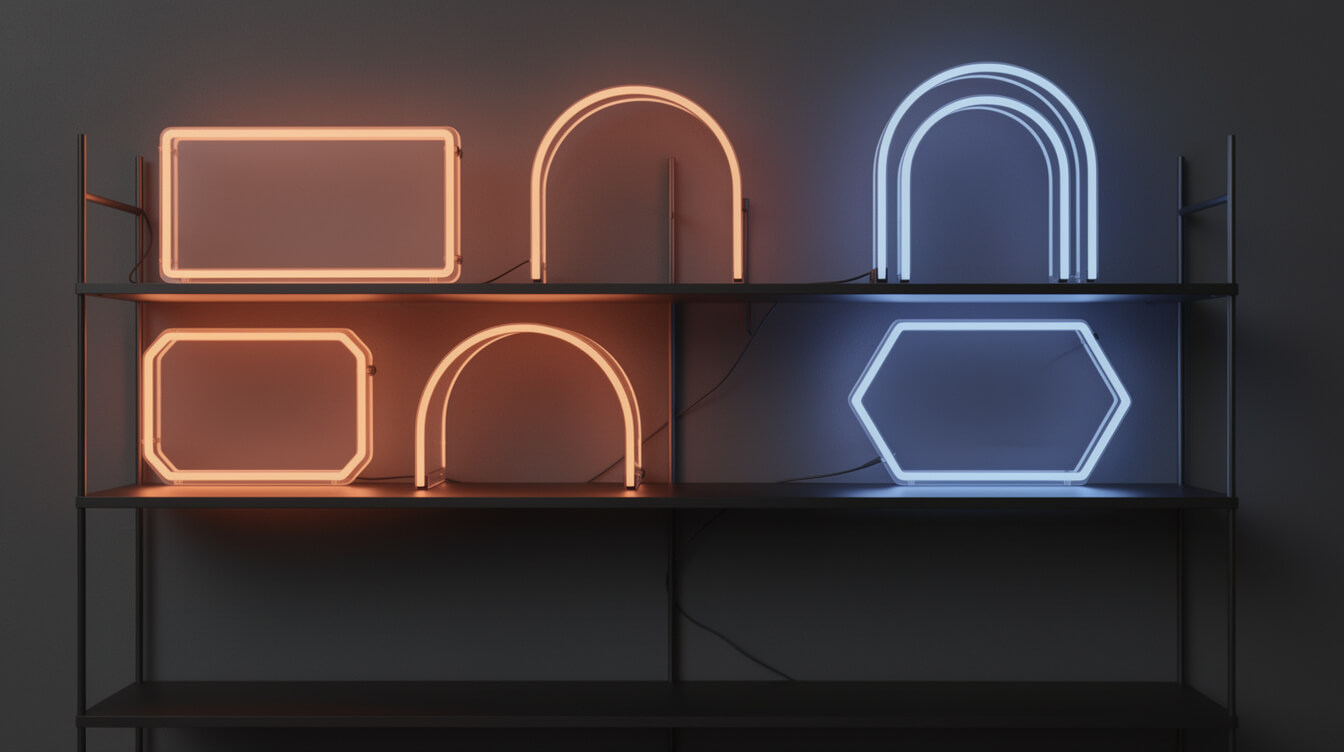
Printful does not carry custom LED neon signs in its standard catalog as of 2026. Their product range is built around sublimation, DTG printing, and embroidery, and the LED neon manufacturing process (bending flexible strips, cutting acrylic, assembling hardware) sits entirely outside their production capabilities. Searching for “neon” in the Printful product catalog returns no results.
Printify operates differently. Because Printify connects sellers to an open network of third-party vendors, catalog availability varies. The authoritative check is the Printify product creator: search “neon sign” there and filter by your target shipping region. Some vendors in Printify’s network do list custom LED neon products, though availability can change as vendor partnerships shift. Confirm a specific SKU is active and shipping before you build product listings around it.
Outside the two main platforms, the most reliable path for custom LED neon signs is white-label supplier relationships with manufacturers who offer drop-ship programs. Factories in China (visible on Alibaba, Made-in-China) produce LED neon signs at wholesale prices and will ship directly to your customers with neutral packaging. This is a made-to-order model, not a print-on-demand model, and the key distinction matters: production takes 5-10 business days per order, not hours. A buyer who expects next-day t-shirt turnaround will need clear expectations set in your product description.
The honest summary for POD sellers: custom LED neon signs require going one step beyond the standard Printful/Printify integration. The payoff for that extra step is a gross margin of $60-130 per order instead of $4-8 on a mug.
How custom LED neon signs are made: what the supplier handles
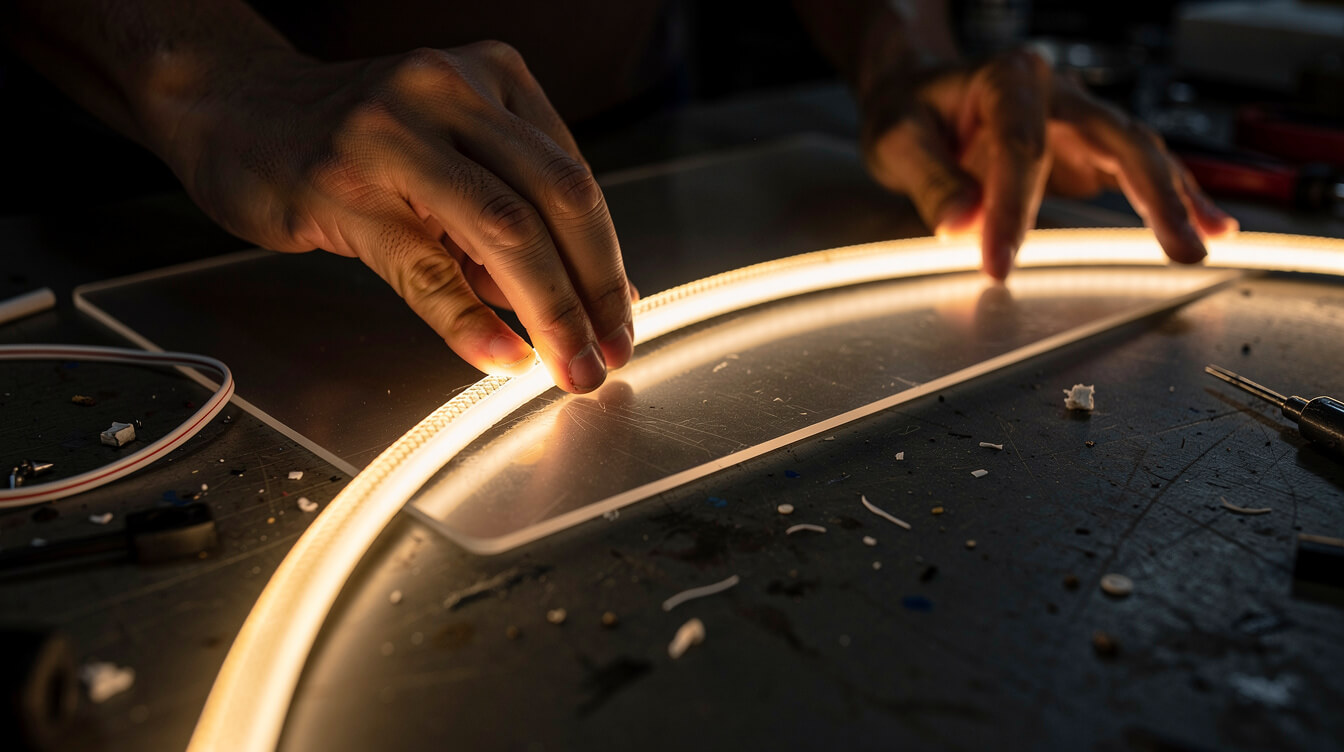
Understanding the production process helps you set accurate customer expectations and evaluate suppliers knowledgeably. Here is what happens from design file to shipped product.
The core components: An LED neon sign is a flexible LED strip (12V or 24V DC) enclosed in colored PVC silicone tubing, bent into the design shape and mounted on clear acrylic backing. The backing is laser-cut to the sign’s outline or left as a standard rectangle. Wall mounting hardware (metal screws or adhesive strips) and a power adapter with on/off switch complete the assembly.
The production sequence: The seller (you) submits a design file, typically an SVG for text or vector artwork. The factory technician curves the LED tubing by hand to follow the design, mounts it to the acrylic backing, solders connection points, and tests the unit before packaging. The sign is wrapped in foam and bubble wrap, placed in a rigid cardboard box, and shipped via express freight (DHL, FedEx, or UPS).
Production timeline: Standard lead time is 5-10 business days from design approval to shipping. Rush options exist at premium pricing, typically reducing to 3-5 business days. This is not a product you can list as “ships within 24 hours.” Clear communication of production time in product listings is non-negotiable if you want to avoid negative reviews.
What you need to supply: A clean SVG design file (for text, this is exportable from any vector tool), the desired size in inches, LED color choice, power adapter specification (US/EU/UK plug), and the customer’s shipping address for drop shipment. Most established white-label suppliers have a straightforward order portal or email-based submission workflow.
Fragile goods packaging: Budget $12-20 for proper fragile goods packaging and shipping. LED neon signs that arrive broken are your problem unless your supplier explicitly covers defects in transit. Verify your supplier’s breakage policy before you list, and build adequate packaging cost into your landed cost estimate.
The POD-adjacent path: white-label LED neon sign suppliers
Setting up a white-label supplier relationship for LED neon signs is more involved than connecting a Printful integration, but the process is manageable. Here is the setup workflow.
Step 1: Vet suppliers before committing. On Alibaba, filter LED neon sign factories by trade assurance, gold supplier status, and minimum 3-year history. Request a production sample ($30-80 range for a standard text sign) to test quality yourself before routing customer orders. Evaluate the sample for: clean bends with no visible gaps or hot spots in the LED strip, secure acrylic mounting, consistent light output, a well-soldered power connection, and packaging that would survive shipping intact.
Step 2: Confirm blind drop-ship capability. A white-label drop-ship setup means the factory ships directly to your customer with neutral packaging, no factory name or address visible. Confirm this in writing before proceeding. Most established factories offer this service, but some add a small blind-ship surcharge ($1-3 per order).
Step 3: Set up as a made-to-order product in WooCommerce. This is distinct from a standard POD product. The customer places an order, provides their custom text, and chooses their options. You receive the order, create the SVG design file, submit to your supplier via their portal or email, confirm the order, and track the shipment. The workflow is semi-manual but repeatable once you have a template for design submission.
Step 4: Pricing for made-to-order economics. The manual workflow (15-20 minutes per order for design file creation and supplier submission) is worth pricing for. At $150 retail on a $45 landed cost product, you have $105 gross margin from which to pay yourself for that 15-20 minutes. That math works. At $80 retail on a $45 cost, it does not. Price the product to account for your time, not just the manufacturing cost.
Step 5: Set expectations in your listings. “Custom made-to-order. Production time 7-10 business days. Ships via express courier.” This is not a disadvantage if communicated clearly from the product page. Wedding buyers with a 3-month lead time, event planners with 6-week project timelines, and home decor buyers without urgent need will accept a 7-10 day window without hesitation.
Unit cost math: what $150-300 retail looks like for a POD seller

Smash print-on-demand. Join the engine room.
One short email a week. Real numbers, real teardowns, the unfiltered economics behind every move.
Size drives wholesale cost more than any other variable. Here is the realistic cost breakdown by size tier at current white-label pricing.
Small (12″ x 8″): $20-30 wholesale + $10-14 shipping (fragile goods, domestic) = $30-44 landed. Retail: $80-120. Gross margin: 63-75% depending on retail positioning. Dollar gross per order: $50-90.
Medium (18″ x 12″): $35-55 wholesale + $12-18 shipping = $47-73 landed. Retail: $130-200. Gross margin: 54-66%. Dollar gross per order: $80-150.
Large (24″ x 16″): $60-90 wholesale + $18-25 shipping = $78-115 landed. Retail: $200-320. Gross margin: 61-69%. Dollar gross per order: $130-220.
Comparison with standard POD products: A custom mug generates $14-20 gross per transaction at typical POD pricing. A medium LED neon sign generates $80-150 gross per transaction. The dollar margin is 5-8x higher per order, in exchange for a more complex fulfillment workflow.
Volume math at medium size: 10 neon sign orders per month at $100 average gross = $1,000 gross profit per month. To generate $1,000 gross from custom mugs at $17 average gross per mug, you need 59 orders. Neon requires fewer transactions to hit the same revenue outcome.
RGB vs single color: RGB versions (remote-controlled color change, typically via a small included remote) cost $10-18 more at wholesale and retail for $30-50 premium. The margin improvement on RGB is better than proportional, so offering RGB as a product variation is worth including. Buyers in the gaming niche in particular have strong affinity for RGB color options.
Outdoor vs indoor: Standard LED neon signs are rated for indoor use. Weatherproof outdoor versions carry a $15-30 wholesale premium and retail for $50-80 more. Bar and restaurant buyers who want exterior signage specifically need outdoor-rated signs, which is a separate product variation worth adding if you target that niche.
The Shopify 1% math on high-ticket items like custom LED neon signs
Shopify’s 1% platform override fee applies to total revenue, not just profit. At $10-15 AOV products like sticker sheets or bandanas, $0.10-0.15 per order is an annoyance. At $150-300 AOV products like LED neon signs, $1.50-3.00 per order becomes a genuine cost line that compounds quickly.
At $150 AOV and 50 signs per month: 1% = $75/month = $900/year in pure platform override.
At $200 AOV and 50 signs per month: $100/month = $1,200/year.
At $200 AOV and 100 signs per month: $200/month = $2,400/year.
WooCommerce overhead in comparison: $15-25/month for hosting, regardless of transaction volume or revenue level. Total overhead for a store generating $10,000/month in neon sign revenue: $15-25/month on WooCommerce, vs $100 override + $79-299 plan cost on Shopify = $179-399/month on Shopify. The difference is $1,848-4,488 per year at that revenue level.
Custom product configurator costs: A custom LED neon sign product requires a text input field where buyers type the words they want on their sign. On WooCommerce, the WooCommerce Product Add-Ons extension provides this functionality for a one-time license fee. On Shopify, the equivalent apps (Product Personalizer, Infinite Options, OrderlyForm) run $19-49 per month. Add that to the Shopify plan and override costs, and the annual platform overhead gap for a serious neon sign store reaches $2,000-5,000.
For a detailed breakdown of this fee structure across product categories and revenue milestones, the side-by-side math in the WooCommerce vs Shopify for POD sellers analysis is the right reference. The higher the AOV on your products, the more consequential the 1% becomes in dollar terms, and the more clearly WooCommerce’s fixed overhead wins.

30x your POD throughput with MEGA
MEGA generates designs, mockups, titles, SEO metadata, and full product listings end-to-end in under 7 minutes. One pipeline from niche idea to live product on your owned WooCommerce store.
Which niches drive custom LED neon sign demand
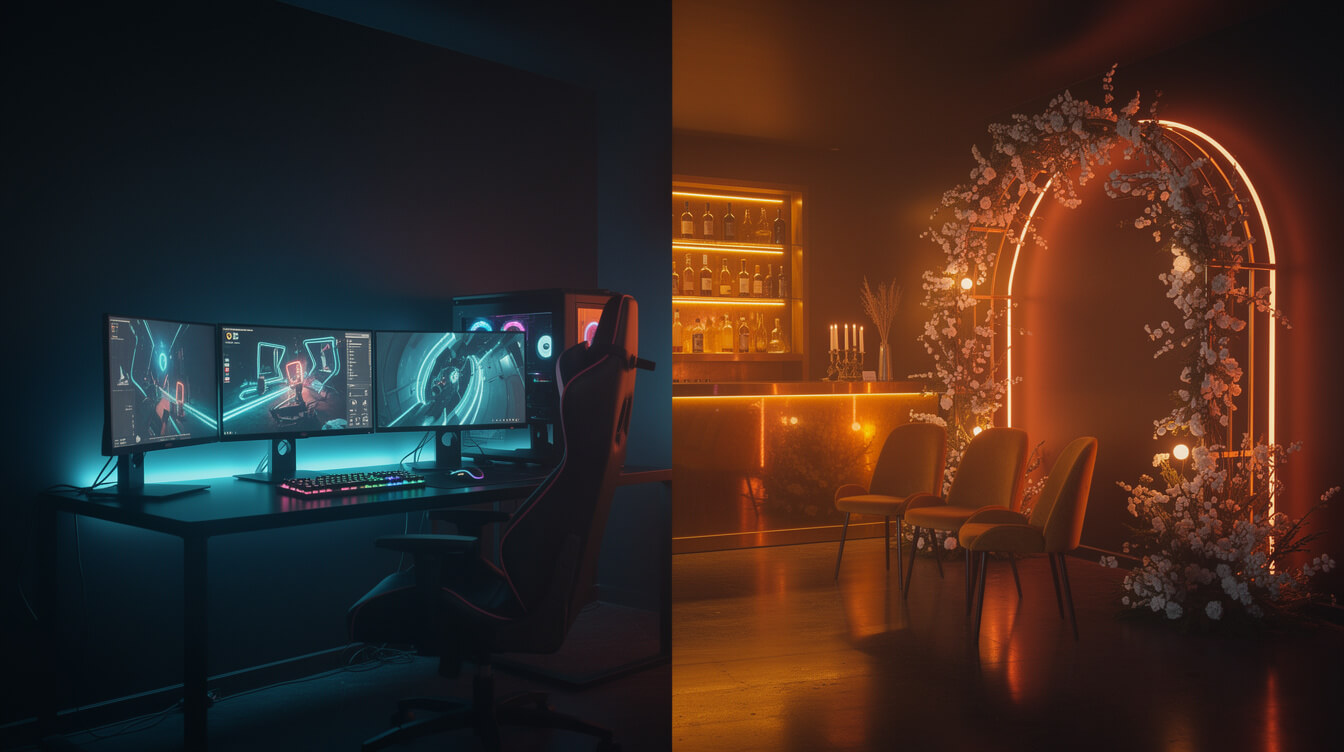
LED neon signs perform best in niches where the aesthetic function is part of the buyer’s identity. The sign is not just decoration: it signals what kind of space this person has built for themselves. That emotional layer is what justifies $150-300 purchases and drives strong social sharing.
Gaming room and setup culture: The gaming niche is the single strongest demand driver for LED neon signs. Gaming room builders actively seek custom identity markers for their setups. “Player 1” silhouettes, controller shapes, clan logos, and custom gamer handles are all high-intent custom requests. TikTok and YouTube setup tour videos normalize the aesthetic and drive organic product discovery without paid advertising. Cross-sell opportunity: gaming room buyers often also purchase custom mouse pads and custom desk mats, so listing LED neon alongside those products creates a natural upsell path.
Wedding and event signage: “Just Married,” “Mr and Mrs [Last Name],” custom cocktail bar signs, and welcome marquees are bought by couples, event planners, and wedding photographers for venue styling. Wedding buyers have minimal price sensitivity for meaningful statement pieces and are deadline-driven (the wedding date does not move). Event planners are repeat buyers who need multiple signs per event and book well in advance, giving you the production lead time your supplier needs.
Bar and restaurant signage: Custom business name signs, specialty cocktail callouts, and “Open” signs for bars, coffee shops, and restaurants. This is a B2B-adjacent niche where the buyer is a business owner making a capital purchase. Budget sensitivity is lower than for consumer buyers, and the dollar value of the sign is a tax-deductible business expense. Restaurant and bar owners who are happy with a sign reorder for new locations and recommend you to other owners in their network.
Baby nursery and children’s rooms: Custom name signs for nurseries, moon and star shapes, soft glow nightlights. Parent buyers and gift buyers (for baby showers) are highly emotionally motivated. The lead time challenge is real here, so emphasize the 7-10 day production window prominently and offer a “rush for an additional fee” option for buyers with tight gifting timelines.
Home office and creator backdrops: Podcast studios, YouTube and Twitch streaming setups, and professional Zoom backgrounds all benefit from custom neon for visual branding. The buyer is a professional or creator for whom the sign is partly a business purchase and partly a status signal in their online presence. This niche pairs naturally with custom poster and custom canvas print buyers who are building out their wall art and background aesthetics.
Seasonal demand windows: Halloween custom neon (pumpkin shapes, spooky graphics) and Christmas custom neon (star shapes, holiday greetings, “Santa stop here”) perform in Q4. List these seasonal designs 8-10 weeks before the holiday to allow for production time and still reach buyers early enough to convert.
WooCommerce product setup for custom LED neon sign stores
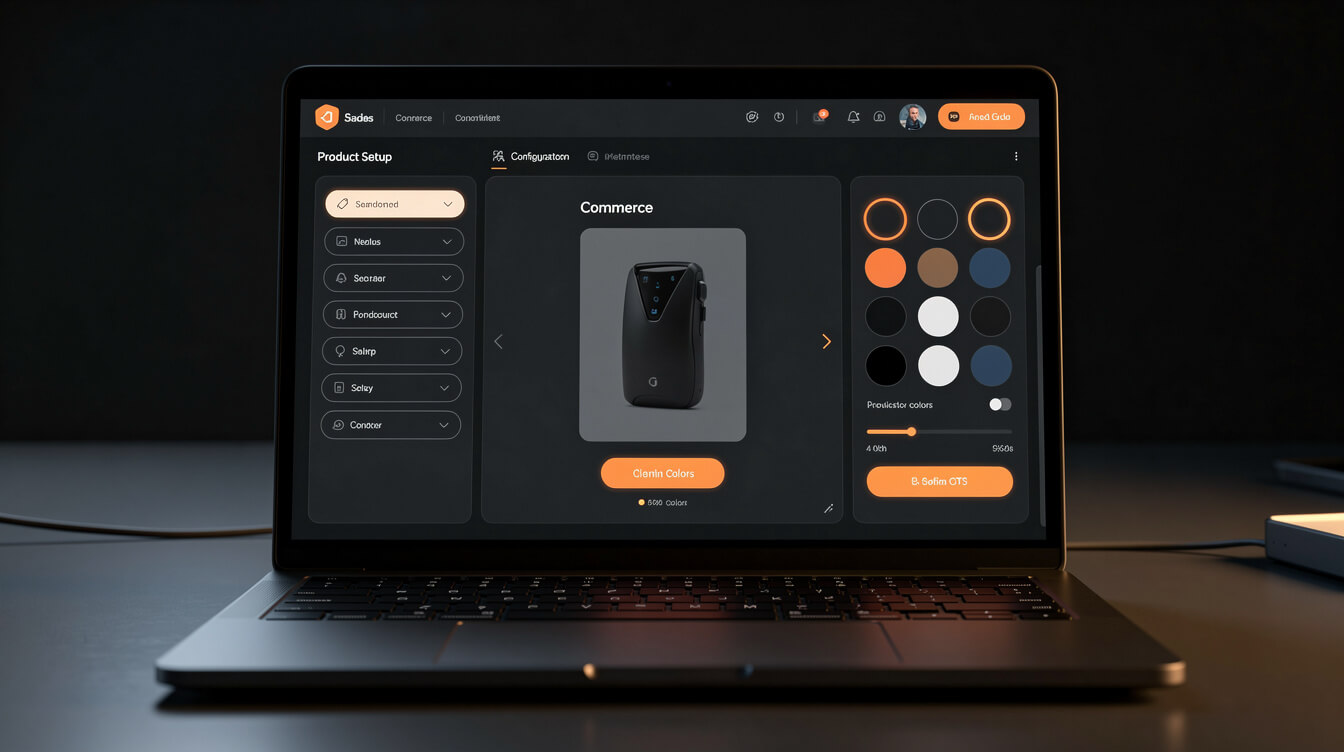
The product configuration for a custom LED neon sign store requires more variable dimensions than a standard t-shirt, but WooCommerce handles all of them natively or with a single extension, without the recurring app costs that Shopify would require.
Custom text input field: This is the most important feature on the product page. Use WooCommerce Product Add-Ons to add a text input field labeled something like “Your custom text” with a character limit appropriate to the sign size (12-inch signs work for 1-2 words; 24-inch signs can hold a short phrase). The customer’s text entry appears on their order detail, routes through your order management, and goes to your supplier as part of the design brief. No Shopify app needed.
LED color attribute: Create a color attribute with options: warm white, cool white, red, blue, green, pink, purple, yellow, and RGB multi-color. Use image swatches if your theme supports them so buyers can visually reference the color they are choosing. RGB is priced $30-50 higher than single color and generates better gross margin per order.
Size variations: Create a second product attribute for size (12 inch, 18 inch, 24 inch, 36 inch). Each size tier maps to a different price point in the variation pricing table. WooCommerce handles multi-attribute variable products natively with no additional plugin required beyond WooCommerce itself.
Custom artwork option: For buyers who want a logo or custom illustration rendered in neon rather than text, add an image upload field via Product Add-Ons. Flag this clearly: “Custom artwork orders require 1 business day for design review before production begins.” The design review step is you converting their uploaded image to a clean SVG suitable for neon bending. This service commands a $20-40 premium and is worth offering for buyers who want brand logos or complex shapes.
Repeat B2B orders: Bar owners, event planners, and interior designers who buy one sign and love the quality will reorder. WooCommerce customer accounts retain order history, making reorders straightforward. Tag these buyers in FluentCRM as “commercial-buyer” or “event-planner” and send a reorder nudge email before their peak seasons (wedding season in spring, holiday season in fall). For sellers building a broader catalog of custom home decor and wall art, MEGA automates the product creation and listing workflow end-to-end, including research, titles, SEO, and publishing to your WooCommerce store.
Custom LED neon signs: higher effort, higher reward
Custom LED neon signs are the most effort-intensive product category covered in this POD series, and they carry the highest gross margin per transaction. That is not a coincidence. The B2C brands dominating the SERP (YellowPop, NeonSigns.com, NeonChamp) have built mature businesses by owning the customer relationship on a made-to-order product that most POD sellers have not bothered with because it falls outside the Printful/Printify automation comfort zone.
That gap is the opportunity. The manufacturing path is manageable once you have a vetted drop-ship supplier and a repeatable order submission workflow. The unit economics are excellent: $80-150 gross per order at medium size, 5-8x higher than standard mug or apparel margins. The platform fee math at $150-300 AOV argues strongly for WooCommerce, where $1,200-2,400 per year in Shopify override fees translate directly to margin improvement on owned infrastructure.
The niches with the strongest demand (gaming rooms, weddings, bars, nurseries) are all emotionally driven markets where buyers make discretionary purchases without heavy price negotiation. The 7-10 day production lead time is not a barrier in those contexts when framed correctly in your listings.
The SERP at “custom LED neon sign” is 100% B2C consumer brands. There is no editorial guide for POD sellers anywhere in the top 10 results. That absence is a ranking opportunity for a seller willing to put in the product research and build the fulfillment infrastructure.
Implement AI. 30x your throughput. Get a 30-min call with the founder.
Drop your details and book a free 30-minute discovery call. Personalized advice on your POD stack, your margin, and where AI fits. No pitch, no fluff.