Custom flags for POD sellers: which providers carry them, what they cost, and the garden flag niche math
Custom flags are one of those print-on-demand products that gets underestimated every single time. The search volume is there — 33,100 monthly searches — and the SERP is entirely product pages from flag manufacturers, Amazon listings, and promo vendors. Not a single editorial piece written for POD sellers exists in the top results. That gap is real, and it is exploitable.
This guide covers everything a POD seller needs to know about custom flags: what types of flags are actually in the Printful and Printify catalogs, how dye sublimation works for flag printing, what the unit cost math looks like at different volumes, why the Shopify 1% fee hurts disproportionately at low AOV, and which niche verticals actually convert for flag products.
What counts as a custom flag in the POD catalog

The word “flag” covers a broader product family than most sellers realize. In the POD context, you are not limited to country flags or giant stadium banners. The catalog breaks into five distinct product types, each with different use cases and buyer intent.
Garden flags are the highest-demand subcategory for POD sellers. These are typically 12.5″ x 18″ or 13″ x 18″ double-sided polyester flags designed for a two-pronged garden stake. They have strong seasonal demand spikes around holidays (Halloween, Christmas, Easter, Fourth of July) and year-round appeal in pet portrait and sports-themed stores.
Sports flags run larger — often 3′ x 5′ — and target fan communities, youth sports leagues, and custom team merchandise. The AOV is higher here ($35-60 range), but the audience is more competitive to reach organically.
Pennant flags are the triangular felt-style flags associated with college sports and retro Americana aesthetics. These are less common in POD catalogs but show up on Printify’s marketplace through select providers.
Desk flags are small stand-mounted flags, typically 4″ x 6″. These are common in corporate gift and personalization niches. Unit costs are low, but so are retail prices — $10-18 is a typical range.
Feather flags (also called teardrop or blade flags) are vertical advertising flags. These are almost exclusively a local business or event product and rarely appear in standard POD dropship catalogs. If a customer requests one, you are likely pointing them to a local print vendor rather than fulfilling via Printful or Printify.
For most POD sellers reading this, the focus should be on garden flags and 3′ x 5′ sports flags. Those two categories have the clearest buyer intent, the most provider support, and the most viable niche verticals.
Which POD providers carry custom flags: Printful vs Printify catalog comparison
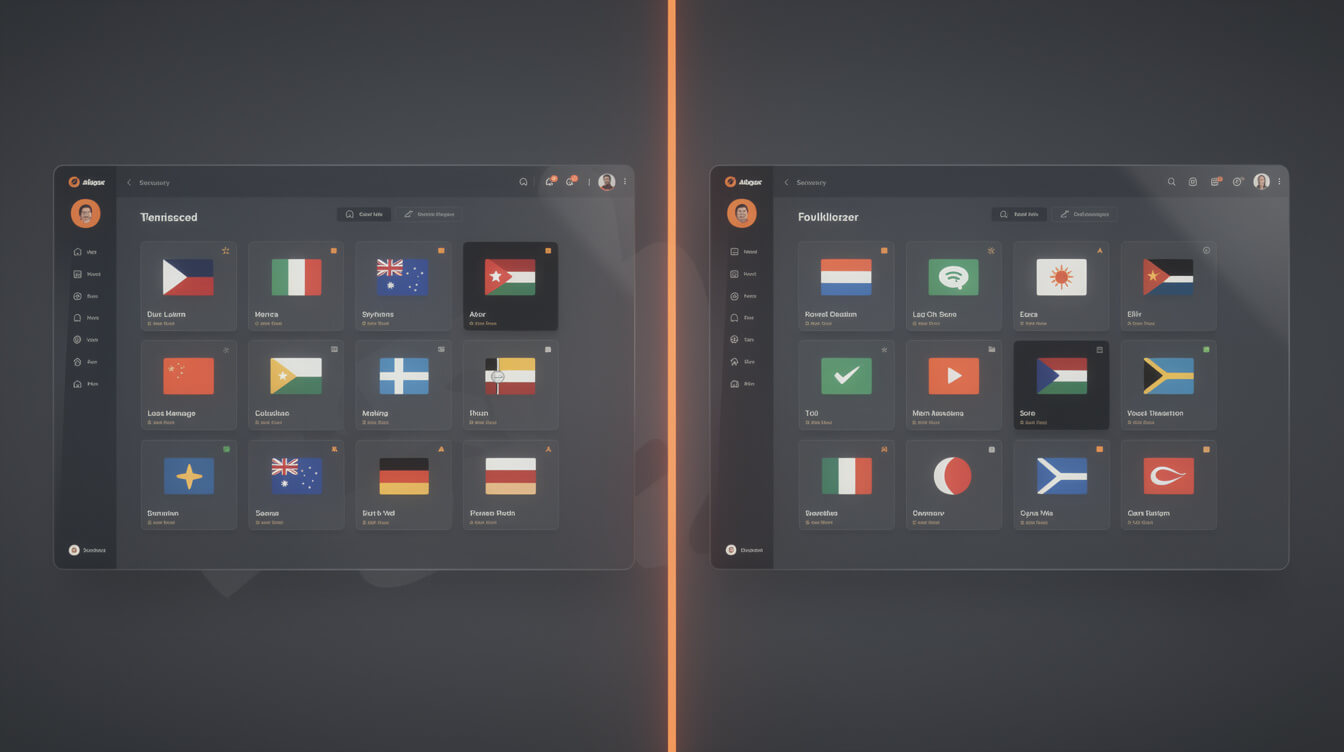
Provider support for flags is more limited than it is for apparel or mugs, so checking the current catalog before building out a store section matters.
Printful carries garden flags in their standard catalog. At the time of writing, Printful offers a 12.5″ x 18″ polyester garden flag through their fulfillment network. The print is dye sublimation, the base is 100% polyester, and the default configuration is single-sided printing with a white backing. Printful also offers an outdoor flag (similar to a standard 3′ x 5′ flag) through select print providers.
Printify gives you more flexibility through their marketplace model. Multiple print providers on Printify carry flags, including some that offer double-sided printing. The trade-off is that different providers have different quality levels, production times, and shipping costs. When you set up flags on Printify, you need to vet provider reviews before going live — flag print quality varies more than it does for a basic t-shirt.
A few comparisons worth noting:
- Double-sided printing: Some Printify providers offer this. Printful’s garden flags are typically single-sided with a backing layer. If your niche requires both sides to look finished (visible from both directions when hanging in a garden), Printify may be the better choice for that SKU.
- Production time: Flags tend to run 3-5 business days for production. Factor this into your shipping estimates, especially for Q4 holiday orders where delivery timing is part of the buying decision.
- File setup: Both platforms require full-bleed artwork that extends to the edge of the template. Unlike a t-shirt where the print area is inset from the edges, flags use the entire surface. Your design file needs to be sized to the exact dimensions of the product template, not just dropped into a centered print area.
The honest summary: if you are starting with Printful because you already have a Printful integration on WooCommerce, their garden flag product is sufficient for most use cases. If you want more flag variety or need double-sided printing, Printify’s marketplace gives you more provider options — at the cost of more vetting work upfront. For a deeper look at how dye sublimation handles full-surface products, the logic is the same as what is covered in this guide on sublimation printing for t-shirts and all-over print apparel.
How dye sublimation works for flag printing
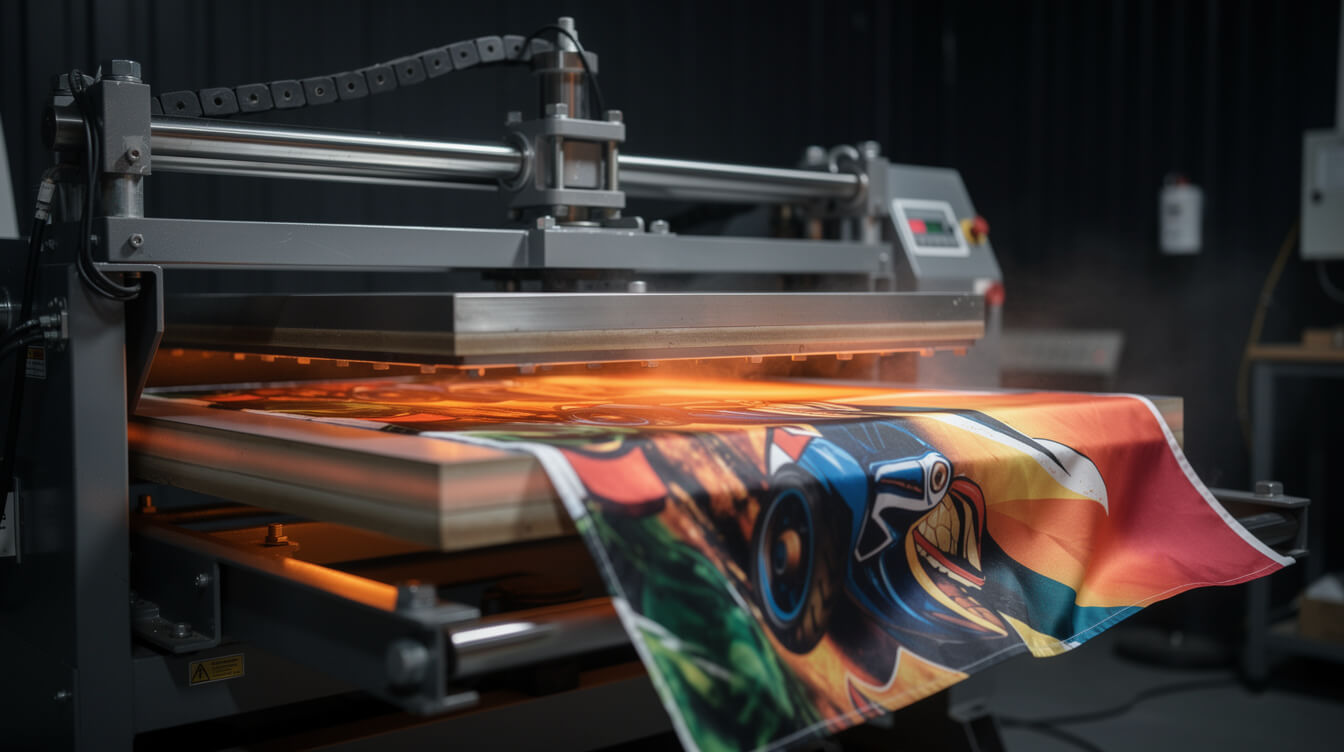
Custom flags are a dye sublimation product. Full stop. Understanding why matters for how you design your artwork and what you promise customers about print quality.
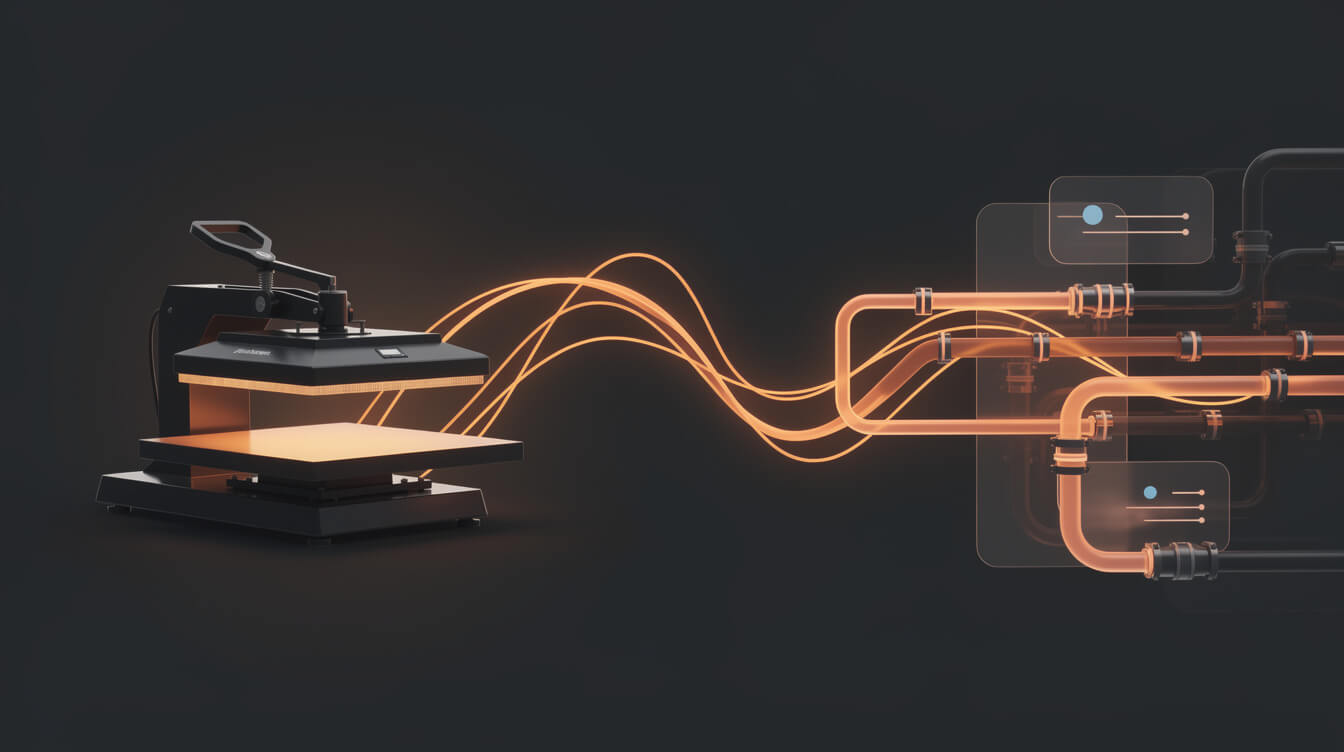
Dye sublimation is a heat-transfer process where ink is converted directly from solid to gas (sublimated) and bonded into the polyester fabric at a molecular level. The result is a print that is part of the fabric rather than sitting on top of it. Colors are vibrant and will not crack or peel the way screen prints or vinyl transfers can.
The requirement is polyester. Sublimation dyes bond to synthetic polymer fibers. On a cotton fabric, the ink has nothing to bond to and the image washes out or fails entirely. This is why every flag in the POD catalog is 100% polyester — not because polyester is the premium choice, but because it is the only substrate that works for the printing method.
What this means for your designs:
- Edge-to-edge coverage is the default. Sublimation covers the entire flag surface, including edges and seams if your template calls for it. Design for bleed — extend your background color to the template edges.
- White is not printed. In sublimation printing, white areas in your artwork are actually the white of the polyester fabric showing through. This means you cannot print a white design on a black flag using sublimation — the “white” just disappears. If you need a true white-on-black look, you need a product category that uses DTF or screen printing.
- Colors shift slightly on polyester. RGB colors look different on a screen versus sublimated into polyester fabric. Reds tend to go slightly more orange. Very dark colors (near black) can look slightly muted. Design in sRGB and test with a sample before committing to a large catalog launch.
- Photographic prints work extremely well. Pet portraits, landscape photography, and detailed artwork translate well to sublimation flags. The process handles gradients and photographic detail better than screen printing, which is one reason the pet portrait niche is so viable for this product.
For your customers, the key selling point is that a sublimation-printed custom flag will not fade or crack with reasonable outdoor use. It is not a forever product — UV exposure over years will eventually affect the color — but it holds up well for garden and seasonal use, which is exactly what your buyers are expecting.
Unit cost math: what a custom flag costs at 1, 10, and 50 units vs retail price

Smash print-on-demand. Join the engine room.
One short email a week. Real numbers, real teardowns, the unfiltered economics behind every move.
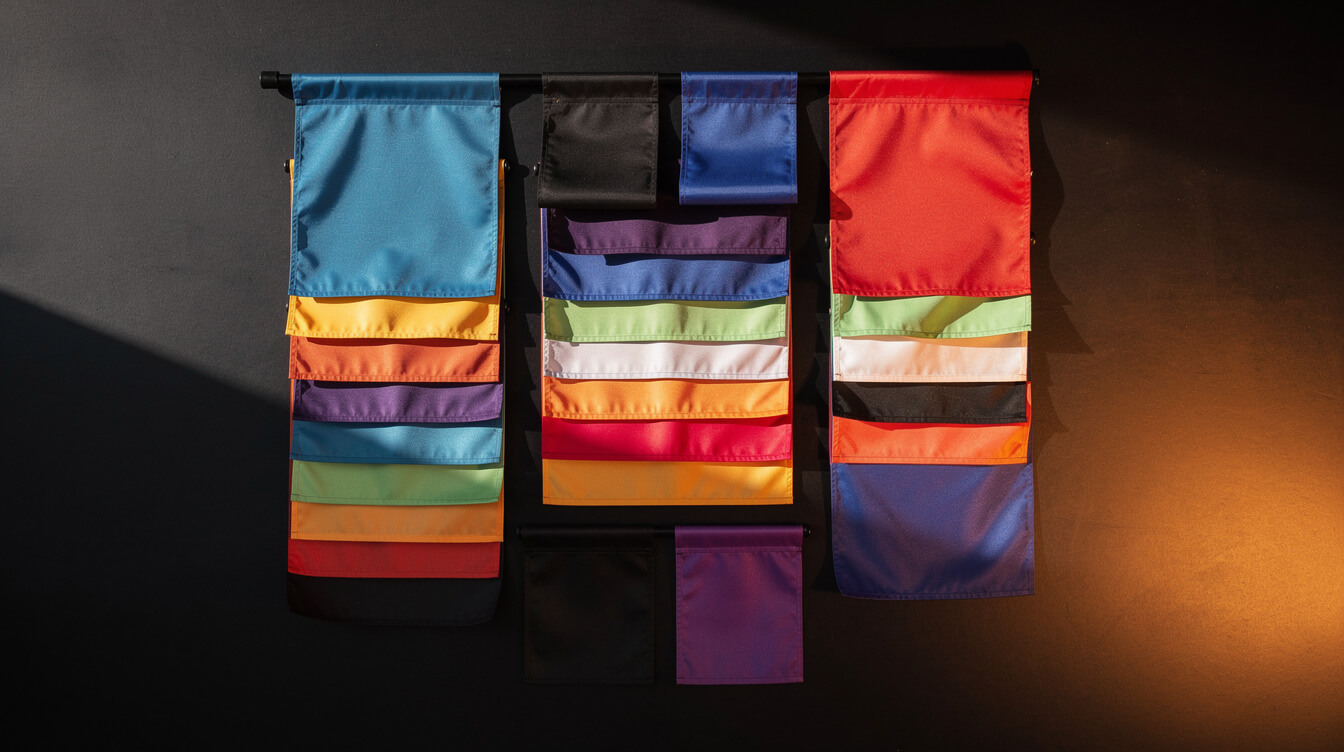
The economics of custom flags are different from apparel because the AOV is lower and the margin structure depends heavily on which size and provider you use. Here is the math at different volumes for a standard garden flag through Printful.
Printful garden flag (approx. 12.5″ x 18″):
- Unit cost at 1 unit: approximately $8.95-$9.50 (base product + Printful fulfillment)
- Shipping to US customer: typically $4.00-$5.00 for the first item
- Total landed cost to you: approximately $13-$15 per order
Retail pricing for custom garden flags runs $22-$28 on Etsy and independent POD stores. At a $25 retail price and $14 landed cost, your gross margin is $11, or roughly 44%. That is a workable margin for a low-handling, fully automated product — but it leaves less room for paid advertising than a $40-$50 apparel item.
For a 3′ x 5′ outdoor flag (larger format), the economics shift:
- Unit cost: approximately $14-$18 depending on provider
- Shipping: typically $5-$7 for the larger format
- Retail price: $35-$50 is common
- Gross margin: $15-$25 per order, or 40-50%
At volume, some providers offer pricing tiers — but in a POD dropship model, you are typically fulfilling one at a time rather than in batches. The “volume” benefit in POD comes from your catalog size and organic traffic, not from bulk production runs.
One comparison that frames the economics well: a custom flag at $25 retail is structurally similar to a custom mug at $18-22. Both are low-AOV, fully automated products where the margin per unit is healthy but the gross dollar amount per transaction is modest. The key to making flags profitable is catalog depth and organic traffic — not chasing high per-unit margins on individual sales.
If you are already running a custom drinkware range in your POD store, adding garden flags follows the same playbook: same provider integration, same sublimation print method, similar AOV bracket, and a completely different seasonal demand curve that complements your drinkware sales.
Build a full custom flag catalog in under 7 minutes
MEGA automates the research-to-product pipeline for POD sellers. Niche selection, image generation, sizing, mockups, titles, and SEO — end to end, without the 6-hour Canva workflow.
The Shopify 1% tax at low AOV: why flag margins hurt more than hoodies at $25 retail

If you are running your POD store on Shopify, the platform’s 1% transaction fee applies to every order processed through a third-party payment gateway (anything other than Shopify Payments). On high-AOV products, that fee is a rounding error. On low-AOV products like garden flags, it compounds the margin problem in a way that is worth calculating explicitly.
At a $25 retail price:
- Shopify 1% transaction fee: $0.25 per order
- If you also pay Shopify Payments 2.9% + $0.30: total processing ~$1.03 per order
- Combined platform + payment cost on a $25 order: $1.28
On a $40 hoodie, that same math produces a $1.70 platform cost — but the margin dollars are larger, so the percentage impact is smaller. On the $25 flag, the 1% transaction fee represents ~4.6% of your already-thin margin, before accounting for payment processing.
Now run it at volume. A store selling 100 custom flags per month at $25 each pays $25 per month in pure Shopify transaction fees — $300 per year — that disappears without producing a single product, customer touchpoint, or piece of content. At 500 orders per month, that is $1,500 per year in fees on a $25 product.
This is exactly the math that makes WooCommerce the more rational choice for low-AOV POD products. WooCommerce charges zero platform transaction fees. You pay your payment processor (typically 2.9% + $0.30 through Stripe or PayPal) and nothing else. Every dollar that would have gone to Shopify stays in your margin.
For POD sellers focused on high-volume, low-ticket seasonal products — and garden flags at $22-28 retail are exactly that — the fee savings compound quickly. A store doing $5,000 per month in flag and seasonal POD revenue saves $600 per year in transaction fees alone by operating on WooCommerce instead of Shopify. That covers hosting costs and leaves a meaningful margin improvement on every product.
The pattern holds across low-AOV POD products. We ran through the same math for custom embroidered hats at no minimum — the headwear niche where a $28-35 AOV creates the same fee compression — and the WooCommerce advantage is consistent.
Niche verticals where custom flags actually sell: pet portraits, holiday garden flags, sports teams, house numbers
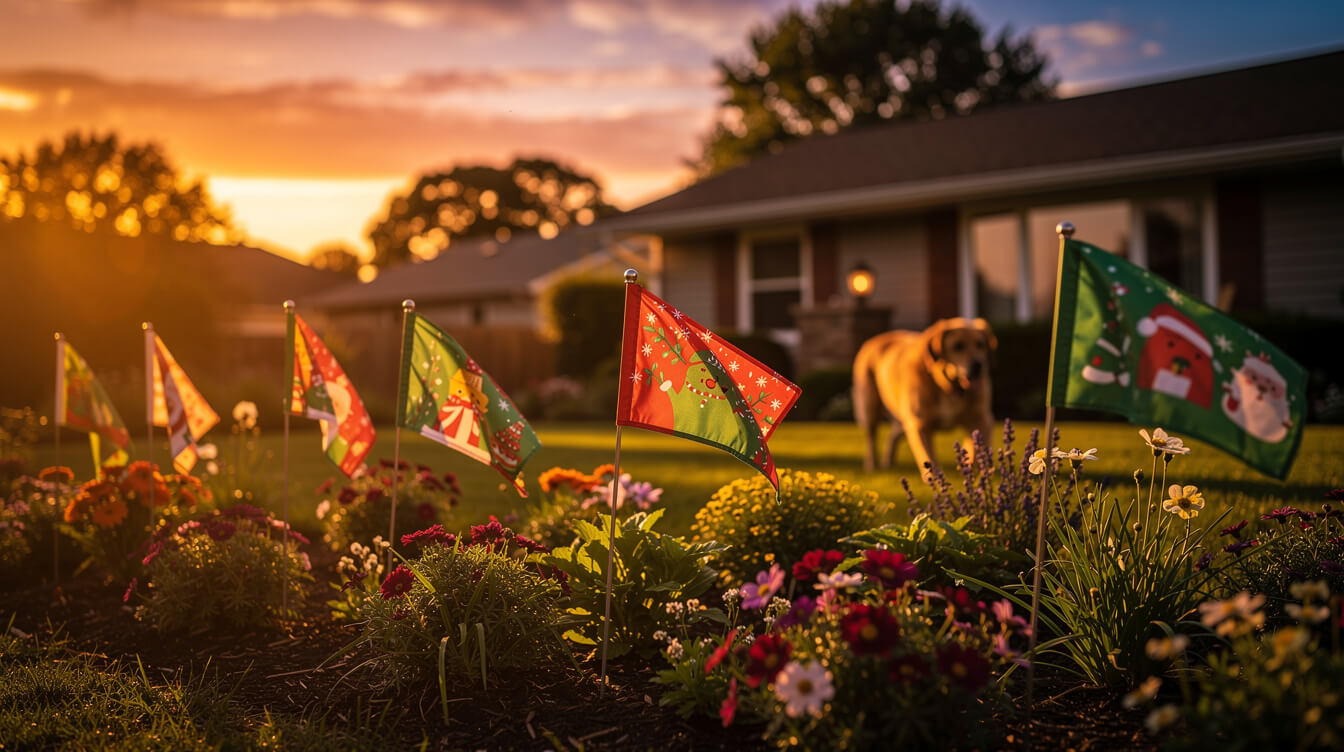
Custom flags are not a general-audience product. Buyers are searching for a specific flag for a specific reason — a holiday garden decoration, a team flag for a youth soccer league, a pet portrait flag as a gift. Understanding the verticals that convert helps you build a catalog with intent rather than hoping that a generic “custom flag” listing attracts buyers.
Pet portraits are the most consistently high-converting vertical for garden flags. The buyer profile is a pet owner — often female, 30-55 — looking for a seasonal or permanent yard decoration featuring their dog, cat, or other pet. The gift occasion is frequently a birthday or Mother’s Day. These buyers search specifically: “custom dog garden flag,” “personalized cat flag for yard,” “custom pet portrait garden flag.” Your design offering needs to be photo-based (upload your pet’s photo) rather than illustrated, because the value proposition is personalization, not generic animal art.
Holiday garden flags are the highest-volume seasonal opportunity. Halloween, Christmas, Easter, and Fourth of July all drive significant garden flag searches. The buying window is tight — typically 4-6 weeks before the holiday — which means your listings need to be live and indexed well before the season peaks. For a POD store, this means having your holiday flag designs ready and listed by September for Halloween, by October for Christmas, and so on. The keyword specificity here works in your favor: “halloween garden flag” and “christmas garden flag” are product searches with clear intent, not broad research queries.
Sports teams represent a different buyer entirely: parents and coaches of youth sports leagues, adult recreational leagues, and high school booster clubs. These buyers want team-branded flags — team name, colors, maybe a mascot — to fly at games, decorate team spaces, or give as end-of-season gifts. The value of this niche is the repeat purchase behavior: a new team season means new team branding opportunities. The challenge is that licensed professional sports team branding is off-limits for POD (copyright issues). Youth leagues and adult recreational leagues have no such restrictions.
House numbers and welcome flags are a smaller but consistent niche. Personalized welcome flags with the family name or house number appeal to new homeowners and buyers looking for housewarming gifts. The design complexity is low, but the personalization requirement means you need a system for handling custom text input — most POD platforms handle this through their personalization tools.
One way to understand the seasonality math here: a flag catalog that covers pet portraits (year-round), holiday flags (Q4 dominant), and sports team flags (spring and fall seasons) has demand distributed across the full calendar year rather than concentrated in a single window. That makes flags a useful catalog addition even for a store whose primary category is something seasonally heavier, like holiday-themed custom photo blankets.
Setting up custom flag products in WooCommerce with Printful: variants, SEO, and category structure
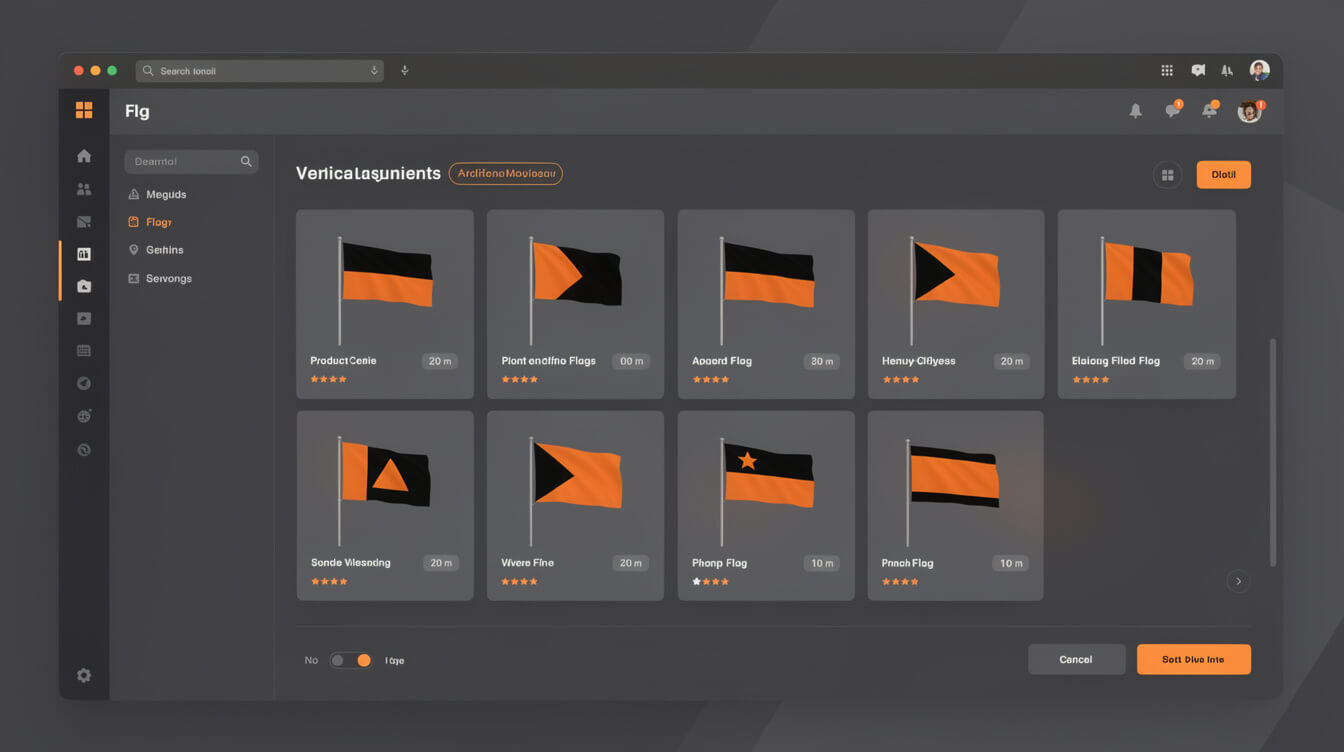
If you are running WooCommerce with the Printful plugin, adding custom flags follows a familiar pattern. Here is what to get right during setup.
Product variants: Flag products typically have one main variant dimension: size. Printful’s garden flag is a single size (12.5″ x 18″). If you are adding a sports flag or outdoor flag, you may have multiple size options (2′ x 3′, 3′ x 5′, 4′ x 6′). Set each size as a WooCommerce product variation, not as separate products — this keeps your catalog clean and allows customers to select the right size from a single product page without losing context.
Product naming for SEO: Use the specific keyword your target buyer would search rather than a generic name. “Custom Garden Flag — Personalized Pet Portrait” ranks better than “Flag Style 1.” Include the use case in the title: “Custom Holiday Garden Flag — Upload Your Design” tells the algorithm and the buyer exactly what this product is and who it is for. Product title length on WooCommerce does not have the same hard cap as Etsy listings, so you have room to be specific.
Product descriptions: Describe the sublimation print method in plain language. Buyers who have ordered flags from Amazon or a local vendor may not know that POD flags are sublimation-printed on polyester — explaining this builds trust and reduces return requests from customers who expected a different material. Include the size in the description, the recommended use (garden stake, outdoor, indoor), and care instructions (most polyester flags are hand-wash only).
Category structure: Group your flags under a dedicated “Flags and Banners” category or nest them under a broader “Home and Garden” category depending on your store’s structure. For seasonal flags, consider also tagging them with the relevant holiday tag — this helps with internal site search and can feed automated seasonal promotions if you use WooCommerce’s marketing tools.
Personalization setup: If you are offering photo-upload personalization (pet portraits, family names), Printful’s personalization tool handles the file upload on the product page. Configure it through the Printful dashboard under the product’s customization settings. Test the workflow from the customer’s perspective before going live — the file format requirements and upload size limits catch sellers off guard more often than the print setup does.
For an end-to-end picture of how sublimation products integrate into a WooCommerce + Printful setup, the same workflow applies here as it does for all-over-print apparel. The custom socks for POD stores guide covers the Printful integration steps in detail, and the flag product follows the same path through the dashboard.
Frequently asked questions about custom flags for POD sellers
Can I sell custom flags without holding inventory?
Yes. Both Printful and Printify fulfill flags on demand. No inventory, no upfront production cost. You list the product, a customer orders it, the provider prints and ships it directly. Your only cost is the per-unit fulfillment price charged when an order is placed.
What file format do I need to submit flag designs?
Printful requires PNG files at the correct template dimensions (downloadable from their product page). For a garden flag, the template is typically 2550 x 3675 pixels at 300 DPI. Printify providers vary by vendor, but most also use high-resolution PNG. Always download the template before designing — the dimensions are specific to each product size.
Are double-sided custom flags available through POD providers?
Some Printify providers offer double-sided flags where both sides of the flag show the printed design (rather than a white backing). Printful’s standard garden flag is single-sided. If double-sided printing is a selling point for your niche, filter Printify providers by that feature when setting up your product.
What is the production time for custom flags?
Most providers print flags in 3-5 business days. Add shipping time on top of that — 3-7 days for US domestic via standard shipping. For holiday-season orders, communicate the lead time clearly in your product descriptions to avoid support requests from buyers who ordered too close to the holiday.
How do I handle color-accurate designs for sublimation flags?
Design in sRGB color mode in your graphics software. Avoid very dark colors that sit at near-black (they often print slightly muted on polyester) and test a sample of your most important designs before scaling the listing. Most providers offer sample orders at cost price — ordering one flag of each core design before you launch is worth the $15-20 investment.
The flag niche in context: where it fits a POD store built for throughput
Custom flags belong in a POD catalog for the same reason seasonal home decor products always do well: the buyer has a specific need, a specific buying window, and is looking for something they cannot buy mass-market exactly as they want it. That combination — specific need, time pressure, personalization value — is where POD beats generic retail every time.
The economics are not the thickest in the catalog. At $22-28 retail and $13-15 landed cost, garden flags produce roughly $10-12 of gross margin per order. But they are fully automated, require no customer service overhead that a t-shirt does not, and have seasonal demand curves that complement higher-AOV products in the same store. A store that sells custom blankets, hoodies, and flags has three different seasonal demand peaks working together rather than one product carrying the whole catalog through Q4.
If you are building a POD store that is meant to operate autonomously — where MEGA or a similar automation layer handles research, design generation, and listing at scale — flags are one of those products that rewards catalog width over individual product optimization. The more flag designs you have indexed and ranked, the more seasonal traffic you capture, and the more orders flow through without additional manual work per SKU. That is the throughput logic that makes automation tools worth the investment for POD sellers building beyond their first dozen products.
Implement AI. 30x your throughput. Get a 30-min call with the founder.
Drop your details and book a free 30-minute discovery call. Personalized advice on your POD stack, your margin, and where AI fits. No pitch, no fluff.