Custom canvas tote bags for POD sellers: which providers carry them, what the print method looks like, and the eco-buyer niche math
If you search “custom canvas tote bags” today, you land on corporate event suppliers quoting 50-unit minimums at $4-6 per bag. Custom canvas tote bags are everywhere as a promotional product. As a no-MOQ retail product for an individual POD store, they are barely documented. This article fills that gap: which providers carry them at no minimum order, what the print method actually is, what the unit cost math looks like, and which buyers search for personalized canvas totes from small stores instead of bulk promo vendors.
Why “custom canvas tote bags” searches land on corporate event suppliers — and what POD sellers are actually looking for
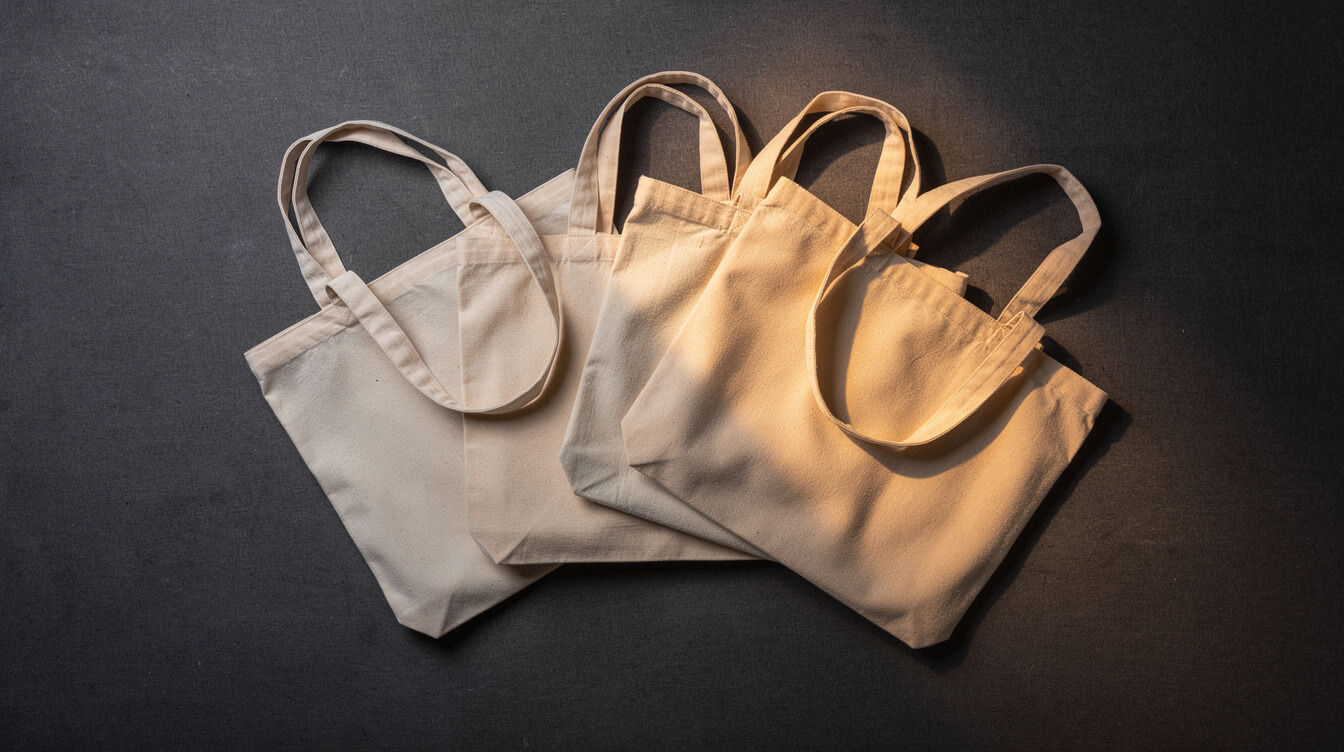
The top of the SERP for “custom canvas tote bags” is occupied by ToteBagFactory, Merchery, LL Bean Business, and Staples Promo. Every one of these vendors sells to corporate event coordinators buying 40 to 500 units for trade show giveaways or employee onboarding kits. They are not built for the seller who wants to list one SKU in a WooCommerce store, connect it to Printful, and fulfill orders one at a time.
These are two different businesses. Corporate event buyers want cheap bags at high volume, fast. They do not need personalization beyond a company logo, and they are buying from a procurement budget. POD sellers want zero upfront inventory, per-unit fulfillment, and the ability to offer personalized totes — a buyer’s name, a dog portrait, a book quote — with no minimums and no warehouse.
The confusion is understandable because the product name is the same. But the supply chain is completely different, and the unit economics look nothing alike. When a POD seller searches for “custom canvas tote bags,” they are asking whether Printful or Printify carries them, what the DTG print looks like on cotton canvas, and whether the margin holds up at a $22 average order value.
The answer is yes, the products exist at no MOQ. The margin is thinner than apparel, but it is workable, and it improves substantially with bundles. Here is what you need to know before you list your first tote bag.
Which POD providers carry canvas tote bags in 2026

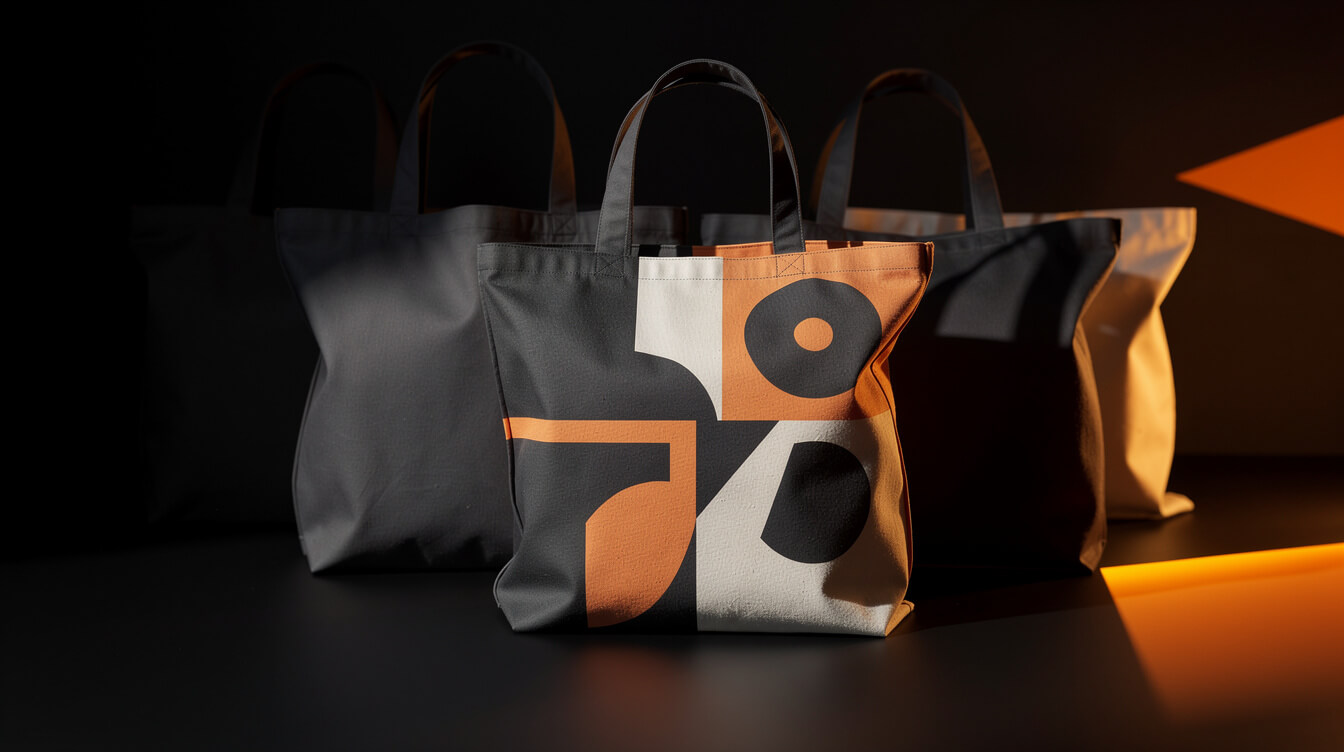
Printful carries cotton canvas tote bags as a standard catalog item. The current product is a 6 oz, 100% cotton natural canvas bag with a 15 x 15 inch print area on the front panel. Base price runs approximately $10-13 depending on the variant. The print method is DTG (direct to garment), and Printful fulfills these with no minimum order quantity. The bag is available in natural cotton and black. Black bags require a white underbase layer, which adds cost.
Printify network vendors carry tote bags through select partners. Product availability varies by region and vendor. Before building listings, open the Printify product catalog and verify which tote bag vendors are available in your fulfillment region. Some Printify network vendors may offer AOP (all-over print) sublimation totes on polyester fabric, which is a different product with a different look, different substrate requirements, and a different margin profile. Always verify the substrate description before ordering a sample — “canvas” is sometimes used loosely to describe weave texture on polyester bags, not material content.
Gooten lists tote bags in its catalog for US-based sellers. Availability and print specifications vary by provider partner. Verify the current catalog before setting up listings, since Gooten’s vendor network shifts over time.
SPOD (Spreadshirt POD) carries canvas totes with a stated 48-hour US fulfillment window. Worth evaluating if turnaround speed is a meaningful differentiation point for your store positioning — for instance, if you are marketing to last-minute gift buyers.
The most reliable starting point is Printful. The catalog is transparent, the no-MOQ policy is guaranteed at the platform level, and DTG quality on cotton is consistent and well-documented. Order a sample before listing. Canvas weave texture affects how ink sits on the fabric, and a sample is the only reliable way to evaluate how your specific design looks — particularly for designs with fine lines, small text, or subtle gradients on a textured background.
Print method breakdown: why DTG works on cotton canvas and sublimation does not
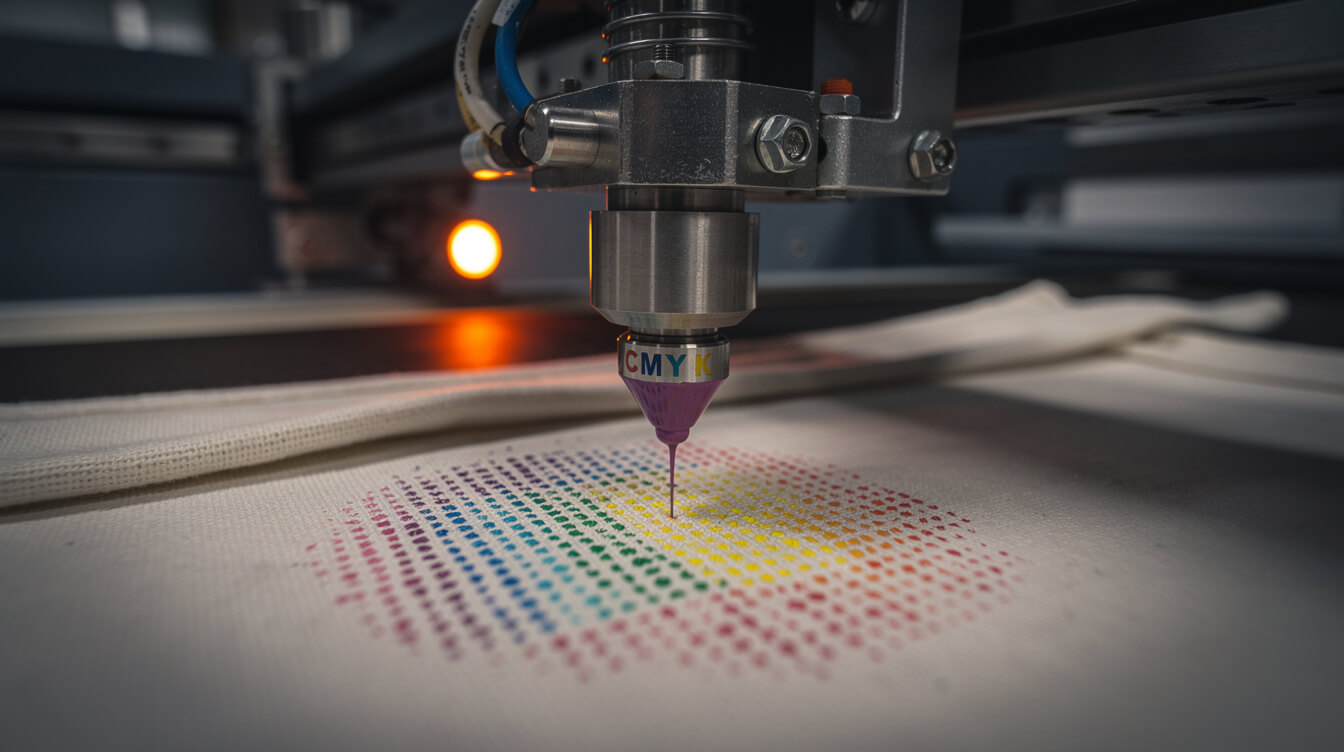
The most important technical fact about custom canvas tote bags is this: sublimation does not work on cotton canvas. Understanding why matters, because this constraint shapes your entire product research and sourcing strategy.
Dye sublimation works by converting ink into a gas state and bonding it at the molecular level inside a polyester substrate under heat and pressure. The process requires the dye to chemically bond with synthetic polymer chains. Natural cotton canvas has no polyester content, no synthetic polymer chains, and no substrate for the dye to bond with. Try to sublimate onto cotton and you get faded, washed-out colors that wash out further with every laundry cycle.
If you see a POD supplier offering “sublimated canvas tote bags,” read the product description carefully. They are almost certainly selling a polyester-blend bag and using “canvas” loosely to describe the weave pattern, not the fiber content. Genuine 100% cotton canvas cannot be sublimated — full stop.
DTG (direct to garment) is the standard method for cotton canvas tote bags. A DTG printer sprays water-based ink directly onto the fabric fibers and heat-cures it. The result is similar to a high-quality inkjet print on fabric: photorealistic gradients, unlimited colors, and a soft hand feel once cured. The print area on a Printful canvas tote covers the front panel — not all-over coverage — which means your design needs to work within roughly 15 x 15 inches.
Screen printing is a third option, but it requires a minimum run (typically 24 to 50 units) and a separate screen per color. Screen printing produces more vibrant solid-color prints than DTG, and the cost-per-unit drops substantially at 100+ pieces. But for a no-MOQ dropship model, screen printing is not viable. It is best used when a specific design has already proven demand via the DTG path and you want to reduce cost on a batch order.
Practical constraints for DTG on cotton canvas:
- Dark-colored canvas (black bags) requires a white underbase layer, which adds $2-4 to the print cost and slightly affects color vibrancy on fine details.
- Very fine lines and thin typography may not reproduce cleanly on textured weave fabric. Test designs with your specific bag variant before going live — what looks sharp on a smooth garment may look slightly rough on canvas.
- File requirements: 300 DPI PNG with a transparent background, sized to match the provider template for your specific bag SKU. Download the provider’s template and design within the safe zone before uploading to production.
- For all-over prints: you need a polyester tote, not cotton canvas. If your design concept requires edge-to-edge coverage with no panel boundaries, source a polyester AOP tote through the Printify network — just know your buyer is getting a different material (often a smoother, shinier finish) than traditional canvas.
Unit cost math: canvas tote bags vs 100-unit wholesale — when each path wins

Smash print-on-demand. Join the engine room.
One short email a week. Real numbers, real teardowns, the unfiltered economics behind every move.
Canvas tote bags sit at the lower end of the POD margin stack. Understanding the numbers across both sourcing paths helps you decide when to use each one.
No-MOQ POD path (Printful):
- Base cost: $10-13 per bag (DTG print included, all sizes and color variants)
- Shipping to US domestic: $3.50-5.00
- Landed cost: $13.50-18 per unit
- Retail price: $22-28
- Gross margin: 30-40% ($6.60-10.00 per sale)
For comparison: a custom mug on Printful runs 45-55% gross at a similar $18-22 retail. A custom sweatshirt runs 38-56% gross but at a $42-55 retail, meaning higher dollar profit per sale even at the same percentage. Canvas totes require more volume to generate meaningful revenue per day than higher-AOV categories.
Bundles change the math significantly:
Eco bundle (2 canvas totes + 1 produce bag):
- 2 Printful totes: $26-36 combined base
- Combined shipping (Printful ships multi-item orders together when possible): $7-9
- Landed: $33-45
- Retail: $55-65
- Gross margin: 32-45% on a $60 AOV — significantly better dollar gross than single-unit sales
100-unit wholesale path:
- Blank canvas bags wholesale: $3-5 per unit (ToteBagFactory, S&S Activewear, and similar distributors)
- Screen print setup cost: $25-50 per color
- Per-unit printing at 100 units: $0.50-1.20
- Landed cost at 100 units: $4-6.50 per bag
- Gross margin at $22 retail: 70-80%
The wholesale path wins on margin, but it requires $400-650 upfront for 100 bags, a design that is pre-sold or has strong validated demand, and physical inventory storage. At zero to 50 orders per month, POD wins because there is no capital at risk and no excess inventory if the design underperforms. At 100+ orders per month with a proven design, the wholesale batch becomes worth modeling — but only for that specific design, not as a platform replacement.
The two models are not mutually exclusive. Validate design demand via POD, then batch the winners at wholesale once you have 15-20 sales confirming a design works. This is the same research-first logic that MEGA automates for the broader product pipeline — test first, scale what sells.
The POD tote niche: who actually buys custom canvas tote bags from individual stores

The corporate event market does not shop from your WooCommerce store. Understanding who does is the difference between building a sustainable catalog item and listing a bag that generates no organic traffic and no repeat buyers.
Here are the buyer segments that generate real no-MOQ POD tote bag sales:
Progressive and social cause merch buyers. Canvas totes have a long association with environmental and social messaging. Buyers looking for eco-themed, feminist, LGBTQ+, or activist cause merch often specifically want cotton bags as the materially consistent format. They are buying the material association as much as the design. This segment has above-average willingness to pay because the purchase feels principled, and they are likely repeat buyers who follow stores that match their values.
Bookish and literary fan stores. The Bookstagram community and literary fan culture generate consistent demand for book-themed canvas totes. Quote-based designs on natural canvas — “a reader lives a thousand lives,” reading-aesthetic phrases, specific book references — are proven evergreen sellers in this niche. This buyer segment also intersects with book club merch, library gift shop items, and English teacher appreciation gifts. One design approach can reach several buyer cohorts simultaneously.
Farmers market and kitchen aesthetic buyers. Buyers furnishing a farmhouse kitchen or participating in a weekly farmers market routine shop for reusable canvas bags as a lifestyle product. Designs in this niche lean toward produce illustrations, recipe styles, and kitchen motifs. These are impulse purchases at moderate price points, and they perform well on Pinterest and Instagram where visual lifestyle discovery drives traffic.
Dog mom and pet owner brands. Custom dog portrait tote bags occupy a well-defined sub-niche. A buyer who owns a French Bulldog and wants their dog’s face on a daily-carry bag is a motivated buyer with low price resistance. The bag is functional, personalized, and gift-appropriate. This is the same demographic that buys custom dog bandanas — if you already sell dog accessories, adding a portrait tote is a natural catalog extension that reaches the same existing audience.
Local brand merch. Small businesses — coffee shops, yoga studios, independent bookstores — occasionally order 5 to 20 totes as branded merchandise for loyal customers. These orders often come in through a custom quote or file-upload field, not the standard product page. A WooCommerce store with a file-upload add-on can capture them at $35-45 per bag, meaningfully above the standard retail ceiling for POD single-unit sales.
The eco-buyer and bookish niches are the highest-volume opportunity for a new store. Both have steady Etsy and Pinterest demand, a clear visual aesthetic that is easy to produce consistently, and buyers who are receptive to email list opt-ins — which makes them unusually good for building an owned audience over time.
Shopify 1% at $20-28 AOV: why the fee math hits tote bags harder than other POD categories

Canvas tote bags have a structural problem on Shopify that is worse than on most other POD products: the Shopify 1% platform override fee is applied to every transaction, and at $20-28 AOV, it cuts into already-thin gross margin at a disproportionate rate.
Here is the math at a realistic tote bag store doing 200 orders per month:
At $22 AOV (single tote, no upsell):
- Gross revenue: $4,400/month
- Shopify 1% override: $44/month = $528/year
- Shopify Basic plan: $39/month = $468/year
- Personalization app (for custom text on totes): $19-39/month = $228-468/year
- Total Shopify overhead: $996-1,464/year
- Gross profit at 35% margin: $1,540/month before platform costs
- Platform overhead as percentage of gross profit: 5.4-7.9%
Compare that to a $65 wall art store at the same 200 orders per month: the Shopify override is $130/month = $1,560/year — a much larger dollar amount — but as a share of gross profit at 42% margin, it represents 4.7%. The higher AOV absorbs the fee more efficiently. Totes, with their lower margin and lower AOV, are more exposed to the same percentage fee.
Add the personalization app, and the Shopify overhead for a tote store starts consuming 8-10% of gross profit before you account for any marketing spend. That leaves very little room for paid acquisition.
WooCommerce does not charge a 1% platform override. There is no per-transaction platform fee on WooCommerce beyond standard payment processing (Stripe or PayPal at 2.9% + $0.30, the same rate as Shopify Payments). For a tote store doing $4,400/month, that is $528 per year staying in your pocket instead of going to Shopify. See the full fee comparison in our WooCommerce vs Shopify breakdown for POD sellers.
The personalization argument compounds this. WooCommerce handles custom text fields, file uploads for portrait totes, and product notes natively — either via the Product Add-Ons plugin (one-time cost or included in many WooCommerce setups) or custom PHP. Shopify requires a recurring $19-39/month app for the same functionality. Over a year, that is $228-468 in subscription fees WooCommerce eliminates entirely.
For a high-margin product like a $200 canvas print, those savings are nice to have. For a 35% gross margin tote bag at $22 AOV, they are often the difference between a profitable catalog item and a breakeven one.
WooCommerce tote bag store setup: personalization fields, variant strategy, and print file specs
Setting up a custom canvas tote bag product on WooCommerce follows the same pattern as any POD product with personalization options. Here is the practical setup for a Printful-integrated store:
Product type: Variable product. Create variations for color (natural/black at minimum), and if you offer multiple fixed design options, add design as a variation attribute. Keep the variation structure as flat as possible. A product with two colors and three design options creates six variants — that is manageable. Do not create a unique SKU for every possible combination of size, color, design, and custom text, or the Printful SKU mapping becomes unwieldy.
Personalization fields for monogram and name totes. Use WooCommerce’s Product Add-Ons plugin (built into WooCommerce or available as a free plugin) to add a text input field at the product level. Label it clearly: “Custom name or text (optional, max 20 characters).” Set it as optional unless your product concept requires it to function. For portrait totes (dog face, baby photo), add a File Upload field type to collect the buyer’s image at checkout. Both field types are native WooCommerce capabilities — no third-party subscription required.
Print file specifications to communicate to buyers:
- Minimum resolution: 150 DPI at final print size (300 DPI preferred for sharpest results)
- For a 15 x 15 inch print area: provide at least 2,250 x 2,250 pixels at 150 DPI
- Preferred file format: PNG with transparent background, or high-quality JPEG for photographs
- For portrait totes: well-lit frontal or 3/4 profile images; avoid dark, backlit, or blurry photos
Add these specs to a product FAQ block or a collapsible info section on the product page. Buyers who understand what makes a good photo upload will send better files, which means fewer order issues and fewer refund requests.
Bundling within WooCommerce. Use WooCommerce’s grouped product type to package multiple designs as a set, or offer a “tote plus sticker sheet” bundle. Sticker sheets complement canvas totes well — both are low-AOV, lightweight items that ship together efficiently. See our custom sticker sheet for POD sellers guide for the sticker margin math. A tote at $22 plus a sticker sheet at $10 creates a $32 AOV with better combined gross profit than either product alone.
Product photography priority. A photograph of an actual sample outperforms any Printful mockup in conversion rate for tote bags. Canvas weave texture is difficult to convey in a digital rendering, and buyers who cannot assess print quality from your images will hesitate to buy. Order two samples — one with a simple solid-color design, one with a photorealistic image — and photograph them in natural light against a neutral background. This single step removes the most common conversion barrier for this product category.
Seasonality planning. Canvas totes are not a primary Q4 product. Peak demand windows fall in spring (Earth Day, late April; teacher appreciation, May; graduation, May-June) and late summer back-to-school (August-September). Dog portrait totes and social cause merch run relatively evergreen. Plan design launches and SEO-targeting two to three months ahead of these windows to capture organic search indexing lead time.
For a store that already sells accessories like sportswear, bandanas, or sticker sheets, adding canvas tote bags to the catalog requires minimal setup: one Printful product connection, two sample orders, and three to five listings across your best niche angles. The incremental search traffic from tote-specific queries adds organic reach without requiring a separate content or ad strategy. See our guide on custom sportswear for POD sellers for how to think about accessory product sequencing within a broader catalog.
Canvas tote bags are not the highest-margin POD product. They are a low-risk, catalog-rounding item that reaches eco-buyers, bookish buyers, and dog portrait buyers who may not otherwise discover your store. At zero upfront cost, with a WooCommerce store that keeps the full 35% gross margin without a per-sale platform override, a three-listing tote bag catalog is worth building for the organic search presence alone.
Implement AI. 30x your throughput. Get a 30-min call with the founder.
Drop your details and book a free 30-minute discovery call. Personalized advice on your POD stack, your margin, and where AI fits. No pitch, no fluff.