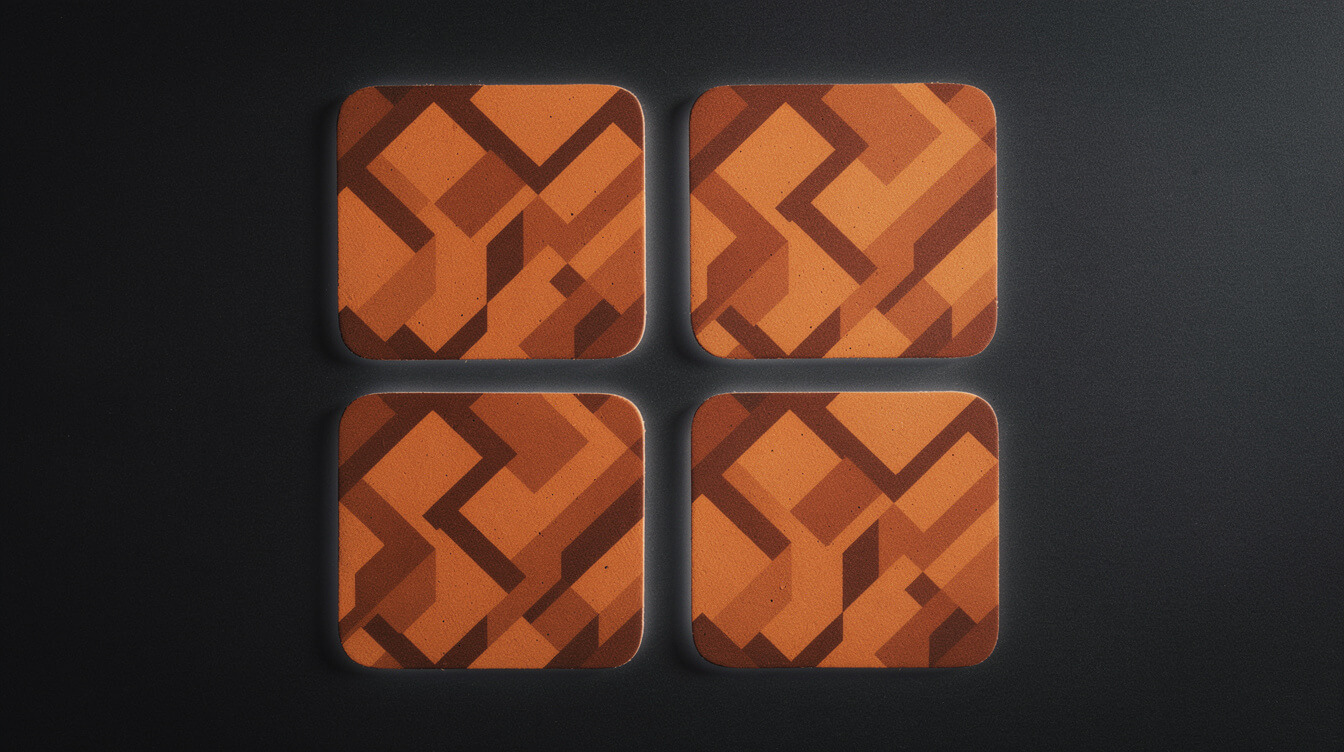
Custom rugs for POD stores: which providers carry sublimated area rugs, the rubber-backed polyester process explained, and the home decor margin math
When you search “custom rug,” every result is a premium consumer retailer. Rugtomize targets corporate logo orders. Stark Carpet courts interior designers. Perfect Rug services homeowners commissioning bespoke sizes. Not one result explains how a POD seller can build a custom rug product line with zero upfront inventory, no minimum order quantity, and gross margins that outperform most apparel categories. This guide fills that gap. Here is everything a POD seller needs to know: which providers carry custom rugs, how the sublimation process works on polyester-backed substrates, what the unit economics look like across size tiers, and which niches drive the highest repeat purchase rates.
Which print-on-demand providers carry custom rugs in 2026
The provider landscape for POD rugs is narrower than for apparel or mugs. Not every platform offers area rugs at no minimum order quantity. Here is the current state of the catalog.
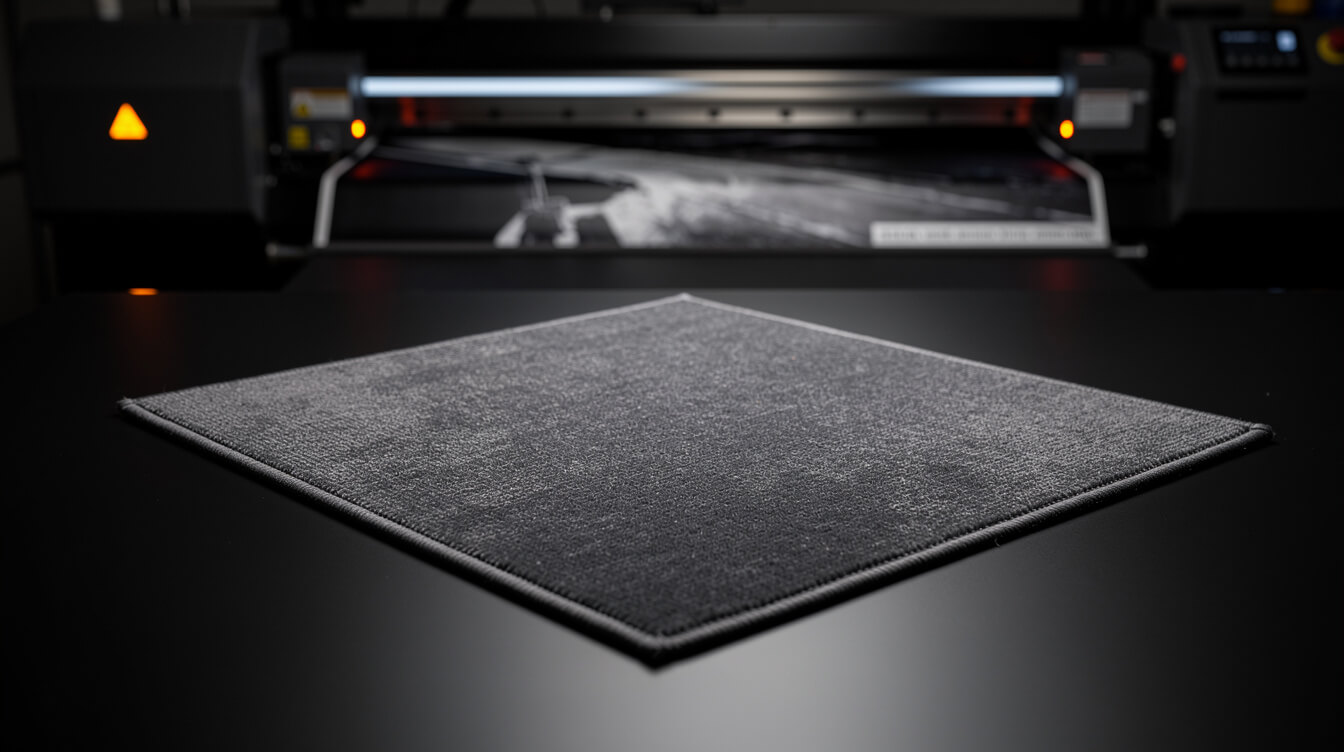
Printful carries sublimated polyester area rugs at no MOQ. Their catalog includes standard sizes in a polyester-face, rubber non-slip-backed construction. Products are fulfilled from US facilities for US orders, keeping delivery times in the 4-7 business day range. Printful’s rug SKUs use the same sublimation pipeline as their yoga mats and mouse pads. The rubber backing is heat-press compatible and holds dimensional stability through production.
Printify has multiple rug vendors in its network. Vendor coverage depends on your region and which printing partners are active in the Printify catalog at the time of listing. Check the Printify product creator directly before building listings — vendor availability changes. Look under “Home & Living → Floor coverings.” Vendors such as Subliminator and AOP+ sometimes carry area rug variants, but availability is not guaranteed across all account regions.
Gooten offers custom floor mats and rugs in their home and lifestyle range. Their catalog skews toward functional entryway-sized mats rather than large decorative area rugs, so confirm your target size is available before building listings.
SPOD carries rug options with US and EU fulfillment. If you are building a store that ships internationally, SPOD is worth checking against their current product catalog for the specific sizes you plan to carry.
Before listing any rug product, always download the provider’s print template for the specific SKU. Template files include the precise bleed zones, resolution requirements, and any print-limited areas around the rubber backing edge. Listing without a provider template is the single most common cause of rejected sublimation rug orders. If you also sell custom doormats, note that POD doormats share the same rubber-backed polyester substrate and nearly identical design constraints — template requirements transfer directly.
How sublimation printing works on rug substrates
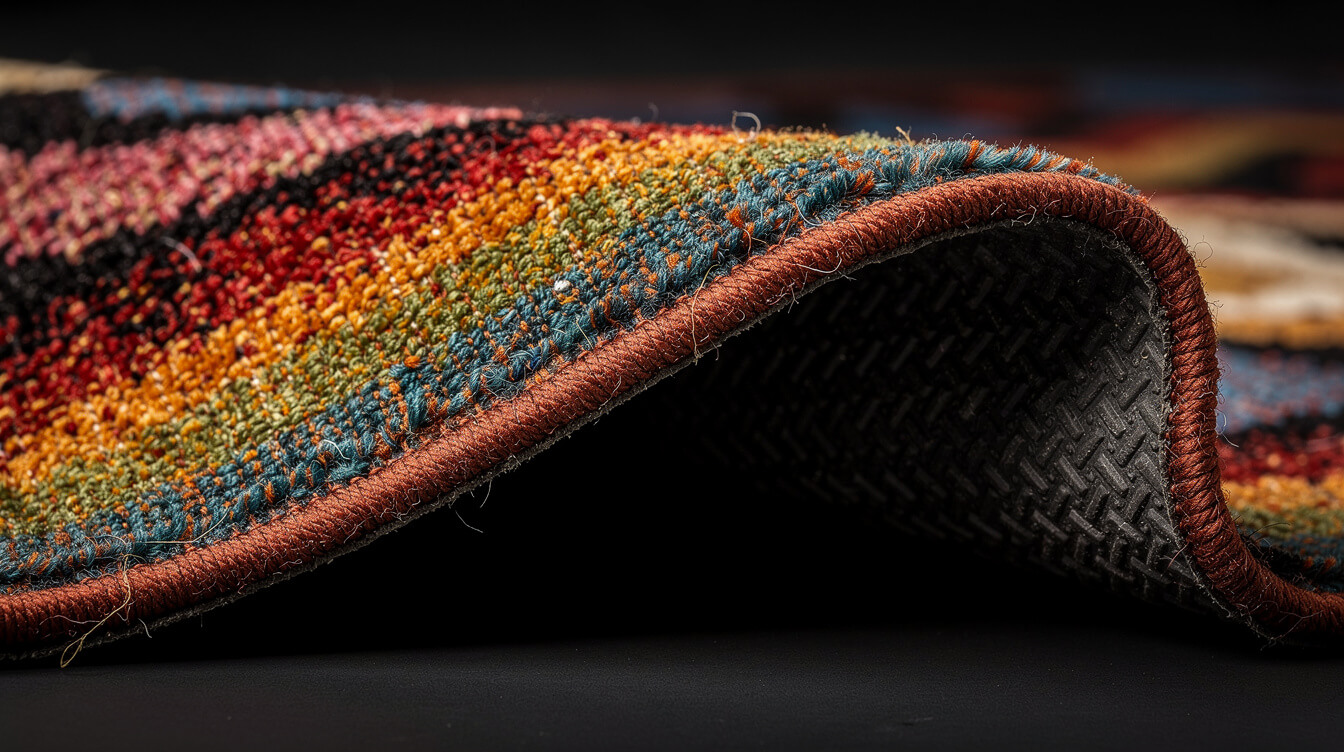
Sublimation is the only practical no-MOQ print method for custom rugs. Understanding why it works requires a quick look at how the process interacts with the substrate.
How sublimation works: Sublimation printing uses heat (typically 370-400°F) and pressure to convert solid dye particles directly into gas. That gas penetrates the polyester fibers at a molecular level and bonds permanently as it cools. The result is a print that is part of the fiber itself, not sitting on top like inkjet or screen print. Sublimation prints do not peel, crack, or fade under normal washing and foot traffic.
Why polyester is required: Sublimation dye bonds only to polyester and other synthetic polymers with compatible molecular structures. A rug face that is 80% polyester or higher accepts sublimation dye consistently. Cotton, wool, jute, and natural fiber rugs cannot be sublimated — the dye has nowhere to bond. This is why POD-compatible custom rugs use woven polyester on the face with rubber non-slip backing, not the luxury wool or natural fiber rugs you see at furniture retailers.
Color and edge behavior: Because sublimation dye converts to gas and diffuses into fibers, colors spread slightly at the edges. Hard geometric edges maintain their shape reasonably well, but fine details under 3mm may soften. Use bold design elements that read clearly from standing height. Photorealistic designs work well at rug scale because you are not asking the printer to hold a 0.5mm detail line — the eye integrates slight softness as part of the textile texture.
White base requirement: Sublimation inks are translucent. They add color to whatever base they land on. POD rug products use a natural white polyester face, which gives you a clean white point to build colors from. Dark rug designs work well — they rely on covering the white base with dense color. AI-generated dark-themed designs are a strong match for this substrate.
Resolution at rug scale: Resolution requirements drop relative to smaller products when you are working at rug dimensions. A 5×7 rug at 150 DPI requires approximately a 7,500×10,500px file. AI-generated art at 2048px wide upscales cleanly to these dimensions using standard interpolation tools. Provider templates define the exact resolution; always follow the template over any rule-of-thumb guidance.
Rug sizes available through POD and which sell best
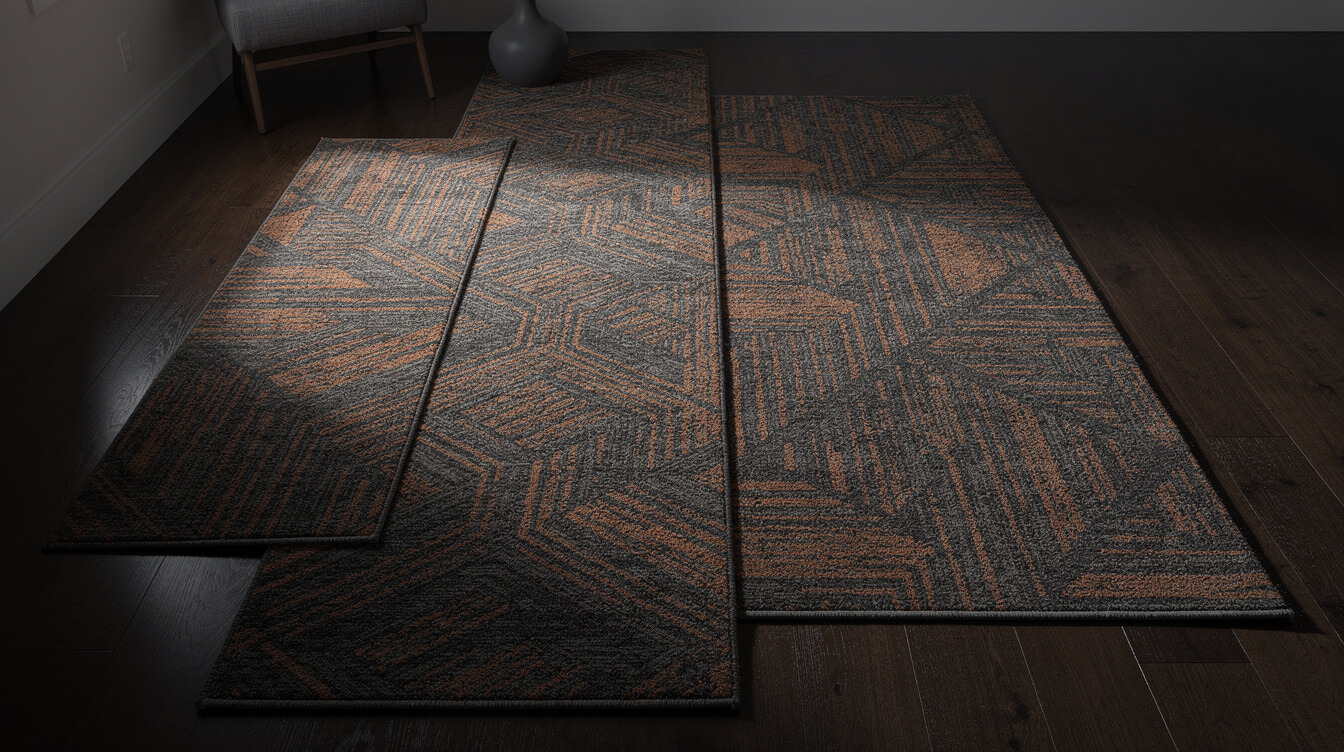
Rug buying decisions are highly size-dependent. Buyers search and browse differently depending on whether they want a small accent piece or a room-anchoring area rug.
Standard POD rug sizes:
- 2×3 feet: Small accent rugs for entryways, bathrooms, and beside coffee tables. Impulse purchase territory. Lower unit cost with lower AOV.
- 4×6 feet: The most versatile POD size. Suitable for offices, guest rooms, and smaller living areas. Large enough to function as a statement piece without requiring the largest shipping format.
- 5×7 feet: The sweet spot for living room and bedroom anchor rugs. High buyer intent. The largest market by search volume in the residential POD rug category.
- 8×10 feet: Full room coverage. Higher unit cost, higher shipping cost, higher retail price, highest AOV. Many POD vendors do not carry this size — verify before listing.
Where to start: The 4×6 and 5×7 are the right entry points for most new POD rug stores. They are large enough to generate meaningful retail prices ($65-95 at standard margins) without the logistics complexity of 8×10. Custom rug buyers in the home decor and gift category tend to browse 4×6 and 5×7 first. Once your store has proven demand, add 2×3 as an impulse upsell (“matching accent rug”) and test 8×10 for your highest-margin designs.
Custom rugs share important demand characteristics with custom canvas prints — both are home decor statement pieces that buyers select for emotional or aesthetic reasons rather than pure utility. The design and niche strategies overlap significantly. If you already carry canvas prints, your existing design library almost certainly contains work that translates directly to rug format.
Custom rug unit cost math: what you actually earn per order

Smash print-on-demand. Join the engine room.
One short email a week. Real numbers, real teardowns, the unfiltered economics behind every move.
Custom rugs are one of the better-margin POD categories because the retail expectation for a custom rug is significantly higher than for a t-shirt or mug. Buyers understand that a custom-printed area rug represents a premium home furnishing, not a commodity item.
Cost breakdown by size:
| Size | Base cost | Shipping (US) | Landed | Retail price | Gross margin |
|---|---|---|---|---|---|
| 2×3 ft | $18-22 | $6-8 | $24-30 | $45-55 | 33-47% |
| 4×6 ft | $25-35 | $8-12 | $33-47 | $65-80 | 35-49% |
| 5×7 ft | $32-42 | $10-15 | $42-57 | $75-95 | 40-56% |
| 8×10 ft | $45-60 | $14-20 | $59-80 | $110-145 | 39-55% |
These are ranges, not guarantees. Actual costs depend on the specific vendor and their current rates. Use your chosen provider’s product cost calculator before setting prices.
Comparison to apparel: A custom t-shirt on Printful runs $14-18 base + $4.50-6 shipping = $18.50-24 landed, retailing at $28-38 for a 23-38% gross margin. At the 5×7 rug tier ($75-95 retail, 40-56% gross), you are earning $30-53 gross per order — that is 2-3x the gross dollar amount per sale compared to a standard tee at the same order volume.
Dollar margin per order: A 45% gross margin on a $80 rug = $36 gross per sale. A 35% gross margin on a $28 tee = $9.80 gross per sale. Even at the same gross percentage, the rug produces 3.7x the gross dollar profit per transaction. At 100 orders per month, a rug store at $80 AOV generates $3,600 monthly gross, compared to $980 monthly gross for a standard tee store at the same order volume. See the wall art comparison at custom poster POD stores for how this dollar-margin math plays out across similar home decor products.
The economics favor building rug SKUs early and aggressively. The design work is comparable to other POD categories. The margin floor is materially higher.
The Shopify 1% override math on rug-level AOV
Shopify charges a 1% platform override on every sale when using third-party payment processors. Most POD sellers know this fee exists. Fewer have calculated what it costs at rug-level AOV, where it becomes structurally more significant than it appears on a per-transaction basis.
At $80 AOV (a typical 5×7 rug retail price):
- 50 orders/month: $40/month = $480/year in override fees alone
- 100 orders/month: $80/month = $960/year
- 200 orders/month: $160/month = $1,920/year
Add the Shopify plan cost ($39-79/month) and a variant management plugin for size options ($29-49/month), and the full-stack annual cost at 100 orders/month on Shopify is approximately $960 (override) + $588 (plan) + $468 (variant app) = $2,016/year.
On WooCommerce, the equivalent structure: $15-30/month hosting + $0 platform override + $0 for native variable products (WooCommerce handles rug size variants natively without a third-party app). Total: $180-360/year.
The difference at 100 orders/month is approximately $1,650/year. At 200 orders/month, that gap exceeds $3,000/year. That is money that at rug margins buys back about 40-80 rug production runs per year — or roughly two months of part-time VA time for product listing and customer service. The 1% is not a rounding error at these AOV levels. It is a structurally larger annual cost than most store owners calculate when they build their initial pricing model.
MEGA automates the rug listing workflow — niche research, design generation, and full WooCommerce product listings — in under seven minutes per product. Try MEGA to see how much of this pipeline runs without manual input.
For the full platform comparison with fee math across five revenue milestones, see WooCommerce vs Shopify for POD sellers.
The best niche verticals for custom rugs in 2026
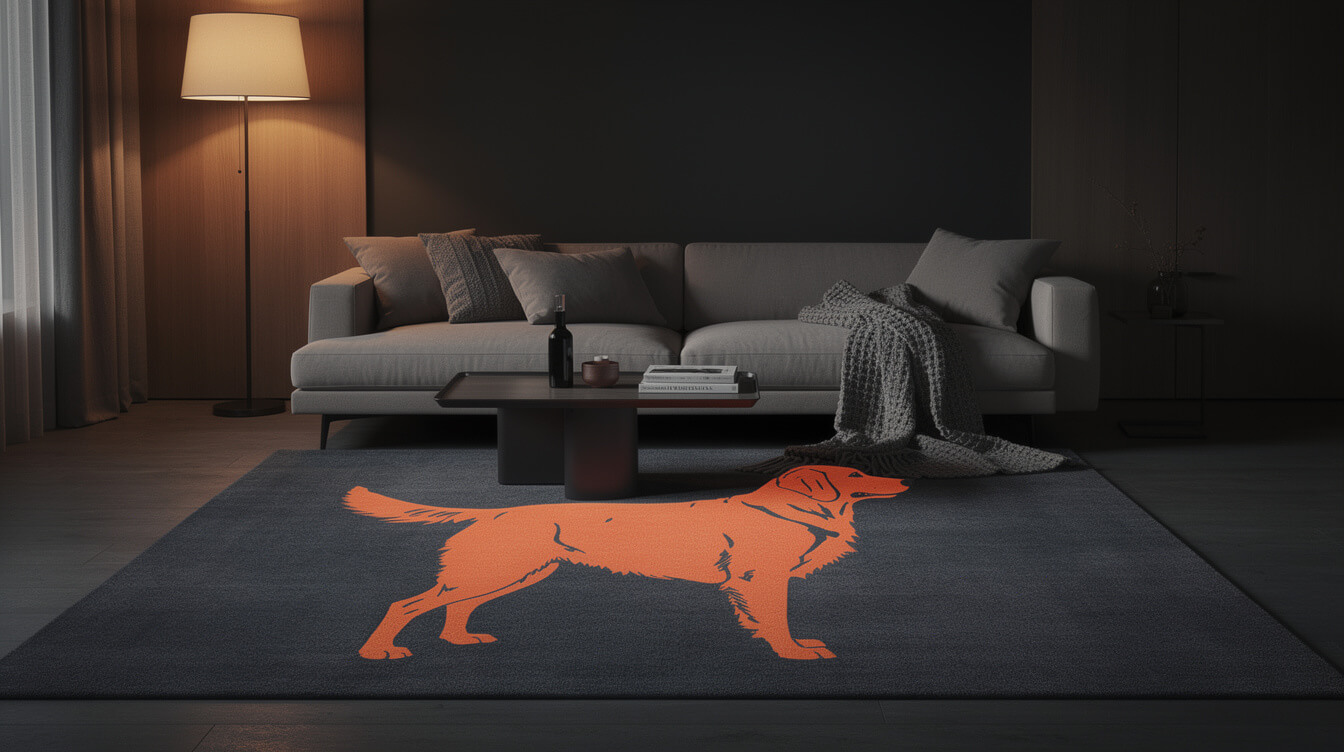
Custom rug buyers split into two distinct groups: functional buyers replacing worn rugs or furnishing a room, and gift or novelty buyers looking for something emotionally resonant. The second group is where POD sellers win, because the design is the product.
Pet portrait rugs: Pet portrait is the highest-converting POD niche for custom rugs. Dog and cat owners buy custom portraits across multiple product categories — mugs, blankets, canvas prints — and rugs are a natural extension of that behavior. A custom rug with a buyer’s dog featured in a bold pattern is a statement piece that gets shared on social media without any prompting. The viral coefficient on pet portrait products is higher than almost any other POD category. Start with popular breed-specific designs (golden retrievers, french bulldogs, border collies) before moving to upload-your-own photo options that require photo upload handling at checkout.
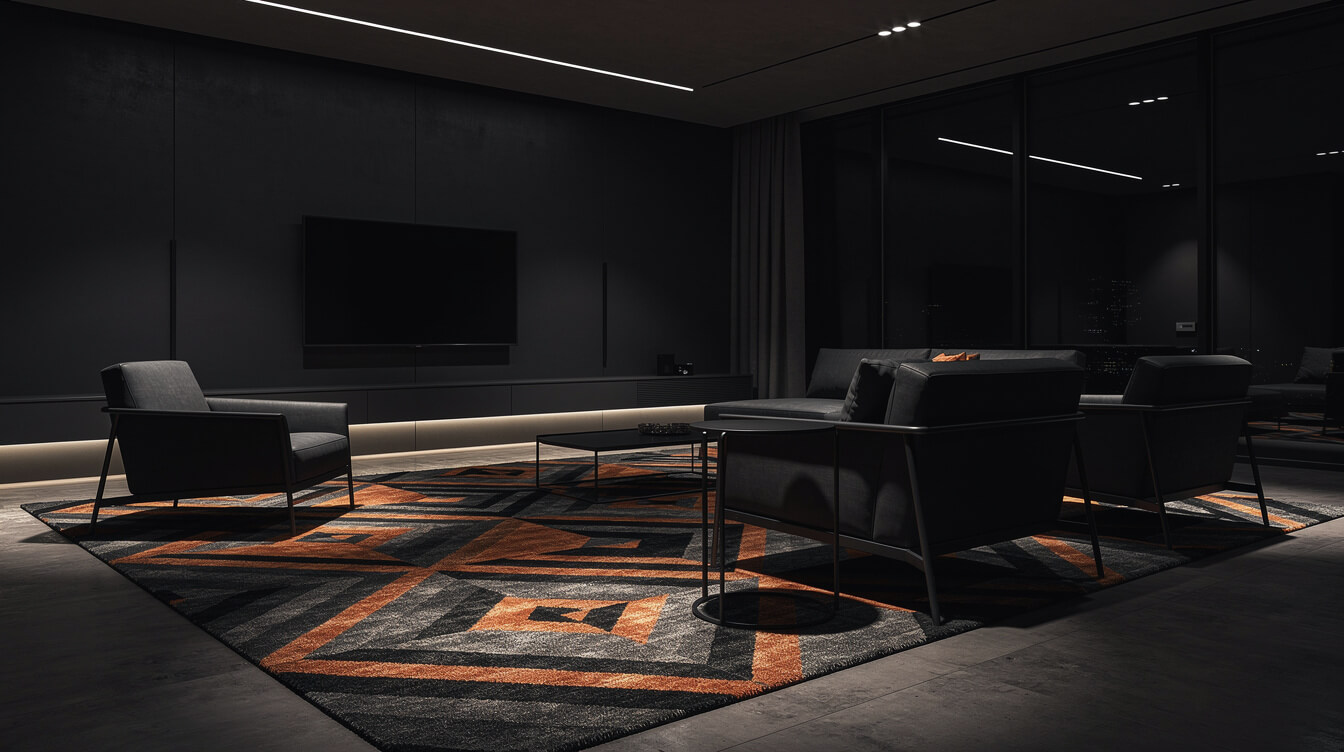
Home gaming and man cave rugs: Buyers building a dedicated gaming setup or home bar often search for custom statement pieces. A rug with a bold geometric or abstract design in dark tones with vibrant accents is a natural fit for this aesthetic. The buyer has already committed thousands to furniture and equipment — an $85 rug is an easy incremental purchase. Dark-themed AI-generated designs at $0.08 per image translate directly to this market.
Sports fan rugs: Team-themed rugs are a long-established market. For POD sellers, the path is original fan art rather than licensed marks. Abstract geometric patterns in team colors, regional design motifs, and stylized mascot-adjacent imagery all work without licensing restrictions. A well-designed original fan art rug at $75-95 competes directly with the $200-400 licensed alternatives at sports retailers.
Boho and Moroccan-inspired AI art: Complex geometric Moroccan tile patterns, mandala motifs, and abstract boho aesthetics are exactly what AI image generation does reliably and cheaply. These designs sell across a wide buyer demographic and have consistent search demand year-round, not just during seasonal peaks.
Baby nursery rugs: Personalized nursery pieces are an emotional purchase at low price sensitivity. A rug with a child’s name embedded in a pastel geometric design sells well in the $65-80 range. Newborn gift buyers are highly motivated and typically purchase without extended comparison shopping.
Seasonal holiday drops: Winter geometric and snowy abstract rug designs work well for October-December. List by early September to allow 4-6 weeks of Google indexing before peak Q4 buyer intent. Seasonal rug designs that reference winter aesthetics without being literally Christmas-specific extend relevance through the full Q4 window. The same design can sell in November and January without feeling dated.
Why WooCommerce is the right platform for a rug POD store
Three WooCommerce structural advantages compound specifically for rug stores, beyond the fee math already covered.
Native variant management for sizes: A rug product typically needs 3-5 size variants (2×3, 4×6, 5×7, 8×10) at different price points. WooCommerce handles this with native variable products. On Shopify, managing multiple size variants at different price points often requires apps like Bold Product Options ($19-49/month). For a five-variant rug product, the native WooCommerce handling saves $228-588/year in app costs before the override is even factored in.
Photo upload for custom designs: Buyers who want their own pet photos or custom artwork need to upload a file at checkout. WooCommerce supports this with native product add-ons fields at no recurring cost. Shopify requires a dedicated personalization app. For a rug store where photo-personalized products drive meaningful revenue — particularly in the pet portrait and nursery segments — this is a $228-588/year recurring cost differential that compounds with every custom order.
Buyer relationship ownership: Every order on WooCommerce lands customer data in your own database: email, purchase history, shipping address. You own the list. This matters more for rugs than for commodity products because rug buyers repeat across related home decor categories. A buyer who purchased a pet portrait rug is an ideal audience for a holiday rug drop, a matching doormat, or a canvas print featuring the same design in a different format. None of that lifecycle value is reachable if the buyer exists only as an order in a platform database you do not fully control.
The owned-data model compounds. Rug buyers who become list subscribers generate incremental revenue through seasonal email drops without paid acquisition cost. At rug AOV levels, a single repeat order from an email subscriber covers the WooCommerce hosting cost for approximately two months. Building on an owned platform is not just a fee argument at the start — it becomes the structural advantage that separates stores with a customer base from stores that re-acquire every buyer through paid channels.
For the complete platform comparison, including fee math at $1k, $3k, $5k, and $10k monthly GMV, see WooCommerce vs Shopify for POD sellers.
The custom rug opportunity in one paragraph
The custom rug category has 18,100 monthly searchers and zero editorial competition. Every top result for this keyword is a consumer retailer. The POD path — sublimated polyester face, rubber non-slip backing, no MOQ from Printful and the Printify network — is invisible in search results. That invisibility is the opportunity. The unit economics make the case clearly: a 5×7 custom rug at $85 retail produces $34-48 gross per order, which is 3-4 times the gross dollar margin per sale compared to a standard tee at the same order volume. The Shopify 1% override at rug AOV compounds to $1,650-3,000 per year in margin that WooCommerce stores do not pay. The niche verticals — pet portrait, gaming aesthetic, fan art, boho AI design, baby nursery — have proven repeat purchase behavior and minimal editorial competition. Start with one or two high-confidence designs on WooCommerce. List the 4×6 and 5×7 sizes first. Use bold, high-contrast AI art at $0.08 per image. The editorial lane is uncontested. The economic case is solid. What comes next is execution.
Implement AI. 30x your throughput. Get a 30-min call with the founder.
Drop your details and book a free 30-minute discovery call. Personalized advice on your POD stack, your margin, and where AI fits. No pitch, no fluff.