Custom notepads for POD stores: which providers carry them, offset printing explained, and the stationery gift margin math
A custom notepad is one of the easiest products to underestimate. Low ticket, light to ship, simple to design. Most POD sellers walk past it. That is a mistake. Gift economy buyers who purchase a custom notepad once come back for teacher gifts, birthday sets, and office accessories. The repeat-purchase flywheel is baked into the product category. This guide covers which print-on-demand providers actually carry notepads in 2026, how digital offset printing works on paper products, what the unit cost math looks like across three bundle scenarios, and why Shopify’s 1% platform override is proportionally most destructive at the $14-18 AOV stationery tier.
Why custom notepads fit a POD store (and which 3 buyer occasions drive consistent demand)
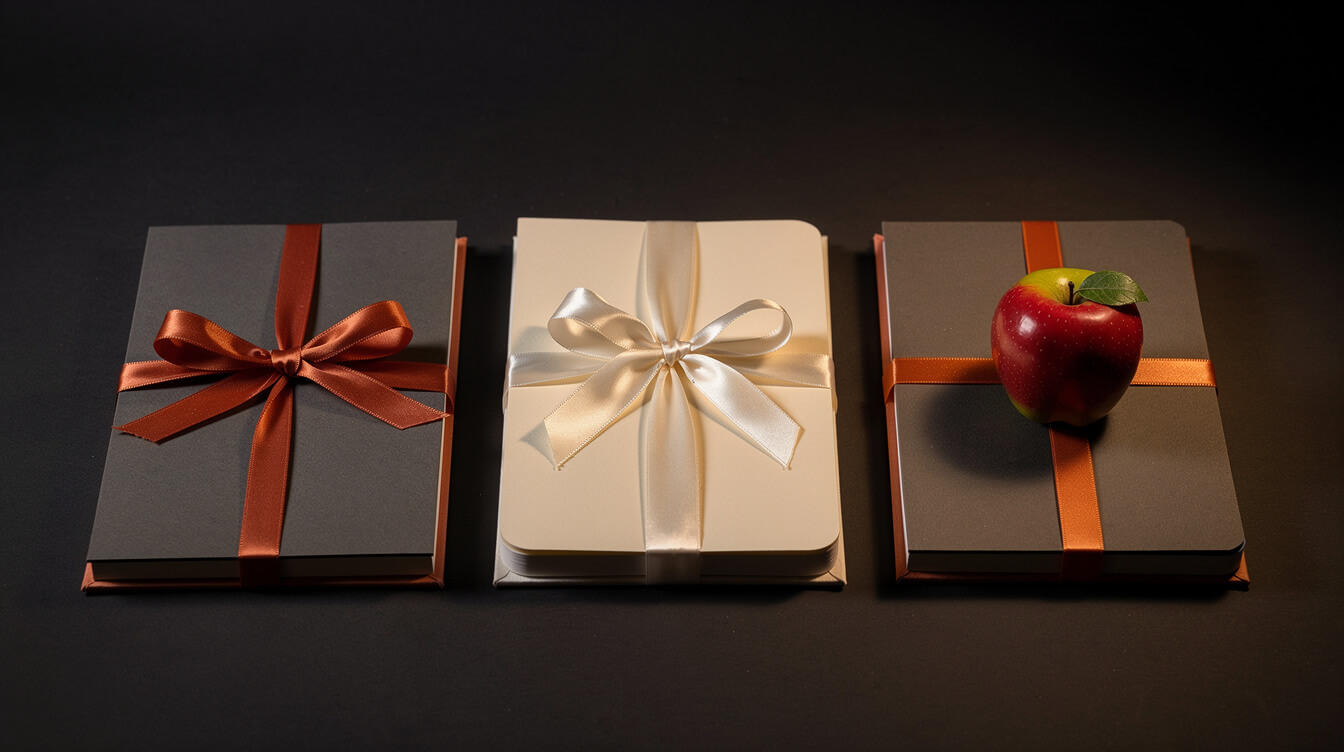
Custom notepads sit in the gift economy, which means buyers approach them with low price resistance and high repeat intent. A mug or canvas print is a one-time purchase. A notepad is something a buyer replaces when it runs out, orders again for next year’s teacher, or buys in a set for a bridal party.
Three buyer occasions consistently drive notepad demand across the calendar year.
Corporate gifting is the first. Companies order employee onboarding kits, client gifts, and conference takeaways. A logo notepad is low cost to produce and high on perceived professionalism. At no minimum order quantity through a POD provider, a WooCommerce store can serve a startup needing 5 notepads as easily as a company needing 50.
Teacher appreciation gifts are the second. The annual demand window is predictable: spring (April-May end-of-year and Teacher Appreciation Week), late August (back-to-school), and December (Christmas gifts from students and parents). A seller who lists a “Best Teacher” notepad in March and a custom name notepad in July captures two distinct demand peaks from the same product.
Wedding and bridal stationery is the third. “Bride to be” notepads, personalized bridesmaid gifts, and custom family name notepads have strong Etsy and Pinterest traction. The AOV on a bridal stationery set (two notepads plus a matching card) runs $42-48, which doubles the gross dollar margin versus a single notepad sale.
These three occasions spread demand across all four quarters. Most POD product categories spike in Q4 and go quiet. Notepads stay relevant year-round.
Which POD providers carry custom notepads in 2026
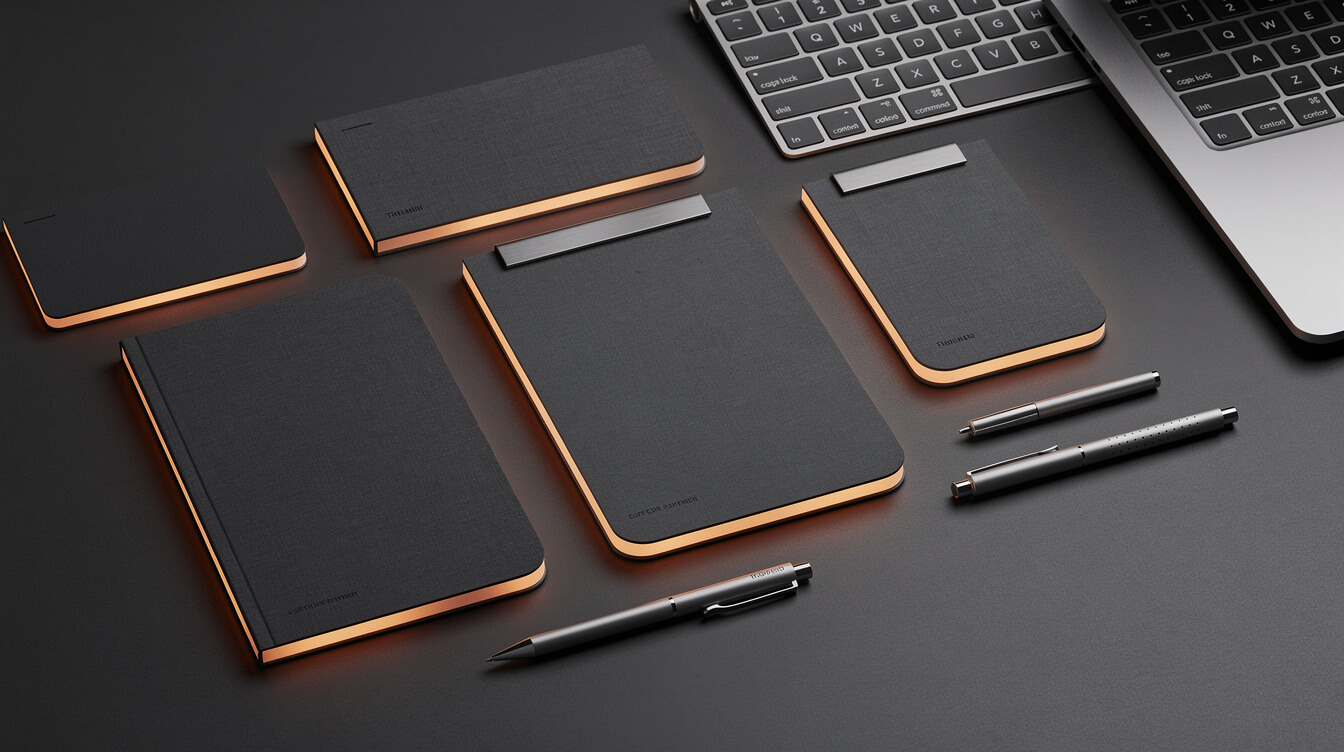
The first thing a POD seller needs to know: Printful does not carry custom notepads in its standard catalog. Printful’s paper product range focuses on canvas prints and posters, not stationery. If your current POD stack is Printful-only, you need a second fulfillment partner for this product category.
Printify’s network is the primary path to custom notepads at no minimum order quantity. Several US and EU vendors in the Printify network carry wire-bound and glue-bound notepads across standard sizes. Availability varies by region and by vendor, so open the product creator and search for “notepad” before building your listing. Verify shipping costs to your target markets before going live.
Gelato carries editorial notepad options and ships from local production hubs. For sellers with a meaningful European customer base, Gelato’s regional fulfillment often cuts shipping time and cost significantly compared to a US-only fulfillment partner. If you serve both US and EU markets, Gelato is worth evaluating alongside Printify’s network.
Gooten carries notepads and notepads with custom covers. Gooten’s print network is smaller than Printify’s, but it has earned a reputation for reliable production lead times. For a product category where customers expect quick turnaround on a low-ticket item, that reliability matters.
All three operate on a true print-on-demand model: zero inventory risk, zero minimum order, no upfront stock commitment. You design once. The vendor prints and ships per individual customer order. The only upfront cost is the time to build the listing.
Digital offset printing for paper: not sublimation, not DTG
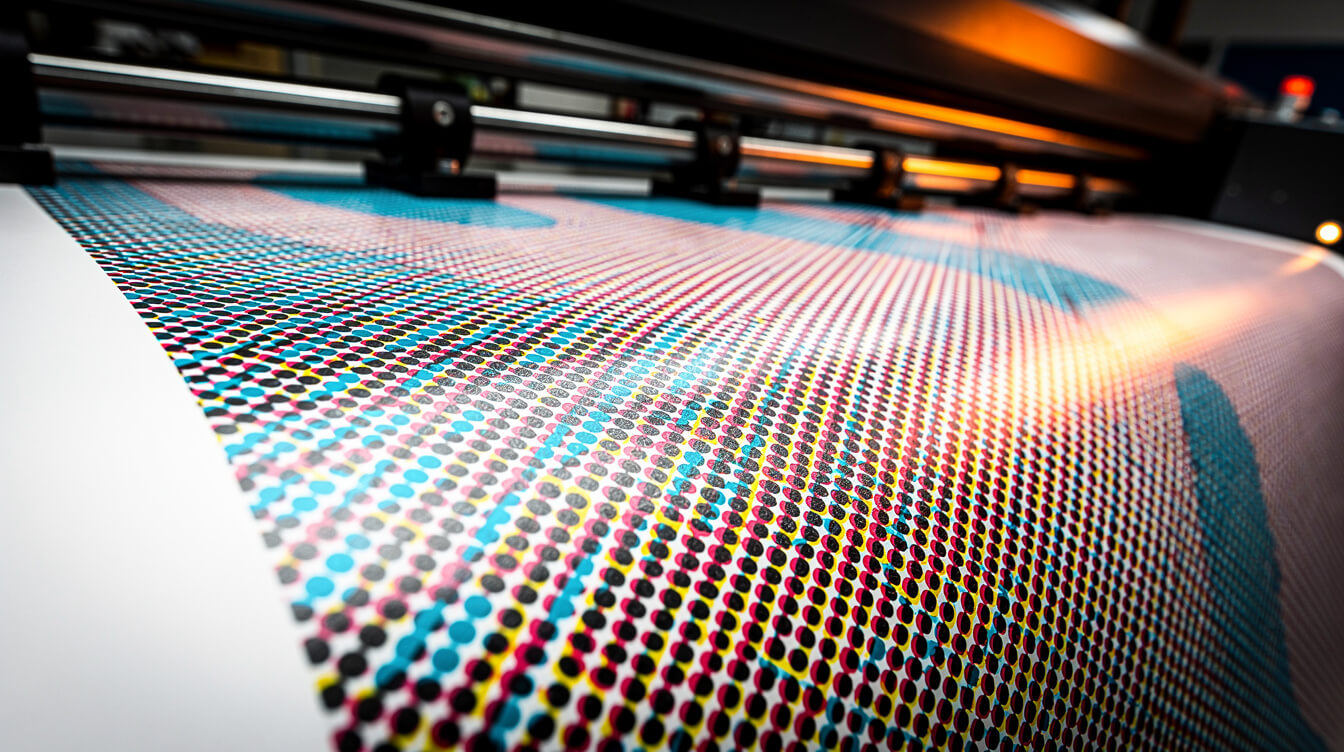
Sellers who come from the garment POD world often assume all print-on-demand products use the same technology. They do not. Sublimation requires a polyester substrate. Direct-to-garment (DTG) printing requires a fabric surface. Paper cannot be sublimated and cannot be DTG-printed.
Custom notepads are produced via digital offset printing. The press applies CMYK ink directly to the paper stock. There is no heat transfer, no dye sublimation, and no adhesive transfer involved. The result is sharp, reproducible color across the full print surface.
Three design rules follow from this process.
Work in CMYK, not RGB. RGB is the color model screens use. Offset printing works in CMYK. The same file that looks vibrant on your monitor may shift in color on press if it is not converted to CMYK before upload. Most design tools (Adobe Illustrator, Photoshop, Canva Pro) allow you to set up a document in CMYK mode before you start. Do it at the beginning of the project, not as an afterthought.
Set your resolution correctly. The standard minimum for offset paper printing is 150 DPI at final print size. 300 DPI is better for photo elements. A 5.5 x 8.5 inch notepad page at 300 DPI requires a file that is 1,650 x 2,550 pixels. If your design source is AI-generated, export at the highest available resolution before uploading to your POD vendor.
Add bleed. Most notepad vendors require 0.125 inches of bleed on all edges. Bleed is the zone outside your design that gets trimmed during cutting. If your background color stops exactly at the edge of your intended print area, a 1mm shift in the trim line leaves a white strip. Extend your background color into the bleed zone. Your vendor’s template will specify the exact requirement.
Once the file is set up correctly, digital offset printing on paper is highly consistent. Unlike DTG, which can vary slightly between fabric batches, digital offset on a controlled paper stock reproduces your design accurately at run lengths of one.
Notepad specs sellers need to know before listing

Smash print-on-demand. Join the engine room.
One short email a week. Real numbers, real teardowns, the unfiltered economics behind every move.
Choosing the right specifications at the listing stage prevents costly surprises after your first order. Here are the decisions that matter.
Size: The three standard sizes that cover 90% of the market are 4 x 5.5 inches (half letter, impulse gift price point), 5.5 x 8.5 inches (half sheet, the most popular general-use size), and 8.5 x 11 inches (full letter, for professional use and desk pads). The half-sheet is the best starting point for most POD sellers. It is large enough to be useful, small enough to keep the base cost low, and fits easily in standard gift bags.
Sheet count: POD vendors typically offer 25, 50, and 100 sheets per pad. The 50-sheet option is the standard retail configuration. A 25-sheet notepad feels thin and underpriced. A 100-sheet pad increases the base cost and shipping weight significantly. Start with 50 sheets.
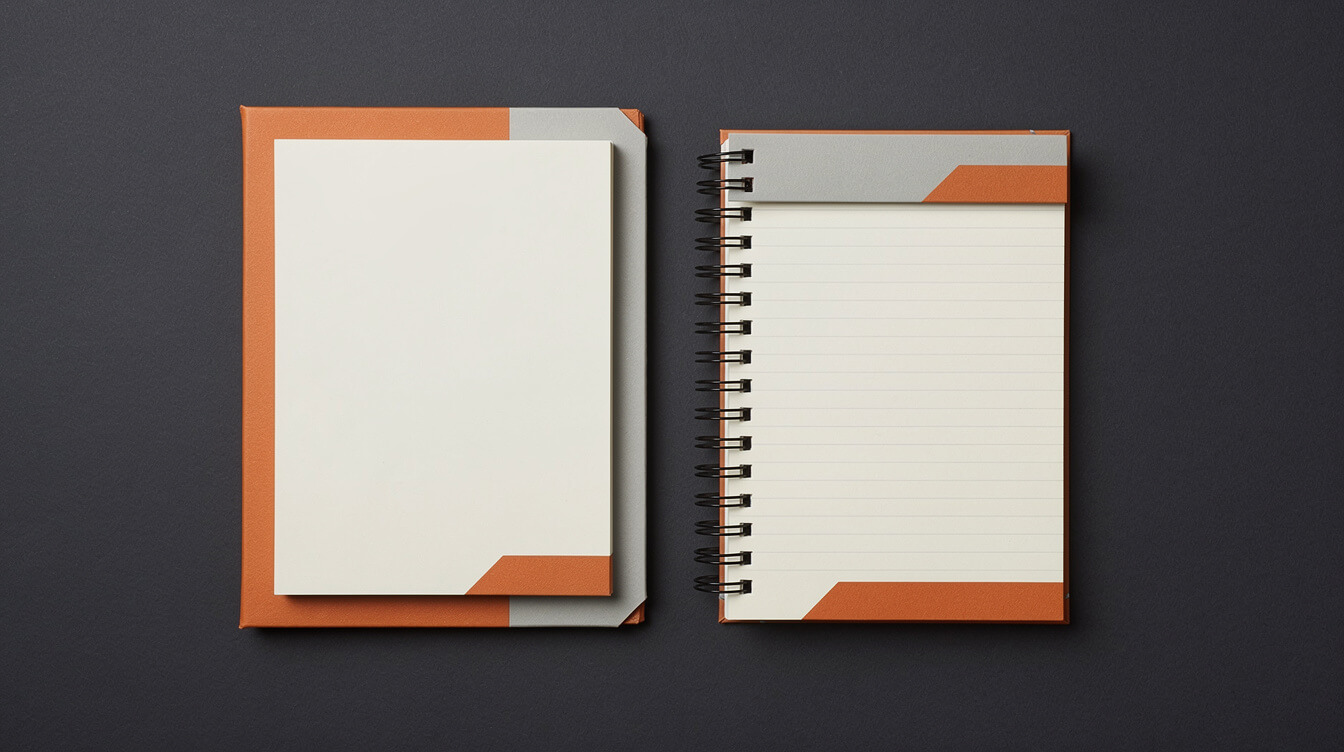
Binding type: Glue-bound pads (where sheets are bound along one edge with a strong adhesive) are the most common and least expensive option. Wire-o binding adds a spiral wire that allows the notepad to lay flat when open. Wire-o adds cost but increases perceived quality and commands a higher retail price. Chipboard backing adds structural rigidity, which matters for desk use.
Paper weight: 60 lb text stock is standard. 70 lb stock feels meaningfully heavier without a large cost increase. If your vendor offers 70 lb as an option, it is worth the small premium for premium gift positioning.
The combination that works for most POD sellers starting in this category: 5.5 x 8.5 inch, 50 sheets, glue-bound, 60 lb text stock, single-sided. That is the specification to set up your first listing against.
Custom notepad unit cost math: $5-8 base, $14-18 retail
The unit economics on custom notepads are tighter than most POD product categories. That is not a problem if you understand it going in. The margin structure rewards bundling.
A single 5.5 x 8.5 inch, 50-sheet, glue-bound notepad runs approximately $5-7 in base production cost through Printify’s network. Add $3.50-4.50 in shipping for a US buyer. Total landed cost: $8.50-11.50 per unit.
At a retail price of $16-18, the gross margin on a single notepad is 30-38%. In dollar terms, that is $4.50-9.50 gross per sale. Respectable for a $16 ticket item, but not the headline number of this category.
The multiplier is bundling. A 3-pack notepad set at $38 retail costs roughly $25 landed (three units plus modest shipping savings on combined weight). Gross margin on the bundle: 34%. Gross dollar margin per transaction: $13. That is nearly 3 times the dollar margin of a single unit sale at nearly the same gross percentage.
The highest AOV configuration is a personalized notepad set: two pads plus a matching notecard. At $42-48 retail with a $26-32 landed cost, this generates $14-18 gross per transaction. That is comparable to a custom mug in dollar terms, on a product with a lower purchase hesitation threshold.
The research-to-listing pipeline is where most of the time cost in this category lives. Designing unique notepad covers, setting up variant listings for size and quantity, and writing SEO-optimized product descriptions for multiple configurations adds up fast at manual Canva pace. MEGA automates the design and listing step entirely, cutting notepad product setup from 90+ minutes per design to 7 minutes end-to-end.
30x your stationery listing throughput. Build your notepad catalog in 7 minutes.
MEGA’s research-to-product pipeline generates unique notepad cover designs, sets up WooCommerce variants, and publishes listings to Printify end to end. No Canva workflow. No 90-minute manual setup.
The Shopify 1% fee math at $14-18 AOV
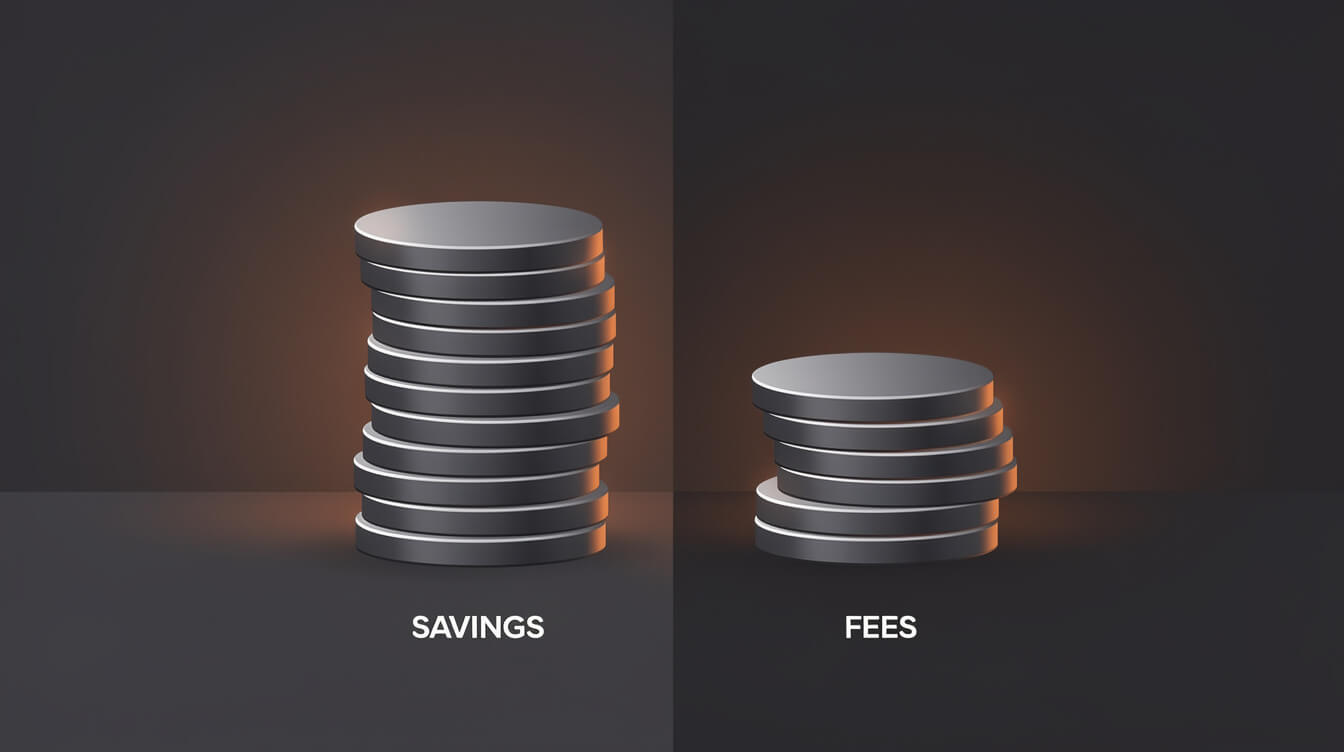
Shopify’s 1% platform override fee is a flat tax on gross revenue. At a $65 wall art AOV, 1% is $0.65 per order. Annoying but manageable. At a $16 notepad AOV, 1% is $0.16 per order. That sounds small until you run the annual math.
A notepad store doing 200 orders per month at $16 AOV generates $38,400 in annual revenue. Shopify’s 1% override on that volume is $384 per year in pure margin erosion. Add Shopify’s Basic plan ($228/year), the personalization app needed to handle custom names and messages ($228-588/year), and total Shopify overhead sits at $840-1,200 per year.
The 3-pack bundle changes the AOV but not the direction. At $38 AOV, 200 orders per month, Shopify’s 1% override alone is $912 per year.
WooCommerce costs $15-30 per month in hosting. Total annual overhead: $180-360. There is no transaction fee. WooCommerce’s native product add-ons handle custom name text fields for notepads at zero additional monthly cost. That is the $228-588 personalization app line item eliminated.
The break-even point is low. A notepad store doing 15 or more orders per month covers WooCommerce hosting. Any store doing 30 or more monthly orders saves money versus Shopify’s full fee stack. The savings compound as volume grows.
For the full fee comparison across $1,000, $3,000, $5,000, and $10,000 monthly GMV milestones, the WooCommerce vs. Shopify breakdown for POD sellers runs the numbers by platform, plan tier, and product category.
Top niche verticals for custom notepad stores
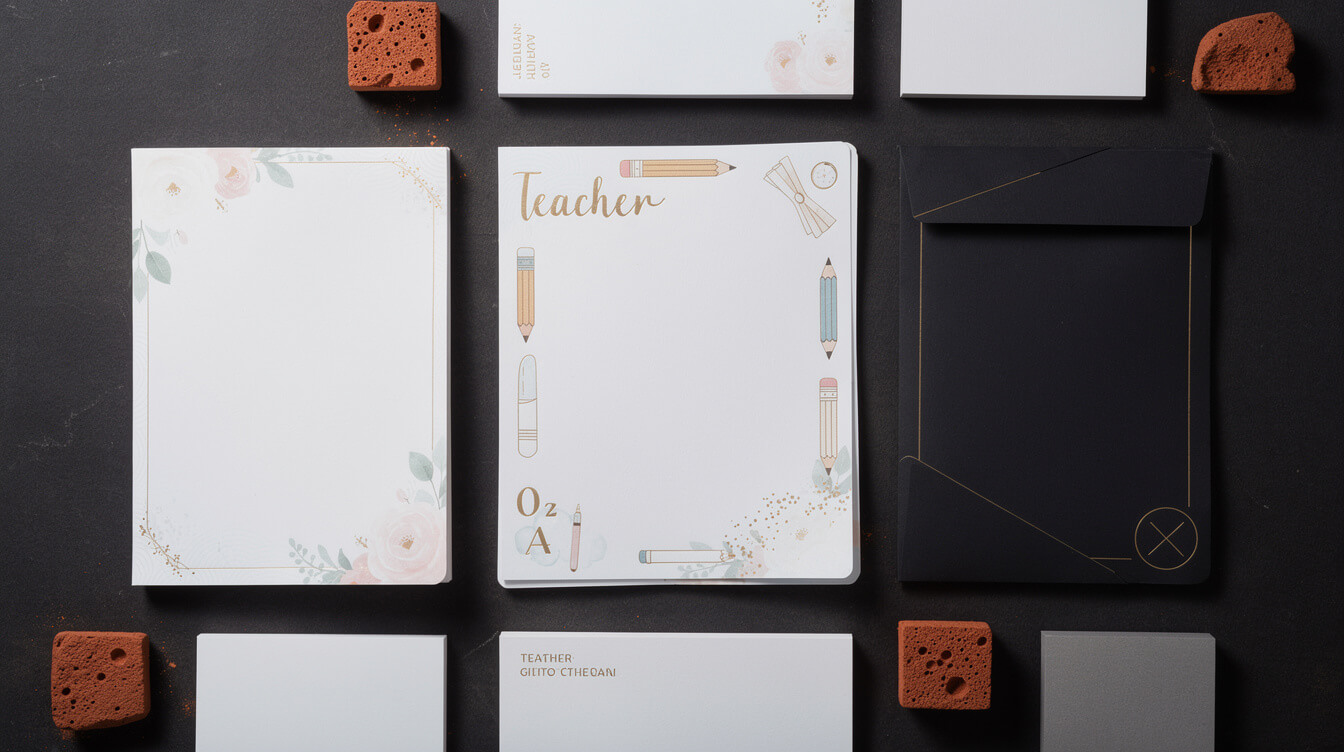
Teacher gifts are the highest-repeat niche in the category. A parent who buys a “Best Teacher” notepad in May is likely the same parent who buys a personalized name notepad in December. The seasonal cadence is built-in: April-May (Teacher Appreciation Week and end-of-year), late August (back-to-school), and December (Christmas gifts from students and parents). A single teacher gift notepad listing, well-optimized for gift search intent, serves three demand windows from one product page.
Office and WFH décor buyers treat notepads as desk accessories, not just writing tools. A “Daily To-Do” notepad with a clean dark aesthetic, a “Focus Mode” productivity pad, or a company-branded notepad for remote teams performs well in this segment. Corporate gifting and individual consumer purchase intent overlap here. The AOV stretches to $28-35 when the buyer perceives the notepad as a functional desk piece rather than a generic gift.
Bridal and wedding stationery buyers have a predictable timeline and higher spend per transaction. A bride in the planning phase shops for bridal party gifts 4-8 months before the wedding. A “Maid of Honor” notepad, a “Bride Squad” planning pad, or a monogram notepad gift set positions your store in a high-intent search segment. The custom wrapping paper guide covers the adjacent gift packaging opportunity for bridal sellers.
Journaling and planner communities are active and discover new stationery products constantly. A ruled notepad with a minimal dark design, positioned as a daily habit tracker or weekly review template, fits naturally into this audience’s workflow. Reddit’s bullet journal communities and Instagram’s planning ecosystem are good organic discovery channels for a well-designed notepad SKU.
Children and back-to-school buyers purchase personalized name notepads for homework pads, reading logs, and classroom stationery. The name personalization is the core value proposition here. WooCommerce’s native text field handles it without a third-party app. Compare that to Shopify’s $19-49 per month personalization apps, which add overhead that makes low-AOV children’s products less viable on that platform.
For the paper product category broadly, the custom sticker sheet guide covers a complementary low-AOV stationery product that bundles well with notepads in the gift market. For the broader stationery cluster, the custom calendar guide covers the seasonal opportunity in the same gift economy.
Conclusion: why notepads belong in your POD store’s catalog
Three things make custom notepads worth adding to a POD store this quarter.
First, the SERP is uncontested from an editorial perspective. Every current search result for “custom notepad” is a B2C product page or a corporate bulk supplier. There is no POD seller economics guide. That gap is a traffic opportunity.
Second, the product has built-in repeat purchase behavior. Buyers who find a notepad shop they trust come back for teacher gifts, office supplies, and seasonal gift sets. The customer lifetime value math on a $16 product is better than it looks on a single-unit basis.
Third, the economics of running a notepad store work better on WooCommerce than on Shopify. At $14-18 AOV, Shopify’s 1% platform override, personalization app overhead, and base plan cost combine to compress margins on an already thin-margin product. WooCommerce’s fixed cost structure protects gross margin from the first order to the ten thousandth.
The setup path is straightforward. Open Printify, search for notepads, verify your preferred vendor’s US and EU shipping costs, design a half-sheet 50-page glue-bound pad at 5.5 x 8.5 inches in CMYK at 300 DPI, and list it in your WooCommerce store with a native text field for personalization. Add a 3-pack bundle listing at $38 on day two. The stationery gift market does not need to carry your store’s revenue by itself. A custom notepad listing that generates 20-30 orders per month from the teacher gift search window alone is a meaningful margin contributor at zero inventory risk.
Implement AI. 30x your throughput. Get a 30-min call with the founder.
Drop your details and book a free 30-minute discovery call. Personalized advice on your POD stack, your margin, and where AI fits. No pitch, no fluff.