Custom bandanas for POD stores: which providers support them, print methods explained, and the unit cost reality
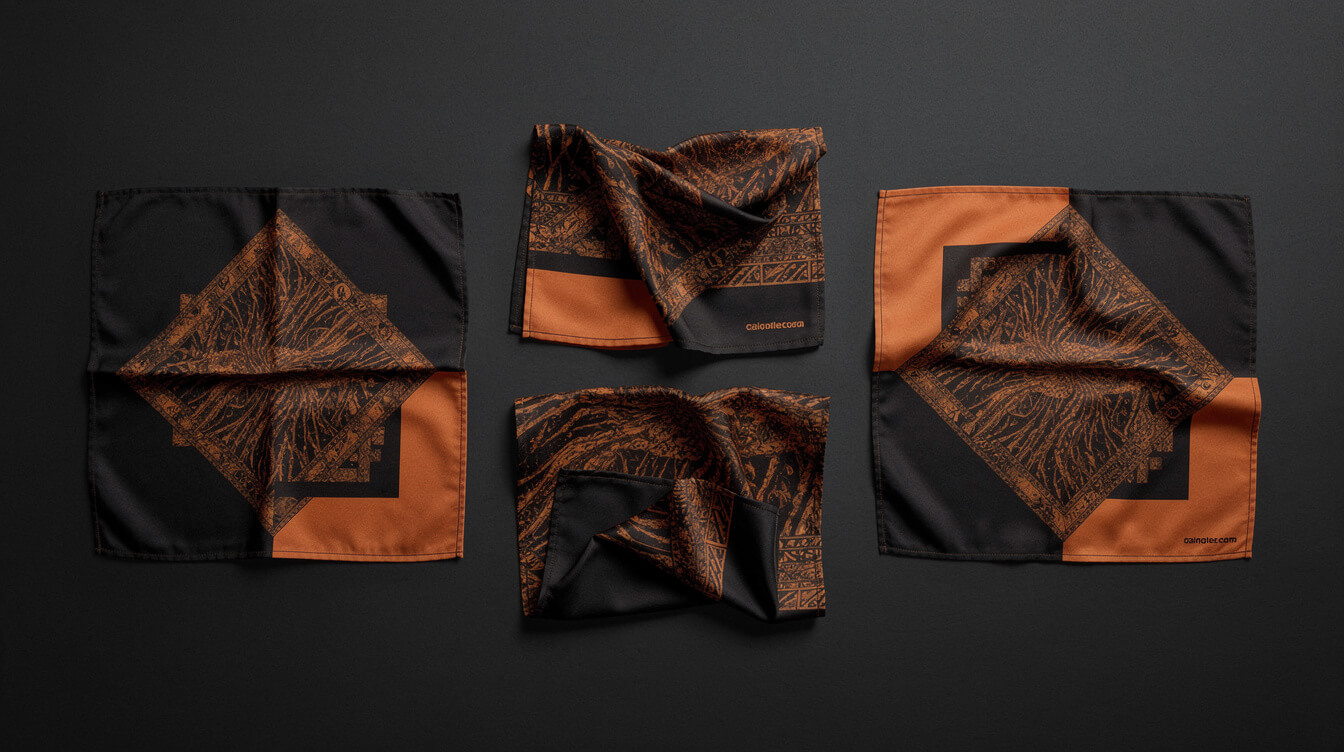
If you have browsed the custom bandana market online, you have noticed something odd: every result is a B2B promo vendor pitching 144-piece minimums to event planners and corporate HR teams. There is almost nothing for the independent POD seller who wants to list a custom bandana in their WooCommerce store and ship single units on demand. That gap is real, and it is worth understanding before you assume bandanas are off-limits for a no-inventory print-on-demand business. This guide covers which POD providers actually carry custom bandanas, what sublimation versus screen printing means for your designs, and what the margin looks like at $18-28 retail.
Why custom bandanas are an underrated no-minimum POD product
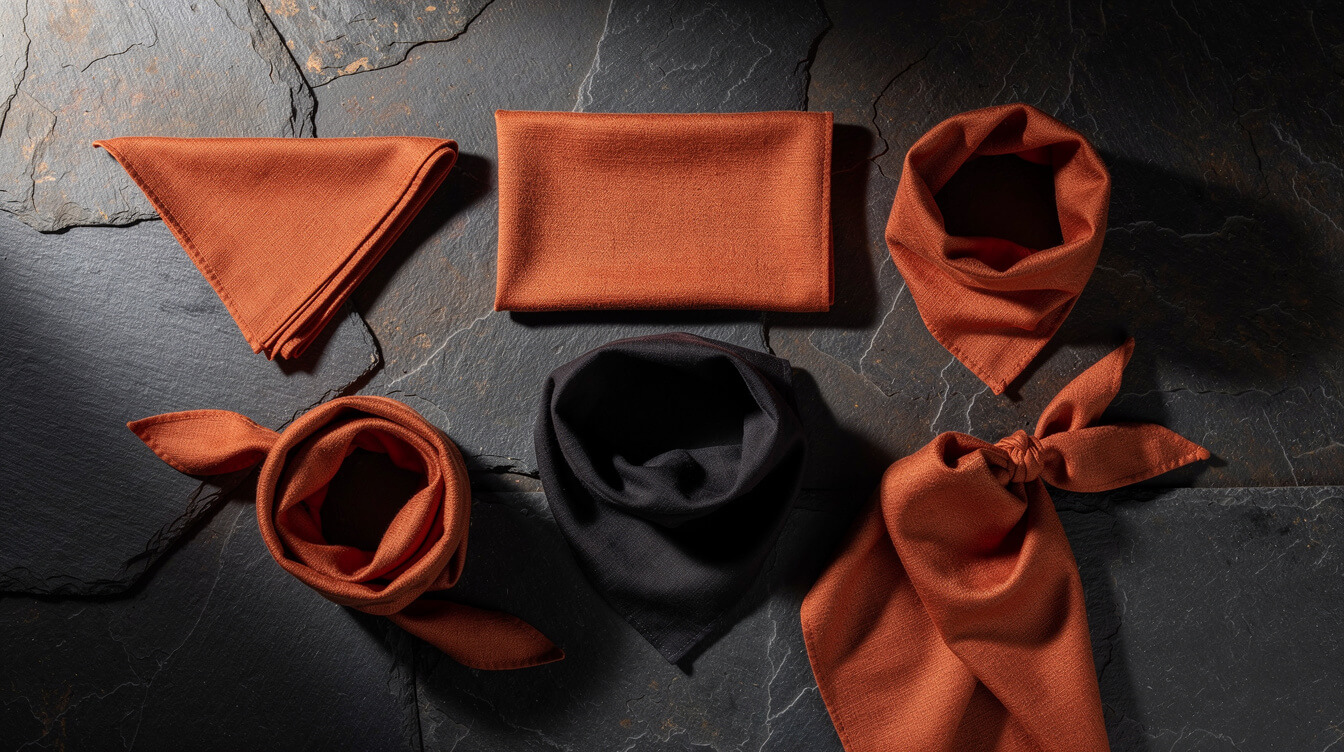
The accessories category gets far less attention than t-shirts and hoodies, but it has real advantages. Bandanas ship flat. They weigh almost nothing. They require no sizing variants. And a 22-inch square of polyester has more usable print surface than the front of a standard tee.
The market signal is there. “Custom bandana” pulls 5,400 searches per month with a keyword difficulty of zero. That is an unusual combination: meaningful search volume, no editorial competition. The first page of results is wall-to-wall event suppliers targeting bulk buyers. Not one result speaks to the POD seller asking: can I list a bandana in my store and fulfill one unit at a time?
The answer is yes. Both Printful and Printify carry custom bandanas with no minimum order quantity. That means you can test the product with zero inventory risk, run a single sale to see if your niche responds, and scale only when the data supports it.
The standard size for a POD bandana is 22 x 22 inches for the square format, with some providers also offering 21 x 21 or 20 x 20. All-over print coverage means your design fills the entire surface, edge to edge. That is a meaningful difference from apparel, where a chest print is 12 x 14 inches on a much larger surface. On a bandana, the design is the product.
Low weight also means low shipping cost. A bandana typically ships in a poly mailer for $3.50-4.50 domestic. That keeps your landed cost lean, which matters when your retail price sits at $18-28. Bandanas also have zero sizing returns, which is a structural advantage over apparel where 15-25% of orders generate an exchange request.
Which POD providers carry custom bandanas
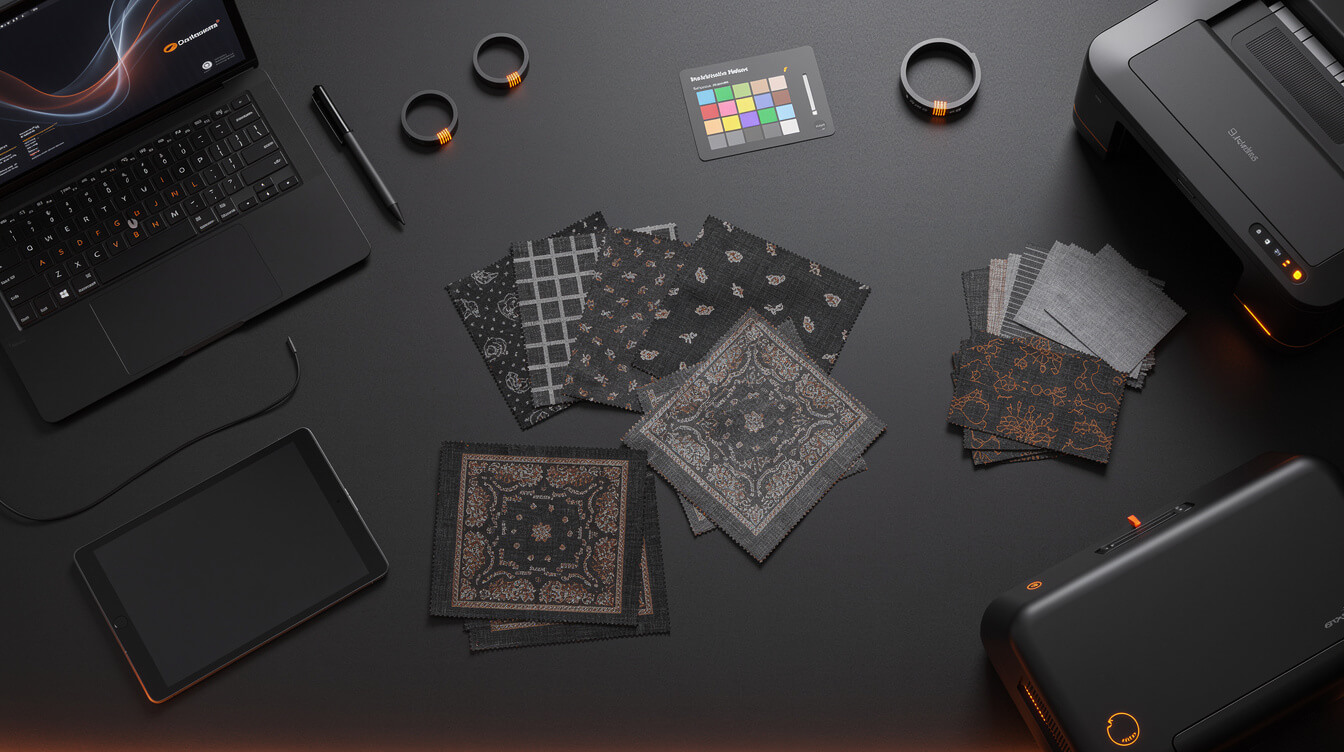
Printful carries sublimated all-over-print bandanas as a standard catalog item. The product uses a 100% polyester construction, which is required for sublimation dye bonding. The print covers the full surface with no white border or margin. Printful’s fulfillment network handles single units with no setup fee or minimum, and the product ships from their US, EU, and MX fulfillment centers depending on where your buyer is located.
Printify’s provider network includes vendors with custom bandana options. The specific vendor and product specs vary by region, so confirm availability in Printify’s product creator before building a store around it. Some vendors in the Printify network carry both square bandanas and rectangular neckerchief formats, giving you slightly more format variety than Printful’s catalog.
SPOD (Spreadshirt) is a third option worth checking. They carry sublimated bandanas and are known for a 48-hour production guarantee on standard items, which can be a strong selling point if your audience skews toward event-driven or last-minute purchases.
For sellers who want to offer branded bandanas as inserts with a larger order, or who want to go outside the standard POD network for higher volumes, Printify’s premium plan gives you access to lower base costs once your volume justifies the monthly fee.
None of these providers carry cotton bandanas in the traditional western or workwear sense. Standard cotton bandanas cannot be sublimated, which rules out the full-color edge-to-edge print that makes the product commercially viable at a single-unit price point. If your niche genuinely requires cotton, you are looking at screen printing with a minimum order, which moves you outside the no-minimum POD model entirely.
Sublimation vs screen printing vs DTG: what the print method means for custom bandana quality
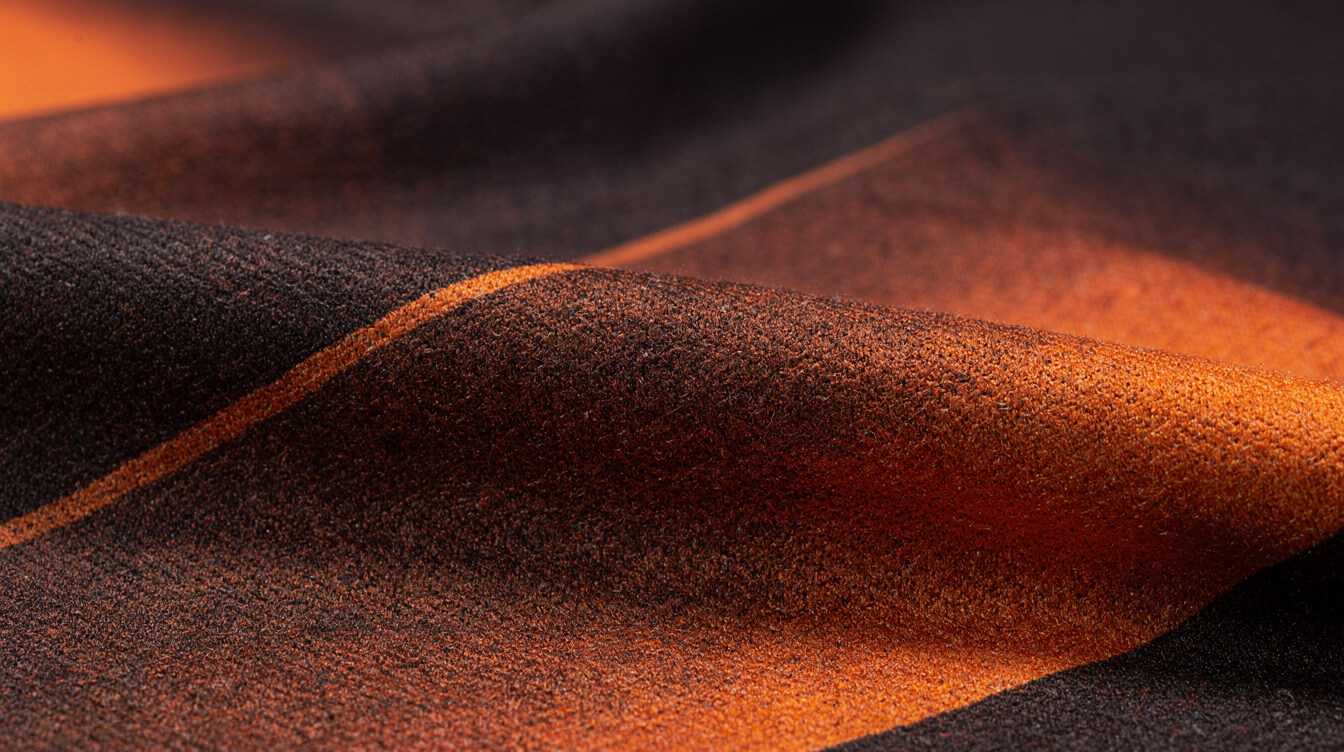
Sublimation is the only method that delivers full-coverage, photographic-quality print on a bandana with no minimum order. The process uses heat and pressure to bond dye directly into polyester fibers at the molecular level. The result is a print that does not sit on top of the fabric. It will not crack, peel, or fade the way a screen print can after repeated washing, because the color is part of the fiber rather than a layer applied to it.
Because the dye bonds into the fiber itself, the color achieves a vibrancy that other methods cannot match on polyester. Gradient transitions and complex photographic designs reproduce accurately across the full 22-inch surface. This matters for bandana designs that feature pet portraits, landscape photography, or detailed illustrations where edge detail and tonal range are part of the product’s appeal.
The constraint is substrate. Sublimation only bonds to polyester. A bandana with less than 80% polyester content produces a washed-out, faded print because the dye has insufficient polyester fiber to bond with. Every bandana from Printful and the standard Printify vendor options uses 100% polyester, which is why you get full vibrancy on those products. You can read more about how sublimation behaves on different fabric types in the custom sportswear guide, where the performance fabric rules apply in similar ways.
Screen printing is a different method with a different trade-off. You get excellent opacity on any fabric, including cotton, but you need a minimum order to amortize the screen setup cost. Most screen printers start at 12-24 pieces per design and charge a setup fee for each color. A 4-color design on 24 bandanas could carry $60-80 in setup fees before you see a single sellable unit. That model does not work for a test-first, scale-when-proven approach.
DTG (direct-to-garment) printing uses inkjet technology to print directly onto fabric. It works on cotton and is common on t-shirts, but it is poorly suited for bandanas. DTG produces lower vibrancy on polyester, requires pre-treatment on any fabric that is not white, and does not offer edge-to-edge coverage. The cost per unit for DTG does not improve the economics of a low-AOV bandana the way sublimation does.
The practical conclusion: if you want to run a no-minimum custom bandana product on a POD fulfillment model, sublimation on 100% polyester is the only method that works. It is also the method that produces the best visual result for full-coverage designs. Similar to how custom baseball jerseys rely on AOP sublimation for full-panel print coverage, bandanas require the same substrate and method to achieve the design quality buyers expect.
Unit cost math: 1 unit, 10 units, 50 units and the margin at $18-28 retail

Smash print-on-demand. Join the engine room.
One short email a week. Real numbers, real teardowns, the unfiltered economics behind every move.
Here are the numbers at standard POD pricing.
At Printful, a sublimated bandana has a base cost of approximately $8.95 before shipping. Domestic shipping in a poly mailer runs $3.50-4.50. That puts your landed cost at $12.45-13.45 for a single unit shipped to a US buyer.
Retail pricing at $18 yields a gross margin of $4.55-5.55, which is 25-31%. That is thin. Retail pricing at $24 yields $10.55-11.55, which is 44-48%. The pricing decision matters more on bandanas than on a hoodie, where a $5 swing in retail is less proportional to the base cost. At Printify, vendor pricing varies, but comparable products typically come in at $7.50-9.50 base cost, with a similar margin profile at $22-26 retail.
At 10 units per month, your monthly landed cost on bandanas runs $124-135. At 50 units, $622-672. The base cost does not improve with volume on a standard POD plan, unlike a direct manufacturer where you see tiered pricing starting at 25-50 units. POD’s value is not volume discounts; it is zero upfront capital and zero inventory risk.
The bundle strategy improves the economics materially. Selling a 3-pack of bandanas at $49 instead of individual units at $22 pushes your AOV to a level where even a mid-tier Shopify plan’s overhead is proportionally manageable, and your gross margin per transaction nearly triples on an absolute dollar basis. WooCommerce handles bundle variant logic natively without a paid app license, which is relevant when your margin per unit is already thin. MEGA automates the product creation side of this, generating listings and variant configurations end-to-end so you focus on design and niche selection rather than data entry at mega.management.
One more number worth knowing: a custom bandana weighs approximately 1.5-2.5 oz. That puts it comfortably under the 4 oz threshold that triggers additional USPS First Class weight bands. Compared to a custom sticker sheet, which might run $4-5 in shipping for a rigid mailer, a bandana in a poly mailer is a cost-efficient item to ship. If you are already selling custom sticker sheets and have built an accessories buyer list, bandanas are a natural addition to the same catalog with a higher AOV floor.

Automate your POD product listings. End-to-end.
MEGA generates complete product listings in under 7 minutes. Research, image generation, sizing, SEO metadata, and publishing, all automated. No manual Canva workflow. No 6-hour sessions.
The Shopify 1% override at $18-22 AOV: why the platform fee stings more on low-ticket products

Shopify’s 1% platform override fee applies to every transaction on the standard plan when you use a third-party payment processor. At higher AOVs, it is annoying. At bandana-level AOVs, it is damaging in a way that compounds across your full volume.
Run the math for a store doing 200 bandana orders per month at $22 AOV.
Monthly revenue: $4,400. Shopify 1% override: $44. That is $44 per month taken directly from gross margin, or $528 per year. Now compare that figure to what $44 represents as a percentage of gross margin. If your gross margin on a $22 bandana is $8-9, then $44 is the equivalent of erasing the full margin on five transactions. At 200 orders per month, five transactions represent 2.5% of your volume going to the platform fee before you pay the Shopify monthly subscription ($29-79 on standard tiers), app fees, and print provider costs.
At a $55 hoodie, the same 1% override is $0.55 per order. Annoying but proportional. At $22, it is $0.22 per order, which sounds small until you multiply it across your full sales volume and realize you are funding Shopify’s infrastructure with what could be your profit margin on several complete transactions.
WooCommerce does not charge a platform override fee. You pay your payment processor’s standard rate (typically 2.9% + $0.30 for Stripe) and nothing beyond that goes to the platform. On 200 orders at $22, that is $44 per month you keep instead of sending to Shopify. Over 12 months, that is $528 in margin retained. Add the Shopify subscription ($348-948 per year depending on tier) and the app stack fees ($120-360 per year for tools that are free or low-cost in WooCommerce), and the gap compounds to $1,000-1,800 per year on a modest bandana volume. Sellers who run multiple low-AOV accessory products feel this even more sharply.
Top niche verticals for custom bandana stores: where buyers actually convert
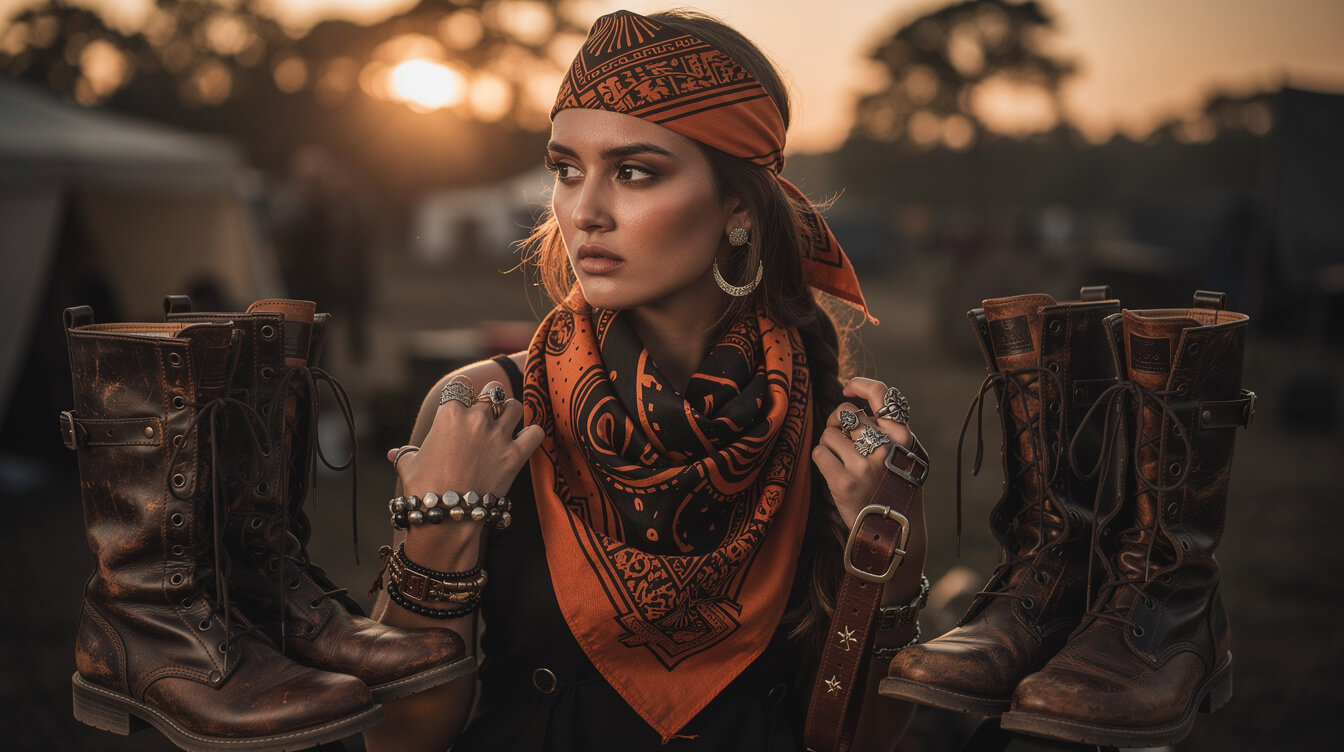
The most successful bandana niches share a common trait: a strong identity signal that buyers want to wear or carry publicly. A bandana is a visible accessory. It signals tribe membership, aesthetic alignment, or personal identity in a way that a mug or phone case does not. The buyer motivation is different from a purely functional product, and your niche selection should account for that.
Pet portrait bandanas. This niche converts well because pet owners are already spending on custom pet products and they respond strongly to high-personal-relevance items. A bandana with a buyer’s specific dog breed printed in full coverage has no direct competitor in mass retail, and the buyer pool is enormous. This niche works equally well for the human-wears-bandana format and as a coordinating accessory. If you have already published a dog bandana product for pets, adding a matching human bandana creates a bundle opportunity that appeals to the same buyer.
Outdoor and camping. Bandanas are functional gear in this context. Hikers, trail runners, and overlanders use them for sun protection, sweat management, and dust filtration. A custom bandana branded for a specific trail, national park aesthetic, or outdoor lifestyle brand has both utility and collectible appeal. The design can lean into topographic patterns, wildlife illustration, or regional scenery without any licensed IP complications. Production costs are the same, but the buyer is motivated by function as well as aesthetics, which supports higher price tolerance.
Music festival and artist merch. This is one of the highest-impulse purchase contexts for accessories. A bandana at a merch table costs nothing to add to a catalog, ships flat in any order, and can be designed in hours. The limited-edition angle works well here, with event-specific or tour-specific designs that create scarcity without requiring the seller to hold inventory. For independent artists running their own WooCommerce stores, bandanas are among the easiest merch SKUs to add and the most likely to sell through at a festival price point of $20-28.
Streetwear and fashion. The revival of bandanas as a streetwear accessory has been consistent across multiple cycles. Paisley revival, oversized pattern prints, and intentionally retro graphics all convert in this niche. Designers already running streetwear apparel lines on POD can add bandanas as an accessory upsell that ships in the same order or as a standalone purchase.
Sports fan spirit gear. Team spirit bandanas for youth leagues, local teams, or fantasy leagues are a recurring purchase item. The same buyer who orders a jersey for game day might add a bandana as a lower-ticket accessory or as a gift. The sublimation print coverage means team colors reproduce accurately across the full surface, which matters for spirit gear where color fidelity is part of the product’s identity.
WooCommerce advantage for bandana sellers: no override fee, owned customer data, bundle potential
The platform economics case for WooCommerce is quantified in the Shopify fee section above. But the advantage extends beyond the fee math into how your store compounds over time.
WooCommerce gives you the customer record without a platform intermediary. Every buyer who orders a custom bandana from your WooCommerce store is added to your customer list. You can email them for the next seasonal drop, the next product addition, or the next bundle offer. That repeat buyer relationship, built around a $22 product, has compounding value over time that a one-time transaction on a marketplace does not build.
Shopify also gives you customer records, but the platform’s fee structure creates a structural incentive to grow their ecosystem rather than yours. App dependencies, payment processor lock-in, and the 1% override on third-party processors mean the platform extracts increasing value from your store as it grows. WooCommerce’s overhead is fixed. A $15-30 per month hosting cost does not change whether you sell 10 or 1,000 bandanas. The delta between those two models grows larger with every order.
For bundling, WooCommerce handles product grouping, custom text fields, and variant logic natively or with low-cost plugins. If you want to sell a 3-pack of bandanas with a buyer-selected design per unit, or offer a bandana bundled with a matching tote, the implementation is straightforward without a paid app license. On Shopify, the same bundle functionality typically requires a third-party app at $19-49 per month. That monthly app fee can exceed your monthly margin on a low-volume bandana product.
The product listing workflow for a bandana store also benefits from automation. Generating product descriptions, setting SEO metadata, creating variant configurations, and syncing to your print provider are all repeatable steps. A pipeline that handles this work removes the manual ceiling on how many products you can list and test without adding hours to your week.
The custom bandana opportunity in summary
The custom bandana niche has a specific and exploitable gap. Search volume is real at 5,400 searches per month, keyword difficulty is zero, and every competitor in the SERP is a B2B bulk vendor targeting corporate buyers. The no-minimum POD seller does not yet own this editorial space, which means there is room to publish, rank, and capture a buyer pool that is actively searching with no editorial guidance on where to go.
The economics work at $24-28 retail, less reliably at $18-20. The way to make bandanas work long-term is to retail above $22, bundle where possible, and run on a platform that does not extract 1% from every transaction. On WooCommerce with Printful or Printify fulfillment, a 200-order bandana month generates $44 more in kept margin than the same store on Shopify. That gap compounds every month.
The niche verticals with the strongest buyer signal are pet portraits, outdoor and camping, festival and artist merch, and sports fan spirit gear. Each has a committed buyer who cares enough about a custom product to pay $22-28, and none require licensed IP or complex production workflows. The bandana’s simplicity, in both design and fulfillment, is the point. One 22-inch square of polyester, full-coverage sublimation, and no minimum. The only question is which niche you serve first.
Implement AI. 30x your throughput. Get a 30-min call with the founder.
Drop your details and book a free 30-minute discovery call. Personalized advice on your POD stack, your margin, and where AI fits. No pitch, no fluff.