Custom wine labels for POD stores: which providers carry them, waterproof label printing explained, and the wedding niche margin math
Every week, POD sellers ask which products carry the highest AOV in their store. Custom wine labels sit near the top of that list, and yet they remain one of the most misunderstood categories in the catalog. The phrase “custom wine label” describes two completely different businesses. One sells actual bottled wine with a custom label applied before shipping. The other sells the labels themselves, printed on waterproof vinyl, for customers to apply to wine they already own. If you are evaluating whether to add custom wine labels to your POD store, the distinction matters completely. This guide covers the supplier landscape, material specifications, unit cost math at three bundle sizes, and the wedding and seasonal niches where this product peaks.
The two different businesses called “custom wine label” (and which one is the POD opportunity)
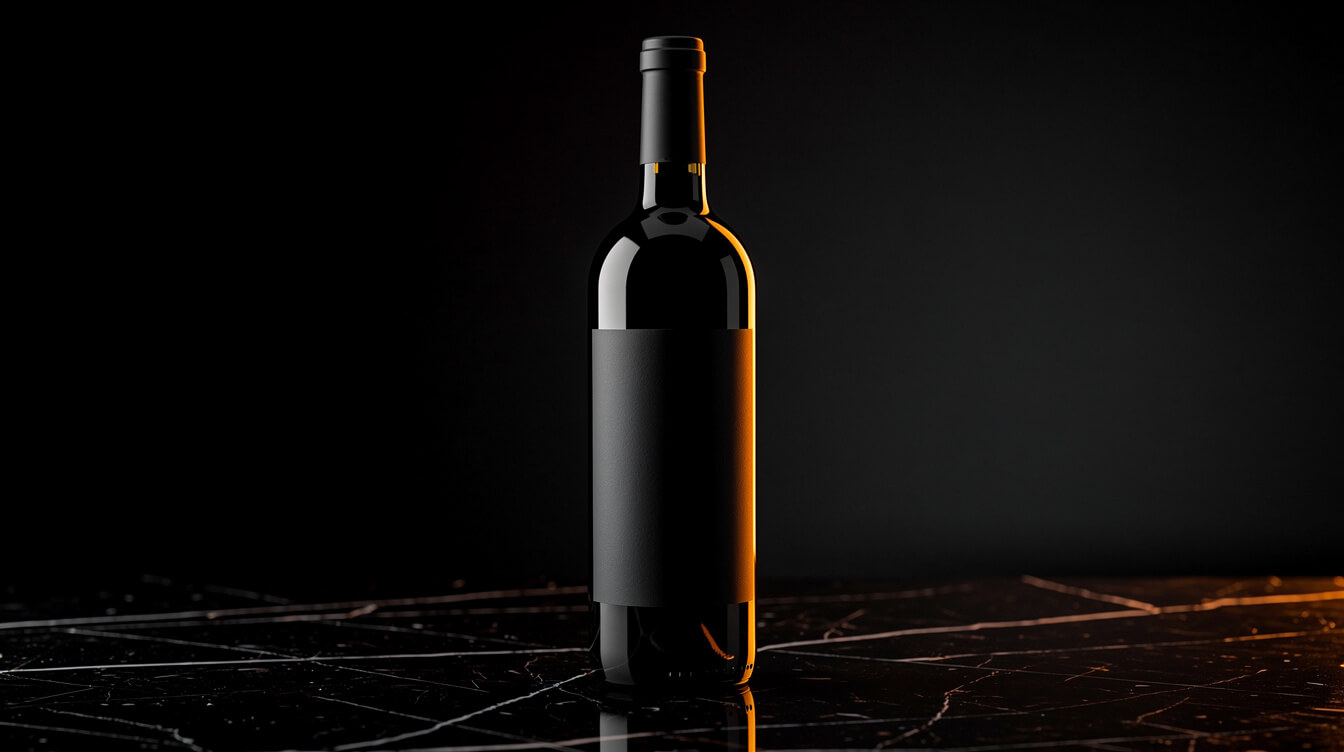
Search for “custom wine label” and Google returns two entirely different types of businesses. Most sellers assume they are competing for the same market. They are not.
Model A: the wine-with-a-custom-label business. Companies like personalwine.com source, bottle, and ship actual wine. A customer orders a bottle of Cabernet, personalwine.com prints a custom label, affixes it, and ships it as a complete product. This model requires alcohol licensing, three-tier distribution compliance, state-by-state shipping restrictions, and fulfillment infrastructure for a regulated product. POD sellers do not touch this model.
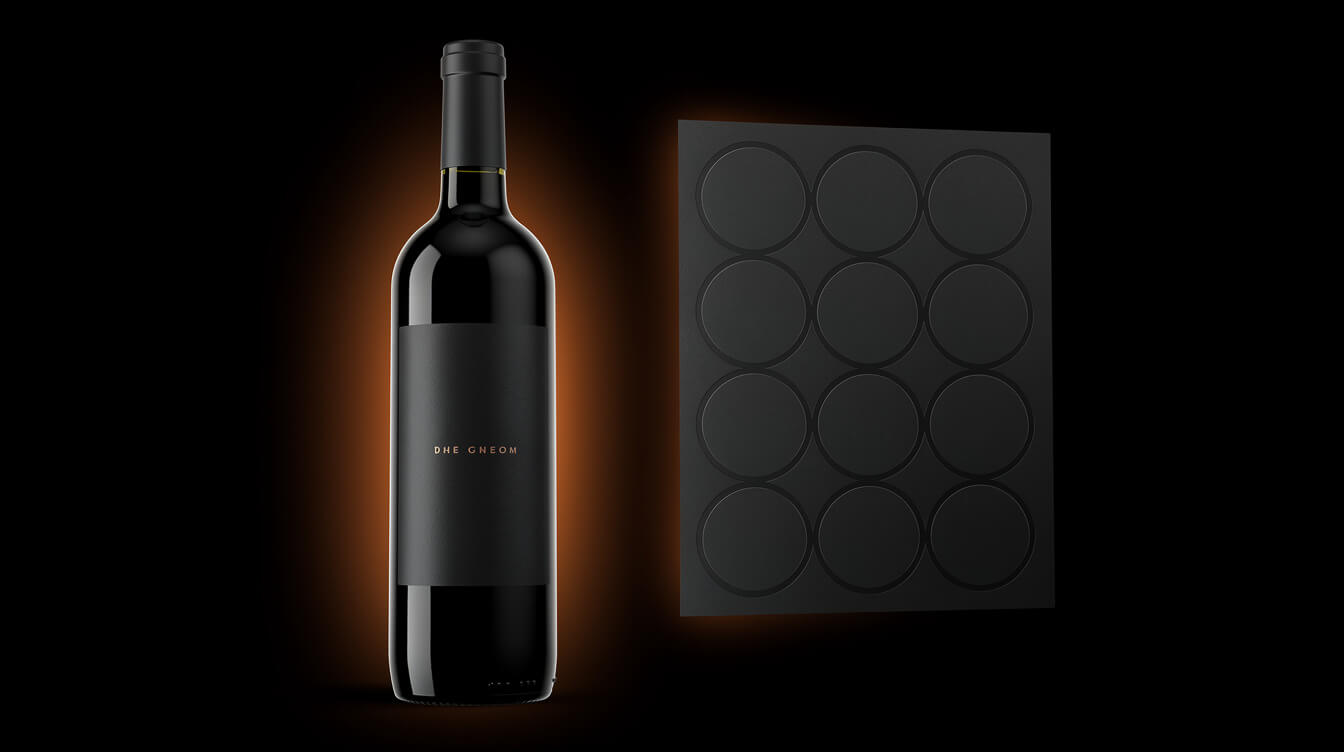
Model B: the custom label sticker business. Companies like bottleyourbrand.com and sheetlabels.com print vinyl label sheets and ship them to customers who apply the labels to wine they purchase locally. This model has zero alcohol involvement. The product is a printed sticker. It ships like any other flat stationery item. A customer orders a 12-pack of custom labels, receives them in the mail, buys a 12-pack of wine at the grocery store, peels and applies. This is the POD-adjacent opportunity.
The POD seller’s position is clear: you are selling printed vinyl labels, not wine. You need no licensing, no refrigerated shipping, no alcohol compliance. Your supplier ships a flat package of vinyl sticker sheets. The customer handles the wine themselves. This distinction is also the reason the SERP is entirely uncontested for POD sellers. Every top result is either a wine-with-label company, a Canva design tool, or a B2B label print shop. Zero editorial exists for POD sellers who want to list custom wine labels in their WooCommerce or Printify store. That gap is your opportunity.
Which POD providers carry custom wine labels as a store product

The honest answer: the custom wine label category does not sit neatly in the big-three POD platform catalogs the way t-shirts or mugs do. Here is what the provider landscape actually looks like as of 2026.
Printful: does not carry wine labels in its standard product catalog. Printful’s catalog focuses on apparel, home decor, and accessories. Vinyl label sheets are outside its current product range. Do not expect this to change in the near term.
Printify network: select vendors in the Printify marketplace carry custom label sheets, including vinyl and waterproof options. Availability changes as vendors are added and removed from the network. You need to check the product creator directly for current SKU availability in your region. The Printify network’s strength is vendor breadth, and label printing is one category where that breadth creates options Printful cannot match.
StickerMule: this is the most accessible white-label path for wine labels. StickerMule offers a 10-unit minimum on custom die-cut and kiss-cut sticker sheets, which is meaningfully lower than most custom label vendors that require 25 or 50 unit minimums. At 10 units, the landed cost per label is approximately $1.75. The primary limitation is that StickerMule requires a physical order rather than a fully automated drop-ship API, so this path involves more manual workflow than a Printify integration.
Gelato: Gelato’s platform includes sticker sheet products in several markets. If you operate in Europe, Gelato may be the most practical path to local-market fulfillment of label orders at no MOQ. Verify availability in your target market in the product creator.
The takeaway for product setup: custom wine labels require a slightly more intentional supplier relationship than standard POD products. The print-on-demand infrastructure for labels is maturing, not mature. Sellers who establish a reliable supplier relationship now are building a moat before the catalog becomes crowded.
Waterproof vs paper label printing: what your customers actually need
Material selection is the most technically important decision in the wine label category. Most first-time sellers assume any printed label works. It does not.
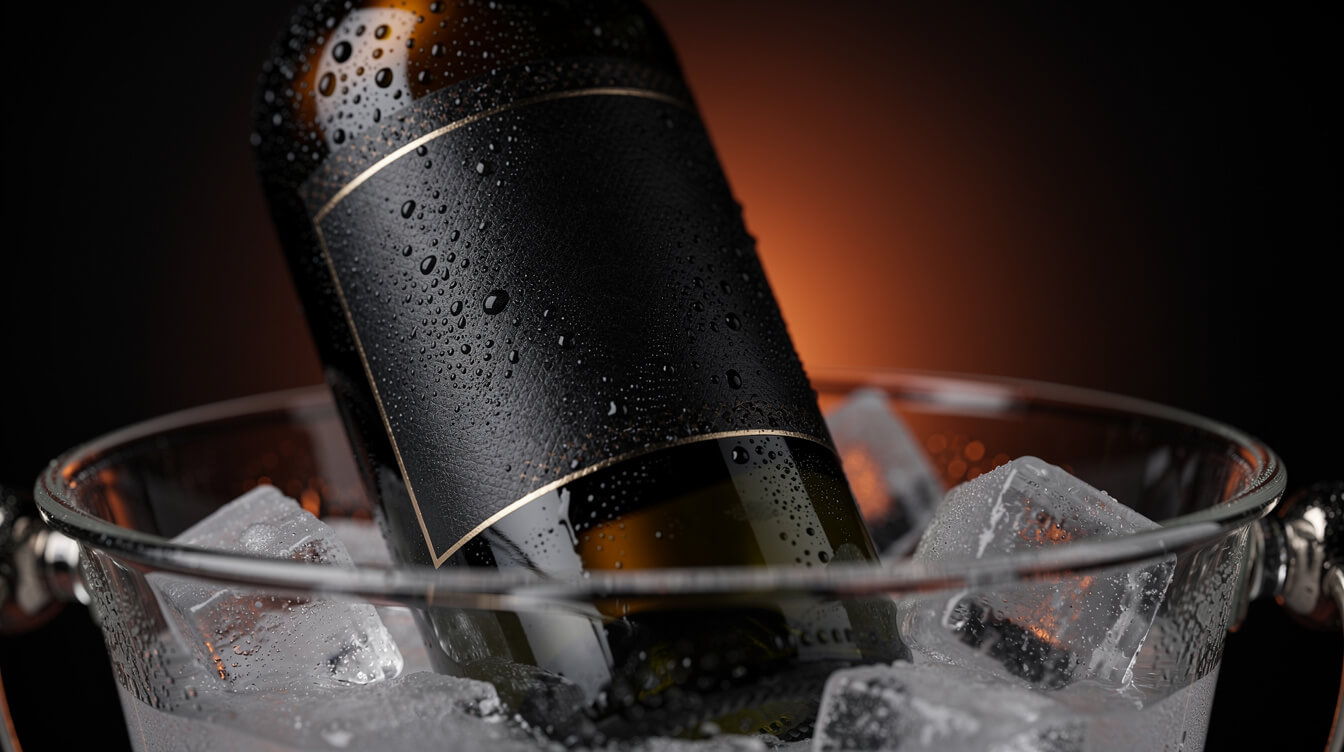
Why paper fails on wine bottles. A wine bottle in active use spends time in the refrigerator, in an ice bucket, in transit with condensation forming on the glass, and sometimes in a wet kitchen. Standard paper labels absorb moisture. They soften, peel from the adhesive, smear if touched while wet, and leave behind a residue that looks worse than no label at all. A paper label on a $65 personalized bottle arriving at a wedding is a customer service problem waiting to happen.
The correct material: waterproof vinyl (BOPP polypropylene). BOPP is the same material used for commercial wine labels from real wineries. It is ice-proof, condensation-resistant, and carries a permanent adhesive rated for curved glass surfaces. It does not absorb moisture, does not peel at the edges, and holds color accurately even when wet.
Finish options. Gloss finish produces the premium “real wine label” look with high-contrast color reproduction. Matte finish reads as elegant and minimalist, closer to artisan-wine aesthetics. Both are standard offerings from most vinyl label vendors. Offering both finish options in your store gives buyers a meaningful choice without complicating your supplier relationship.
Print method. Vinyl labels are printed via UV inkjet, not sublimation. This distinction matters if you have existing sublimation relationships: sublimation bonds dye to polyester substrates at heat. Vinyl is a synthetic non-porous surface that does not accept sublimation dye. Your label supplier handles this automatically, but it is worth knowing so you do not mismatch substrates when evaluating new vendors.
Design specifications. Standard front wine bottle label dimensions are 3.5 inches tall by 4 inches wide. Wrap-around labels run longer. Always request the vendor’s template before designing. Set your files in CMYK color mode, not RGB. Minimum resolution is 300 DPI at final print dimensions. For adjacent knowledge on the vinyl and sticker printing workflow, the custom sticker sheet guide for POD sellers covers BOPP substrates and kiss-cut sheet specifications in more depth.
Unit cost math: from single labels to bundle sets

Smash print-on-demand. Join the engine room.
One short email a week. Real numbers, real teardowns, the unfiltered economics behind every move.
Custom wine labels only make economic sense at bundles of six or more. Here is why single-unit economics do not work, and where the margin actually lives.
Single label: At 1 unit through StickerMule, the base cost is approximately $1.75. But StickerMule’s minimum shipping charge is $4 to $5 on small orders. Total landed cost for a single label: $6.75 or more. Retail price for a single custom wine label: $5 to $8. The math is negative before you add your platform fee. Single-unit listings in this category are not viable.
10-pack: At 10 units via StickerMule, the order totals approximately $12.50 plus $5 shipping, landing at $17.50 for 10 labels, or $1.75 per label. Retail for a 10-pack: $28 to $35. Gross margin: 37 to 50 percent. This is the minimum viable configuration.
6-pack “event set”: Positioned for bachelorette parties and small celebrations. Retail $18 to $22. At a $20 retail price, landed cost of approximately $12 to $13, gross margin 35 to 40 percent. This set works as an impulse buy and fits easily in a padded mailer.
12-pack “wedding favor set”: Retail $38. Landed cost approximately $19 to $21. Gross margin 45 to 47 percent. This is the mid-tier sweet spot, positioned for couples who want custom labels for a rehearsal dinner or bridal shower wine station.
24-pack “bridal shower table set”: Retail $65. Landed cost approximately $28 to $32. Gross margin 50 to 56 percent. The 24-pack is the highest gross margin configuration in the category on a percentage basis, and it carries the highest absolute gross dollar value per order. At $65 and 50 percent margin, a single order produces $32.50 in gross profit. Compare that to a $28 custom tee at 30 percent margin producing $8.40. The math strongly favors pushing buyers toward the bundle.
Bundle strategy summary: design your store around the 12-pack as the default “add to cart” and the 24-pack as the upsell. A buyer landing on the 6-pack page should see the 12-pack positioned as only $16 more for double the quantity.
What the Shopify 1% fee costs you on every custom wine label order
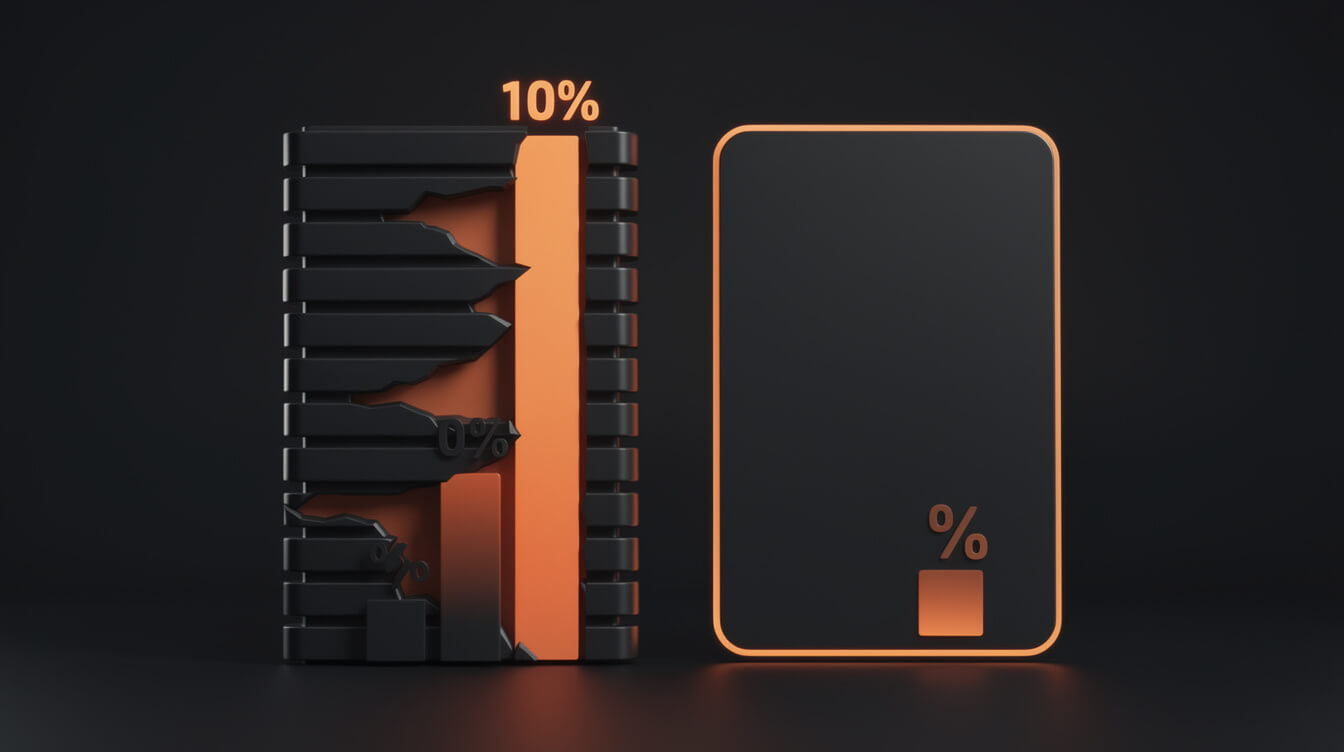
Shopify charges a 1% platform override on all transactions on its basic plan if you do not use Shopify Payments. Even if you do use Shopify Payments, you pay payment processing plus the monthly subscription. For wine label sellers, the fee math compounds as AOV increases, which is exactly where the category performs best.
At the 6-pack ($20 retail): Shopify 1% at 200 orders per month equals $40 per month, $480 per year. That is $480 you pay Shopify to process sales that WooCommerce would handle for a flat $15 to $30 per month regardless of volume.
At the 24-pack ($65 retail): Shopify 1% at 200 orders per month equals $130 per month, $1,560 per year. You are paying Shopify $1,560 annually on a single product category at moderate volume. This is not a rounding error.
WooCommerce fixed cost: hosting runs $15 to $30 per month depending on your provider. That is $180 to $360 per year, no matter how many orders you process or at what AOV. As AOV increases and volume grows, WooCommerce’s fixed cost structure becomes more favorable on every additional order. The full WooCommerce versus Shopify breakdown for POD sellers covers the full fee comparison across product categories and revenue tiers.
Personalization fields on WooCommerce: wine label buyers need to enter names, dates, and custom messages at checkout. WooCommerce handles custom text fields natively with no additional app required. On Shopify, product customization requires a paid app in the $19 to $49 per month range. That is another $228 to $588 per year added to your operating cost before a single order ships.
MEGA automates the product listing step for WooCommerce stores. Title, meta description, SEO optimization, product images, and the full listing can be pushed to your WooCommerce store in under 7 minutes. For a category like custom wine labels where bundle variants (6-pack, 12-pack, 24-pack, matte, gloss) would otherwise require manual listing work, that throughput advantage compounds. Learn more at mega.management.

Build your wine label store listings in under 7 minutes
MEGA generates title, SEO metadata, product images, and WooCommerce listings end-to-end. Seven minutes from niche idea to published product.
The wedding and celebration niche: where custom wine label demand actually lives
Custom wine labels are not a general gift product. They are a celebration product, and the demand curve follows events with a predictable calendar structure.
Wedding favors. This is the highest-volume, most consistent segment. Approximately 75 percent of US weddings include some form of personalized label or branded item as a favor or table element. The couple wants labels on wine served at the rehearsal dinner, the welcome reception, or the day-after brunch. Average order size: 24 to 48 labels. Average AOV: $65 to $120. These are not impulse buyers. They find your listing two to four months before the wedding and bookmark it. Converting them requires accurate design preview capability and clear BOPP/waterproof callouts in your product description.
Bachelorette party. Smaller sets, faster decision cycle. The maid of honor is buying 6 to 12 labels, three to four weeks before the event. She is looking for something fast, fun, and deliverable within a week. Position your 6-pack as the bachelorette option with faster processing notes in the listing.
Bridal shower. The host often wants a wine bottle on each table with a label matching the shower’s theme. This is the 24-pack buyer. She has more lead time than the bachelorette buyer and higher budget. Focus your design templates in this segment on floral and color-coordinated aesthetics that match 2026 shower trends (dusty rose, sage green, terracotta).
Holiday gifting. The November 15 to December 20 window is the second-largest seasonal peak. “Thank you for hosting” and “Happy Holidays” wine label sets perform well as host gifts and corporate client tokens. Plan your Q4 listings by September. Search volume builds through October and peaks mid-November. Labels that are not indexed by late October miss the traffic wave.
New Year’s Eve. A tight three-week selling window from December 8 to December 30. “Ring in [Year]” themed labels, toasting occasion framing. NYE orders tend to cluster in the final two weeks of December, so fast fulfillment time is a meaningful listing differentiator.
Valentine’s Day. The second most consistent annual peak. Four-week buying window from January 15 to February 14. Romantic and personal messaging focus. Couples buying wine for a home date night, or friends sending a thoughtful bottle as a gift. The gift-occasion overlap with custom wrapping paper and gift packaging is meaningful: buyers in the Valentine window often want a coordinated bundle.
Beyond weddings: Airbnb hosts, corporate events, and personalized holiday wine
The wedding segment is the volume driver, but the adjacent segments carry the highest repeat-purchase rate in the category.
Airbnb hosts. A host running a short-term rental property keeps a welcome wine in the refrigerator for arriving guests. A custom label with the property name or a seasonal welcome message elevates the guest experience in under two minutes of setup time. These buyers order 12 to 24 labels at a time, two to four times per year as they rotate seasonal designs. They are not one-time celebratory buyers. They are recurring low-friction customers who reorder when their label stock runs low. The Airbnb host segment is worth targeting explicitly in your listing copy and advertising if you expand into paid traffic.
Corporate gifting. Small businesses and agency owners who send wine as client holiday gifts want their logo or brand message on the label. This is a B2B-adjacent order pattern: one buyer, higher quantity per order (24 to 48 labels for a client list), and a strong reorder motivation the following year. Corporate gift buyers have a narrower decision window (October to late November) and a higher price tolerance than consumer buyers. If you want to reach this segment, run the listing with corporate language (“client gift,” “business thank you,” “professional holiday gift”) as a separate product variant or listing.
Small wineries and cideries. This is a niche but real use case. A craft cidery or micro-winery that wants a custom-labeled run for a seasonal release or private event cannot always access traditional print-run minimums of 500 or 1,000 labels. If you can offer BOPP vinyl labels at 12 to 50 unit quantities, you capture a buyer segment that commercial label printers underserve. The product needs to be positioned around “no minimum order” and “label samples available,” which are the two questions this buyer type asks first.
Housewarming gifts. A buyer brings a bottle of wine to a housewarming and wants it personalized with the new homeowners’ names or address. This is a single-occasion, single-buyer purchase. The 6-pack is the correct configuration. Lead time is typically one to two weeks, so fulfillment speed matters. This segment skews toward spring and summer when home purchases peak.
For the beverage-adjacent buyer who also shops for custom drinkware for POD stores, the overlap in gift occasion timing is worth noting. A buyer planning a wedding registry or corporate gift suite often wants branded wine labels and branded glassware as part of the same package. Your store’s internal linking between these categories can capture that session intent.
Conclusion: custom wine labels as a high-AOV bundle and seasonal drop play
The custom wine label is not a high-volume everyday product. It is a seasonal, occasion-driven category with a clear bundle architecture and a strong AOV ceiling.
The bundle math is the core thesis. Selling six individual labels at $10 each produces $60 in revenue and roughly $18 in gross margin. Selling one 24-pack at $65 produces $65 in revenue and $33 in gross margin. Same number of labels, roughly the same materials cost, more than double the gross margin per transaction. The bundle strategy is not optional. It is the economics of the category.
WooCommerce makes the personalization side of this product operationally simple. Custom name and date text fields are native functionality. No paid app. No monthly add-on fee. On Shopify, you pay $19 to $49 per month for product customization capability that WooCommerce includes out of the box. At scale, that difference compounds alongside the Shopify 1% platform tax.
The seasonal calendar is fixed. Start building listings and letting them index by September 1 for Q4 peak. Valentine’s Day listings should be live in January. NYE content should be searchable by December 1. Listings that are not indexed before the seasonal search wave arrive miss the peak entirely.
MEGA automates the full product listing pipeline. Title, SEO metadata, product images, variant setup, and the WooCommerce listing are generated end-to-end in under 7 minutes. For a category like custom wine labels where bundle variants (6-pack, 12-pack, 24-pack, matte finish, gloss finish, multiple design templates) multiply the manual listing workload, that speed advantage is the difference between building a catalog before peak season or missing it entirely. Learn more at mega.management.
Implement AI. 30x your throughput. Get a 30-min call with the founder.
Drop your details and book a free 30-minute discovery call. Personalized advice on your POD stack, your margin, and where AI fits. No pitch, no fluff.