
Printful art prints: unit economics, WooCommerce setup, and what sellers need to know
If you are selling art prints through a marketplace — Etsy, Redbubble, Amazon Merch — you are renting your audience. Every order ships with the marketplace’s branding, and the repeat-purchase email goes to their list, not yours. Printful art prints sold through your own WooCommerce store flip that equation. You own the customer relationship, set the margin, and control the data. This guide covers everything WooCommerce sellers need to know before adding art prints to their catalog: what Printful actually stocks, the real unit economics at three price points, how to configure the integration, and the pricing strategy that keeps margins healthy without pricing out buyers.
The SERP for “printful art prints” is almost entirely Printful’s own marketing and product pages. There is no independent guide for sellers who want the full picture. This is that guide.
What Printful actually offers for art prints: giclée, posters, canvas, and framed
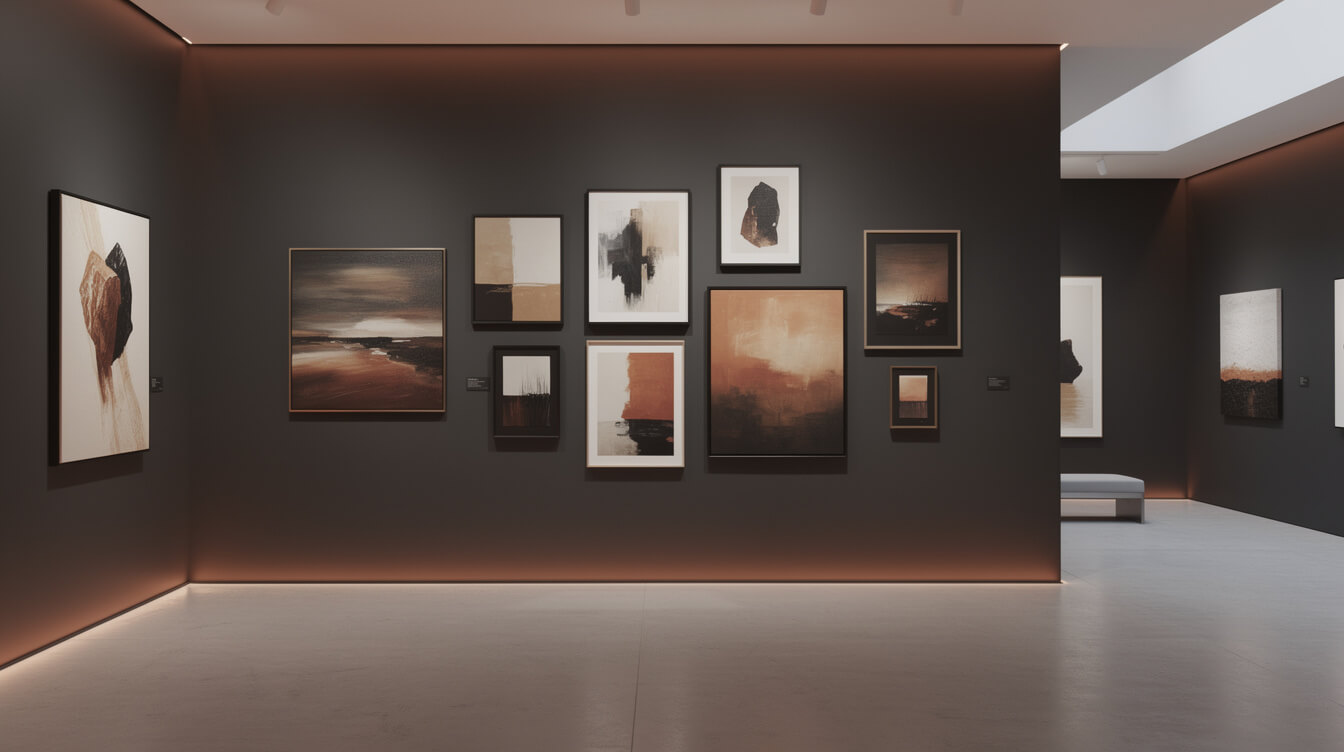
Printful’s art print catalog is more varied than most sellers realize. There are four main product categories, each with different base costs, production times, and customer expectations.
Fine art prints (giclée)
Printful offers museum-quality giclée prints on Hahnemühle Photo Rag 308 gsm paper. These are acid-free, archival-grade, and target buyers who use words like “collector” and “investment.” The base cost runs higher — a 12×16 inch giclée starts around $18–22 depending on the paper variant — but the premium positioning supports a retail price of $65–120 for original or limited-edition artwork. If your store is art-forward (original illustrations, photography, limited runs), this is your anchor product.
Posters
Standard poster prints on matte or semi-gloss paper. Sizes range from 8×10 up to 24×36 inches. Base cost for a 12×16 poster is roughly $9–11. This is the highest-volume format and the one most POD sellers start with. The margin window is wide because the perceived value of a poster can reach $25–40 for the right design in the right niche, and the base cost leaves room to get there.
Canvas prints
Gallery-wrapped canvas on a solid pine frame. Printful stretches the canvas and the edges are either mirrored or solid-colored at your choice. Base cost for an 8×10 canvas is around $25; a 16×20 runs $40–50. Canvas prints carry an inherently higher perceived value — buyers expect to pay $60–150 for a canvas that looks like real art. The production time is longer (3–5 business days), so set expectations accordingly.
Framed posters
Printful frames the poster before shipping. This dramatically increases the perceived value and eliminates the #1 customer complaint about poster orders (“I have to find a frame”). Base cost for a framed 12×16 is around $35–45 depending on the frame finish. Retail price can comfortably reach $75–120. The trade-off: higher shipping weight means higher shipping cost, and returns on framed items are more complex. Set your refund policy before you launch.
Unit economics: what a 12×16 art print costs from Printful and what you should charge

The honest margin math is what most seller guides skip. Here it is, using a 12×16 poster as the baseline because it is the most common starting point.
The baseline numbers (US fulfillment)
- Base cost (12×16 poster, matte): ~$10.00
- Packaging: included in Printful’s shipping (they use rigid mailers and tubes)
- Shipping to US customer: ~$4.00–6.00 standard
- WooCommerce payment processing (Stripe): 2.9% + $0.30 per transaction
- No Shopify override fee: WooCommerce does not charge a platform percentage on your gross revenue. This matters more at scale than it looks on a single order.
Three retail price scenarios
Scenario A — Budget positioning ($19.99 retail, free shipping absorbed):
- Revenue: $19.99
- Printful cost + shipping: ~$15.00
- Payment processing: ~$0.88
- Gross margin: ~$4.11 (20.6%)
- Verdict: thin but viable for high-volume niches where repeat buyers are the play
Scenario B — Mid-market positioning ($34.99 retail, free shipping):
- Revenue: $34.99
- Printful cost + shipping: ~$15.00
- Payment processing: ~$1.32
- Gross margin: ~$18.67 (53.4%)
- Verdict: healthy. This is the sweet spot for most 12×16 poster niches.
Scenario C — Premium positioning ($49.99 retail, free shipping):
- Revenue: $49.99
- Printful cost + shipping: ~$15.00
- Payment processing: ~$1.75
- Gross margin: ~$33.24 (66.5%)
- Verdict: excellent if the design quality and brand positioning justify it. Entirely achievable in art-adjacent niches (astrology, botanicals, vintage travel, architectural prints).
The Shopify comparison deserves a specific mention here. A store doing $5,000/month in poster sales on Shopify’s Basic plan pays the 2% transaction fee ($100/month) if they use a third-party payment processor, or the Shopify Payments lock-in with no third-party flexibility. WooCommerce charges zero. That $100/month buys an extra 6 12×16 prints of pure margin every 30 days. At $10k/month it is $200. At scale the number becomes meaningful.
How to build a Printful art print store on WooCommerce: the setup workflow

Setting up Printful art prints on WooCommerce is a four-step process. It takes 60–90 minutes the first time, considerably less once you understand the product configuration options.
1. Install and connect the Printful plugin
Install the official Printful integration plugin from the WordPress plugin directory. Connect it to your Printful account via API key or OAuth. Once connected, the plugin syncs your WooCommerce products with Printful’s fulfillment queue automatically — no manual order forwarding needed.
One architectural note: Printful recommends using their own hosted product pages for some setups, but for a WooCommerce store the right approach is to push products into WooCommerce and let WooCommerce own the storefront. You want your product URLs, your checkout, and your post-purchase email sequences. Printful handles fulfillment in the background.
2. Create your first art print product in Printful
In the Printful dashboard, navigate to “Products” → “New product” → “Wall art.” Select the print format (poster, canvas, framed, giclée). Choose your sizes. Upload your design file — Printful requires 150 DPI minimum for most print products; 300 DPI is the production-quality target. Use the mockup generator to preview how the design looks at each size before syncing to WooCommerce.
Size selection matters for margin. A 12×16 and an 18×24 poster from the same design file have very different base costs ($10 vs. ~$18) but buyers often perceive them as the same product at different scales. Offering three sizes (8×10, 12×16, 18×24) within a single WooCommerce variable product gives you a natural upsell path without managing three separate listings.
3. Sync to WooCommerce and configure pricing
After designing in Printful, use “Sync to WooCommerce.” The plugin creates the product in WooCommerce with your selected variants. The important step most sellers miss: set your retail price inside WooCommerce (not Printful) and verify that the WooCommerce price is the one that controls the checkout amount. Printful’s side shows base cost only; WooCommerce shows what the customer pays.
Set up a WooCommerce upsell: point buyers from a 12×16 product page to the 18×24 canvas version. The price difference (say, $34.99 vs. $89.99) is significant enough that even a 15% upsell rate meaningfully lifts average order value.
For WooCommerce sellers who want the full picture of how Printful’s integration compares to running your own print infrastructure, the Printful review for WooCommerce sellers covers the honest trade-offs in detail.
4. Configure shipping zones
Art prints are fragile. Printful ships most posters in rigid tubes or flat mailers. Canvas prints ship in custom cardboard. Verify your WooCommerce shipping zones are configured to match what Printful will charge you — a 16×20 canvas to Australia costs more than $6. If you advertise free worldwide shipping on a $34.99 poster, the shipping cost can turn a 53% margin into a 20% margin on international orders. Either restrict free shipping to specific zones or adjust international pricing.
Art print product selection: which sizes and formats have the best margin-to-volume ratio

Smash print-on-demand. Join the engine room.
One short email a week. Real numbers, real teardowns, the unfiltered economics behind every move.

Not all art print products are equal. Here is the ranking by margin-to-volume ratio, based on real Printful base costs and realistic retail price ranges.
Tier 1 (best ratio): Standard posters (12×16 and 18×24)
These deliver the widest margin windows because the base cost is low and buyer price expectations are already calibrated to $25–50 from Etsy and Amazon. A well-positioned 12×16 at $34.99 is not fighting the market — it is in the middle of it.
Tier 2 (strong): Framed posters
The base cost is higher but so is the retail ceiling. Buyers who want a framed print ready to hang will pay $75–120 for a 12×16. The margin dollars per unit are often better than an unframed poster at Tier 1 pricing, even if the percentage is similar.
Tier 3 (specialty): Canvas prints
High average order value, longer production time, heavier shipping. Canvas buyers are buying “art” not “decor.” They need to believe in the design. Canvas works well for original artwork, limited-edition series, and brand-heavy niches (sports, travel, custom family portraits). Generic designs underperform on canvas.
Tier 4 (niche only): Giclée fine art prints
The margin per unit is good if you can price at $80+ — but the buyer pool for archival fine art prints is narrow. Unless you have an existing following for your original work or a genuinely premium art brand, start with posters and graduate to giclée once demand validates the investment.
For sellers also running apparel through Printful, the comparison of how art prints stack up as a complementary product line is covered in the Printful custom hoodies guide — specifically the section on diversifying a Printful catalog beyond apparel.
Design sourcing for art prints: three approaches POD sellers actually use

The design is the product in art print POD. Here are the three approaches that work at scale, with honest trade-offs for each.
Approach 1: Original art (highest ceiling, hardest to scale)
If you are an illustrator, photographer, or visual artist, Printful is simply a production and fulfillment layer for your existing work. Upload at 300 DPI, set your price, and you own 100% of the design IP. The ceiling is unlimited because you are not fighting design parity with other POD sellers. The floor is slow — building a catalog of original artwork takes time.
Approach 2: Licensed artwork (moderate ceiling, faster catalog build)
License artwork from platforms like Creative Market or through artist collaborations. The Printful store acts as the retail front; the licensed artist takes a royalty or flat fee per design. This scales faster than creating original work but requires clear licensing terms — Printful’s terms of service require you to have commercial print rights for everything you upload.
Approach 3: AI-generated artwork (fastest catalog build, requires curation)
AI image generation has reached a quality level where botanicals, abstract art, vintage-style travel posters, and minimalist line art are genuinely saleable as art prints. MEGA’s image pipeline uses Flux 2 Pro for high-resolution outputs that print cleanly at 300 DPI on 18×24 and larger formats. The workflow: prompt → generate → review for print artifacts (AI still struggles with text and fine symmetry) → upscale if needed → upload to Printful.
The risk with AI art prints is catalog parity. If 200 other sellers are running the same prompt style, differentiation collapses. The play is niche specificity: “botanical watercolor prints for modern farmhouse” beats “botanical prints” as a position. The tighter the niche, the harder it is for generic competitors to crowd you out.
For the full AI design-to-listing workflow, the AI t-shirt design POD workflow guide covers the same pipeline applied to apparel — many of the steps (prompt writing, quality review, file prep) transfer directly to art prints.
Build your Printful art print catalog 30x faster with MEGA
MEGA generates AI art designs, configures Printful variants, and creates WooCommerce listings end-to-end. Research to live product in under seven minutes.
Pricing strategy: the 2.5x rule, market anchoring, and why $29–$49 is the sweet spot

Pricing art prints is part math, part psychology. Here is the framework that keeps margins healthy and conversion rates realistic.
The 2.5x markup rule
Price at minimum 2.5x your total fulfillment cost (base cost + average shipping). For a 12×16 poster where total fulfillment runs $15, that is $37.50 minimum retail. This covers payment processing, occasional returns, and leaves room for a discount promotion without going below breakeven.
Sellers who price at 1.5x or 2x are building a structurally fragile business. One bad month of returns or one currency fluctuation on international shipping erases margin. The 2.5x floor keeps the P&L stable enough that you can run a 20% promotion to move inventory without panic.
Market anchoring
Price relative to what buyers see when they search your niche. If your category anchor is Etsy (where the median art print sells for $18–35), you need to either match that or justify the premium. Justification levers: better frame quality, faster shipping, higher-resolution printing, limited-run language. If you cannot justify the premium, match the anchor and compete on design quality instead of price.
The $29–$49 retail band for 12×16 unframed posters is where WooCommerce sellers consistently see the highest conversion rates. Below $29 you signal cheap; above $49 you need a stronger brand story. Start in the $34–39 zone and test from there.
Shopify sellers: the invisible tax on every print
A quick note for sellers considering WooCommerce versus Shopify for their art print store. Shopify charges a 2% transaction fee on your gross revenue if you use a non-Shopify payment processor. On a $39.99 poster, that is $0.80 per order before Shopify Payments processing fees. At 200 orders per month, that is $160 per month in pure overhead — enough to cover Printful’s base cost on 16 additional prints. WooCommerce does not take a percentage of your revenue. For margin-sensitive products like POD art prints, that difference compounds fast.
MEGA automates the entire product creation pipeline — from generating art print designs to configuring WooCommerce listings with pricing, variants, and SEO metadata. Try MEGA if you want to build a Printful art print catalog without configuring each listing manually.
The customer-ownership gap: what you lose when you sell art prints through Printify or Etsy marketplaces
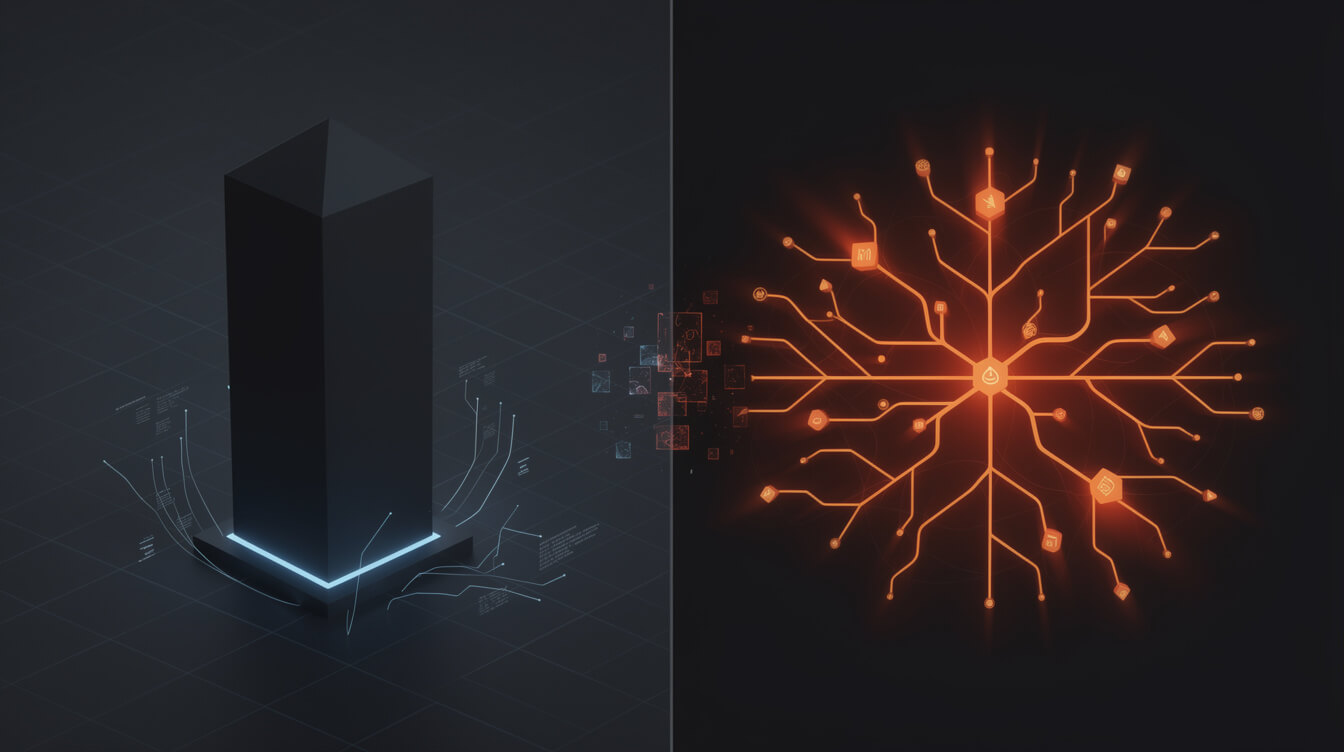
This is the argument for WooCommerce that the POD education crowd rarely makes explicitly. Here it is plainly.
When you sell art prints through Etsy, the customer’s email address goes into Etsy’s database, not yours. The post-purchase email sequence is Etsy’s. The review request is Etsy’s. The retargeting pixel is Etsy’s. If Etsy decides tomorrow to charge a 25% commission instead of 6.5%, you cannot move your customers — you do not have them.
When you sell through Printify’s Pop-Up Store or any marketplace arrangement, the same logic applies. You are renting shelf space. Printify’s own how Printify works guide makes this clear if you read the terms carefully — customer data belongs to the platform.
WooCommerce is an owned store. The customer email, the order history, the browsing behavior — all of it flows into your own database. You can:
- Send a post-purchase sequence that cross-sells the matching canvas version
- Trigger a re-engagement email when someone abandoned the cart on a framed print
- Export your customer list to run ads against a lookalike audience
- Build a subscription offering (e.g., “Art Print of the Month”) on WooCommerce Memberships
None of that is possible on Etsy or Redbubble. The trade-off is that WooCommerce requires setup work and you are responsible for driving your own traffic — there is no built-in marketplace discovery. But the long-term asset you are building (a customer list, repeat-buyer economics, email revenue) is worth the initial friction.
Frequently asked questions: Printful art prints for WooCommerce sellers

What DPI does Printful require for art print files?
Printful requires a minimum of 150 DPI at the final print size. For archival-quality output (giclée prints), aim for 300 DPI. For standard posters, 150–200 DPI is acceptable. If your file is smaller, Printful’s preview tool will flag a quality warning.
Does Printful dropship art prints internationally?
Yes. Printful fulfills from facilities in the US, Europe, and Mexico. Most US orders ship from US facilities; EU orders often ship from Latvia or Spain. International shipping times and costs vary by destination. Factor this into pricing for stores with significant non-US traffic.
Can I sell AI-generated art prints through Printful on WooCommerce legally?
You are responsible for ensuring you have the rights to every design you upload. AI-generated images from tools like Midjourney or Stable Diffusion have varying commercial use terms depending on the platform and the version used. The safest position is to use models that explicitly grant commercial rights to outputs (Flux 2 Pro, for example, grants commercial use). When in doubt, review the model provider’s terms before listing.
How long does Printful take to fulfill an art print order?
Standard posters: 2–3 business days production. Canvas prints: 3–5 business days. Framed prints: 3–5 business days. Giclée prints: varies by order volume (typically 3–7 business days). Add shipping time on top. Set your WooCommerce product shipping estimates conservatively — it is better to deliver ahead of expectation than behind.
Can I run a limited-edition print series through WooCommerce + Printful?
Yes, and this is one of the highest-margin strategies available. Use WooCommerce’s stock management to set a fixed quantity (e.g., 50 prints), price at a premium, and mark the product as sold out when the limit hits. Printful fulfills on demand, so you are not pre-ordering inventory. The perceived scarcity of a limited edition supports significantly higher retail prices — especially for original or AI-generated art in a clearly defined niche.
Final thoughts: Printful art prints are worth adding to your WooCommerce catalog
The unit economics on Printful art prints are strong at mid-market pricing ($29–$49 for standard posters, $75–120 for framed prints and canvas). The product range is broader than most sellers realize — from mass-market posters to archival giclée. And the case for selling through WooCommerce instead of a marketplace comes down to one question: who owns the customer after the first order?
If the answer is Etsy, Redbubble, or Printify’s hosted storefront, you are building someone else’s business. If the answer is your WooCommerce store, the customer list, the email sequences, and the repeat-purchase economics compound in your favor over time.
Start with a 12×16 and 18×24 poster in your highest-conviction niche. Get the product configured in Printful, synced to WooCommerce, and priced at 2.5x fulfillment cost. Order a sample before you launch — seeing and holding the physical product is the fastest way to calibrate your confidence in the margin and the customer experience.

Implement AI. 30x your throughput. Get a 30-min call with the founder.
Drop your details and book a free 30-minute discovery call. Personalized advice on your POD stack, your margin, and where AI fits. No pitch, no fluff.