Lulu print on demand for creators: what it covers, what it skips, and why WooCommerce connects both
Lulu print on demand has one clear niche: it is one of the most reliable self-publishing platforms for creators who want to sell books without managing a warehouse. But the conversation about lulu print on demand usually stops at the platform overview. Nobody covers the unit economics, the native WooCommerce plugin, or the ceiling a book-only platform hits the moment you want to sell apparel or accessories alongside your publication.
This post covers what Lulu actually offers, what it charges, how Lulu Direct connects to WooCommerce (and why that matters if you are on Shopify paying the 1% platform override fee), and where a creator needs additional tooling to handle the merchandise side of a modern creator store.
What Lulu print on demand actually is (and what it is not)

Lulu launched in 2002 and is one of the oldest self-publishing platforms still operating. The product range is book-specific: paperbacks, hardcovers, photo books, comic books, calendars, and notebooks. That is the full catalog.
There is no apparel. There is no accessories line. No mugs, no posters, no phone cases. If you are looking for a single platform that covers books and merchandise in one place, Lulu is not it.
Lulu operates through three distinct channels, and understanding which one you are using determines your economics.
Lulu Direct
Lulu Direct is the commerce-facing product. It connects to your own store through WooCommerce, Shopify, Wix, or a direct API, and fulfills orders automatically. You set the price. You keep the margin above manufacturing cost. The customer buys from your store, and Lulu ships from one of its global printing facilities.
Lulu Bookstore
Lulu Bookstore is Lulu’s own retail channel. You list your title there and Lulu handles the sales interface. The payout structure differs from Direct and is covered in the next section.
Retail distribution
Retail distribution via Ingram puts your title into Amazon, Barnes and Noble, and library ordering systems. Margins thin considerably once distributors take their cut. Most creators building an owned store should focus on Lulu Direct. The economics are better, and you keep the customer relationship.
How Lulu pricing works: the 80% revenue share model

Lulu’s pricing has two layers, and they are often conflated in first-pass comparisons.
Manufacturing cost
Manufacturing cost is what Lulu charges per unit to print the book. For a 200-page black-and-white paperback with a color cover, the base manufacturing cost is approximately $4.38. A 200-page hardcover runs closer to $7.50. These are not list prices. They are the floor you price above when selling on Lulu Direct.
The 80% revenue share (Lulu Bookstore only)
The 80% revenue share applies specifically to Lulu Bookstore sales. When a customer buys your book through Lulu’s own marketplace, Lulu takes 20% of the list price above manufacturing cost. The 80% figure sounds generous. Here is what it looks like on an actual sale.
On a $14.99 paperback that costs $4.38 to manufacture, you have $10.61 of margin. Lulu takes 20% of that, which is $2.12, leaving you $8.49 per sale before payment processing.
Amazon KDP operates on a similar structure: 60% of list price minus printing costs on physical books sold through its marketplace. At $14.99 list, KDP pays 60% ($8.99) minus printing ($4.38), which equals $4.61 per sale. Lulu Bookstore pays better in this comparison. But neither model is as clean as selling direct.
Lulu Direct is the cleaner math
On Lulu Direct, you set the price, collect the full sale, and pay only the manufacturing cost. No platform revenue share. The only cost is the per-unit manufacturing fee, which is predictable and scales linearly with volume.
One note for Shopify users: Lulu Direct is available as a Shopify integration, but Shopify charges a 1% platform override fee on every transaction under most plans. On $14.99, that is $0.15 per sale. Across hundreds of book orders per month, that adds up to a recurring cost that our Shopify fee breakdown for POD sellers makes concrete. WooCommerce does not charge it.
Lulu Direct and WooCommerce: how the integration works
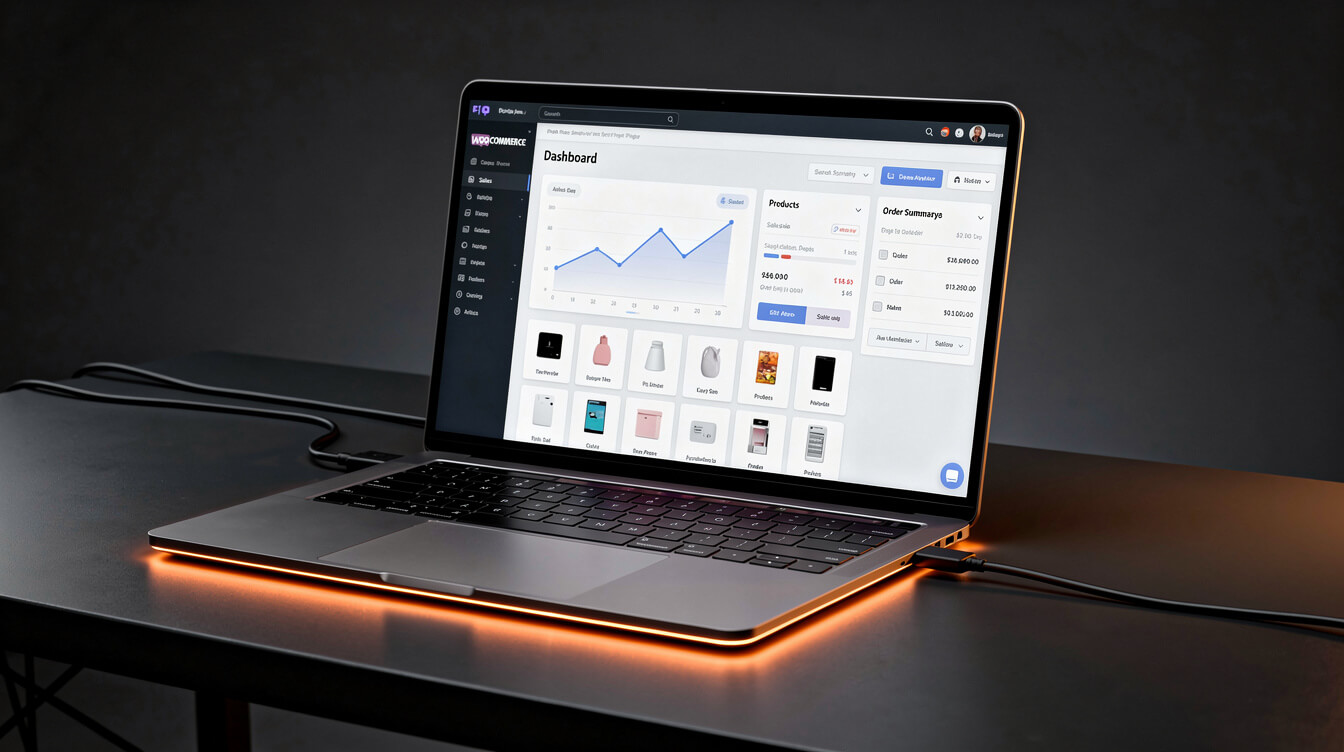
Lulu Direct has a native WooCommerce plugin. It is published on the WordPress plugin repository and installs like any standard plugin.
The setup runs in four steps:
- Install and activate the Lulu Direct for WooCommerce plugin.
- Connect it to your Lulu account via API key.
- Import your Lulu products into WooCommerce as synced products.
- Orders placed on your WooCommerce store trigger Lulu fulfillment automatically.
The plugin supports variable products. Trim size, cover type, and page count variants map cleanly to WooCommerce variable product configurations. A book with both paperback and hardcover editions becomes a single WooCommerce product with two variants.
The WooCommerce cost advantage
The key economic advantage over Shopify is the absence of the platform override fee. WooCommerce itself has no transaction fee. You pay Stripe or PayPal processing fees (typically 2.9% plus $0.30 per transaction), but no additional platform cut on top of that.
A store doing $5,000 per month in Lulu book sales saves $50 per month by running on WooCommerce instead of a Shopify plan with the 1% override. At $10,000 per month, that is $100 per month, or $1,200 per year, in platform fees that WooCommerce simply does not charge. The full breakdown is in our WooCommerce pricing guide for POD stores.
Lulu Direct also supports Shopify, Wix, and a direct API. If you are already on Shopify and your book volume is low, the switch may not be urgent. But if you are running meaningful book sales volume, the annual savings on WooCommerce are real and calculable.
The multi-product creator problem: books plus merch in one store

Smash print-on-demand. Join the engine room.
One short email a week. Real numbers, real teardowns, the unfiltered economics behind every move.
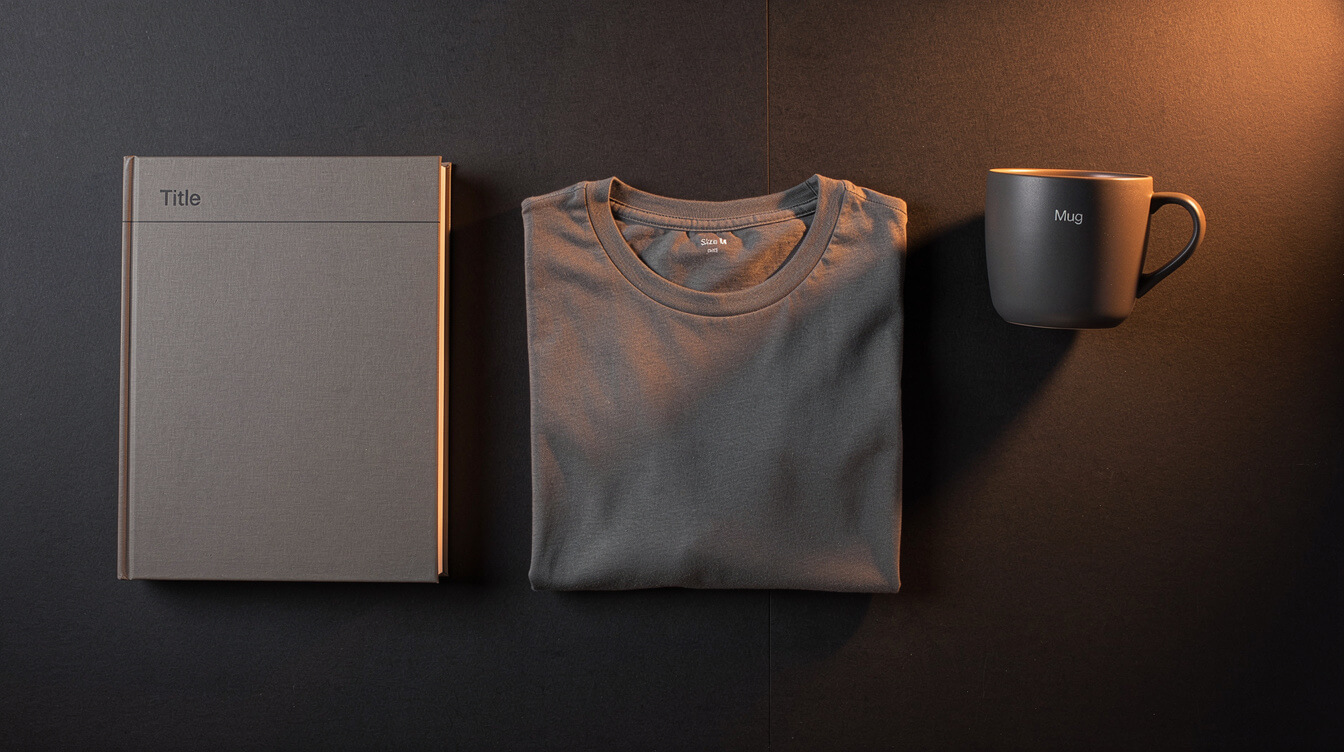
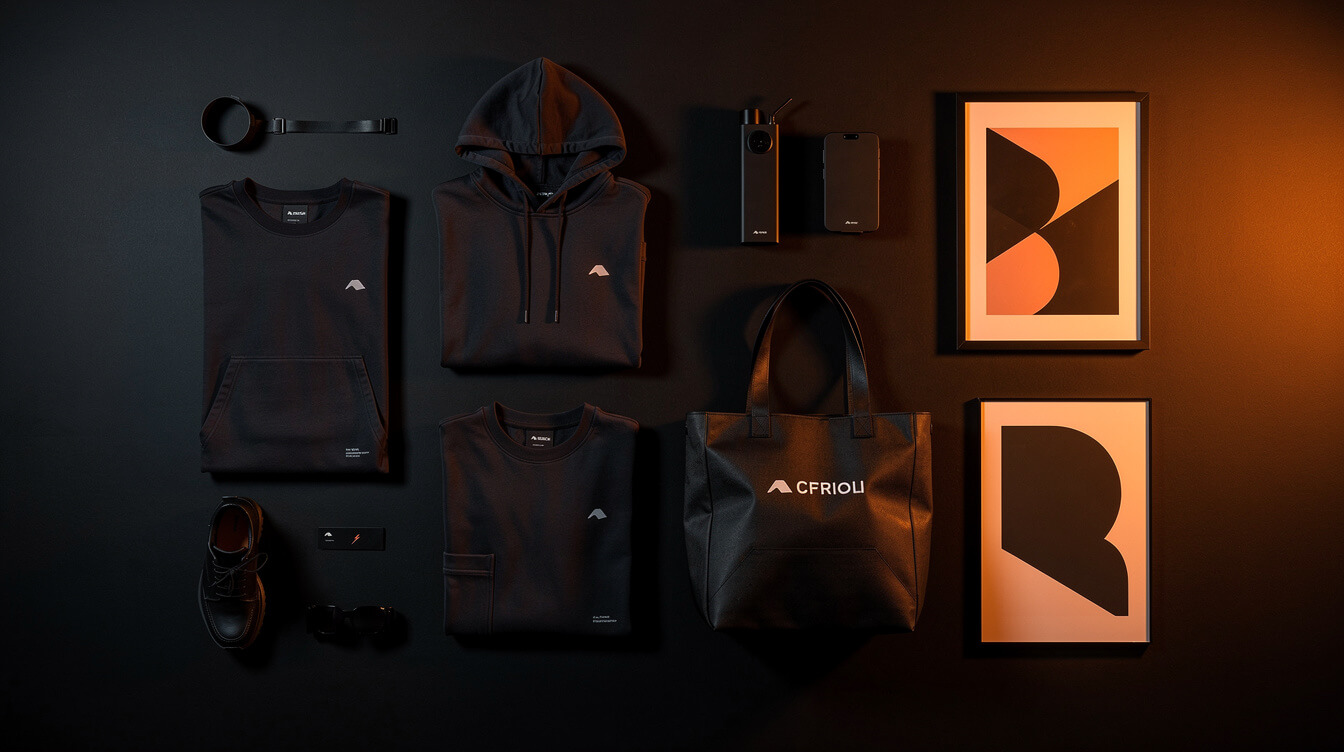
A book-only store is rare. Most creators who publish also have a community, a brand, or an audience that responds to merchandise. A novelist with a fantasy series wants enamel pins and tote bags. A non-fiction author who teaches a method wants branded hoodies and journals.
Lulu does not sell those items. So the practical question is this: how do you run a store that fulfills books through Lulu and merchandise through a separate POD provider, without maintaining two separate storefronts and two separate checkout flows?
Two fulfillment backends, one WooCommerce store
The answer is WooCommerce with two fulfillment backends.
Lulu Direct handles books. Printful (or Printify, Gooten) handles apparel and accessories. Both integrate with WooCommerce natively. A customer can add a hardcover book and a hoodie to the same cart, check out once, and both orders route to their respective fulfillment providers automatically.
The Shopify equivalent exists, but every transaction on Shopify carries that 1% override. On a $45 cart containing one book and one hoodie, that is $0.45 per transaction. Across a real operation, that number compounds month over month. Our review of Shopify POD app options covers what Shopify offers for this use case, including where the fee math changes the decision.
The automation gap on the merchandise side
The merchandise side of this setup is where manual work piles up quickly. Generating product variants, writing listings, handling sizing matrices, creating mockups for every new SKU. This is exactly what MEGA handles end-to-end: the apparel and accessories side of the store, from niche research to a published listing, in one automated pipeline. Lulu covers the book. MEGA covers the rest. The book gets the human attention it deserves. The merchandise side does not require it.
Where Lulu falls short for POD sellers

Lulu is an excellent tool for a specific job. It is not designed for POD sellers who need speed, scale, or catalog depth beyond books.
The gaps are structural, not incidental.
No AI-assisted product generation
Uploading a new book to Lulu requires uploading the interior file, the cover file, and manually configuring trim size, page count, paper type, and binding type for each format. There is no automation path. Every edition requires manual configuration from scratch, and every format variant is a separate upload workflow.
No niche research tools
Lulu does not help you identify which book formats or subject categories are performing well in any given niche. You bring the manuscript. Lulu prints it. Market intelligence is entirely your responsibility and entirely outside the platform.
No automated listing pipeline
Creating a product on Lulu Direct for WooCommerce requires manual product creation, image upload, and configuration. Lulu’s WooCommerce plugin is a sync tool, not a generation tool. It keeps your Lulu products connected to WooCommerce. It does not help you create new products faster or at higher volume.
Long upload workflow for multiple formats
A creator who wants to offer a book in paperback, hardcover, and large-print editions must set up three separate Lulu products and sync each to WooCommerce. For an author with a small backlist, that is manageable. For a creator publishing multiple titles per quarter, the manual per-format workflow is a recurring time cost.
For comparison, here is how Printify handles product creation on the apparel side. The platform is built for catalog velocity in a way that Lulu is not. That contrast is useful for understanding what each tool is actually designed to do.
When to use Lulu and when to look elsewhere

The right-tool question for Lulu is straightforward once you understand what the platform is designed to do.
Lulu is right for you if
- Your primary product is a book, photo book, calendar, or journal.
- You want to sell direct to your audience through an owned WooCommerce store without Shopify’s 1% platform override.
- You want wide retail distribution through Ingram as a secondary channel alongside your direct store.
- You value a stable, long-running platform with a track record in self-publishing that goes back two decades.
Look elsewhere if
- Merchandise (apparel, accessories, wall art, drinkware) is your primary product and books are secondary. Lulu handles books and only books.
- You need automated product generation at scale. Lulu’s workflow is manual. For a creator who wants to launch 30 or 50 new SKUs per month, Lulu’s per-format upload process is a hard ceiling.
- You need niche research and keyword-informed product decisions built into your workflow. Lulu is a fulfillment tool. Research is outside its scope entirely.
The most common scenario
The creator who has a published work, an audience, and wants both books and merchandise without two separate storefronts is exactly the use case WooCommerce is built for. Lulu Direct handles the book fulfillment. A pipeline like MEGA handles the merchandise operation, from research to live listing, without the manual 6-hour session for every new product.
If you are evaluating where to start or whether to move off Shopify, the AnyWherePOD review offers a useful comparison perspective on multi-platform POD management for store owners running both books and merchandise on the same platform.
Final thoughts
Lulu print on demand is a well-built platform for one job: printing and fulfilling books. Its pricing is competitive. Its WooCommerce integration is functional and genuinely useful. The Lulu Direct model gives a better per-unit margin than the Lulu Bookstore revenue share or Amazon KDP on physical book sales.
The platform’s limits are product scope decisions, not design flaws. Lulu does books. Everything else, you source elsewhere.
The practical question for most creators is not whether to use Lulu. It is how to connect Lulu’s book fulfillment to a broader product catalog through one owned WooCommerce store, and how much of the non-book side to automate so the book itself gets the attention it deserves.

Automate your merchandise side. Lulu handles the book.
MEGA generates complete POD product listings end-to-end: niche research, AI design, sizing, mockups, SEO copy, and live listings on WooCommerce and Printful. One pipeline. No Canva sessions.

Implement AI. 30x your throughput. Get a 30-min call with the founder.
Drop your details and book a free 30-minute discovery call. Personalized advice on your POD stack, your margin, and where AI fits. No pitch, no fluff.