Custom patches velcro: how POD sellers source, price, and sell without a warehouse
If you have been adding apparel accessories to your store, custom patches velcro options keep coming up. Collectors want removable patches. Tactical buyers want swappable gear. Streetwear brands want patches that move between jackets without damage. The search volume for velcro patch terms is rising, and the top SERP results are all patch manufacturers selling to consumers. There is no editorial for POD sellers asking the questions that actually matter: do Printful or Printify even carry velcro patches? What does sourcing look like if they don’t? And what does the margin math say at 50 units versus 200?
This post answers all of it.
Why custom patches velcro options are rising in the POD accessory category
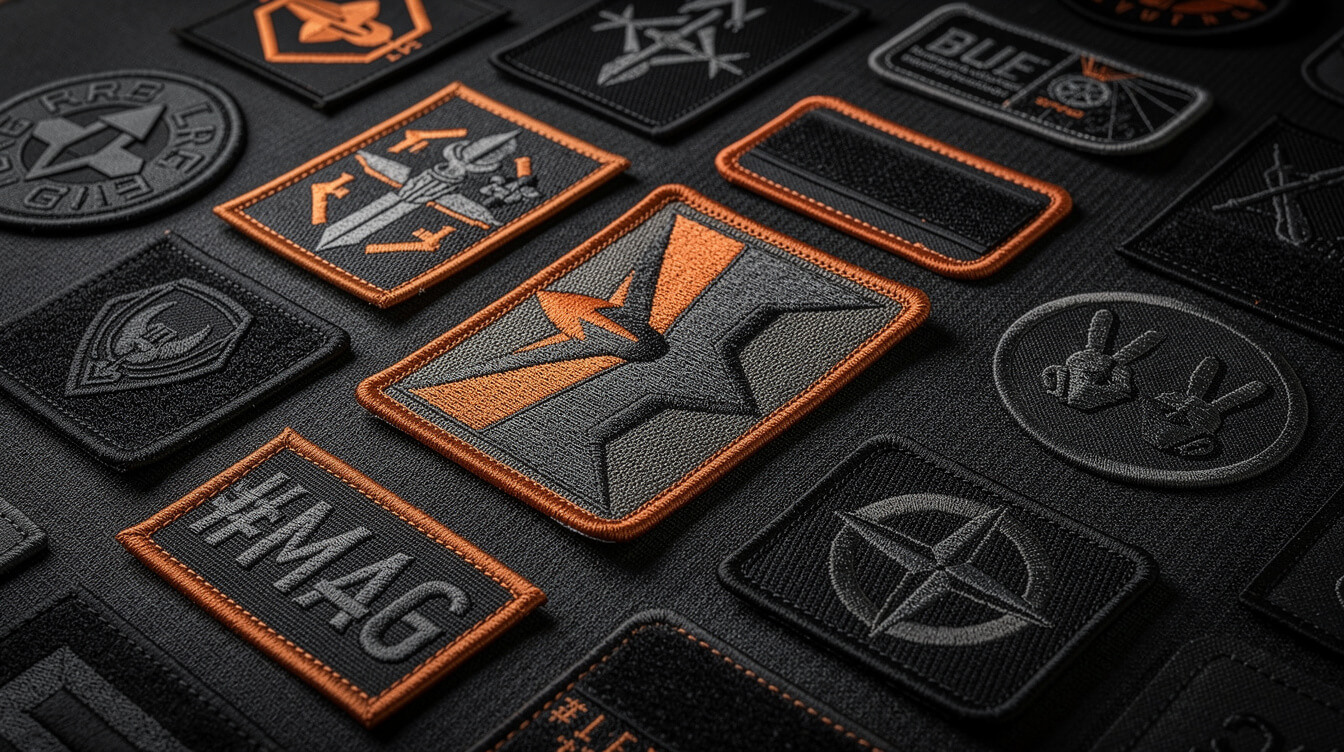
Morale patches have been part of military culture for decades. The tradition moved into tactical and outdoor markets, then into streetwear. Today, brands in all three verticals are selling patches as standalone accessories or bundled with apparel.
Velcro-backed patches, specifically the hook-and-loop style, have a practical appeal that iron-on and sew-on versions do not. Buyers can move them between items. They can organize patch collections on a vest or backpack, rearrange them, or swap them out seasonally. That reusability raises perceived value and supports a higher price point, typically $10 to $18 per patch at retail.
For POD sellers, this represents a low-inventory accessory with strong margins if you source correctly. The challenge is that the standard POD fulfillment model does not apply here. Printful and Printify do not offer velcro-backed standalone patches. If you want to sell them, you need to understand why, and what your actual options are.
Do Printful and Printify actually offer velcro-backed patches
The short answer: no. Neither platform offers velcro-backed standalone patches as a POD product.
Printful does carry embroidered patches as a print method for certain garments, but these are iron-on or sew-on only. A standalone velcro patch that ships as its own SKU is not in their catalog. Printify has a similar situation. Their provider network covers a wide range of products, but velcro-backed standalone patches are not available from any Printify-connected provider at the time of writing.
This matters because most POD sellers assume that if the product exists commercially, some print partner covers it. Patches are the category that breaks that assumption. You can buy velcro patches everywhere, but you cannot get them fulfilled on demand through a standard POD network.
The full Printful product catalog covers hoodies, bags, home decor, and accessories, but velcro patches fall into a category the platform has not built fulfillment infrastructure around. Understanding what your print partner covers and where the gaps are is foundational before adding any new product type.
What this means practically: velcro patches require a direct sourcing workflow. You work with a patch manufacturer, place a minimum order, and fulfill from your own inventory or via a small batch arrangement. The POD model shifts to a hybrid model for this product.
Unit cost math: sourcing custom patches velcro from a manufacturer

Patch manufacturers like Dutch Label Shop, Patches4Less, and Ninja Patches publish price scales based on quantity. The numbers matter, so here is what the typical range looks like.
At 50 pieces, embroidered velcro patches run approximately $3.50 to $6.00 per unit, depending on size, detail level, and whether both hook and loop backing are included. At 100 pieces, the unit cost drops to roughly $2.50 to $4.50. At 200 pieces or more, expect $1.80 to $3.00 per unit. These are rough industry ranges. Your actual quote will vary by vendor and spec.
If you sell a 3-inch embroidered velcro patch for $12.00 at retail, and your unit cost is $4.50 at 50 pieces with $1.50 in shipping overhead, your gross margin is around 50 percent. At 200 pieces with a unit cost of $2.50 and the same retail price, that margin climbs above 75 percent. The economics improve sharply with scale, which makes a test run at 50 to 100 units a reasonable starting point before committing to a larger run.
Shipping from patch manufacturers to your location adds cost. Most domestic US manufacturers ship via USPS or UPS at standard parcel rates. Budget $15 to $30 for a 50-unit order. International manufacturers, particularly those in Asia, may offer lower per-unit costs but add 3 to 4 weeks of lead time and potential import duties.
Compare this to other embroidery options. If you have explored custom hoodie embroidery for POD stores, you know the per-unit cost on embroidered apparel runs $8 to $18 per garment before the blank is factored in. A standalone velcro patch at $4.50 is a lower upfront cost, with simpler fulfillment, if you are running small batches from your own stock.
Velcro vs iron-on vs sew-on: which patch backing sells best

Smash print-on-demand. Join the engine room.
One short email a week. Real numbers, real teardowns, the unfiltered economics behind every move.
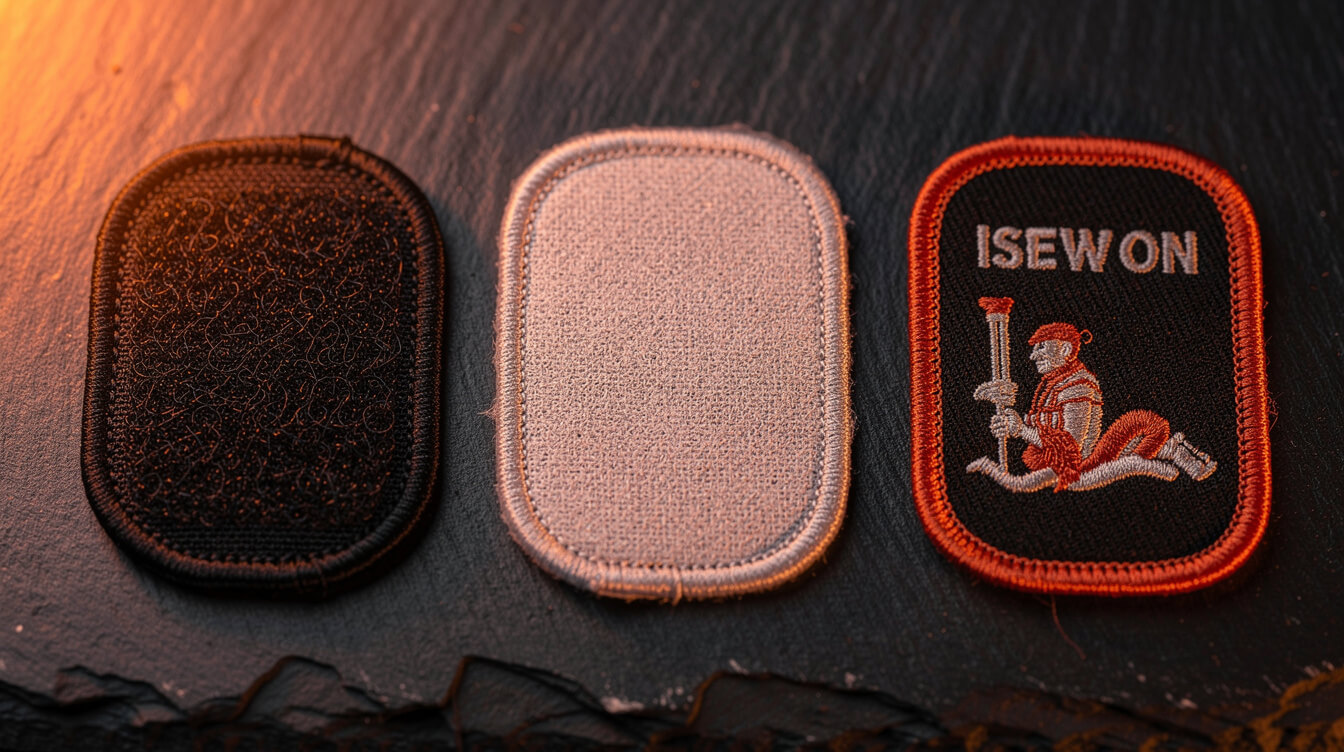
Each backing type serves a different buyer and use case. Understanding the differences helps you position your product correctly and avoid returns from buyers who expected one thing and received another.
Velcro (hook-and-loop): Removable and reusable. Best for buyers who want flexibility: collectors, tactical gear users, outdoor enthusiasts, and anyone building a rotating patch collection. Velcro patches command a premium. The backing adds production cost, and buyers understand that. $10 to $18 at retail is standard. One trade-off: the backing requires velcro loops on the item you are attaching to. Military-style vests, backpacks, and certain jackets have this. Consumer apparel usually does not.
Iron-on: Permanent once applied. Lower production cost and lower price point. Buyers who want to customize a jacket or bag with a one-time decoration prefer this. Easier for consumers to apply at home. The concern: iron-on patches peel or lift on garments that go through repeated washes, especially at high temperatures. Quality iron-on adhesive reduces this, but it remains a product support issue to manage.
Sew-on: Most durable. No adhesive involved, so there is no peeling or lifting. Buyers who want a permanent, professional finish choose this. Application requires a needle and thread or a sewing machine, which limits the buyer pool to those with sewing skills or access to a tailor. If you have looked into custom screen printing transfers, you are already familiar with the trade-off between DIY-application products and professionally applied equivalents. Sew-on sits at the same point on that spectrum: durable but not self-service.
Velcro outsells the other two in markets where interchangeability is part of the product’s appeal. Tactical and outdoor gear buyers, in particular, expect velcro as the default. For streetwear, iron-on or sew-on is more common, since the jacket stays on the wall or in the wardrobe.
If you are using MEGA to research and launch new product lines across your WooCommerce store, each patch backing type represents a distinct product line with its own customer profile, SEO angle, and listing copy.
How to add velcro patches to your WooCommerce store without a warehouse
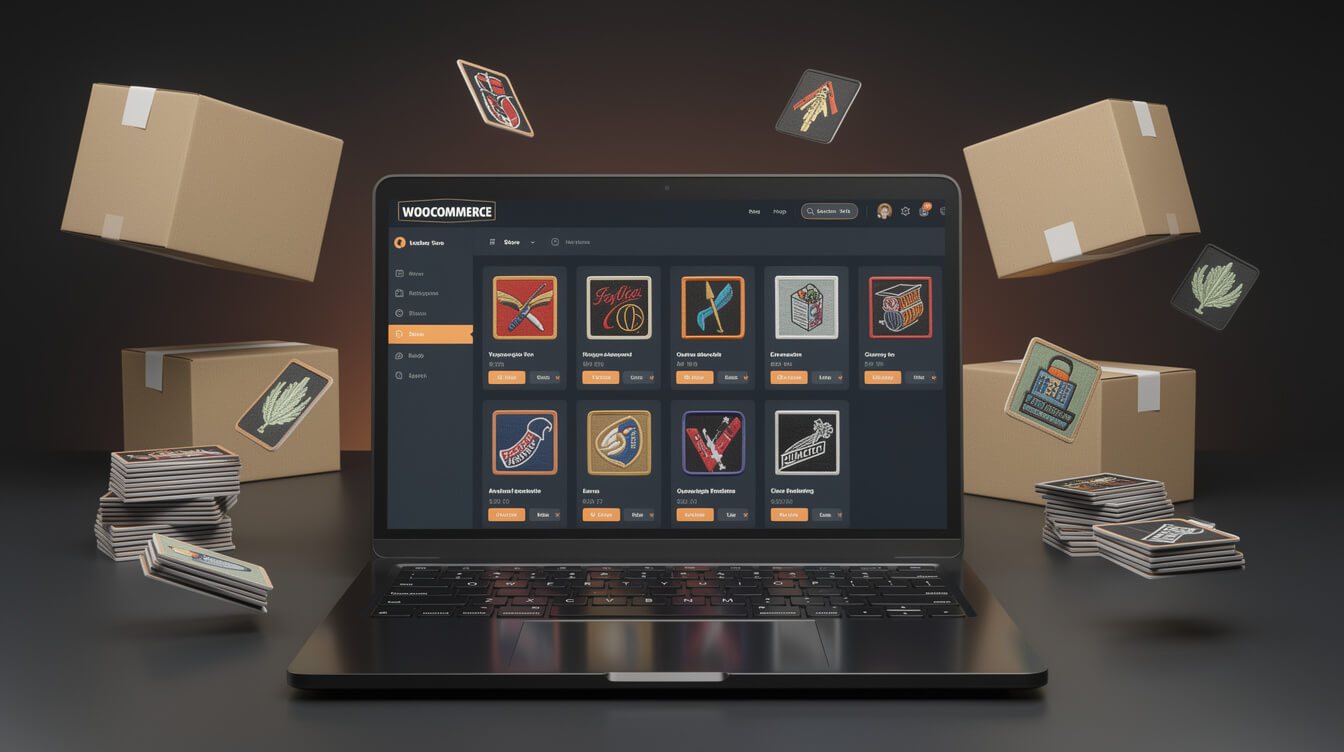
Running patches through a WooCommerce store does not require warehouse space. Here is the workflow that keeps inventory light.
Start with a small test batch. Order 50 to 100 patches from a manufacturer. Keep them at home or at a small studio. List them in WooCommerce as physical products with inventory tracking enabled. When an order comes in, you pack and ship manually or via a local fulfillment service.
For sellers who want to avoid any physical inventory, a hybrid approach works: partner with a patch manufacturer who ships direct to your customers using your branding. This is not on-demand fulfillment in the standard POD sense. It requires coordination and minimum order commitments, but some manufacturers accommodate it for repeat customers.
WooCommerce gives you full control over how products are listed, priced, and bundled. You can offer velcro patch packs, mix backing types in a single listing, or create bundles with compatible apparel. The platform does not charge per-transaction override fees, which matters when your average order value is $10 to $20 for a patch.
Build your patch store with a research-to-listing pipeline
MEGA automates the niche research, product listing, and SEO work that slows down POD sellers. If you are sourcing patches and need to launch product lines fast, the MEGA pipeline cuts the manual research cycle to under seven minutes per product.
The morale patch niche: tactical outdoor and streetwear demand
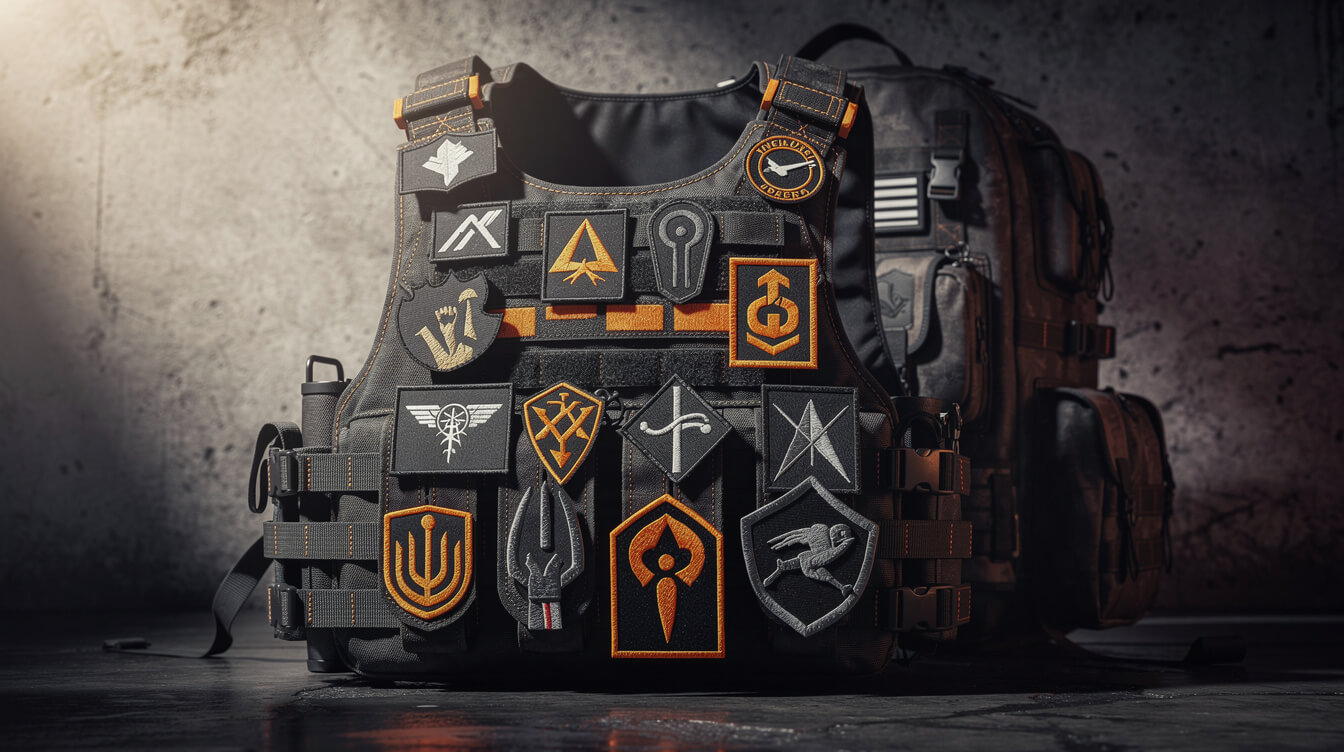
Morale patches originated in military units as a way to identify squad affiliation, commemorate missions, or add personality to standard-issue gear. The tradition moved into law enforcement, fire service, and emergency medical communities. From there, it crossed into civilian tactical culture, then into outdoor recreation, then into streetwear.
Today, morale patches are a legitimate collector market. Enthusiasts build patch collections the same way others collect pins or stickers. The velcro-backed format makes them particularly suited to collection culture: patches can be displayed, traded, or rotated without permanent commitment to a single placement.
Three sub-niches have the strongest demand for velcro patches right now:
- Tactical and EDC (everyday carry): Buyers who outfit backpacks, range bags, and chest rigs. High average order value, high repeat purchase rate, and strong community behavior that drives word-of-mouth sales.
- Outdoor and adventure: Hikers, climbers, overlanders. Patches mark trips, peaks, or clubs. The national park and wilderness aesthetic drives strong demand for location-specific and achievement designs.
- Streetwear and limited releases: Brands using patches as limited-edition accessories to drive social media engagement. Patch drops function like apparel drops. Velcro is preferred here because the patch completes an outfit without permanently altering it.
For POD sellers, the morale patch niche rewards specificity. Generic patches underperform. Niche-specific designs that speak directly to a community’s inside references consistently outperform broad designs. The research step matters more here than in almost any other POD accessory category.
Shopify 1% on low-AOV accessories and why WooCommerce wins for patch sellers
Patches sell at $10 to $18 per unit. That low average order value makes the platform fee conversation unavoidable.
Shopify charges a 1% override fee on top of payment processing for anyone not using Shopify Payments. Even on Shopify Payments, the Basic plan charges 2.9% plus $0.30 per transaction. On a $12 patch sale, you are looking at roughly $0.35 to $0.65 in platform and payment fees before shipping, production, or cost of goods are factored in. That is a real number when your gross margin per unit is $7.50.
The fee structure we have covered in detail in our Shopify transaction fees breakdown for POD sellers shows exactly how the math compounds at scale. A store doing 500 patch transactions per month at $12 each pays $175 to $325 per month in fees alone, not including Shopify’s monthly plan cost of $39 and up.
WooCommerce eliminates the per-transaction platform override. You pay hosting, a payment gateway fee (Stripe or similar charges 2.9% plus $0.30, but that is the processor’s fee, not a platform tax), and optional plugin costs. The monthly platform cost for a WooCommerce store on a decent managed host runs $15 to $30. That is the ceiling, not a floor that scales with revenue.
For accessory sellers with a low average order value and a repeat customer base, the math consistently favors WooCommerce. Patches are exactly the product category where that advantage is clearest. The lower your AOV, the more each percentage point of platform fee costs you relative to gross margin.
Common questions about custom velcro patches for POD sellers
Can I get velcro patches made with no minimum order? Most patch manufacturers require a minimum of 25 to 50 pieces per design. True no-minimum velcro patch fulfillment through a standard POD network is not currently available. If no-minimum is essential, iron-on patches through certain POD providers are an alternative, though without velcro backing.
How long does production take for custom velcro patches? Domestic US manufacturers typically take 10 to 14 business days for embroidered velcro patches. International manufacturers run 3 to 6 weeks. Rush options exist but add cost, typically 25 to 50 percent on top of the base price.
What size sells best for velcro patches? The 3-inch and 3.5-inch sizes are the most common for morale patches. Smaller patches at 1 to 2 inches work well for hats and bags. Larger patches at 4 to 5 inches are used on back panels and jacket sleeves. Offer two sizes if you are testing a new design to see which dimension gets more traction.
What is the difference between hook velcro and loop velcro on a patch? Hook is the rough, scratchy side. Loop is the soft, fuzzy side. Patches typically ship with the hook side attached. The loop panel goes on the wearable item, the vest, backpack, or jacket. Make sure your product listings specify which backing is included so buyers know they need a compatible loop surface for attachment.
Can I sell velcro patches through a WooCommerce store that also uses Printful? Yes. Printful will handle your apparel fulfillment while you manage velcro patches separately through your own sourcing workflow. WooCommerce supports multiple fulfillment methods within the same storefront. If you also sell custom sweatshirts through Printful, the two product lines run independently without any conflict at the store level.
What to do next
Custom patches velcro is a real product opportunity for POD sellers willing to step outside the standard on-demand fulfillment model. The category has clear demand, a rising collector culture across tactical outdoor and streetwear markets, and economics that improve significantly with scale.
The workflow requires direct sourcing from a patch manufacturer, but the margin math at 100-plus units makes it viable. WooCommerce is the right storefront for this product category. The 1% platform override that Shopify charges on low-AOV accessories erodes margin in exactly the wrong place.
If you are building a multi-product POD store and want the research and listing pipeline to run automatically, MEGA handles niche discovery, product research, and listing generation so you can focus on sourcing decisions rather than content work.
Implement AI. 30x your throughput. Get a 30-min call with the founder.
Drop your details and book a free 30-minute discovery call. Personalized advice on your POD stack, your margin, and where AI fits. No pitch, no fluff.