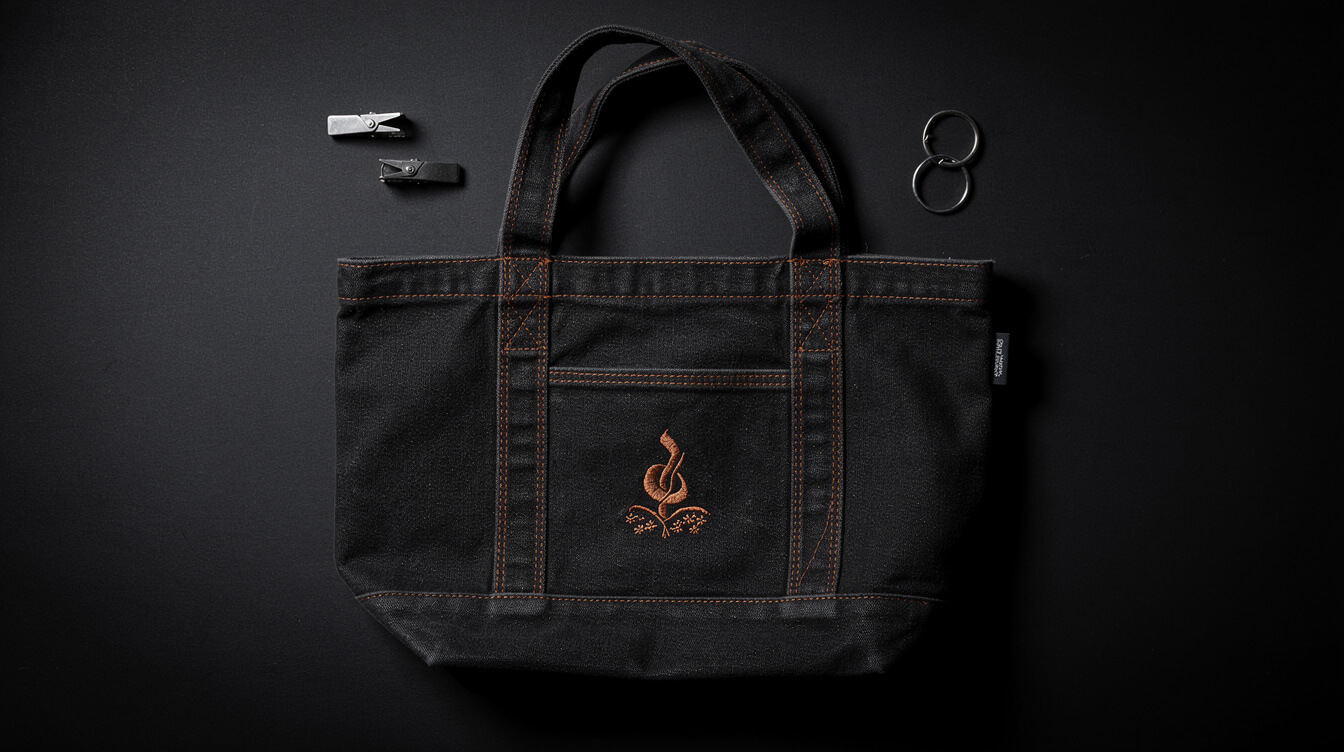
Custom embroidered tote bags for POD stores: which providers do it, what it costs, and when the margin works
Custom embroidered tote bags occupy a genuine gap in the print-on-demand market. Search volume exists, the price point is real, and buyers associate embroidery with quality in a way that screen printing simply does not deliver. But if you search for how to actually sell them as a POD seller, you get Lands End Business, kenzkustomz, and ToteBagFactory — product pages, zero editorial for the seller who wants to add a custom embroidered tote bag line to an existing WooCommerce or Printful-connected store.
This guide covers what the search results skip: which POD providers actually support embroidered totes, what the unit cost math looks like at small volumes, whether the margin holds at a $28-35 retail price point, and what the Shopify 1% transaction fee does to that margin on every order.
Why embroidered tote bags are a real POD opportunity
Tote bags are the most popular accessory category in print-on-demand, after apparel. They ship flat, have no size variants, and come back at a fraction of the return rate of clothing. That baseline demand is strong. But printed totes are commoditized. You can buy a branded canvas tote from fifty suppliers at $18-22 retail. The margins are thin, the differentiation is low, and competing on a generic DTG-printed tote is a race to the bottom on price.
Embroidery changes the positioning. A well-executed embroidered tote commands $28-38 at retail — a 40-60% premium over a comparable printed version. Buyers perceive embroidery as durable and intentionally crafted. Corporate gifting buyers, in particular, associate it with quality and permanence. Wedding and event planners use embroidered totes as premium favors because the texture reads as considered rather than printed-and-forgotten.
Three demand clusters make this worth building toward:
- Corporate gifting. Companies buying 10-50 branded totes for events or welcome kits are willing to pay $30-45 per bag. They are not price shopping against Etsy listings.
- Event and celebration merch. Bachelorette parties, baby showers, school fundraisers, and milestone gifts regularly use personalized embroidered accessories at premium price points.
- Eco-conscious consumer merch. Buyers choosing a canvas tote as a lifestyle purchase often want the product to feel elevated, not disposable. Embroidery signals permanence in a way a heat-transfer print does not.
The accessory category also benefits from a structural advantage: no sizing. A tote bag converts without a size chart conversation, without the “I ordered a medium and it runs small” return, and without the inventory logic of offering XS through 3XL on every design. For POD sellers who have worked through apparel’s fulfillment complexity, the simplicity of an accessory SKU is a real operational relief.
For POD stores already running custom canvas tote bag printing, adding an embroidered SKU is a natural product-line extension that opens a different customer segment without changing your supplier relationships.
Which POD providers support embroidered tote bags
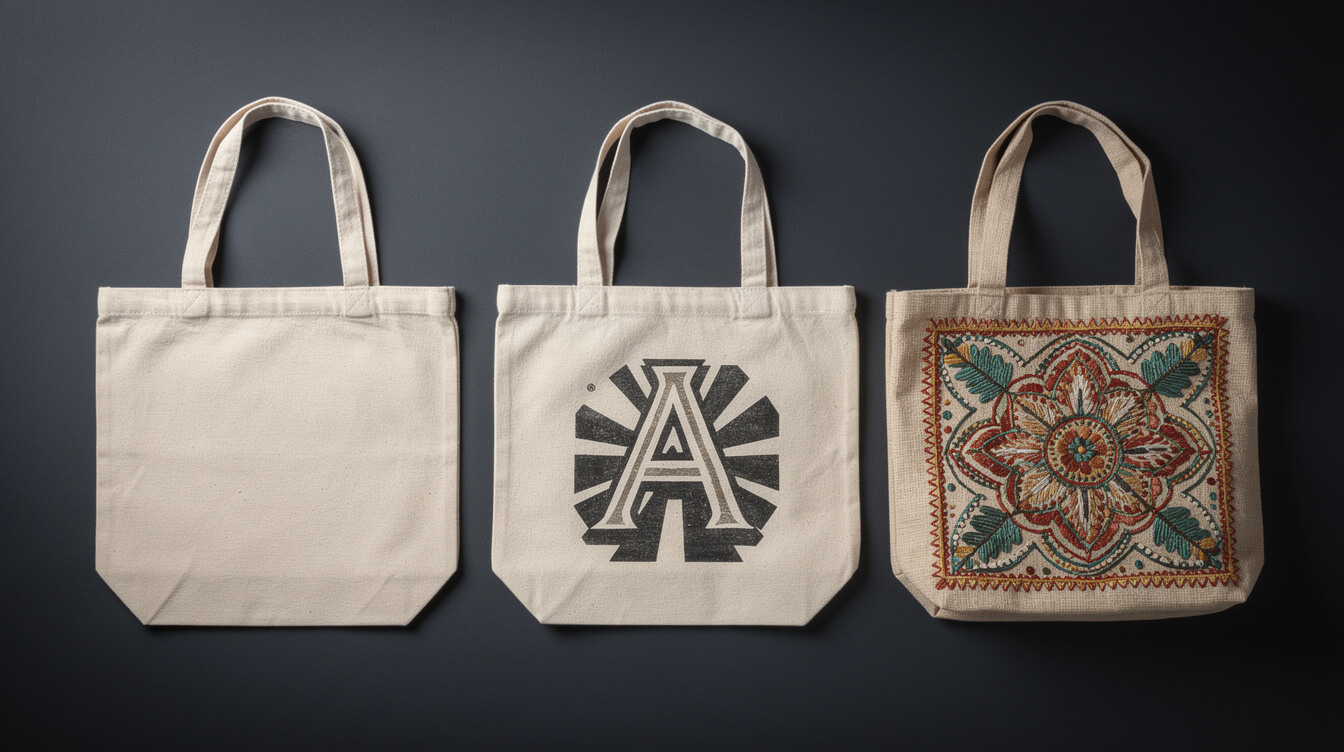
This is where most resources go silent. The short version: embroidered tote bag support in the POD world is narrower than embroidered hats or shirts, but it exists. Here is what each major platform actually offers as of mid-2026.
Printful
Printful offers embroidery on select bag products, including certain tote styles through their in-house fulfillment centers. Their embroidery workflow works as follows: you submit your artwork, Printful either accepts an existing stitch file (DST format) at a reduced digitization fee of around $6.95, or converts your artwork to a stitch file for approximately $25-30 per design. This digitization fee is a one-time cost per design, not per order. Every subsequent unit produced from that design uses the same stitch file at no additional setup cost.
Printful’s embroidered bag catalog is more limited than their hat catalog. Their product lineup changes quarterly, so check their current catalog for the specific embroidery-enabled tote SKUs. When evaluating, look for products where “embroidery” is listed as the customization method, as opposed to DTG, sublimation, or cut-and-sew. Not every tote in their catalog supports embroidery.
Printify
Printify connects you to a network of independent print providers, and embroidery availability varies significantly by provider. Some providers in the network — particularly those focused on promotional products and corporate merchandise — offer embroidery on tote bags and accessories. The challenge with Printify’s model is consistency: different providers have different quality standards, different digitization processes, different fulfillment speeds, and different stitch-count pricing. If you find a Printify provider offering embroidered totes, request samples from at least two different provider options before listing. Comparing stitching quality in person is the only reliable way to validate a production partner you cannot visit.
Specialist alternatives
For serious volume or premium quality, specialist embroidery-capable POD providers are worth evaluating. Apliiq focuses on custom apparel and accessories with embroidery capabilities and is designed for brands building at scale rather than for individual listings. SPOD (Spreadshirt’s POD arm) has limited embroidery options and is primarily screen-print focused. Companies like BrokenArrowWear offer custom embroidery at strong quality levels but require minimum order quantities that break the pure POD model.
The honest reality: if embroidered tote bags become a significant revenue line, you may eventually outgrow the pure POD model and move toward a hybrid approach — ordering blank totes in small batches of 24-50 units and using a local embroidery shop. The per-unit economics at 50+ units are substantially better than single-unit POD. That is a different operation, but it is worth knowing where the ceiling is so you can plan toward it.
Unit cost math: plain canvas tote vs embroidered tote vs custom-print tote

Three product types, three cost profiles. Here is where the numbers actually live.
Plain printed canvas tote (DTG or screen print via Printful)
- Blank tote cost: $5-7
- Print fee for one-location DTG: $3-5
- Total base cost: $8-12 per unit
- Typical retail: $18-24
- Gross margin at $20 retail and $10 base: $10 (50%)
DTG-printed tote with full-color design
- Base product plus DTG print: $9-14 depending on ink coverage and design complexity
- Better for photorealistic or gradient designs that embroidery cannot replicate
- Total base cost: $9-14 per unit
- Typical retail: $20-28
Embroidered canvas tote
- Blank tote — embroidery-compatible spec: $8-12
- Embroidery fee, varying by stitch count: $6-15
- Digitization fee: $25-30 one-time per design
- Total base cost per unit: $16-27 (before amortizing digitization)
The digitization fee is where most POD sellers stumble on the initial cost calculation. It looks expensive upfront, but it is a one-time cost per design, not a recurring cost. Here is how it spreads across order volume:
- 5 units sold: $5-6 per unit added from digitization
- 20 units sold: $1.25-1.50 per unit added
- 50 units sold: $0.50-0.60 per unit added
- 100 units sold: $0.25-0.30 per unit added
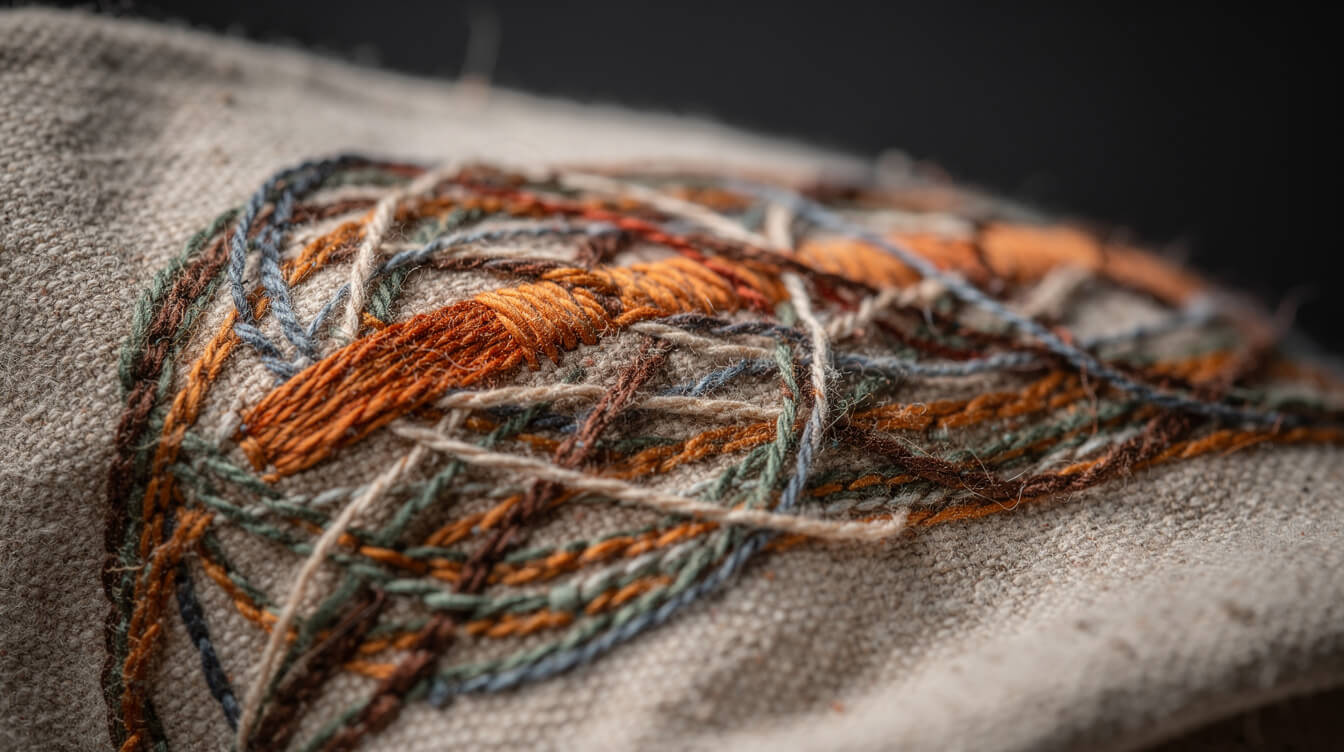
If your design converts at all, the digitization fee becomes negligible within 30-50 sales. The variable you should focus on is the per-unit embroidery fee: a simple 5,000-stitch logo (small chest placement) costs significantly less than a complex 15,000-stitch full-front design. Stitch count is your cost lever on embroidered products, and optimizing for it at the design stage is the most effective way to protect margin.
For a detailed breakdown of how embroidery compares to other print methods on quality and output, our guide on DTG vs DTF for print-on-demand sellers covers the method comparison with cost data across fulfillment scenarios.
Setting retail price for a $25-35 embroidered tote and what the margin actually is

Smash print-on-demand. Join the engine room.
One short email a week. Real numbers, real teardowns, the unfiltered economics behind every move.
Let us run the actual numbers on a realistic embroidered tote SKU. This is the math the vendor product pages do not show you.
Scenario: standard embroidered logo tote, Printful, digitization amortized over 20 units
- Base product cost: $12
- Embroidery fee at 8,000 stitches, chest logo placement: $9
- Digitization amortized at 20 units: $1.40
- Total unit cost: $22.40
At $32 retail with customer paying shipping ($5.99 separately):
- Revenue per order: $32.00
- Unit cost: $22.40
- Gross margin: $9.60 (30%)
At $35 retail with free shipping absorbed into price (your effective tote cost rises by ~$4 to cover fulfillment):
- Revenue per order: $35.00
- Effective unit cost with shipping: $26.40
- Gross margin: $8.60 (24.6%)
Thirty percent gross margin is tighter than a printed tee at volume, but it is workable for an accessory that retails at $32-35. The critical number is the absolute dollar return: $9-12 gross profit per order produces a meaningful return per sale. Compare that to a $22 printed tote at 50% gross margin — that is $11 gross profit per order, nearly identical in dollar terms but requiring you to compete in a crowded, lower-price market.
The embroidered version also has a structural pricing advantage: customers who seek out embroidered products are less price-sensitive than buyers comparison-shopping generic totes. You are not fighting a race to $18. You are competing on quality positioning at $32+, and at that price point there are far fewer sellers.
The margin math tightens further when you add platform fees. That is the next section.
MEGA builds the complete embroidered tote SKU in under 7 minutes
From niche research to live WooCommerce product listing, MEGA automates the full POD pipeline end-to-end. No Canva grind. No manual Printful uploads. No guesswork on pricing.
The Shopify 1% fee at $30 AOV: what it costs per bag sold

Shopify charges a transaction fee on every order when you use a payment processor other than Shopify Payments. On the Shopify plan at $79/month, that fee is 1% of the order total. On Basic ($29/month), it is 2%. On Advanced ($299/month), it drops to 0.5%. These fees exist on top of whatever your payment processor charges.
At a $30 average order value, the math looks manageable at first glance. One percent of $30 is $0.30 per order. But run it at volume:
- 100 embroidered tote orders per month at $30 AOV: $30/month to Shopify in transaction fees
- 300 orders/month ($9,000 revenue): $90/month, or $1,080/year
- 1,000 orders/month ($30,000 revenue): $300/month, or $3,600/year
That $3,600 per year comes directly out of margin. On an embroidered tote with $9-12 gross margin per unit, losing $0.30 per order to Shopify means you are giving away 2.5-3.3% of your per-unit margin on every single sale. Small in isolation. Compounding against you as volume grows.
And transaction fees stack. You are already paying the payment processor fee — Stripe or PayPal charges 2.9% plus $0.30 per transaction. Shopify’s transaction fee is a second layer on top of that. At $32 AOV on Shopify’s Basic plan with the 2% transaction fee, you pay Shopify $0.64 per order plus $0.93 to Stripe. That is $1.57 in pure payment friction before Printful gets paid for a single embroidered tote.
For a full analysis of how the Shopify fee stack compounds across a POD store’s revenue at different monthly volumes, our breakdown of Shopify transaction fees for POD sellers runs the complete numbers.
Why WooCommerce changes the tote bag math

WooCommerce charges no platform transaction fee. That is the entire argument in one sentence.
You still pay your payment processor — Stripe, PayPal, or Square — at their standard rates (Stripe is 2.9% + $0.30 per transaction). But there is no additional percentage going to WooCommerce for the privilege of using any payment processor you choose. The fee stack is one layer, not two.
On $30,000 per month in embroidered tote revenue:
- Shopify plan (1% transaction fee): $300/month extra, or $3,600/year going to Shopify in pure overhead
- WooCommerce: $0 in platform transaction fees on the same revenue
That $3,600/year difference is not theoretical margin improvement. It is real money that stays in your operation when you own the platform rather than rent it. At a $10 gross margin per embroidered tote, $3,600/year represents 360 additional units of pure margin equivalence — orders you would need to generate just to offset the Shopify fee.
WooCommerce does not solve your unit production costs. Printful charges the same base price regardless of whether your store runs on Shopify or WooCommerce. What WooCommerce removes is the compounding overhead that scales against you specifically as your revenue grows. The more you sell, the more the Shopify fee costs. WooCommerce stays flat at zero.
Tools like MEGA automate the full embroidered tote SKU pipeline on WooCommerce, from niche research and pricing to live product listing, in under 7 minutes. If you are running a manual workflow on Shopify right now, you are paying the Shopify tax and spending hours on manual setup simultaneously. The platform choice and the workflow efficiency are two separate levers — but they both move margin in the same direction when optimized.
For a complete breakdown of WooCommerce’s cost structure versus Shopify across different store revenue tiers, our guide to WooCommerce pricing for POD stores in 2026 covers the full cost comparison.
Design considerations: what embroidery handles well vs what needs DTG instead
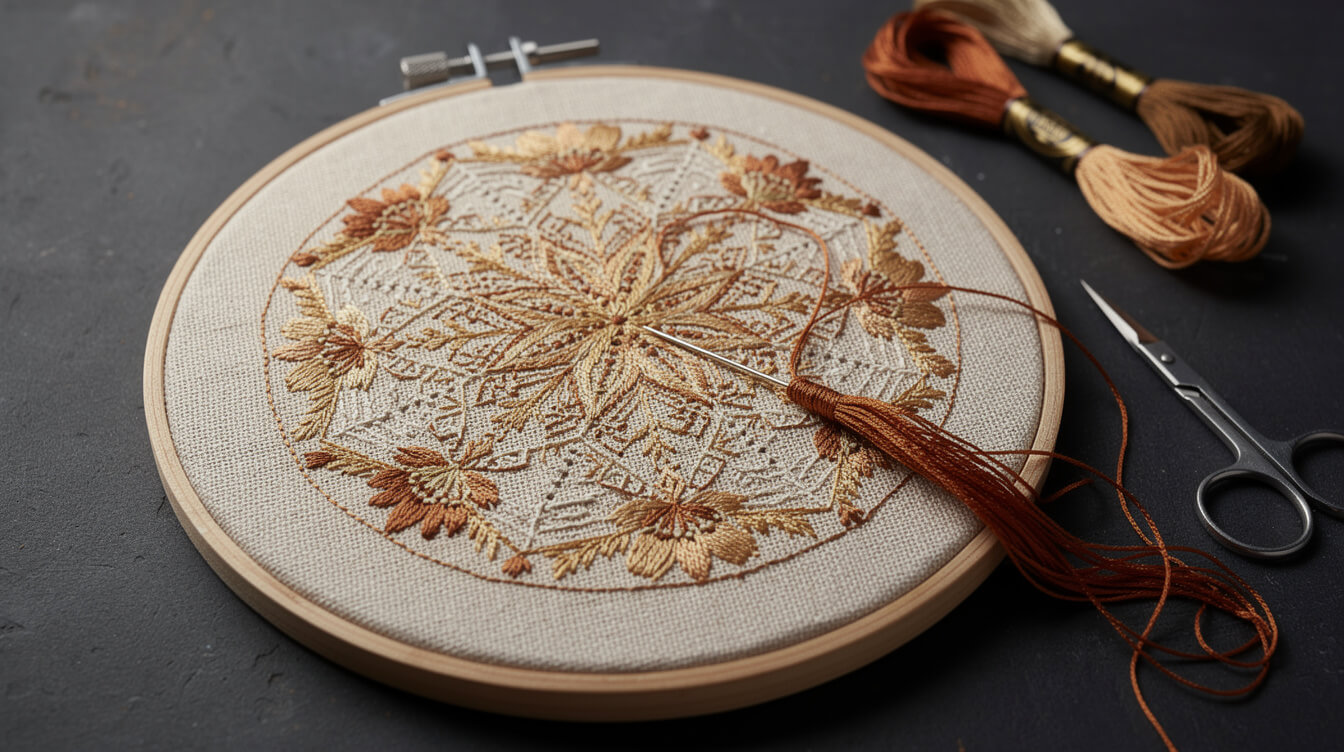
Embroidery and DTG are not interchangeable print methods. They handle fundamentally different types of artwork, and using the wrong method for a design produces poor results that generate refund requests and damage your store’s reputation. Here is the practical breakdown for POD sellers making the format decision.
What embroidery handles well
- Bold logos with clean outlines. Simple brand marks, monograms, and geometric shapes convert to stitch files cleanly and look sharp on canvas. This is the native territory of embroidery.
- Text in block or sans-serif fonts. Bold sans-serif fonts such as Helvetica, Futura, or Gill Sans digitize well at 8pt and above. Script and serif fonts below 12pt tend to blur as stitches collapse the fine details.
- Solid fills with defined edges. Embroidery creates texture through thread direction and density. Clean solid fills with hard edges produce the best result.
- 2-4 color designs. More colors mean more thread changes during production, higher complexity in the stitch file, and higher per-unit cost. Simple palettes keep cost and quality consistent across orders.
What needs DTG instead
- Photorealistic images and photographs. Embroidery cannot render gradients or continuous tones. A pet portrait, a landscape photograph, or any image with soft color transitions belongs in DTG, not embroidery.
- Designs with fine detail below 2mm. Very thin lines and small detail elements — intricate floral patterns, detailed illustrations — get lost in stitching at any reasonable size.
- Full-coverage designs. A full-canvas print covering most of a tote is DTG territory. Embroidery is a placement print method: chest logo, corner badge, or small centered motif.
- Designs with more than 6 colors. High color counts drive up stitch complexity and cost significantly, often making DTG the better economic option.
Stitch count and placement guidance
The most common placement for an embroidered tote is a centered chest logo or a corner badge. A standard chest logo runs 5,000-8,000 stitches for a 3-4 inch design. A more complex full-front design can reach 20,000-30,000 stitches, at which point DTG is often the better economic and visual choice unless the tactile texture of embroidery is specifically what the customer wants and will pay for.
For your first embroidered tote SKU, start with a simple monogram, a minimal brand mark, or a bold single-word design. These digitize cleanly, keep stitch count low (and therefore cost predictable), and photograph well for product mockups. Once you have one converting SKU with a proven margin structure, adding design complexity to future products carries substantially lower risk because you understand the cost model.
The method question is ultimately a product positioning question. If your store’s design library leans toward bold, minimal brand aesthetics, embroidery is a natural extension. If your designs tend toward detailed illustration or photography, stick with DTG for totes and reserve embroidery for simpler logo products like hats or polo shirts where the method is expected.
Is the embroidered tote right for your POD store?
Custom embroidered tote bags are not a fit for every POD operation. The unit costs are higher than printed alternatives, the POD provider options are narrower, and the digitization workflow adds a step that plain DTG printing skips entirely. But for sellers already operating at the premium end of the accessory market — or actively looking to move there — embroidery opens a genuine price-point expansion with real structural advantages.
A $35 embroidered tote competes in a different category than a $22 printed one. The customers are different, the competitive set is smaller, and the return rate is lower. The margin math works when you get three decisions right: keep stitch counts reasonable on initial designs, price to the $30-38 range where the premium is defensible, and run on a platform that does not charge you a 1-2% transaction fee on every order. Those three decisions together are the difference between a product line that compounds in your favor and one that looks viable on paper but erodes quietly at scale.
The gap in editorial for POD sellers on this topic is real. Most of the competition for the keyword is B2B vendors selling at 50-unit MOQ. If you can build a converting embroidered tote product in a POD model, you are in a space where there are very few others doing the same thing with editorial authority to match.
Implement AI. 30x your throughput. Get a 30-min call with the founder.
Drop your details and book a free 30-minute discovery call. Personalized advice on your POD stack, your margin, and where AI fits. No pitch, no fluff.