Custom baseball jerseys for POD sellers: provider options, sublimation vs DTG explained, and the unit cost math
If you search “custom baseball jersey,” every result is a team uniform supplier with a minimum order of 12 to 50 units, a design team on call, and a two-week production window. That SERP was built for athletic directors, not POD sellers. The question most sellers actually have, which is whether they can list sublimated baseball jerseys on their store with no minimum order, goes completely unanswered. This article fills that gap. It covers which providers carry custom baseball jerseys for POD, the exact print method used, unit cost math at 1/10/50 units, and the specific niches where a no-MOQ jersey catalog outperforms a team uniform vendor every time.
Does Printful carry custom baseball jerseys?
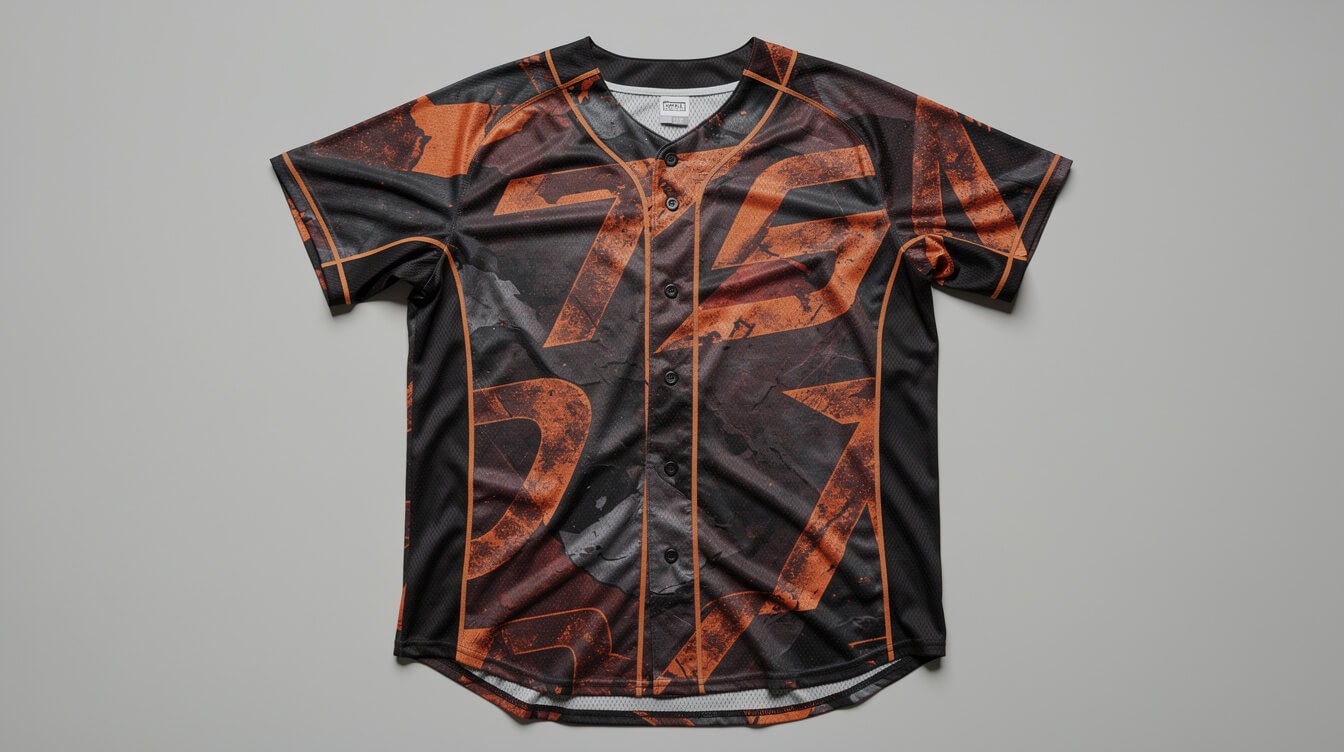
Yes. Printful carries sublimated baseball jersey-style button-down shirts as part of its all-over print (AOP) catalog. The product is typically listed under athletic jerseys or AOP button-down shirts — the exact SKU name varies by region and catalog refresh cycle, but the product itself is a polyester jersey-style top with full-sublimation capability across the entire front, back, and sleeves.
The key spec to understand: Printful’s baseball jersey is a polyester fabric with a button-down closure and a classic jersey silhouette. It is not a replica MLB jersey with stitched numbering. It is a blank polyester shell that accepts dye sublimation printing on every panel. That distinction matters for marketing copy. You are selling a fan-art jersey or a music-artist-themed jersey, not a licensed replica.
Printify also carries baseball jerseys through its partner network. The specific provider depends on your fulfillment region. Printify’s catalog lists jersey-style options via partners including AOP+ and other all-over print facilities. Product specs vary by partner, so always check the mockup generator for actual dimensions and the print area before building a listing. Some Printify partners offer lower base costs than Printful, but production time and fulfillment consistency vary. Run a test order before committing to a partner as your primary jersey supplier.
Both platforms allow single-unit ordering. No minimum. One unit at production cost is available for drop-ship the same as any other AOP product. A sports team supplier like Champro or TeamTriton will not take an order for two jerseys. Printful will. That no-MOQ capability is the core competitive advantage over every team uniform supplier ranking for this keyword, and it is why the POD seller’s business model works where a traditional custom jersey reseller cannot operate at small scale.
Within Printful’s catalog, you will also find AOP jerseys in women’s and youth cuts depending on current inventory availability. Check the mockup generator before building your store structure around these variants, as catalog depth in cut variations can shift between seasons. Men’s AOP jerseys have been a stable SKU for multiple years. Youth cuts have more limited availability.
Sublimated jersey vs DTG on jersey fabric: what sellers need to know
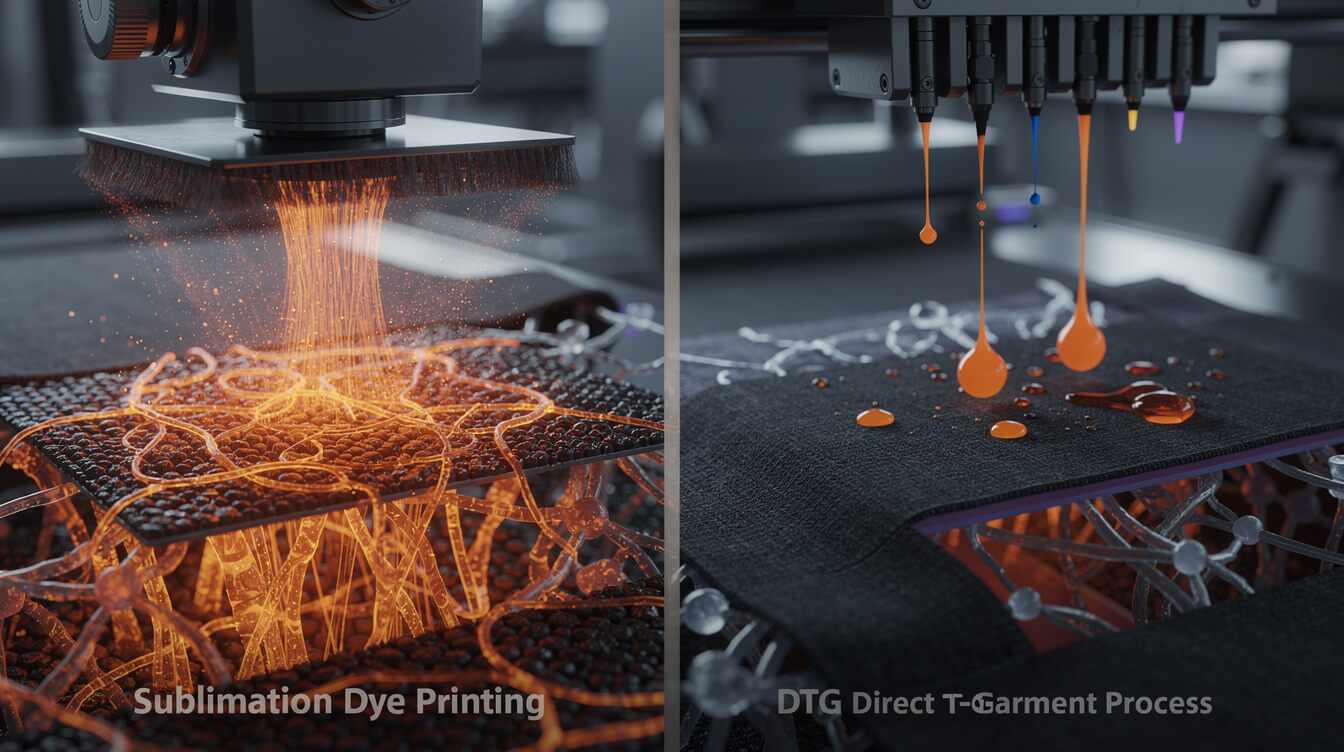
The print method matters for quality, durability, and which designs work on this product. Baseball jerseys are almost always polyester, and polyester requires sublimation, not DTG. Here is why.
DTG (direct-to-garment) printing uses water-based inkjet technology that bonds with cotton fibers. On polyester, the ink does not bond properly. It sits on the surface, fades after a handful of washes, and produces a dull, blotchy print with poor color saturation. Any provider offering DTG on a polyester jersey should be a red flag for quality-conscious sellers. If you have ever received a DTG print on a synthetic fabric that looked faded on arrival and washed to nothing after two cycles, that is the root cause.
Sublimation works differently. The ink is converted to gas under heat and pressure, then bonded directly into the polyester fibers at a molecular level. The result is a print that cannot crack, peel, or fade in the same way a surface-applied print does. Sublimation also enables full-bleed edge-to-edge coverage across the entire jersey surface. That means side panels, sleeve seams, collar, and button placket can all carry your design. The print area is not limited to a chest box or a back panel, since the entire garment is a printable canvas.
The trade-off is fabric color. Sublimation requires white or very light fabric. On dark-colored base jerseys, sublimation washes out and looks muted because the dye bonds with the existing fabric dye as well as the design layer. All-over print sublimated jerseys at Printful and most Printify partners come on white or natural-colored polyester blanks. If a buyer wants a true black-bodied baseball jersey, the print area is typically limited to the front chest and back via screen printing or DTG on cotton-poly blends, and no provider in the no-MOQ space offers that configuration cleanly. The market for POD jerseys is therefore best served with bold designs on white or natural base colors.
For sellers transitioning from t-shirt-focused stores, this substrate change requires updating your design brief. Designs built for a 12×16 inch t-shirt print area need to be rethought for an all-panel baseball jersey canvas. Lighter colors, higher-contrast graphics, and designs that wrap around the body benefit most from the sublimation format.
For more background on how sublimation compares to other print methods across different fabric types, read our sublimation printing on t-shirts explainer.
Unit cost math: POD baseball jersey at 1/10/50 units vs team manufacturer pricing
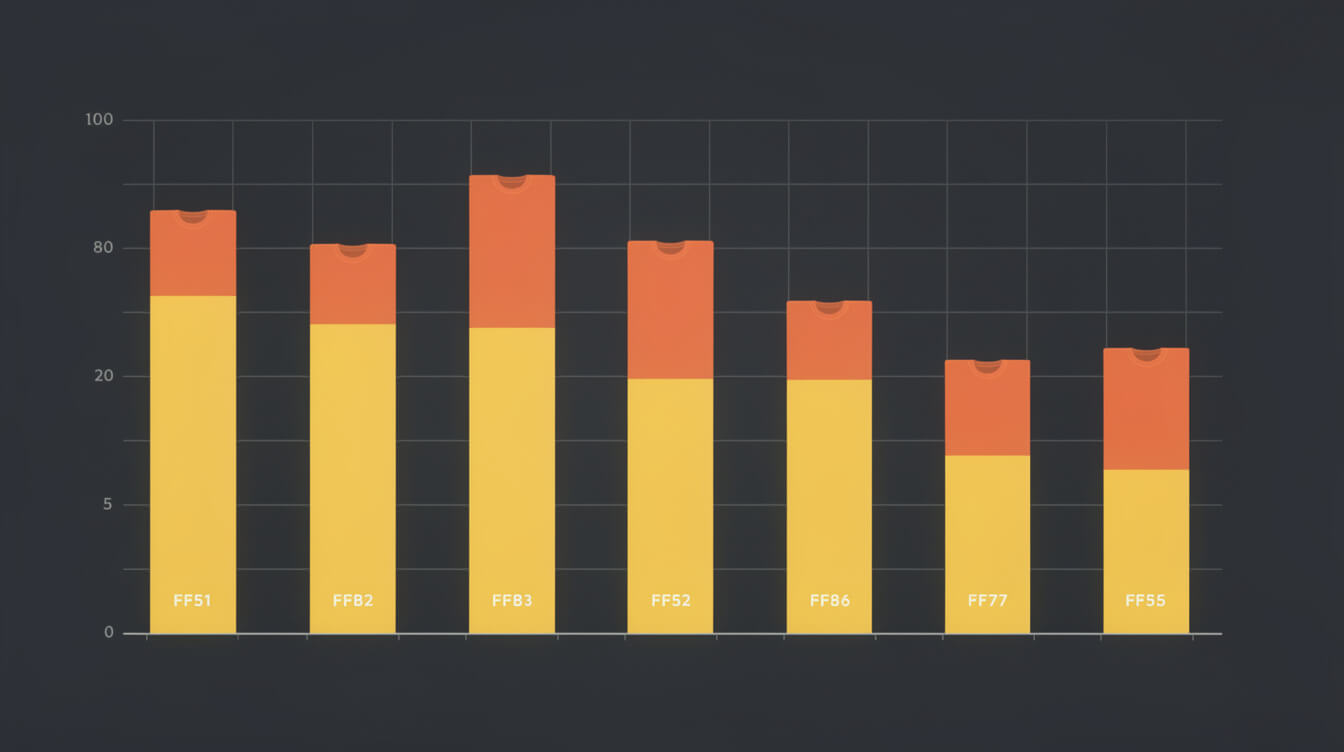
Here is what the numbers look like. Printful’s all-over print jersey runs approximately $25–34 at base cost, depending on the exact SKU and the cut variant (men’s, women’s, youth) you select. Shipping adds $4–6 per unit for domestic US delivery.
At a retail price of $55, the margin math works out as follows. Single-unit POD (Printful): $30 base cost plus $5 shipping equals $35 total cost. At $55 retail that is $20 gross margin per unit, or 36%. That is a solid margin for a mid-ticket product. It falls below t-shirt margins in percentage terms (a $15 retail t-shirt on a $7 base runs at 53%), but the absolute dollar amount per unit is higher and the jersey’s perceived premium reduces buyer resistance at that price point.
Ten-unit POD (Printful): Printful does not offer volume discounts on AOP jerseys in the way that a traditional manufacturer does. The base cost stays flat at approximately $30 per unit regardless of quantity. Ten units cost $350, generate $550 in revenue, and produce $200 in gross margin. No inventory. No upfront capital requirement beyond the design asset itself.
Fifty-unit comparison (team supplier): A team supplier like Champro or TeamTriton prices sublimated jerseys at approximately $18–24 per unit at 50-unit minimums, with a one-time setup fee of $40–80 for the design. Total cost for 50 jerseys: roughly $940–1,280 plus the setup fee. At $55 retail, 50 jerseys generate $2,750 in revenue. The gross margin per unit is higher than POD, but the seller carries $940–1,280 in upfront inventory cost and must sell all 50 units of the same design to realize the margin. If the design does not sell through, the leftover inventory is a loss.
The comparison clarifies the trade-off cleanly. Team suppliers win on per-unit cost at volume, for sellers who can predict demand and commit capital. POD wins on risk profile, for sellers whose demand is uncertain or whose designs cycle quickly.
Fan jersey niches that work without MOQs

Smash print-on-demand. Join the engine room.
One short email a week. Real numbers, real teardowns, the unfiltered economics behind every move.
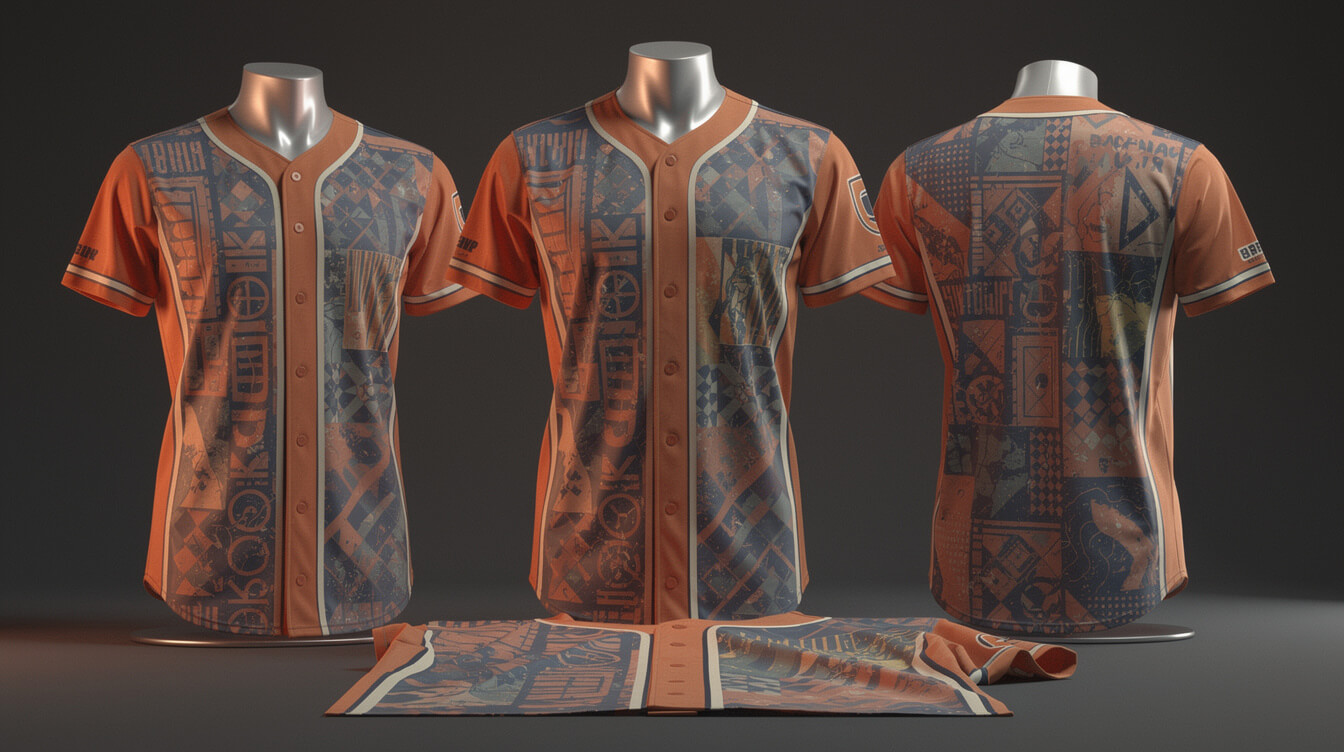
The SERP for “custom baseball jersey” is dominated by team uniform suppliers because that is the highest-volume commercial use case. But there is a completely separate buyer segment: fans, artists, and niche communities who want a jersey aesthetic without the team-order context. These buyers represent the POD opportunity, and none of them are being served by the current SERP.
Music artist merch. Touring artists and independent musicians use jersey-style merchandise as a mid-tier price point between t-shirts ($25–35) and hoodies ($55–70). A sublimated baseball jersey at $55–65 retail with the artist’s album art, tour dates, or signature design printed across the full panel is a legitimate merchandise SKU. The all-over print capability makes it a visual statement piece that a standard screen-printed tee cannot match. For indie artists with online communities, this is a natural upsell to fans who already own the t-shirt.
Retro and parody designs. Sports nostalgia drives consistent search and purchase behavior across multiple platforms. Retro-style jersey designs referencing defunct minor league teams, vintage baseball typography, and classic stadium graphics pull a buyer segment that is not served by modern team uniform suppliers. The designs are original (to avoid IP issues), but the aesthetic triggers the same emotional connection as collecting vintage jerseys. This niche works well on Etsy and WooCommerce stores with a “vintage sports” brand identity.
Fantasy sports leagues. Fantasy baseball leagues range from casual friend groups to large-scale online competitions with thousands of participants. League commissioners looking to add merchandise for their top performers or season champions are a recurring annual buyer. A custom jersey with a fantasy team name, league branding, and the winner’s name on the back is a product no major retailer stocks. POD fills that gap with no inventory commitment and a production turnaround that works within a typical league season end-of-year timeline.
Collector jersey drops. Limited-run jersey drops for specific events, gaming tournaments, or online creator communities mirror the streetwear drop model. A single SKU jersey released for 72 hours with a custom graphic can generate concentrated demand that a no-MOQ POD backend handles without setup overhead. The creator promotes, the buyer orders directly, and fulfillment happens one unit at a time. The seller never touches inventory.
For a related look at how the sports apparel niche plays out in a different product category, see the custom golf polo shirt breakdown.
The youth sports fundraiser angle: when POD jerseys beat the team supplier
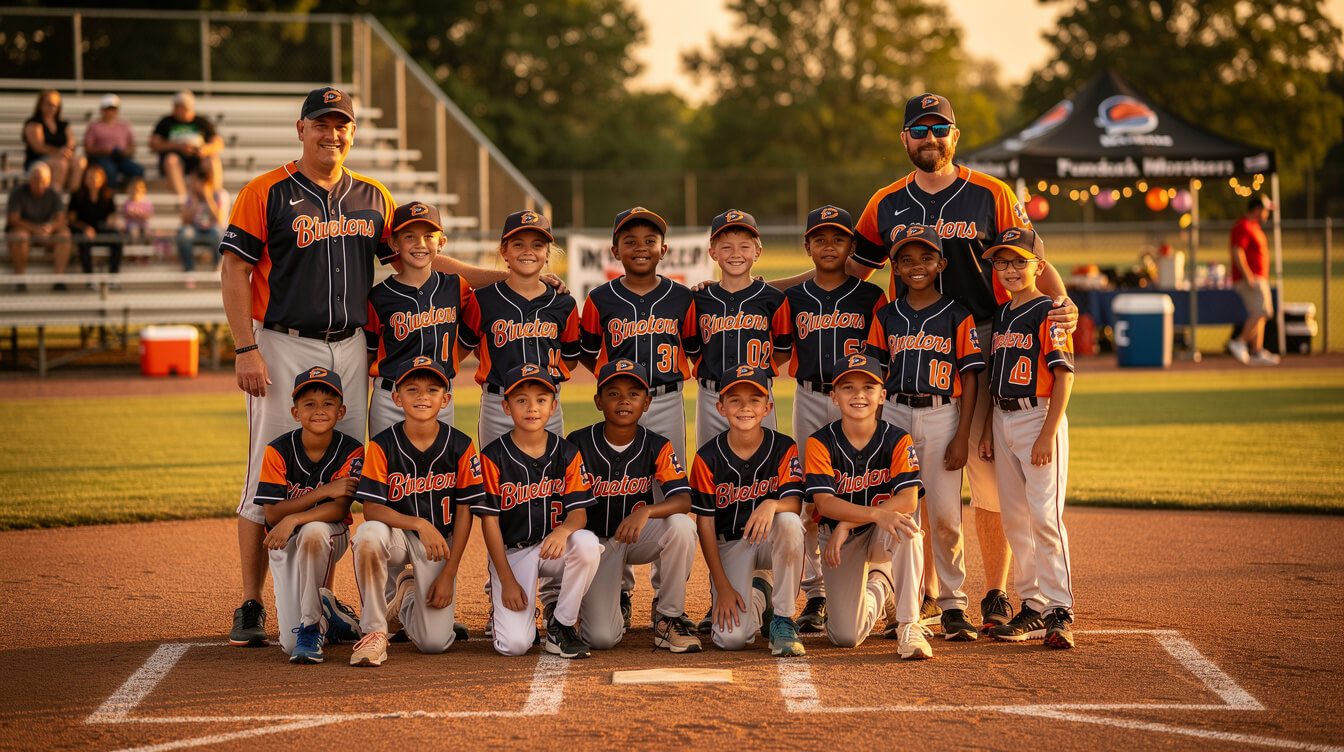
Youth sports leagues, including little league baseball, recreational softball, and community t-ball, face an annual uniform cost problem. Most leagues are volunteer-run on tight budgets. The traditional path is to use a team uniform supplier, collect payment from parents, pay for a bulk order, and distribute at the start of the season. At $22–30 per jersey from a supplier at a 50-unit minimum, a team of 15 players generates a uniform cost of $330–450, funded by registration fees or direct parent payment.
POD jerseys do not replace team uniforms for contact sports in the formal sense. A sublimated polyester AOP jersey is not the same as a padded uniform with stitched numbers meant to withstand slide tackles. But for recreational leagues and casual team apparel, POD jerseys serve a fundraiser function that team suppliers cannot match.
The model works like this: a league designs a jersey specific to the team or season, lists it on a WooCommerce store with a short order window of two to three weeks, and fulfills entirely on demand. No upfront inventory. No minimum order. Parents who want a jersey buy one. Parents who do not, do not. The league never handles inventory, manages storage, or risks leftover stock.
The economics are clean. At $55 retail and a $30 Printful base cost, the league keeps $25 per jersey sold as fundraiser revenue. For a 50-parent league with a 40% purchase rate, meaning 20 jerseys sold, that is $500 in fundraiser revenue with zero inventory risk and zero upfront capital requirement. Compare that to the traditional supplier path, where the league fronts $440 for 20 jerseys at $22 each and hopes for full payment collection.
The key enabler for this model is a WooCommerce store, not a Shopify store. Recurring seasonal fundraisers benefit from a stable store URL, no platform fee on each transaction, and the ability to segment order windows by team or season using WooCommerce’s built-in product visibility controls. A Shopify store adds $0.55 per jersey at $55 retail in platform override fees, small per unit but visible across a full fundraiser run.
For team gear bundle strategies that include jerseys alongside other products, the custom socks for POD stores guide covers bundle math in detail. Jersey plus socks as a bundle upsell is a natural combination for team-themed drops.
Shopify 1% fee math on a $45–75 AOV jersey
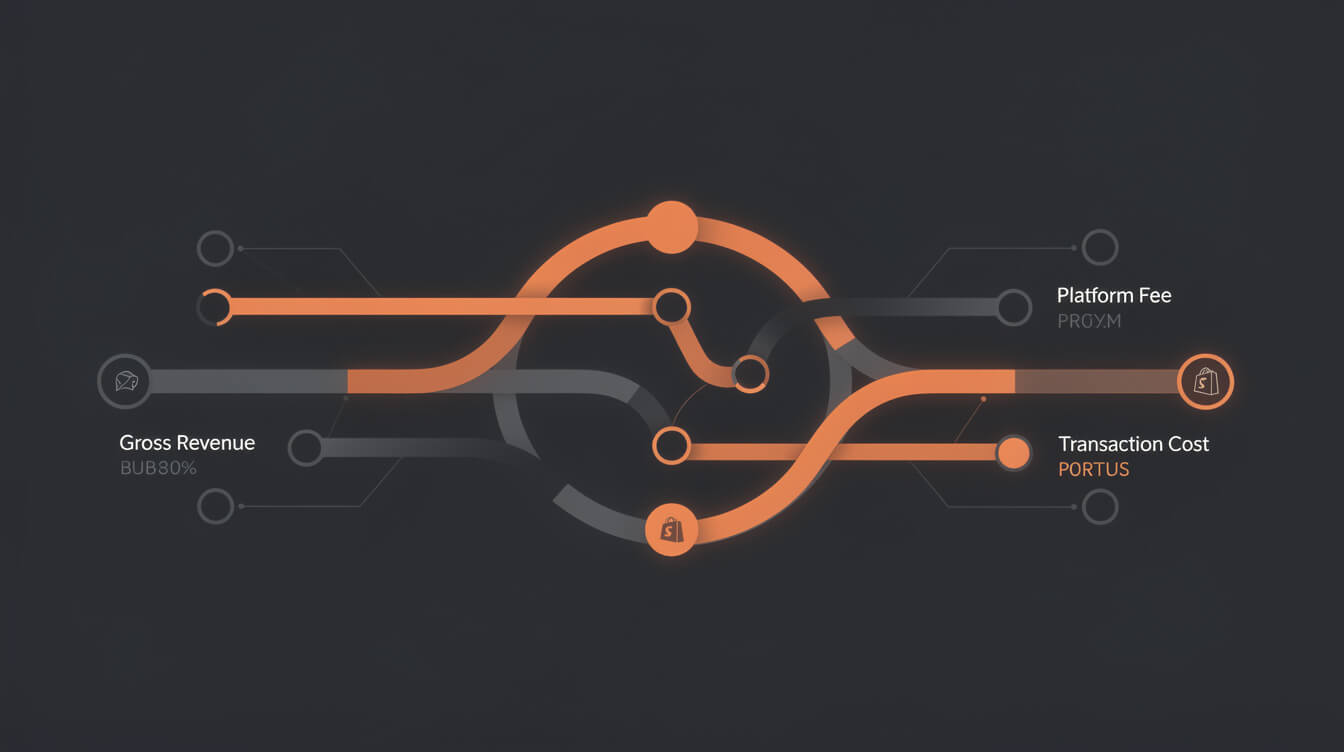
Shopify’s 1% platform override applies when sellers use Printful or Printify as fulfillment partners rather than Shopify’s native print-on-demand product. At a $55 jersey AOV, that is $0.55 per sale. The fee sounds negligible unit by unit.
Run it at volume. A store selling 200 jerseys per month at $55 each generates $11,000 in monthly jersey revenue. Shopify’s 1% on that revenue is $110 per month, in addition to monthly plan fees, which run $39–105 depending on the tier. For a seller whose primary catalog is jerseys and jersey-adjacent apparel, $110 disappears from operating margin every month with no service or capability returned in exchange.
The comparison gets sharper when you hold the jersey AOV next to lower-ticket products. At $22 for a custom sock bundle, the Shopify 1% is $0.22 per sale. The absolute dollar amount is smaller, but the jersey’s higher AOV amplifies the per-transaction fee in absolute terms while the percentage stays constant. A seller running both jerseys and low-ticket accessories on Shopify pays disproportionately more on the jersey side of the catalog relative to the margin those jerseys generate.
WooCommerce on its own hosting eliminates the 1% fee entirely. At 200 jerseys per month, the WooCommerce path saves $110 per month versus Shopify. That covers the annual cost of a mid-tier WooCommerce hosting plan ($120–360 per year) within the first one to three months of operation. The math is not close once a store reaches consistent jersey volume.
WooCommerce for repeat team orders and seasonal jersey drops
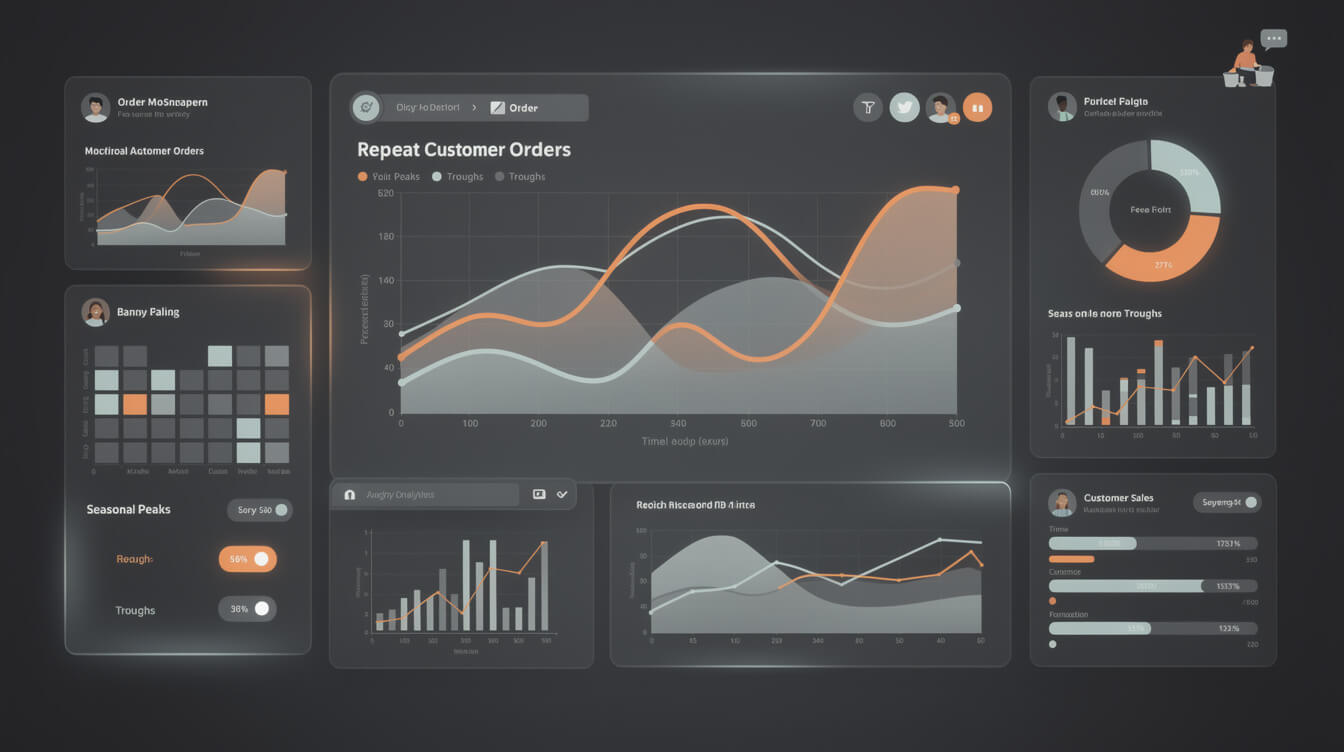
The youth sports fundraiser model and the seasonal creator drop model share a common structural pattern: repeat buyers on a known schedule. A little league parent buys a jersey every spring. A fantasy league commissioner re-orders jerseys at the end of every season. A creator drops a new jersey design every two to three months to their audience. These repeat purchase patterns reward a store infrastructure built for retention, not just acquisition.
WooCommerce handles this pattern better than Shopify for three specific reasons. First, WooCommerce’s order management system supports custom note fields and order tagging that make it easy to segment jersey orders by team, season, or drop. A seller running three simultaneous team fundraisers can tag orders by team name, export order lists by team, and route fulfillment confirmations accordingly without a third-party app.
Second, WooCommerce’s coupon and discount system is more flexible for team-order scenarios. A seller running a fundraiser can issue coupon codes for specific teams or parent groups, limit redemptions per code, set expiration dates matching the order window, and track which codes drove which orders. Shopify’s native coupon system supports some of these features but requires paid apps for full control over code redemption limits and team segmentation.
Third, WooCommerce’s product visibility and scheduling tools let sellers open and close jersey products on a seasonal or event-specific basis without delisting the product entirely. A jersey SKU can be set to visible only during the order window, then hidden until the next seasonal drop, while maintaining its SEO presence and order history.
For sellers using MEGA to build their POD catalog, the baseball jersey listing pipeline runs the same as any other AOP product. Design brief in, Printful-connected WooCommerce product out, with metadata, mockups, and SEO copy generated through the pipeline. The difference with jerseys is niche specificity: the highest-converting baseball jersey listings are not generic “custom baseball jersey” products. They are music artist names, specific retro aesthetics, or community-specific drops with a short time window. MEGA’s research step surfaces these angles before the listing is built, cutting the manual research and Canva workflow that a seller would otherwise spend hours on per drop.
The broader WooCommerce vs Shopify economics comparison for POD apparel sellers is covered in our custom tank top for POD sellers guide.
Conclusion
Custom baseball jerseys are a legitimate POD catalog addition for sellers focused on fan merch, niche communities, and seasonal drops. Printful and Printify both carry sublimated jersey options with no minimum order. The print method is AOP dye sublimation on polyester, not DTG, which means full-panel coverage, edge-to-edge print capability, and wash-durable results. The unit cost math works at $55–65 retail with a $28–34 base cost, producing 35–40% gross margins per unit with zero inventory risk. The niches that convert without team-order volumes are music artist merch, retro parody designs, fantasy league drops, and youth sports fundraisers. Shopify’s 1% fee on jersey transactions adds up at volume. WooCommerce eliminates it entirely. For sellers already running apparel-forward POD stores, a baseball jersey SKU extends the catalog into a niche with 18,100 monthly searches and near-zero editorial competition from the POD seller angle.
Implement AI. 30x your throughput. Get a 30-min call with the founder.
Drop your details and book a free 30-minute discovery call. Personalized advice on your POD stack, your margin, and where AI fits. No pitch, no fluff.