
Custom wrapping paper for POD stores: which providers support it, what the unit cost looks like, and the seasonal demand math
Custom wrapping paper sits in a strange spot for POD sellers. Search volume is 18,100 per month. Difficulty is zero. The top 10 results are all consumer-facing photo print services: Walmart Photo, JAM Paper, PaperBloom, Staples. Not one of them explains how a POD seller can list custom wrapping paper as a product in their own store.
That gap is the opportunity. This post covers which providers actually carry wrapping paper, how the unit cost math works at 1, 10, and 50 units, and why this product category deserves its own Q4 strategy starting in August, not December.
What custom wrapping paper means in a POD context
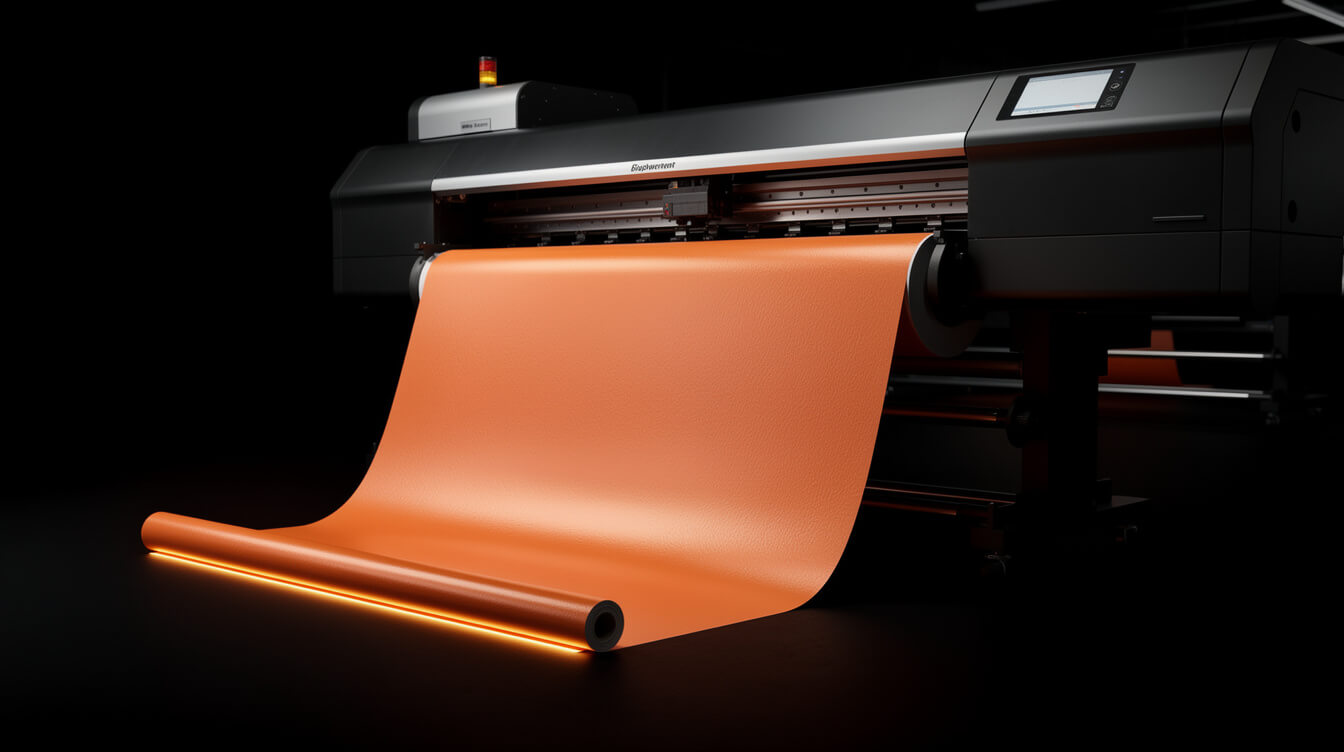
Most search results for “custom wrapping paper” target consumers who want to print a photo onto gift wrap for a birthday or holiday. That is a completely different product than what this post covers.
In a POD seller context, custom wrapping paper means a product you list in your store, with your own designs, that customers order and receive as finished goods through a print-on-demand dropship fulfillment partner. The customer pays you. The provider prints and ships directly to your customer. You never handle inventory.
This is the same model behind every other POD product: tees, hoodies, mugs, canvas prints. The only difference is that wrapping paper is a lower-AOV product, which means the economics work differently.
Custom wrapping paper is not a hero product for most stores. It is a catalog extender that deepens the gift-buying experience for customers already in a purchasing mindset. A store selling custom dog bandanas can sell custom dog-print wrapping paper. A wedding-focused POD store can bundle custom tissue paper with other bridal items. A music artist merch operation can wrap fan orders in branded gift paper.
The most important thing to understand before listing this product: the consumer intent behind “custom wrapping paper” searches splits two ways. About half the searchers want to wrap a gift they already bought. The other half want a product that itself is the gift: artisan wrap, novelty patterns, or branded packaging. Your listings should address one of these intents clearly, not both ambiguously.
Which POD providers carry custom wrapping paper

Here is where the landscape gets narrow. Most sellers know Printful and Printify by name, but their wrapping paper offerings are limited and require some navigation.
Printful: As of 2026, Printful does not list custom wrapping paper as a standard catalog product. They focus on apparel, wall art, home decor, and accessories. If you build your store on Printful as your sole provider, wrapping paper will not be available through their standard product creator.
Printify: Printify’s supplier network includes select vendors who carry gift wrapping products. Availability depends on your region and which print partner you select in the Printify product creator. Some vendors offer flat tissue paper sheets (typically A1 or A2 size) with digital printing. Others offer roll-format paper. Check the product catalog directly, as availability updates regularly.
SPOD (Spreadshirt POD): SPOD carries wrapping paper through their product catalog, with a 48-hour production guarantee. For sellers who prioritize fast turnaround for gift seasons, SPOD is worth evaluating as a secondary provider.
Gooten: Gooten’s supplier network includes wrapping paper products. Like Printify, availability depends on the partner assigned to your orders and your region.
Practical guidance: If Printify is already your primary integration, open the product creator and search “wrapping paper” or “gift wrap” to see current availability from your assigned regional supplier. Supplier catalogs update, so check directly rather than relying on any external guide, including this one.
If your current primary provider does not support wrapping paper, you have two options: add a secondary provider specifically for this SKU, or skip the product category and revisit in 12 months as the POD catalog expands.
A MEGA pipeline that automates product research, design generation, and listing creation across providers handles multi-provider complexity without manual intervention. That is the argument for automation over manual catalog management, especially when products span multiple fulfillment partners.
Print methods for wrapping paper: what the formats mean

The print method determines the final look and feel of the product. For POD wrapping paper, there are three main formats to understand before you list.
Digital print on tissue paper: This is the most common format available through POD suppliers. Tissue paper is a thin, semi-translucent material (typically 17-19 gsm). Digital printing applies the design directly to the surface. The result is a lightweight, foldable product ideal for gift tissue stuffed inside boxes.
The limitation: tissue paper is too thin for the pull-from-a-roll wrapping experience most buyers associate with gift wrap. It is a packing and presentation product, not a roll-wrap product. Position it correctly in your listing.
Flat sheet glossy wrapping paper: Some suppliers offer flat A1 or A2 sheets of heavier coated paper (60-80 gsm), digitally printed with full-color graphics. This is closer to the premium gift wrap experience. The glossy surface produces vivid color output and photographs well for product listings.
The limitation: flat sheets require folding around a box, which is less intuitive for buyers used to cutting from a roll. Some sellers mitigate this by positioning it as an “art print meets gift wrap” product: two uses, one purchase.
Kraft paper roll with digital print: A small number of POD suppliers offer roll-format kraft paper with custom printing. Kraft paper’s natural brown tone limits design options to prints with warm palettes, or designs where the paper grain is part of the aesthetic. It suits rustic, artisan, and eco-brand positioning well.
Sublimation does not apply here: Sublimation requires heat-reactive polyester substrates. Wrapping paper uses paper-based substrates, which do not accept sublimation dye transfer. Any supplier offering “sublimated wrapping paper” is mislabeling the process.
Design spec notes for wrapping paper:
- Designs should tile well: repeating patterns outperform single-placement designs for wrapping paper
- High-contrast designs read better after folding and tearing
- Bleed all designs to the edge; unprinted borders look unprofessional on finished wrap
- Avoid thin line elements that may shift in digital print registration
- Dark backgrounds on glossy paper produce a premium aesthetic with high perceived value
Unit cost math: what a custom wrapping paper listing costs

Smash print-on-demand. Join the engine room.
One short email a week. Real numbers, real teardowns, the unfiltered economics behind every move.

Wrapping paper is a low-AOV product. The unit cost math needs to work at the right margins to justify listing it. Here is a realistic breakdown across three scenarios, based on what POD supplier networks typically charge.
Single unit (one sheet or small roll):
- Base cost: $3.50-6.00 per sheet (tissue or flat glossy format)
- Shipping: $3.50-5.00 domestic
- Total landed cost: $7.00-11.00
- Recommended retail: $12-18
- Gross margin: $1.00-11.00 depending on supplier
The wide range reflects how significantly supplier pricing varies. At the low end, single-unit economics are marginal. At the high end, 60% gross margin on a $15 product is healthy for a niche gift item. The only way to know your actual margin is to map your specific supplier’s pricing through the Printify or Gooten catalog and calculate from there.
Bundle listing (8-12 sheets as a set):
Bundling is the correct strategy for wrapping paper. A “12-sheet holiday gift wrap set” retailing at $32 is a fundamentally different product than a single-sheet listing at $12. The per-unit base cost barely changes (volume discounts are minimal at 12 units), but the AOV more than doubles.
- Base cost for 8-sheet set: $18-28
- Retail: $28-40
- Gross margin: $10-22 per bundle (35-55%)
Bundle listings also address the primary buyer objection: paying $6-8 in shipping for a single sheet of paper feels disproportionate. A curated pack absorbs the same shipping cost across more product, improving the buyer’s perceived value-to-shipping ratio.
Direct sourcing at 50+ units:
At 50 units, direct sourcing from a wrapping paper printer bypasses the POD premium entirely. Cost per sheet drops to $0.80-1.50 through commercial digital print suppliers. This is the territory where POD sellers start to lose on unit economics to sellers running small bulk print runs.
For most POD stores on WooCommerce without minimum order requirements, the no-MOQ advantage is more valuable than the per-unit cost difference, especially for seasonal products where demand is uncertain until it is not.
Build wrapping paper listings in 7 minutes, not 7 hours
MEGA automates the research-to-listing pipeline for POD sellers. From niche identification to live product listing: one pipeline, no manual design work, no Canva sessions.
The seasonal demand window: why Q4 planning starts in August

Custom wrapping paper has one of the most concentrated seasonal demand curves of any POD product. November and December account for approximately 60-70% of annual search volume for gift wrapping-related terms. That sounds limiting. It is actually an advantage, if you plan for it correctly.
The August-September listing window:
For Q4 gift wrap sales, the listing creation window is now: not October, not November. Google’s indexing takes weeks to build ranking history on a new product page. A custom wrapping paper listing created in late October will not rank for “custom wrapping paper” in time for December holiday shopping. A listing created in August has 12 or more weeks to build that history before peak demand arrives.
The same logic applies to custom puzzles, custom ornaments, and other seasonal gift products. POD sellers who publish product listings in Q3 capture Q4 traffic. Sellers who list in Q4 miss the peak, spend money on ads to compensate, and wonder why margins feel thin.
Secondary demand peaks:
Outside the Q4 holiday window, custom wrapping paper maintains steady demand for:
- Valentine’s Day (January through February 10)
- Mother’s Day (March through May)
- Wedding season gift-givers (April through June)
- Birthday gift-wrapping as a general-purpose category (year-round, steady)
- Baby showers (year-round, relatively flat)
A 12-month listing that generates low steady sales from January through October, then spikes in November and December, has a different economics profile than a seasonal listing that earns nothing off-season. The listing costs you nothing to maintain. Let it run.
Product sequencing for seasonal POD:
The right approach is to list custom wrapping paper alongside related gift products. A customer buying a custom poster print or a custom canvas from your store is already in a gift-purchasing mindset. Adding a “match your gift” wrapping option at checkout increases AOV without adding fulfillment complexity. This requires that both products be live and discoverable, which reinforces why listing timing matters.
Shopify 1% at $10-18 AOV: the platform tax that hurts most on low-ticket items

Custom wrapping paper is one of the clearest examples of how Shopify’s platform fee structure damages low-ticket POD products disproportionately.
Shopify charges a 1% override fee on all third-party payment processor transactions on most plans. At a $50 product, that is $0.50 per sale: a minor friction point. At a $12 wrapping paper sheet, the math looks meaningfully different when you aggregate across a holiday season.
The concrete numbers:
| Monthly volume | AOV | Shopify 1% fee | WooCommerce fee |
|---|---|---|---|
| 100 orders | $12 | $12.00 | $0 |
| 200 orders | $12 | $24.00 | $0 |
| 500 orders | $12 | $60.00 | $0 |
| 200 orders | $35 (bundle) | $70.00 | $0 |
At 200 holiday orders of a $12 sheet, Shopify’s platform fee takes $24 in pure margin. That does not include Shopify’s monthly subscription cost ($39-399/month depending on plan), app fees, or payment processor fees layered on top. Every cost stacks.
The case for WooCommerce over Shopify for POD sellers strengthens at low AOVs. The platform override that sounds small at $50 per order becomes proportionally more damaging at $10-18. A wrapping paper SKU that generates $24 in platform tax per month during November and December represents margin that WooCommerce does not charge.
The holiday math across a full catalog:
Consider a POD store with five low-ticket products: custom wrapping paper, sticker sheets, keychains, bandanas, and face masks. Each generates 150 orders in December at an average $14 AOV. That is 750 orders, $10,500 in revenue, and $105 in Shopify platform override fees for that one month alone.
WooCommerce’s platform override: $0. The $105 is kept as margin, not paid to the platform.
Over a full Q4 (October, November, December), a store with this catalog profile pays $200-300 in pure platform tax that WooCommerce does not charge. That is not a dramatic number by itself. Compounded across years and across a growing catalog, it accumulates into a meaningful margin differential.
Niche verticals that sell custom wrapping paper year-round

The broadest wrapping paper opportunity is generic holiday patterns. The most defensible and profitable opportunity is niche-specific patterns with low competition and loyal repeat buyers. Here are the verticals where custom wrapping paper has the most potential as a long-term catalog addition.
Pet mom and pet brand stores:
A store already selling custom dog bandanas, pet portrait prints, and breed-specific apparel has a natural audience for wrapping paper with dog breed illustrations or paw print patterns. The pet-mom gift economy is active year-round: birthdays, gotcha days, and holiday gifts all drive purchase intent. A buyer who spent $28 on a breed-specific hoodie is a prime candidate to add matching gift wrap at checkout.
Wedding and bachelorette:
Custom wrapping paper for wedding gifts is a genuinely differentiated product. Personalized wrap with the couple’s names, wedding date, or a floral pattern matching the wedding theme turns functional gift paper into a keepsake-adjacent product. Bachelorette party organizers also buy custom wrap for coordinated gift presentations. This niche peaks April through June and has secondary demand around holiday bridal shower season (November, December).
Craft brewery and distillery merchandise:
Taproom gift shops increasingly add branded wrapping paper alongside growlers, glassware, and apparel. A brewery’s hop-pattern wrap or a distillery’s barrel-aged aesthetic appeals to the same buyer persona who pays $18 for a branded pint glass. The brewery is both the distribution channel and the design inspiration. Custom wrap sold at the taproom or on the brewery’s WooCommerce store has zero competition from generic online gift wrap services.
DTC brand packaging:
This is the use case that most distinguishes custom wrapping paper from other POD product categories. DTC ecommerce brands use custom tissue paper inside their shipping boxes to reinforce brand identity at the moment of unboxing. This is not gift wrap in the traditional sense. It is branded packaging material.
The buyer for this use case is a business, not a consumer. Order sizes are larger (50-200 sheets per order), and repeat purchases are predictable. This vertical requires a slightly different listing strategy: business buyer intent language, pack sizing options, and branded packaging terminology. It also opens the door to B2B repeat revenue on a product with low fulfillment complexity.
Music artist and indie creator merchandise:
Artists selling physical merchandise alongside digital releases increasingly offer custom wrap as part of fan gift bundles. A vinyl record paired with artist-branded wrapping paper creates a cohesive fan gift that elevates perceived value without significant additional cost. Limited-edition patterns tied to album artwork create urgency and scarcity without requiring a manufacturing run.
Should you add custom wrapping paper to your POD store
Custom wrapping paper is not the highest-AOV product in a POD catalog. At $12-18 for a single sheet, it competes for margin in a way that requires careful platform selection and realistic volume expectations.
The case for adding it is straightforward: 18,100 monthly searches with zero editorial competition, a Q4 demand spike that rewards sellers who list in Q3, and niche verticals where the pattern design itself carries real brand equity beyond generic holiday wrapping.
The platform decision matters more here than it does for $55 hoodies. WooCommerce’s $0 override fee is the correct infrastructure for a product category where $12-18 AOVs make every platform cost visible in the margin math.
The pipeline approach matters here too. If you are still building product listings manually through a design app and uploading one at a time, a seasonal product like wrapping paper may not feel worth the effort at $12 AOV. Automating the research-to-listing pipeline changes that calculus entirely. A product that takes 7 minutes to build from niche research to live listing pencils out as worthwhile even at low AOV, because the labor cost is near zero.
List in August. Bundle the sheets. Price the bundle at $28-35. Build on WooCommerce. Let the listing age through Q4. That is the wrapping paper strategy that actually captures the 18,000 monthly searches the consumer-facing services are collecting right now.

Implement AI. 30x your throughput. Get a 30-min call with the founder.
Drop your details and book a free 30-minute discovery call. Personalized advice on your POD stack, your margin, and where AI fits. No pitch, no fluff.