Custom koozies for POD stores: which providers carry them, unit cost math, and the niche that makes $22 retail work
Custom koozies sit in an interesting corner of the print-on-demand catalog. Volume is enormous — 22,200 searches a month — and the competition is almost entirely promotional product vendors selling to event planners and corporate buyers. There is almost no editorial content aimed at POD sellers who want to add koozies to their own stores and sell them at retail with zero minimum order quantities. That gap is exactly what this guide closes.
If you have been wondering whether custom koozies belong in your POD catalog, which providers actually carry them, how sublimation differs from screen print on neoprene versus foam, and what the unit economics look like at one unit versus fifty — you are in the right place.
What is a koozie and why it belongs in a POD catalog
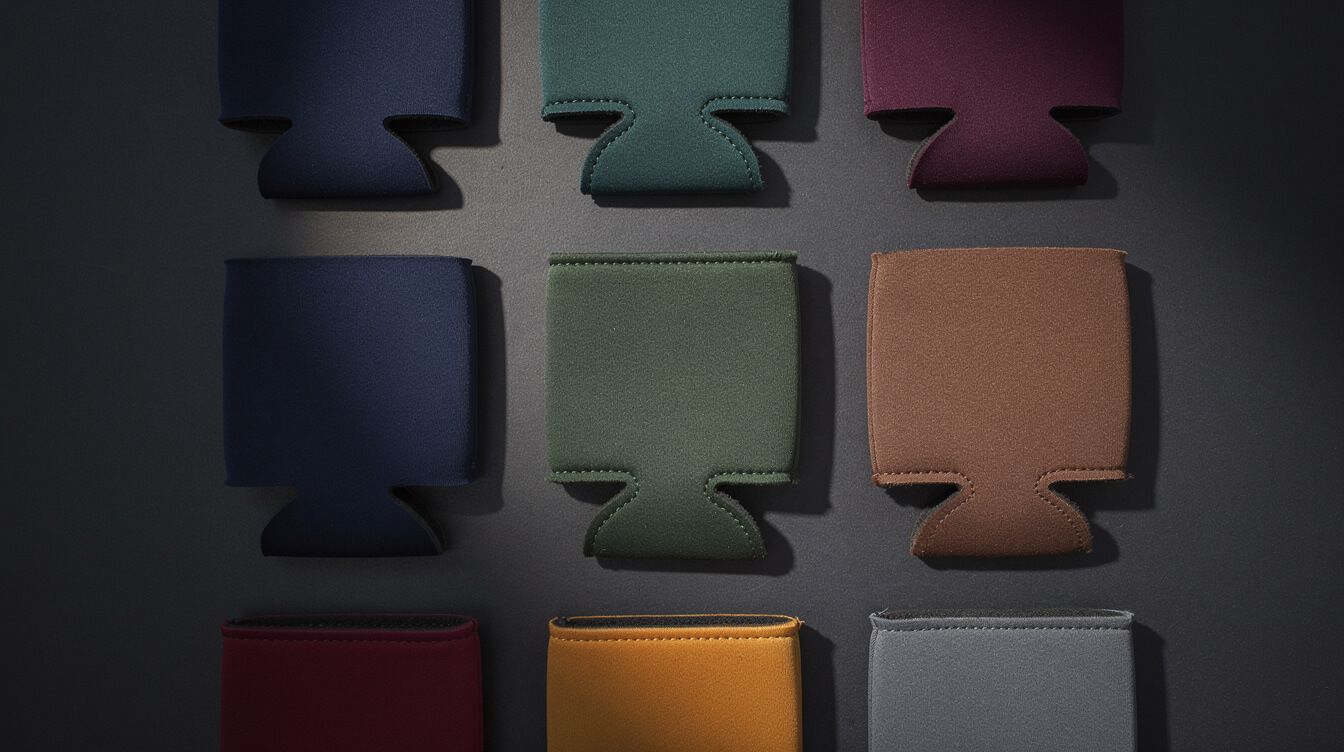
A koozie — also spelled coozie or coolly depending on who you ask — is an insulating sleeve that fits around a canned or bottled beverage. The job is simple: slow heat transfer from your hand to the drink, and from the environment to the drink. The result is a cold beer that stays cold for 20-30 minutes longer than it would bare.
For POD sellers, the appeal is not the thermal physics. It is the price-to-gift ratio. A koozie retails at $15-22. It ships in a standard envelope or poly mailer. It is light enough that shipping barely dents the margin. And it is the kind of product people buy in sets of four for a tailgate, a dozen for a bachelorette party, or as a one-off wedding favor. Repeat-purchase potential is genuine, especially when you build around a niche — your brewery, your sports team, your wedding aesthetic.
Koozies also benefit from a print-on-demand structural advantage that high-MOQ promo vendors cannot match: you can list a koozie in your store today and fulfill the first sale tomorrow with no upfront inventory. The promotional vendor landscape requires 24- to 100-unit minimums. Your POD store requires zero. That is the competitive position to own.
The two main material types you will encounter in the POD world are neoprene and foam. They print differently, feel different in hand, and carry different price points. Understanding the difference before you list is the difference between a product that looks right and one that disappoints the buyer who expected vibrant photo-quality graphics on a foam koozie.
Which POD providers carry custom koozies: Printful, Printify, and Gooten compared
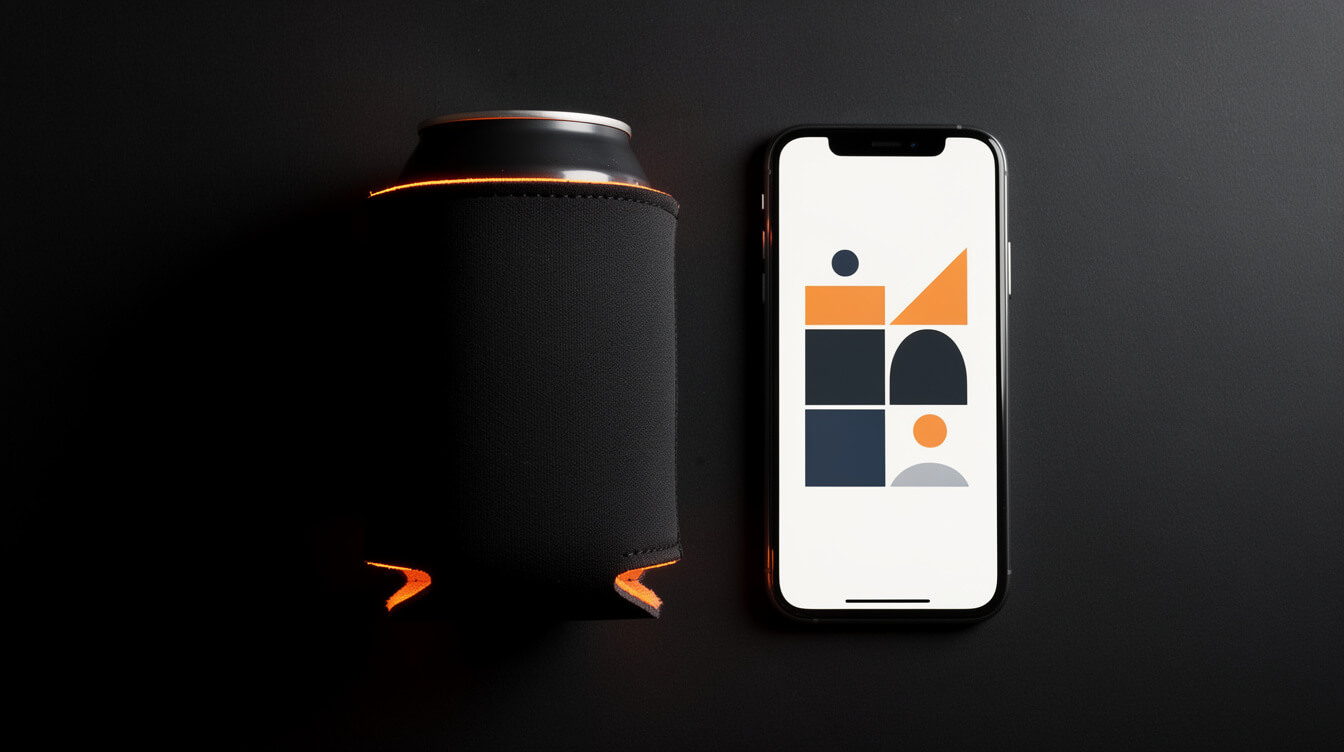
Not every major provider carries koozies, and the ones that do carry different materials with different print methods. Here is the current landscape.
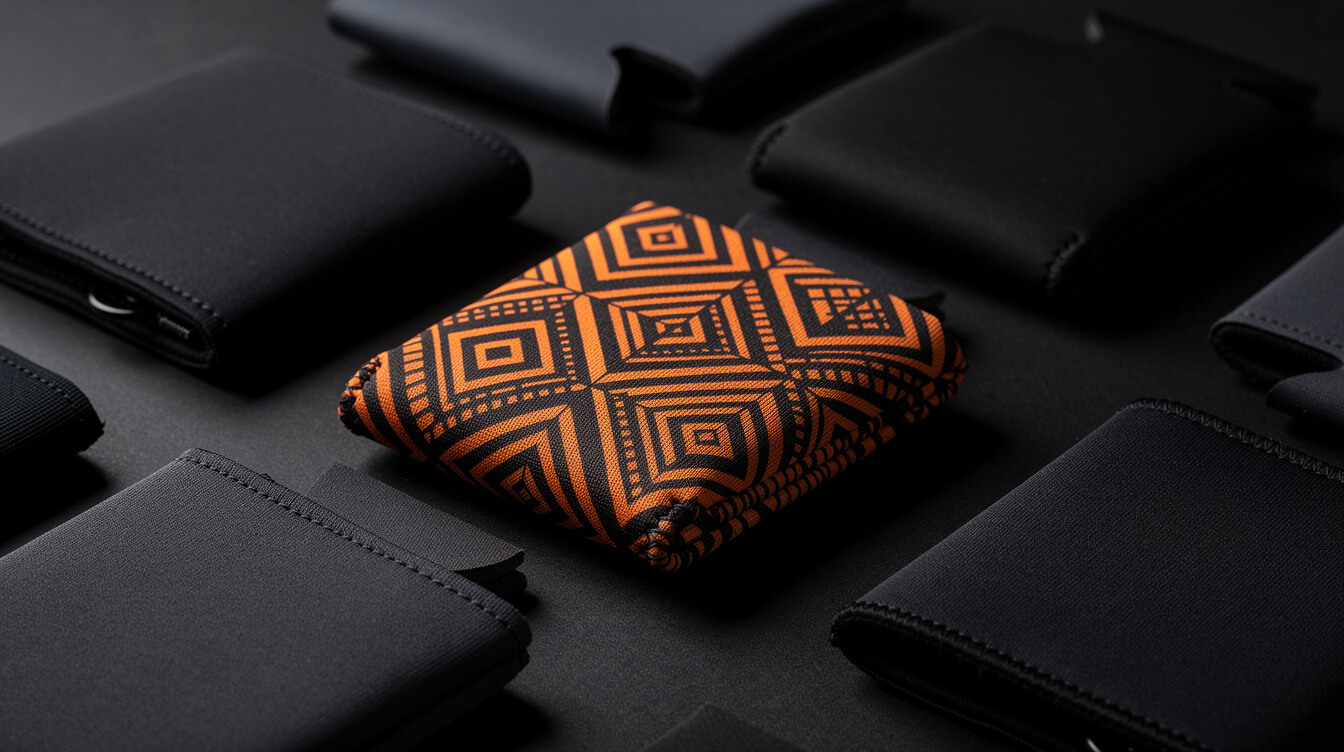
Printful carries a neoprene collapsible koozie in their catalog. It is the 12 oz can sleeve size, sublimation-printed on both panels — front and back — with full-color all-over print capability. Printful’s neoprene koozie is made from 3mm neoprene, the same wetsuit material that makes it soft, grippy, and collapsible flat for storage. The print is bonded directly into the material rather than sitting on top, which means no cracking, no peeling, and no fading over time. Base cost as of 2026 runs approximately $7-9 depending on your tier and any active promotions.
Printify does not have a unified koozie SKU at the platform level, but their partner network includes suppliers who fulfill foam koozies and neoprene sleeves. Specific product availability depends on which supplier region you select. US-based Printify suppliers typically carry a thicker foam (EVA foam, 4mm) koozie with a one- or two-color screen print option. Some Printify suppliers also offer a thinner neoprene option with digital sublimation, though the surface area and bleed specifications vary by supplier. Base costs through Printify partners range from $4-8 depending on material and print method.
Gooten is the third player worth knowing. Gooten has historically carried foam and neoprene koozies through their fulfillment network, though their catalog focus leans toward apparel and home goods. If you are already routing through Gooten for other products, it is worth checking their current SKU list, as availability shifts with their supplier network updates.
The practical recommendation: if you want the cleanest full-color sublimation result with predictable quality, Printful’s neoprene koozie is the default choice. If cost efficiency matters more than print quality — say, for a high-volume wedding favor order where the buyer prioritizes price — a Printify foam koozie with screen print is worth comparing. Run the numbers for your specific order size before committing to a provider.
Print method breakdown: screen print vs full-color sublimation on foam vs neoprene

The print method is where most new POD sellers get confused, and where buyers end up disappointed when they ordered a koozie expecting Printful-quality graphics but received a two-color screen print because they chose the wrong supplier tier. Here is the distinction you need before you list.
Screen printing on foam (EVA foam)
EVA foam is the cheap, squishy material used in most promotional koozies — the kind you get free at a sporting event. Screen printing applies ink through a stenciled mesh onto the foam surface. Each color in the design requires a separate screen and a separate pass. Simple text logos and one- or two-color designs work well. Photographic imagery, gradients, and multi-color designs are effectively impossible. The ink sits on top of the material, which means abrasion and washing gradually degrade it over months of use. Base material is less expensive than neoprene, which is why promotional vendors default to it for 100-unit minimum orders.
Dye sublimation on neoprene
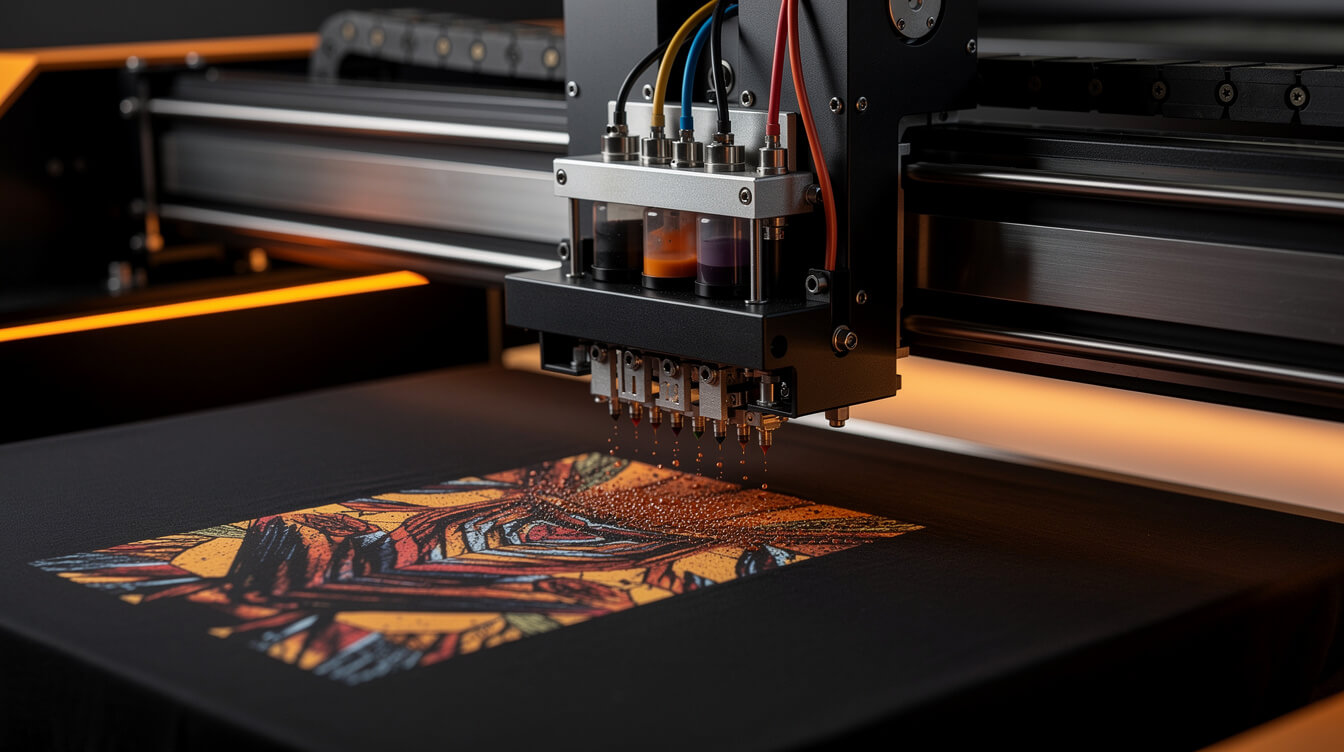
Sublimation is a heat-transfer process where ink converts from solid to gas and bonds molecularly with a polyester-based substrate. Neoprene — technically a polychloroprene material with a polyester face — is sublimation-compatible. The result is a print that is part of the material itself: it will not crack, peel, or fade under normal use. The full-color capability is the key differentiator. Sublimation reproduces gradients, photographs, intricate illustrations, and your logo at the same quality level regardless of color count. There is no per-color fee the way there is in screen printing.
The limitation of sublimation on neoprene: the base material must have a light enough background. Sublimation inks are transparent, which means they bond with the substrate color. Printful’s neoprene koozie uses a white-face neoprene, which allows full-color prints. If you are designing on a black neoprene base, sublimation will not produce accurate colors — you would need a different print method or a different provider.
For POD sellers who are generating product designs at scale with AI tooling and want consistent print quality, sublimation on neoprene is the right call. Design once, list once, and every unit that fulfills will look the same.
Unit cost math at 1, 10, and 50 units (and where retail pricing lands)

Smash print-on-demand. Join the engine room.
One short email a week. Real numbers, real teardowns, the unfiltered economics behind every move.

The numbers that matter for a custom koozie listing:
Printful neoprene (sublimation)
- Base cost: approximately $7.95-8.95 per unit (varies by plan tier)
- Shipping: approximately $3.99 for the first item in the US, lower per additional unit
- Total landed at 1 unit: approximately $12-13
- At 10 units (separate orders): same per-unit math — the POD model does not discount at volume
Printify foam koozie (screen print, US supplier)
- Base cost: approximately $4.50-5.50 per unit depending on supplier and color count
- Shipping: approximately $3-4 for the first item
- Total landed at 1 unit: approximately $7.50-9.50
Retail pricing
The standard POD pricing range for a neoprene koozie is $18-25. A $22 retail price on a $12-13 total landed cost gives you $9-10 gross margin — a 41-45% gross margin percentage. That is workable for a low-AOV product, though not exceptional on its own.
Where the math improves is in bundles. A two-pack or four-pack shifts the AOV to $35-75 while keeping your fulfillment work essentially the same — one shipping event, two or four units. A four-pack of wedding favor koozies at $70-75 retail with $45-50 landed cost produces $25-30 gross margin. Suddenly you are looking at 35-40% on a $70 ticket, which is meaningfully better than a standalone $22 listing.
If you want more margin depth on koozies, the path is clear: sell them in sets, build bundles around occasions (bachelorette kit: four koozies plus one can cooler), and position the set as a gift rather than a single-unit purchase. Compared to similar low-AOV products like custom sticker sheets, koozies carry a higher per-unit base cost but also a higher retail ceiling — the bundle upside is real.
MEGA automates the product creation side of building out a koozie catalog across multiple niche verticals, so scaling SKUs from one occasion theme to ten does not require proportional manual effort.
The Shopify 1% at $15-25 AOV: why low-ticket items hurt more than hoodies

If you are selling on Shopify, the platform charges a 0.5-2% transaction fee on every sale depending on your plan. The 1% figure applies to the most common Shopify plan tier. On a $60 hoodie, that is $0.60 — annoying, but it does not break the economics. On a $22 koozie, that is $0.22.
The problem is not the absolute dollar amount. It is the margin percentage it consumes. Your $22 koozie gross profit might be $9. Shopify’s $0.22 takes 2.4% of your gross profit on that sale. Across 200 koozie orders a month, you have paid Shopify $44 to process transactions — money that buys nothing, produces nothing, and would stay in your pocket on WooCommerce.
The Shopify math compounds when you add app fees. Printful’s Shopify plugin costs nothing, but you likely have a review app, an email capture app, an upsell app, and a page builder. A realistic Shopify stack for a serious POD seller runs $100-150 per month in app fees before you account for the transaction percentage. On $2,000 per month in koozie revenue at 42% gross margin, your $840 gross profit gets reduced by roughly $80-100 in Shopify overhead — you are leaving 10-12% of gross profit on the table versus running the same store on WooCommerce.
WooCommerce’s costs are hosting ($10-20 per month for reliable managed WordPress hosting), Printful’s free WooCommerce plugin, and a page builder you likely already have. The transaction fee is zero. The overhead ceiling is $30 per month versus $100-150 on Shopify. For a koozie-heavy catalog where margins are already thinner than apparel, that cost structure difference is worth running the numbers on before you commit to a platform.
The pattern repeats across low-AOV products. Custom drinkware at $20-35, lanyards at $15, custom socks at $18 — every product under $25 retail amplifies the proportional weight of Shopify’s per-transaction fee. If your catalog skews toward low-ticket novelty and gift products, the platform fee is not a rounding error. It is a structural drag on the business.
Build your koozie catalog 30x faster with AI
MEGA is the research-to-product pipeline that generates complete POD listings end-to-end — on WooCommerce, not Shopify, so the 1% transaction fee never touches your margin.
Niche verticals that make koozies work: weddings, tailgate, beer brands, bachelorette
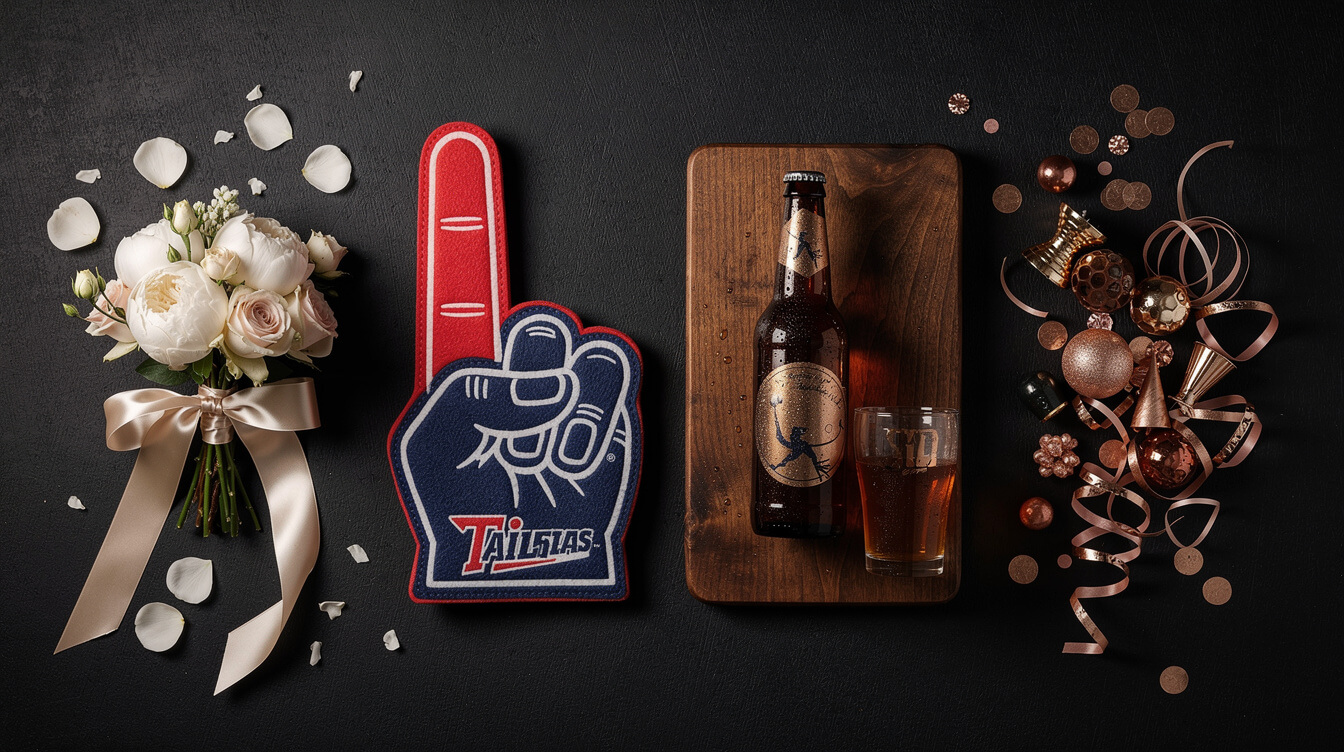
Koozies are not a general-interest product. The buyer who searches “custom koozies” has a specific event or identity in mind. That specificity is your positioning advantage — you can speak directly to the use case, and you do not need to compete with the generic promo vendors who serve corporate HR departments ordering 500 logo koozies for a conference.
Weddings and bridal events
This is the highest-converting koozie niche. Brides search specifically for wedding favor koozies, and they are willing to pay retail prices for a product that feels custom and personal rather than promotional. A sublimated neoprene koozie with the couple’s initials, wedding date, and a design that matches the wedding palette converts well at $20-25 per unit. Four-pack bundles for table settings are a natural upsell. The spring and summer wedding season (March-August) drives the bulk of demand, with a secondary peak around holiday parties in November-December.
Tailgate and sports fan merch
Sports fan koozies are the second-largest segment. A koozie branded for a specific game-day aesthetic serves the tailgate culture directly. You cannot use licensed NFL, NBA, or MLB marks, but original fan art, team colors, and game-day phrases are legitimate. NFL tailgate culture peaks August-January, college football runs the same window, baseball runs April-October. A store that targets a regional fan base — say, SEC tailgate culture or a specific city’s sports identity — can build a repeating seasonal product line year over year.
Craft beer brands and local breweries
Small and mid-size craft breweries represent an interesting B2B-adjacent opportunity. A local brewery with 50 taps and a taproom cannot afford a 500-unit MOQ from a promo vendor, but they can order a six-pack of custom koozies at $25 each for retail display. You are selling to a business that wants to merchandise their brand without a warehouse of inventory. WooCommerce’s capability for repeat business orders and custom pricing for wholesale customers makes this a natural fit. The custom drinkware category also expands naturally here — brewery merch often includes mugs, pint glasses, and branded drinkware alongside koozies.
Bachelorette and bachelor parties
Bachelorette koozies are their own niche within the bridal vertical. The party favor culture in this space runs toward personalized products with the bride’s name, the wedding date, and the party weekend location. A set of six to twelve koozies is the standard order. Buyers are price-sensitive at the per-unit level but purchase in sets, so the AOV lands higher than a single-unit koozie sale. Design themes: florals, leopard print, “wifey / bride tribe” concepts, destination-specific iconography. An entire bachelorette koozie design line with ten distinct SKUs is a reasonable afternoon’s output with an AI design pipeline.
Getting started: design file specs, sleeve dimensions, and your first koozie listing
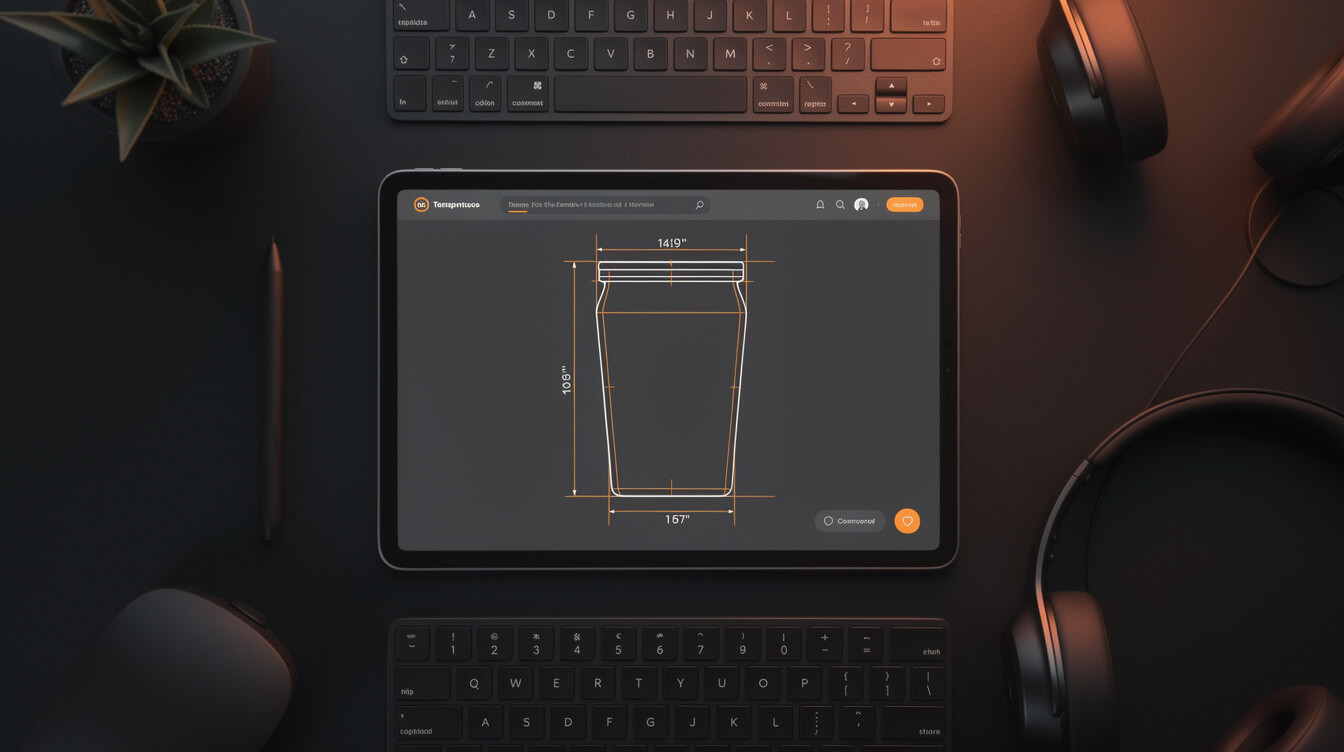
Before you publish your first koozie listing, a few technical specifics will save you from a failed print or a rejected file.
Standard 12 oz can koozie dimensions (Printful)
- Print area: approximately 9.25 inches × 4 inches when the sleeve is laid flat
- File format: PNG or JPEG at 150 DPI minimum (300 DPI preferred for clean edges)
- Color mode: RGB for sublimation — not CMYK, as the sublimation printer renders in RGB
- Background: transparent PNG or white for full-wrap designs
- Bleed: add 0.125 inch bleed on all edges if your design extends to the sleeve edge
One design consideration to keep in mind: the koozie wraps around a cylinder. Your flat file will curve in the finished product. Text that reads perfectly flat will curve with the sleeve. This is especially relevant for horizontal baselines — design with the curve in mind, or keep your most critical design elements centered vertically where the curve is least pronounced.
Mockup strategy
Printful’s mockup generator produces lifestyle and product-on-white mockup images automatically when you create the product. Use the lifestyle mockup — hand holding a can in a koozie, outdoor setting — for your listing’s primary image. It outperforms the flat product shot for conversion. Supplement with a flat design detail shot showing the print quality. The same approach that works for custom socks lifestyle shots applies here: put the product in context and show the buyer exactly what they are getting.
Pricing and variant setup
Create a simple product for single-unit sales and a grouped product or variation for bundle sets. If you are targeting the wedding niche, consider a quantity-discount plugin that drops the per-unit price automatically at 6 and 12 units. This mimics what promo vendors do and removes the buyer’s hesitation about ordering a set. For WooCommerce users, this is a straightforward plugin configuration — and it converts significantly better than a flat single-unit price for occasion-driven buyers who already know they need 10 or 12 pieces.
The custom koozie opportunity in plain terms
Custom koozies are a 22,200-searches-per-month keyword with almost zero editorial competition in the POD seller lane. The promo vendors dominating the SERP require minimums, take orders for 100-unit bulk runs, and have zero interest in the POD seller who wants to fulfill one unit at a time. That is your opening.
The neoprene sublimation koozie from Printful or comparable suppliers gives you full-color print quality, no MOQ, and a landed cost that supports a $20-25 retail price with workable margins. Bundles and occasion-specific positioning — weddings, tailgate, craft beer, bachelorette — push AOV higher and conversion rate up. The platform you run on has a disproportionate impact on a product at this price point: Shopify’s 1% transaction fee takes a bigger bite proportionally on a $22 koozie than on a $60 hoodie, and that cost structure difference compounds across a koozie-heavy catalog.
If you are building a POD catalog and have not yet added koozies, the gap is real. The opportunity cost of waiting is 22,000 monthly searches landing on promo vendors who cannot serve the buyer the way a no-MOQ, sublimation-quality POD store can.
Implement AI. 30x your throughput. Get a 30-min call with the founder.
Drop your details and book a free 30-minute discovery call. Personalized advice on your POD stack, your margin, and where AI fits. No pitch, no fluff.