Custom basketball jerseys for POD sellers: which providers support them, sublimation explained, and the fan merch math
Custom basketball jerseys are one of the most overlooked products in a print-on-demand catalog. Most sellers assume basketball jerseys mean team uniforms, minimum orders, and six-week lead times. They don’t. Printful carries sublimated basketball jerseys with no minimums, full all-over-print coverage, and fulfillment in days. That’s a completely different business than team uniforms. If you’ve been sleeping on custom basketball jersey as a product category, this is the breakdown you need.
This guide covers which POD providers actually carry basketball jerseys, how sublimation works on jersey fabric, the real unit cost math from Printful’s catalog, and the fan merch niches where basketball jerseys consistently convert without chasing team buyers.
Why basketball jerseys belong in your POD catalog
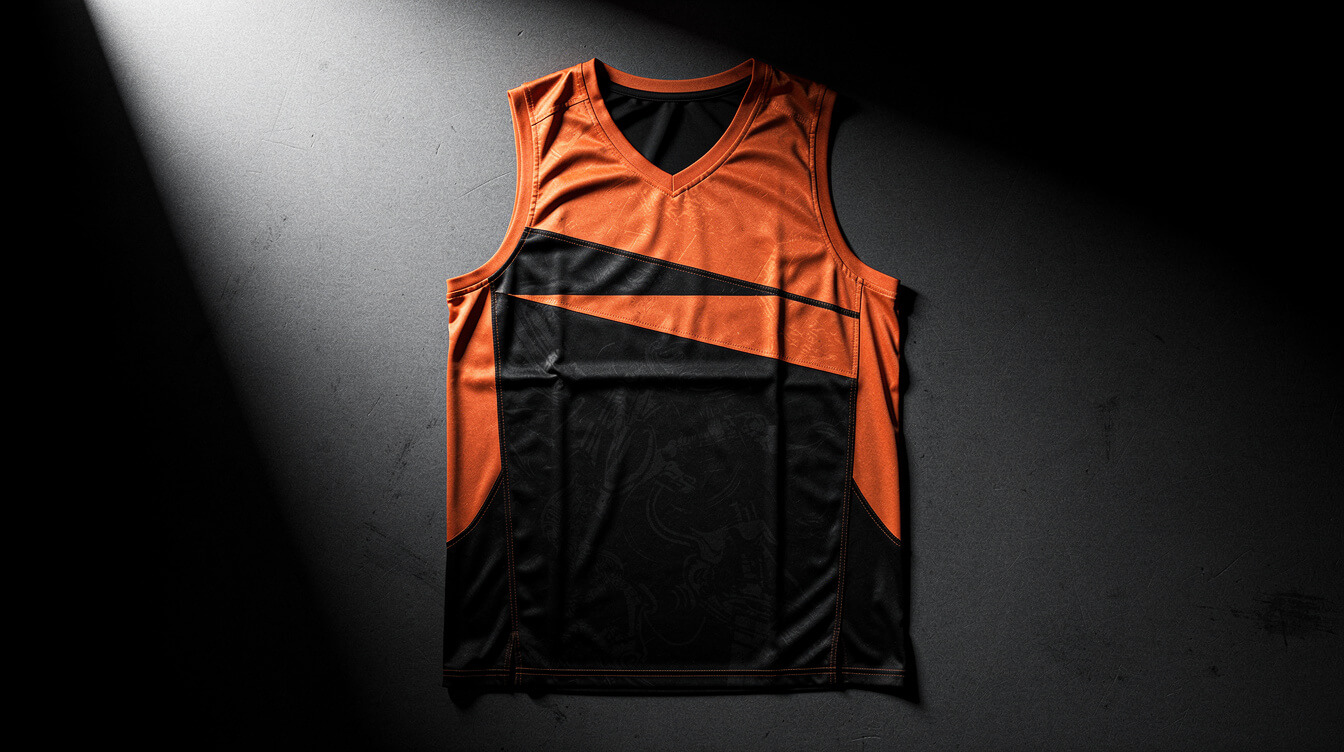
The search volume tells part of the story. “Custom basketball jersey” pulls 12,100 searches per month in the US. The SERP is 100% B2B — Nike Team orders with 20+ minimum, Champro Sports bulk pricing, Amazon consumer listings with no design tools. There is no editorial content for POD sellers explaining how to list and sell basketball jerseys without minimums. That is the gap.
The more important reason is product economics. Basketball jerseys retail between $55 and $75. At those price points, Shopify’s 1% override fee becomes a meaningful margin drain, WooCommerce’s fixed-cost structure wins, and customer lifetime value climbs because jersey buyers often come back for the same design in different colorways, or return for the next team season.
Compare that to stickers at $12 or bandanas at $22. At $65 AOV, a basketball jersey store generating 200 orders per month produces $13,000 in monthly revenue. The economics scale in ways that lower-AOV products don’t.
For POD sellers with an eye on fan merch — music artist stores, retro parody designs, fantasy sports leagues, youth sports fundraisers — basketball jerseys add a high-ticket item to a catalog that might otherwise top out at $38 hoodies.
Which POD providers carry basketball jerseys (Printful and Printify options)

Not all POD providers carry basketball jerseys. Here is what’s confirmed in each major platform’s catalog:
Printful: Carries sublimated basketball jerseys as a standard catalog item. The jersey is an all-over-print (AOP) sublimated design on 100% polyester mesh. No minimum order quantity. Production time is typically 2-5 business days. Printful handles fulfillment from their US, EU, and Mexico facilities. The Printful integration works natively with WooCommerce, Shopify, and Etsy.
Printify: Carries basketball jerseys through its partner network. Availability depends on your region and which print provider you select within the Printify marketplace. US-based sellers typically have at least one active vendor. Printify’s pricing structure means the base cost varies by provider, but the product type (AOP sublimated polyester) is the same. Printify Premium ($29/month) gives a 20% discount on base costs, which meaningfully affects margin at high volume.
SPOD (Spreadshirt): Carries some jersey options but with more limited design coverage than Printful. Worth checking if you are in Europe and want faster EU delivery.
Gooten: Does not carry standard basketball jerseys in the core catalog as of this writing. Check their product library directly before planning a Gooten-based store.
For most sellers starting a basketball jersey catalog, Printful is the safest starting point. The product is confirmed, the quality is documented across community feedback, and the integrations are mature. Once you have volume data, Printify with a regional vendor can lower your base cost.
If you are already running custom baseball jerseys through Printful, basketball jerseys follow the same fulfillment and quality logic. Same sublimation process, same polyester base, different cut and silhouette.
Sublimation vs. screen printing: why jersey fabric forces the choice
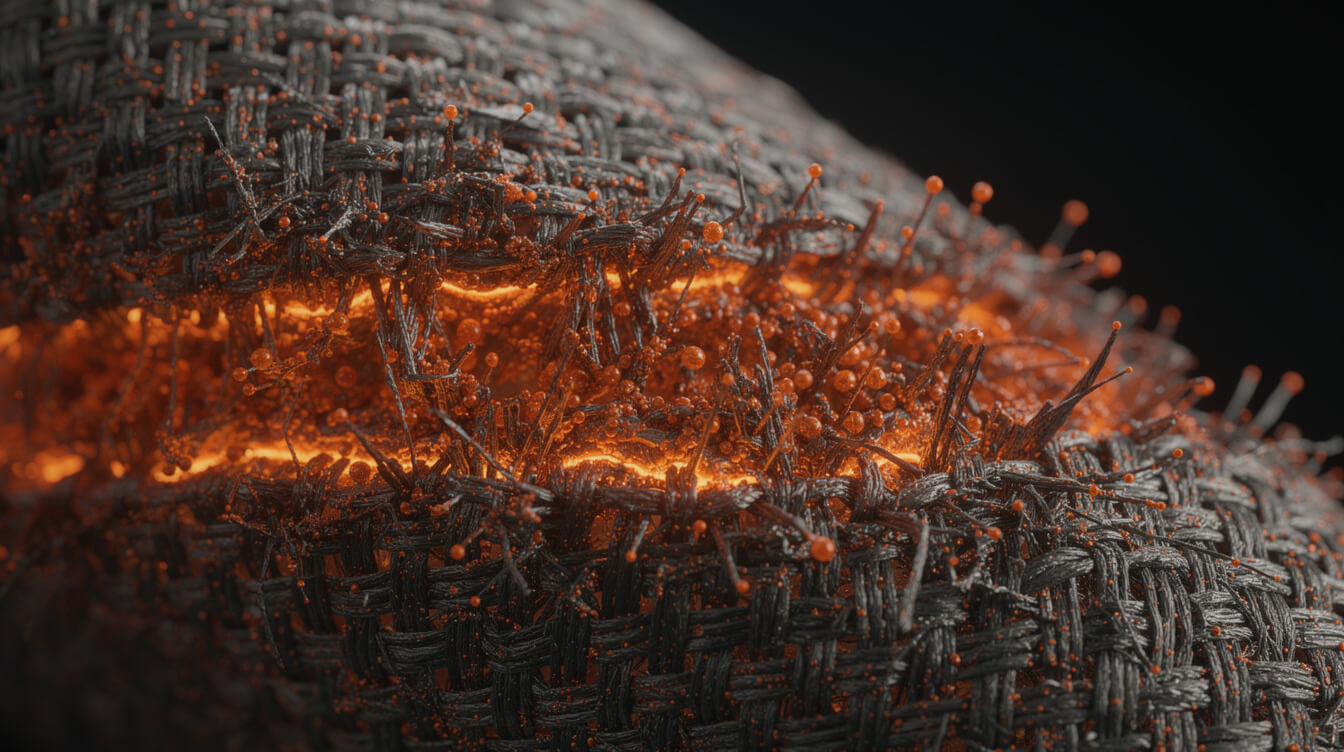
Basketball jerseys are 100% polyester. That single material fact determines everything about how you can print on them.
Sublimation works by converting dye into gas at high heat (375–400°F) and bonding it directly into the polyester fiber at a molecular level. The dye becomes part of the fabric, not a layer on top. The result: no cracking, no peeling, no fading through wash cycles. The print is as permanent as the jersey itself. Sublimation also supports photographic-quality, full-coverage, edge-to-edge designs — the kind of all-over-print visual that makes fan jerseys look premium.
Screen printing applies ink on top of the fabric surface. On cotton, screen printing is excellent. On 100% polyester, it fails for a predictable reason: polyester fibers repel water-based inks. The ink sits on top of hydrophobic fibers rather than bonding into them. Heat from washing causes the fibers to relax and the ink to delaminate. You get cracking and peeling within a few wash cycles — unacceptable for a $65 jersey.
DTG (direct-to-garment) printing has the same problem on polyester. DTG uses water-based inkjet inks designed for cotton. On polyester, the inks don’t bond, the pretreatment doesn’t adhere correctly, and the vibrancy drops significantly compared to cotton.
The practical conclusion: if the jersey is 100% polyester (and all athletic jerseys are, by design — polyester wicks sweat, cotton does not), sublimation is the only viable no-minimum full-color print method. This is not a limitation of the POD model. It is a material science fact that applies to every jersey printer, from the small shop to Nike’s manufacturing contracts.
For POD sellers, this simplifies the decision. You don’t compare print methods for jerseys. Sublimation is the method. All-over-print coverage is the design format. Design your artwork as a full-panel layout — not a chest-left logo — and you’re working with the medium, not against it.
This is also why the fan merch angle is so strong: sublimated AOP jerseys look like the premium replica jerseys fans are already buying. The visual quality is there. The distinction is your design, your niche, and your store — not the technology.
For a broader overview of which fabrics support sublimation and which don’t, custom sportswear for POD sellers walks through the full performance fabric decision matrix.
Unit cost math: what a custom basketball jersey actually costs at 1, 10, and 50 units
Smash print-on-demand. Join the engine room.
One short email a week. Real numbers, real teardowns, the unfiltered economics behind every move.

Let’s run the actual numbers. All figures below use Printful’s published base costs as of 2026. Shipping is estimated for domestic US delivery.
Base cost breakdown (Printful, AOP sublimated basketball jersey):
- Product base cost: approximately $25–$32 depending on size (S–3XL)
- Shipping (domestic US, standard): $5–$7 per unit
- Landed cost per unit: $30–$39
At 1 unit (POD individual order):
- Retail price $65: gross margin $26–$35 (40–54%)
- Retail price $75: gross margin $36–$45 (48–58%)
At 10 units (repeat customer, event batch):
- Cost stays identical per unit — POD pricing is linear, not volume-tiered
- Revenue: $650–$750; gross margin: $260–$450
At 50 units (small league, fundraiser batch):
- POD (Printful): $1,500–$1,950 in cost; revenue $3,250–$3,750 at $65 retail
- Direct manufacturer (at 50 units): $8–$15/unit landed — significantly cheaper per unit, but requires upfront inventory investment, design approval process, 3-6 week lead time, and freight
The honest comparison: at 50 units, a direct manufacturer beats Printful’s per-unit cost by 40–60%. The trade-off is $400–$750 in upfront inventory spend, a 4-6 week wait, and no flexibility on design changes between batches. For a POD seller building a catalog of 5–20 designs, the no-minimum POD path protects you from holding inventory on designs that don’t sell. That risk protection is worth more than the per-unit savings at this volume.
The break-even point where direct manufacturing becomes compelling is typically 100+ consistent orders per design per month. Before that, POD’s per-unit premium is the cost of risk management, not inefficiency.
MEGA automates the product creation pipeline — from niche research to Printful listing — so you can test 20 basketball jersey designs in the time it takes to manually set up one. The economics of that speed matter when you’re still discovering which niches convert. Try MEGA to see the research-to-product pipeline in action.
Research niches. Generate designs. List products. All in one pipeline.
MEGA is the research-to-product engine for POD sellers. Find a niche, generate your jersey design, and create a fully optimized Printful listing — without six hours in Canva.
The fan jersey niche: music merch, retro parody, fantasy leagues, and youth sports fundraisers

The default mental image for “custom basketball jersey” is a team uniform. But the fan merch category is structurally different — and more profitable for no-minimum POD sellers.
Music artist merch jerseys are one of the strongest converters. Artists with cult followings (underground rap, indie bands, bedroom pop) need merch that feels premium without the $5,000 minimum commitment of traditional merch manufacturers. A sublimated basketball jersey at $65 retail positions as a collectible item, not just a t-shirt. Fan communities buy jerseys to signal membership. Production cost $31 landed, retail $65, gross margin 52%.
Retro parody designs play on basketball culture without using licensed IP. Think: team color palettes with fictional team names, vintage-style typography with fictional players, aesthetic homages that evoke a specific era without reproducing trademarked logos. These designs require no license, no approval, and no minimum. They appeal to basketball fans who want something unique versus a licensed replica that everyone else has. This is a design challenge, not a supply chain problem.
Fantasy league team kits are an underserved niche. Fantasy sports leagues (NFL fantasy, NBA fantasy, DFS communities) have passionate players who want physical representations of their digital teams. A sublimated jersey with a custom fantasy team name and color scheme is exactly that product. League commissioners ordering for 8–14 players represent a B2B-adjacent order with a single buyer decision and $520–$910 in revenue per transaction.
Youth sports fundraisers are the highest-volume opportunity in this list. Youth leagues, travel teams, and school sports programs routinely raise money by selling branded merch to families. A basketball jersey at $55–$65 is a practical item — families buy it because their kid will wear it, not just because they’re supporting the team. For POD sellers with community connections (local leagues, school boosters, church groups), this channel requires relationship work but produces reliable repeat orders.
All of these niches share one structural advantage: the buyer intent is specific. They are not searching “basketball jersey” generically. They are searching “custom music artist jersey,” “fantasy league jersey,” or “youth basketball fundraiser merch.” Those long-tail search terms have lower competition and higher purchase intent than the head term.
Shopify 1% at $55–75 AOV: what it costs a growing jersey store per year

Shopify’s platform override fee is 1% of GMV on the Basic plan, 0.5% on Shopify plan, 0.25% on Advanced. These apply on top of your payment processor fees (Stripe, PayPal) if you use a third-party processor rather than Shopify Payments.
At basketball jersey AOV:
- $65 AOV, 200 orders/month ($13,000/month GMV): Shopify Basic = $130/month in override fees alone. Over 12 months, that’s $1,560 in Shopify’s pocket — extracted from margin before you’ve paid for ads, tools, or your own salary.
- $75 AOV, 300 orders/month ($22,500/month GMV): Shopify Basic = $225/month. Annual drain: $2,700.
- At $50k/month GMV (a realistic 12-month target for a focused jersey store): Shopify Basic = $500/month, Shopify plan = $250/month. Neither number is nothing.
These fees compound. A Shopify app for reviews ($15/month), a upsell app ($30/month), a loyalty app ($50/month), a product customizer for adding player names ($29/month) — you’re easily at $250/month in app stack costs before the override fee. At $50k/month revenue, the combined platform overhead on Shopify Basic is $750/month or $9,000/year.
WooCommerce’s overhead model is fundamentally different. You pay for hosting ($15–$30/month on managed WordPress), your Printful plugin (free), and whatever premium plugins you choose. There is no percentage override on your GMV. At $50k/month revenue, WooCommerce’s total platform overhead is $180–$360/year for hosting — versus $9,000 on Shopify Basic. That is not a rounding error.
For basketball jerseys specifically, the personalization feature matters. Buyers often want a custom name and number on their jersey. On WooCommerce, you add a text field to the product with the native Product Add-Ons feature — no app fee. On Shopify, that same functionality requires a third-party app at $19–$49/month. At $29/month app cost, you’re spending $348/year for something WooCommerce provides natively.
The full fee breakdown is in the WooCommerce vs Shopify for POD sellers comparison — worth reading if you’re evaluating the platform decision for a jersey-focused store.
WooCommerce for repeat custom jersey orders: the team and league buyer angle
The team and league buyer is a fundamentally different customer than the one-off fan merchandise buyer. Understanding this distinction shapes how you set up your WooCommerce store for basketball jerseys.
The one-off fan buyer searches, lands on your store, buys one jersey, and may return in 6–12 months when you release a new design. Standard e-commerce behavior. Email marketing, retargeting ads, and collection drops are the main repeat-purchase levers.
The team and league buyer has different behavior entirely. A league commissioner ordering jerseys for 12 players has a recurring need — every season, the league may want updated designs, or new teams join, or returning players need new sizes. If your ordering experience handles their use case well, they don’t leave. The switching cost (explaining their team colors and design preferences to a new vendor) is high enough that satisfied league buyers are sticky.
WooCommerce has specific tools for this buyer segment that Shopify handles poorly without additional apps:
Product variations and bulk ordering: WooCommerce supports product variations (size, color, custom name field) natively. A league commissioner can order 12 jerseys in different sizes with different player names in a single transaction. On Shopify, this either requires a complex workaround or a bulk ordering app ($30–$50/month).
Customer accounts and order history: WooCommerce stores full order history in customer accounts. A returning commissioner can see exactly what they ordered last season, which sizes they chose, and what design variant they used. Reordering is a one-click process. This is basic WooCommerce functionality, not a premium feature.
Custom pricing for repeat buyers: WooCommerce supports tiered pricing and customer-group pricing through free or low-cost plugins. If a league commissioner places an order every quarter, you can offer a recurring buyer discount without building a complex loyalty program. On Shopify, tiered pricing typically requires a paid app ($15–$30/month).
The basketball jersey niche where repeat orders matter most is youth sports. Parents who buy a jersey for their child’s team this spring are the same parents who need new gear in the fall. School athletic directors who find a POD supplier they trust will return for every new season. Your WooCommerce store’s ability to handle returning buyers without friction is a legitimate competitive advantage over sellers using platforms that treat every transaction as one-off.
For building out your sports-adjacent catalog, custom bandanas are a strong addition — low unit cost, high perceived value as team spirit accessories, and the same no-minimum Printful fulfillment model.
Conclusion: basketball jerseys are the high-ticket item your POD catalog might be missing
The case for custom basketball jerseys in a POD catalog comes down to three things: search volume with zero editorial competition, AOV that makes your per-order economics meaningful, and fan merch niches where buyers are motivated and specific in their intent.
The technical reality is simpler than it looks. Sublimation on polyester is the only viable print method for performance fabric — but it is also the method that produces the best visual result. Full-panel all-over-print coverage, photographic-quality design reproduction, and permanent bonding that survives every wash cycle. The technology and the creative opportunity align.
Start with one or two designs. Target a specific niche — a music artist community, a retro parody concept, a local sports league. Price at $65. Test the response. The no-minimum POD model means your downside is limited to your time investment, not inventory. If the first design doesn’t convert, pivot with the next one.
At $65 AOV with 200 monthly orders, the revenue is $13,000. Keep that on WooCommerce instead of Shopify and you’re saving $1,560 per year in override fees alone. That gap is not trivial when you’re building a store with real margin.
Implement AI. 30x your throughput. Get a 30-min call with the founder.
Drop your details and book a free 30-minute discovery call. Personalized advice on your POD stack, your margin, and where AI fits. No pitch, no fluff.