Custom bottle openers for POD stores: which providers support them, print methods explained, and the unit cost math at $12-20 retail
A custom bottle opener looks like the easiest product in the merch catalog. It is small, cheap to ship, useful every day, and it shows up at every wedding, brewery taproom, and corporate event in the country. Then you open Printful to list one and find nothing. That gap is the whole story. Search Google for “custom bottle opener” and every result is a promotional vendor selling 25, 50, or 500 units at a time to event planners. None of them explain what a print-on-demand seller should actually do. This guide covers the honest product verdict, the four print methods, the closest thing to true on-demand fulfillment, unit cost math across three supply routes, the six niches that buy, and the store setup that keeps your margin intact.
Are custom bottle openers actually a POD product?

Short answer: not in the way a t-shirt or a mug is. The longer answer is more useful, because the product is still worth selling if you pick the right supply route.
Printful does not carry bottle openers in its standard catalog. There is no blank you can drop a design onto and sync to your WooCommerce store. Printful’s catalog leans on substrates its own facilities print: apparel, drinkware, wall art, accessories built around sublimation, DTG, and embroidery. A metal bottle opener needs laser engraving, epoxy doming, or UV printing on metal, and those workflows sit outside its core lines.
Printify is a network, not a single factory. Its catalog changes as print providers join and leave. Some providers in the network list metal accessories, and a bottle opener SKU may appear depending on region and timing. Do not trust a blog post (including this one) for the current state. Open the Printify Product Creator, search “bottle opener,” and check which providers carry it, where they ship from, and what the base cost is today.
StickerMule and the other short-run sticker shops do not stock bottle openers either. They are worth knowing about for packaging inserts, not for the opener itself.
That leaves three practical paths:
- Single-unit specialty suppliers. Button and badge shops that make round magnetic openers at one-unit minimums. This is the closest thing to on-demand and the subject of section three.
- Small-batch wholesale. Promotional suppliers with 25 to 50 unit minimums. Very low unit cost, but you hold inventory or you sell the batch as one order.
- Printify network SKUs. If a provider carries one when you check, this is the cleanest fully automated route, and it plugs into the same WooCommerce sync you already run.
The important reframe: a custom bottle opener is a batch-friendly occasion product, not an everyday impulse SKU. Most of the money sits in orders of 6 to 25 pieces for a single event. Once you see it that way, the minimums stop looking like a problem and start looking like an order size.
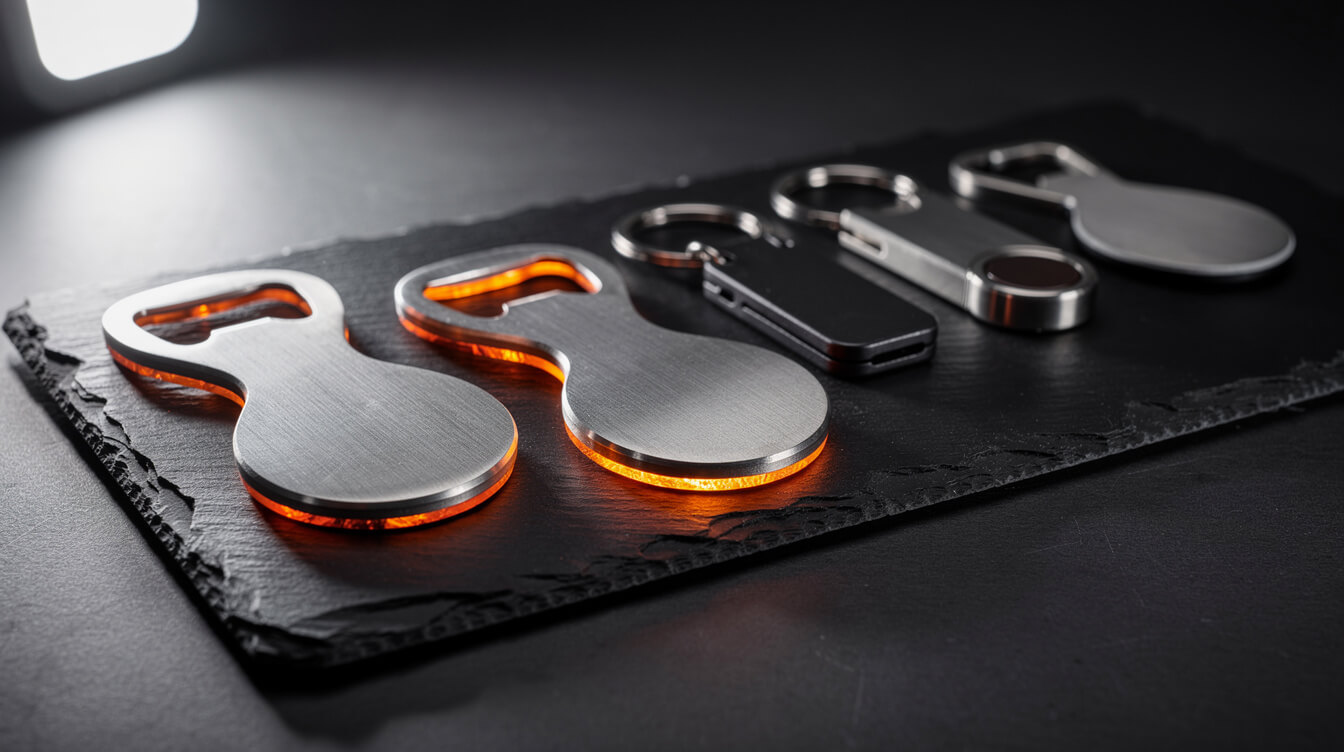
Print and engraving methods: laser, epoxy offset, UV inkjet, and the magnetic dome
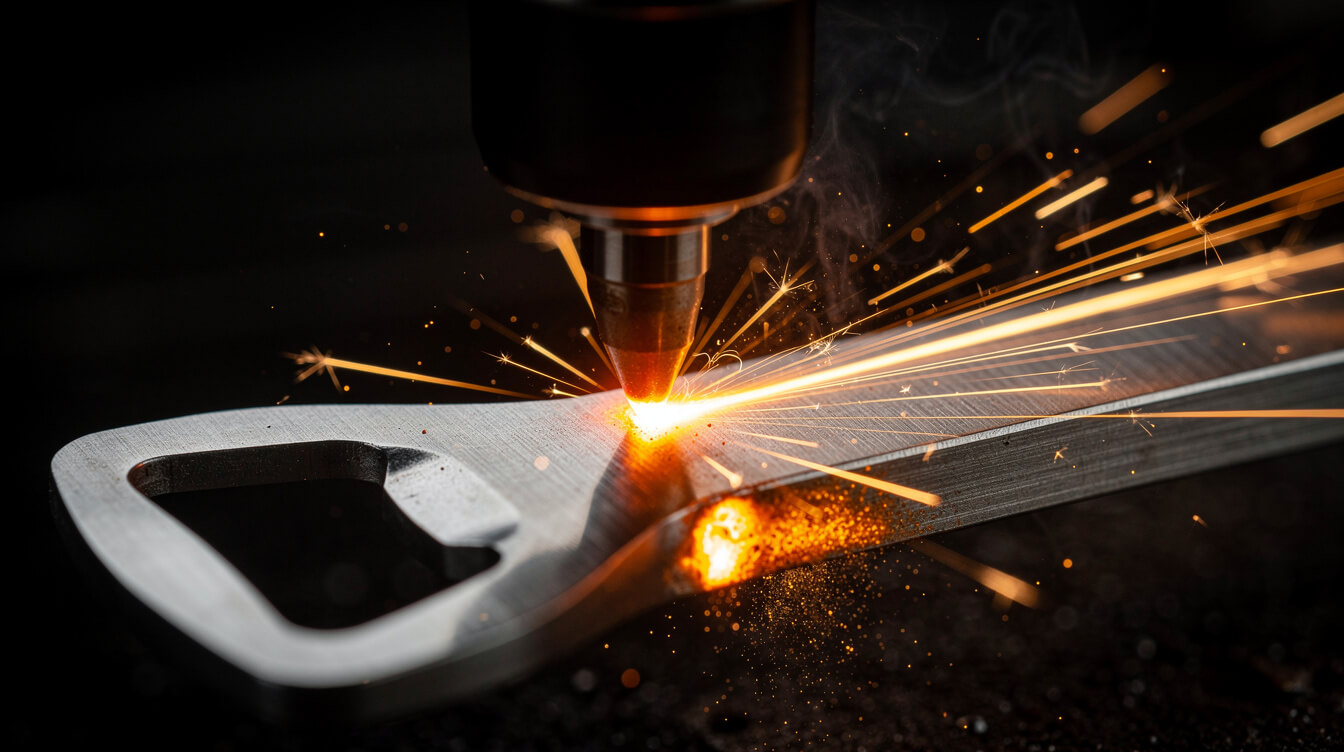
The method decides what the buyer sees, what the supplier minimum is, and which designs you can sell. Four methods cover nearly every custom bottle opener on the market.
Laser engraving
A laser etches the design into stainless steel or anodized aluminum. The result is single-tone and permanent. Nothing peels, fades, or scratches off. It reads as premium, which is why engraved openers dominate groomsman gifts and corporate thank-you sets. The constraint: no color. Your design has to work as line art or a solid silhouette. Names, dates, monograms, and simple logos are ideal. Photos and gradients are not.
Epoxy-coated offset printing
A full-color print is applied to the metal and sealed under a clear epoxy dome. This is the dog-tag style opener common in promotional catalogs. Color range is wide, durability is good, and batch pricing gets very low (promotional listings show unit prices under a dollar at volume). Setup and minimums make it a batch method, not a per-order one.
UV inkjet
UV-curable ink is printed directly on the metal and cured instantly under ultraviolet light. Full color, no screens, no plates, so short runs are economical. It is less scratch-resistant than an engraved or domed finish, especially on high-contact areas near the cap lip. Good for decorative designs on the flat face, weaker for heavy daily use.
Round magnetic dome
A printed paper or film insert sits under a clear dome on a metal backing, with an opener edge and a magnet on the reverse that catches caps on a fridge door. This is the button-shop format. It takes full-color artwork, including photos, and it is made to order at very small quantities.
| Method | Color | Durability | Typical minimum | Best for |
|---|---|---|---|---|
| Laser engraving | Single tone | Highest | Low to batch | Names, dates, groomsman gifts |
| Epoxy offset | Full color | High | Batch (25 to 500+) | Brewery logos, corporate swag |
| UV inkjet | Full color | Medium | Low | Art designs, short runs |
| Magnetic dome | Full color | High on face | 1 unit at select shops | Photo gifts, single orders |
If you already sell custom sticker sheets, the artwork rules for the dome format will feel familiar: bold shapes, high contrast, nothing critical near the edge.
The round magnetic bottle opener: the smallest-batch option and why it works
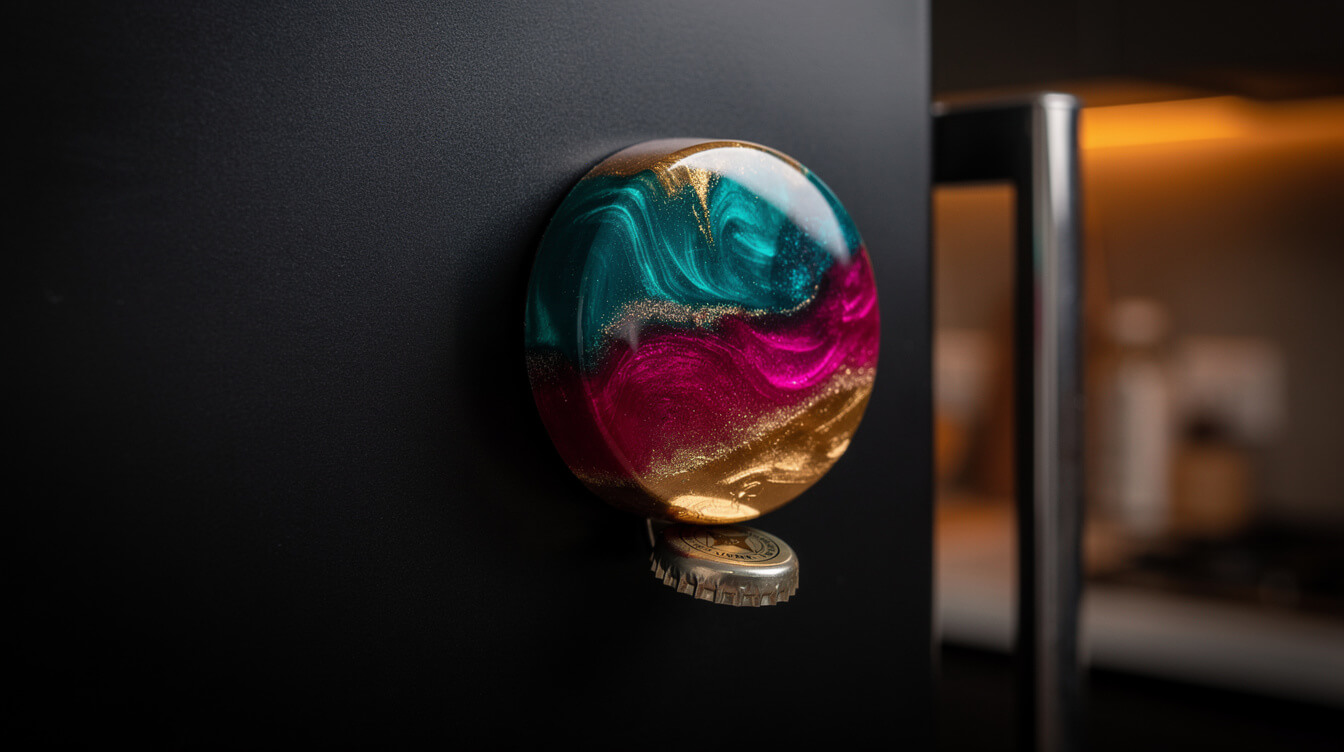
If you want something that behaves like a POD product today, start here. Button and badge shops such as purebuttons.com make a 2.25-inch round magnetic opener with a full-color printed face. At the time of research, single units were listed from around $4.99, with lower per-unit pricing as quantity rises. Check current pricing before you build a listing, because specialty shop pricing moves.
Three things make this format work for a small store:
- One-unit minimum. You can sell a single photo opener to a single buyer without holding stock.
- Full-color artwork. Pet portraits, wedding photos, brewery art, and AI-generated designs all print. Engraving cannot do that.
- Two functions in one object. The magnet sticks to a fridge and catches caps. Buyers understand the product instantly from a single photo, which keeps conversion friction low.
The trade-off is fulfillment. Most button shops are not wired into WooCommerce the way Printful and Printify are. Expect to place orders manually or through email, and to pay their shipping on each order. At low volume that is fine. At 30 orders a week, manual ordering eats the hours you were trying to save.
Two ways to handle that. First, batch the manual step: collect orders and submit them once or twice a week, and set your listing’s processing time to match. Second, ask the supplier about blind dropshipping (your packing slip, no supplier branding) and an order form or API. Some small shops will set this up for a store sending steady volume.
The format also pairs cleanly with other small flat goods. A buyer ordering a magnetic opener for a housewarming will often add a custom keychain with the same design. Offer the pair as a set.
Unit cost math: single-order vs batch vs wholesale
Smash print-on-demand. Join the engine room.
One short email a week. Real numbers, real teardowns, the unfiltered economics behind every move.
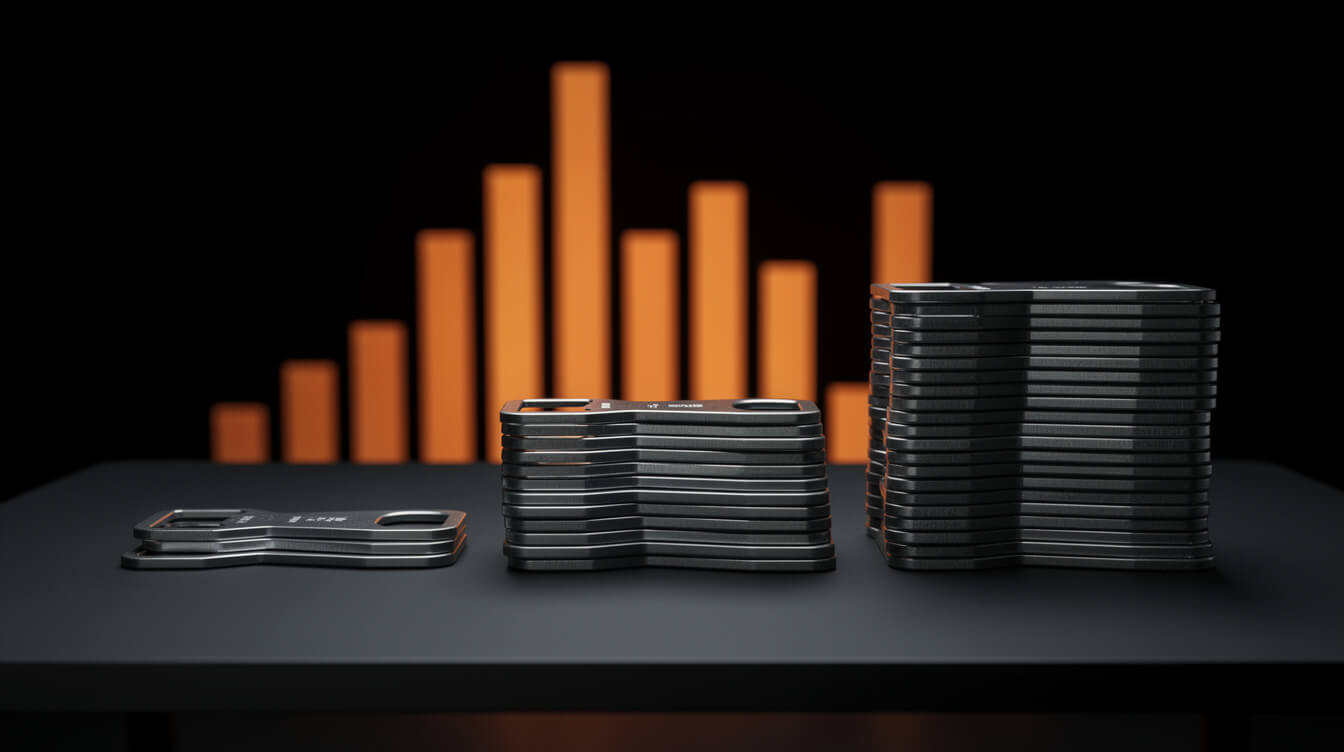
Here are three supply routes side by side. Figures come from published supplier listings at the time of research. Treat them as a planning range and confirm with your supplier before setting prices.
| Route | Landed cost per unit | Retail | Gross margin | Risk |
|---|---|---|---|---|
| Single-unit magnetic (made to order) | $9 to $11 ($4.99 to $6 base + $4 to $5 shipping) | $14 to $18 | About 25 to 38% | None. No inventory. |
| 25-unit minimum (promotional style) | About $0.75 to $0.86 base + freight | $12 to $15 | About 80 to 83% at sell-through | You own 25 pieces. |
| 50-unit wholesale batch | $1.22 to $1.66 ($0.62 to $1.50 base + $8 to $15 freight spread) | $14 to $18 | About 88 to 91% at sell-through | You own 50 pieces. |
The single-unit route has the lowest margin and zero risk. At $16 retail and $10 landed, you keep $6 per order before payment processing. That is thin, which is exactly why this route only works with bundles or add-ons.
The batch routes show huge percentages, but those percentages assume you sell every unit. Fifty generic logo openers sitting in a drawer is not 90% margin. It is $60 to $80 of dead stock. The batch route makes sense in one specific situation: when one customer buys the whole batch.
The wedding favor order: where batch math wins
A couple orders 24 engraved openers with their names and wedding date as guest favors, priced as a set at $220. Your cost: 24 units at roughly $1.22 to $1.66 landed ($29 to $40), plus engraving setup, gift boxes, and shipping to the customer, for a total in the $70 to $84 range. Gross margin lands around 62 to 68% on a single transaction, with no inventory left over because the whole run was personalized for one buyer.
That is the economic shape of this product. Single units keep the listing alive and capture gift buyers. Event sets carry the profit. Price and merchandise accordingly: lead with the set, offer the single as the entry option.
Listing work is the other cost nobody counts. A single opener product with sets of 6, 12, and 24, three finishes, and a personalization field can take an hour to build by hand. MEGA automates this step entirely, from product imagery to titles, SEO metadata, and the full WooCommerce listing, in under seven minutes per product. This post was researched and drafted with help from the same stack.
Six niche verticals with the strongest custom bottle opener demand
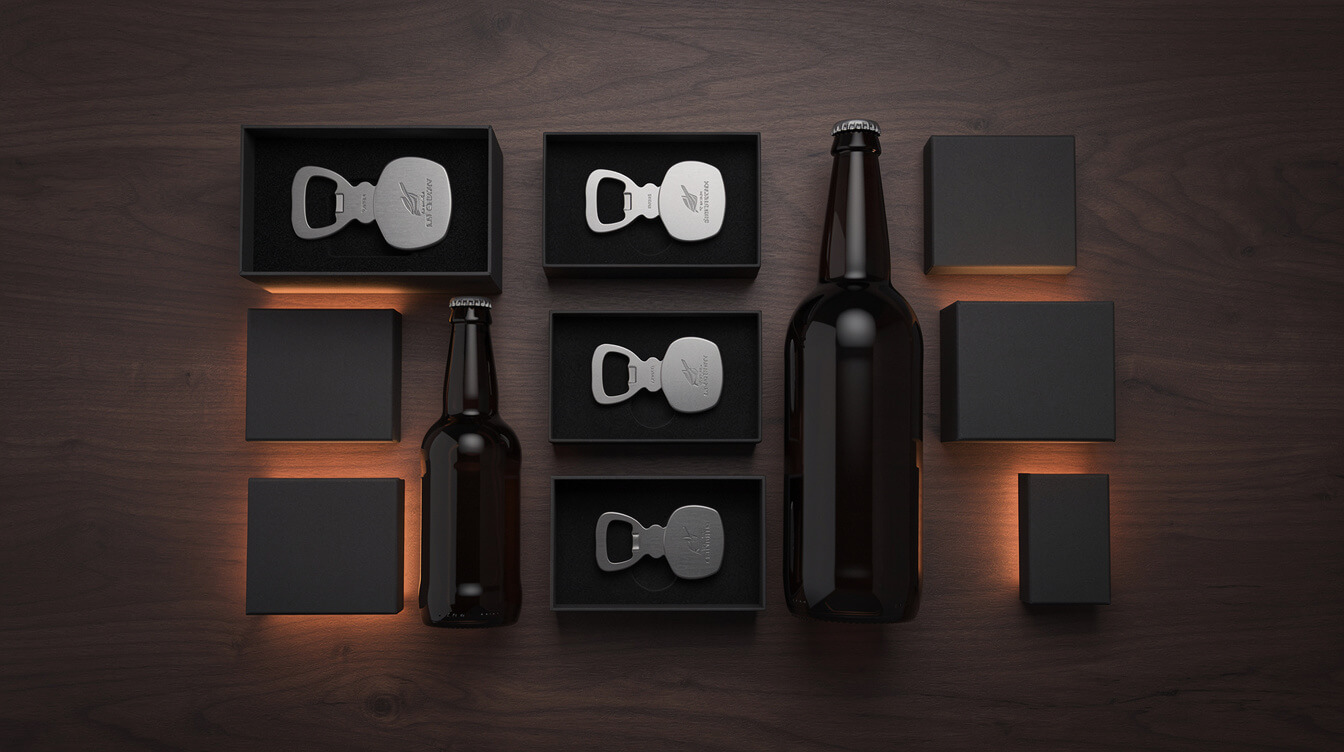
Bottle openers are not a general audience product. Demand concentrates in a handful of occasions and communities. Wedding favors lead. The other five support the catalog through the off-season.
1. Wedding groomsman gifts and party favors
The largest and most consistent segment. A groomsman set runs 6 to 12 pieces at $14 to $18 each, which puts a typical order at $84 to $216. Guest favor orders run larger. Demand peaks May through October, and buyers shop two to three months ahead. Engraving (names, roles, wedding date) is the default request. Get your listings indexed by early spring.
2. Craft brewery and bar merchandise
A bottle opener with a brewery’s logo is functional, cheap to carry, and on-brand at the taproom counter. This is a wholesale-to-business conversation more than a consumer listing: the brewery buys 50 to 200 pieces and resells them. Your edge over promotional houses is design help and smaller minimums.
3. Sports team fan gear
Youth leagues, amateur clubs, rec teams, and alumni groups want team name, year, and a mascot design. Stay away from licensed league marks. Original fan art and team names you have permission to use are the safe lane. End-of-season gifts and banquet favors create predictable annual reorders.
4. Corporate swag in small runs
Offices and small agencies that want 30 openers for a client event do not want to buy 500 from a promotional catalog. A no-minimum or low-minimum option, sold with a clean quote form, wins those orders. Pair openers with custom drinkware for a client gift set with a higher ticket.
5. Personalized novelty gifts
Birthdays, Father’s Day, retirements, and Christmas stockings. Name plus date, or a photo on the magnetic format. Single-unit buyers, low AOV, high volume around holidays. These buyers convert on a strong product photo and a fast processing time.
6. Outdoor, hunting, fishing, and camping merch
A skull, antler, or fish silhouette opener on a carabiner is an impulse buy for an outdoor brand’s audience. If you already run an outdoor store selling hats or custom bandanas, the opener is a natural add-on at checkout.

List six niche variants in the time one takes by hand
MEGA runs research, design, mockups, titles, SEO, and the WooCommerce listing end-to-end. Under seven minutes from niche idea to live product.
Shopify 1% math on a $15 custom bottle opener
Low-AOV products feel the Shopify tax harder than anything else in the catalog, because the fee is charged on revenue while your profit per order is measured in single dollars.
Take the single-unit magnetic route at $15 retail. Landed cost is about $10, so gross profit is about $5 before processing. The 1% override on a $15 order is $0.15. That sounds trivial until you compare it to the profit it comes out of: $0.15 is about 3% of a $5 gross margin, every order, forever.
| Monthly orders at $15 AOV | Monthly revenue | Shopify 1% per month | Per year |
|---|---|---|---|
| 100 | $1,500 | $15 | $180 |
| 200 | $3,000 | $30 | $360 |
| 500 | $7,500 | $75 | $900 |
Then stack the rest. A personalization app for engraving text fields typically costs $19 to $49 per month. A bundle app for 6, 12, and 24-piece sets adds another monthly line. At 200 orders a month, the platform fee plus two apps can easily pass $1,000 a year on a product that grosses $5 per single unit.
WooCommerce overhead for the same store is fixed: hosting in the $15 to $30 per month range, regardless of volume. The fee does not grow when your order count does. For the full side-by-side, see our WooCommerce vs Shopify breakdown for POD sellers.
None of this means Shopify sellers are doing it wrong. Plenty of stores grow fast on it. The point is narrower: on a $15 product with thin single-unit margin, a percentage fee is a bigger slice of what you actually keep. Owning the store fixes that.
WooCommerce setup for name and date personalization without a paid app
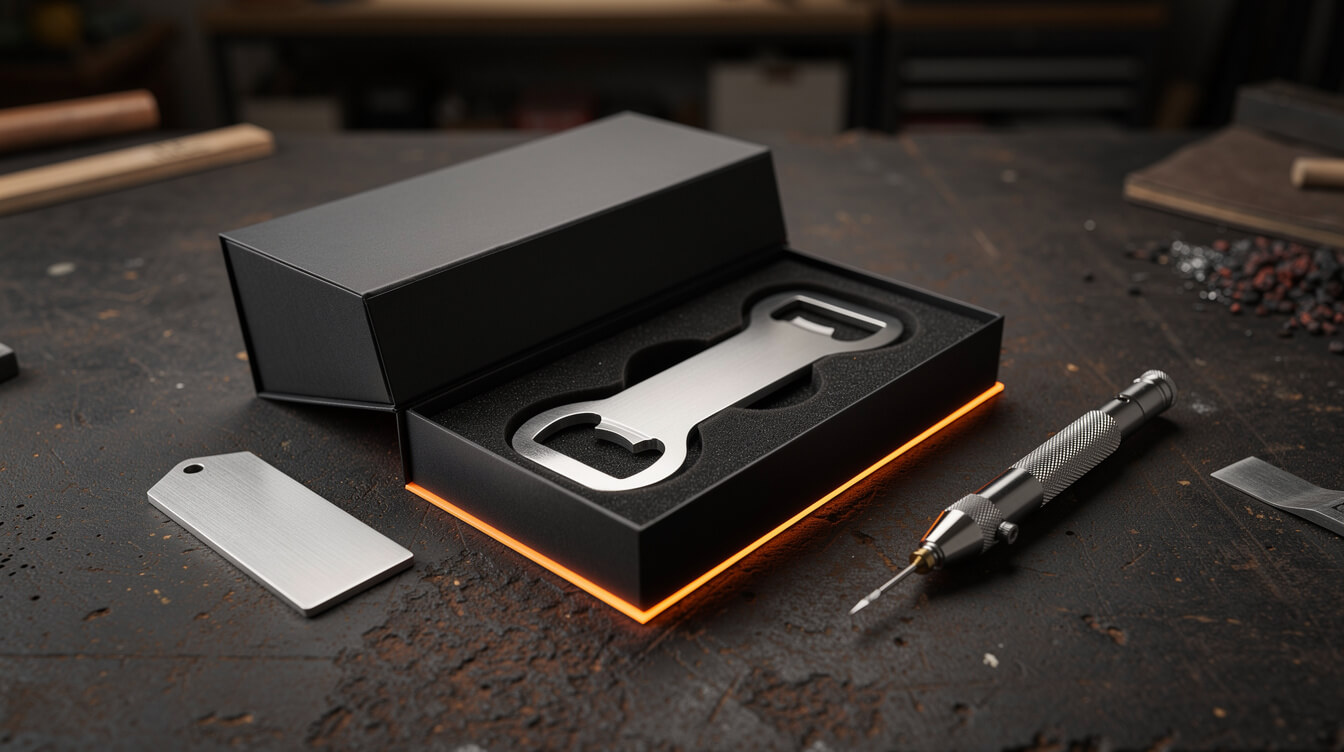
Personalization is what turns a $5 generic opener into a $16 gift. Here is the setup that handles engraving requests and event sets on an owned WooCommerce store.
1. Use a variable product for set sizes
Create one product with a “Set size” attribute: Single, 6-pack, 12-pack, 24-pack. Each variation gets its own price, SKU, and weight. This is native WooCommerce. No bundle app needed, and the price per piece drops visibly as the set grows, which nudges buyers toward the larger set.
2. Add personalization fields
Add text fields for “Name or names,” “Date,” and an optional “Short message,” with a character limit that matches the engraving area (20 to 25 characters per line is a sensible starting point for a standard opener). WooCommerce’s Product Add-Ons extension or a free field plugin handles this. The values flow into the order, the confirmation email, and the admin screen, so your fulfillment step can read them directly.
3. Add a finish or format attribute
“Engraved stainless” versus “Full-color magnetic.” Different suppliers fulfill each, so tag the variations clearly. If you run fulfillment rules by SKU prefix, keep the format in the SKU.
4. Add a proof checkbox for event orders
For sets of 12 and up, add a checkbox: “Email me a proof before production.” Wedding buyers want it, and it cuts remakes on misspelled names. Set processing time on these variations to cover the proof step.
5. Add a quote form for corporate and brewery buyers
Orders above 50 pieces should go to a short form, not a cart. You quote based on current supplier pricing, which protects your margin when batch costs move.
This structure also makes reorders simple. A brewery that bought 100 openers in spring can reorder from its account page in two clicks, and you keep the customer relationship and email rather than renting it from a marketplace.
Conclusion: the honest custom bottle opener verdict for POD sellers
The custom bottle opener is not a classic print-on-demand product. Printful does not carry it, Printify carries it only when a network provider does, and the promotional vendors that own the search results sell in batches. If you expected to drop a design on a blank and walk away, this is not that product.
It is still worth adding, for three reasons. First, the round magnetic format gives you a one-unit-minimum option today, so the listing can exist without inventory. Second, event sets turn batch minimums into a single order: one couple, 24 pieces, 62 to 68% gross margin, nothing left in a drawer. Third, the occasions repeat. Wedding season, brewery restocks, team banquets, and holiday gifting come back every year.
The setup that makes it work is simple. Lead with sets, offer singles as the entry point, collect personalization in native WooCommerce fields, and keep the platform fee out of a product whose single-unit margin is about $5. Build the listings by early spring for wedding season and by September for Q4 gifting.
If you want the listing work off your plate, MEGA generates the imagery, titles, SEO, and WooCommerce product end-to-end. That is the throughput gap between testing six niches this month and testing one.
Implement AI. 30x your throughput. Get a 30-min call with the founder.
Drop your details and book a free 30-minute discovery call. Personalized advice on your POD stack, your margin, and where AI fits. No pitch, no fluff.