Custom hoodie printing for POD stores: no minimums, real margin math, and why you do not own the printer
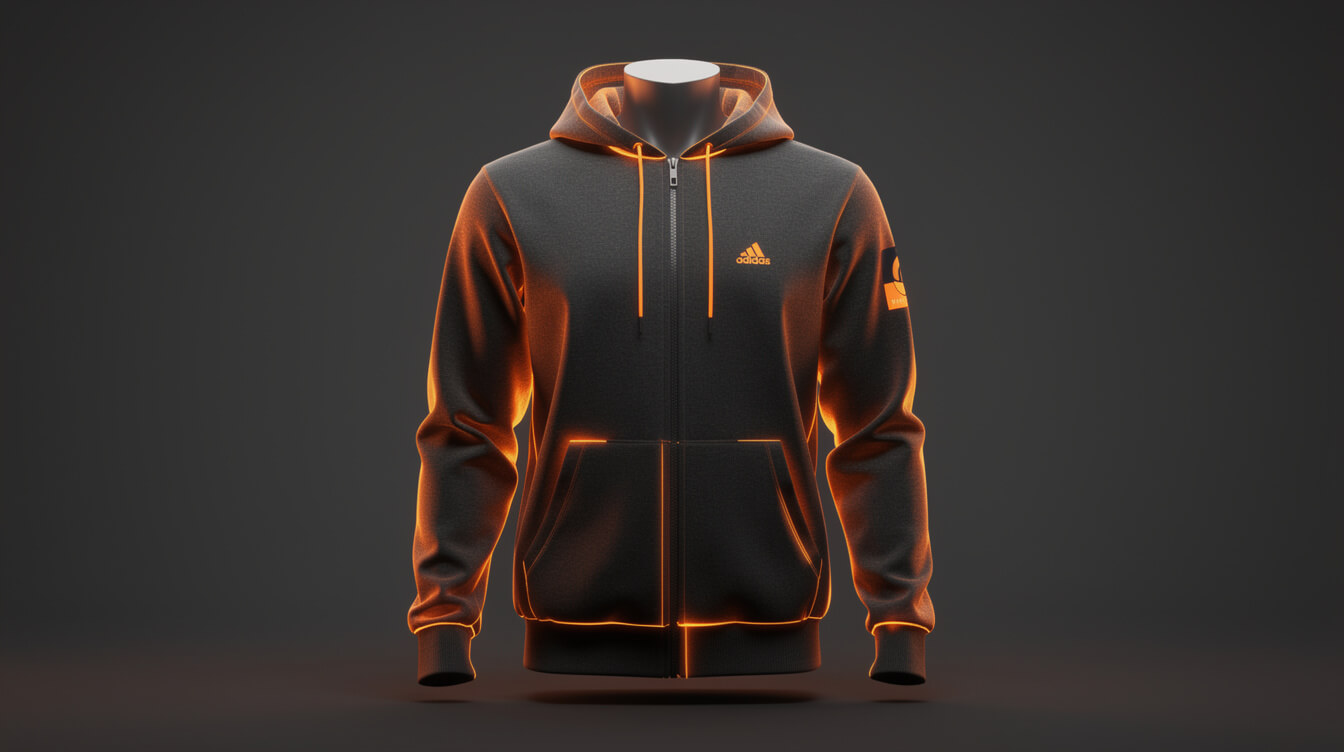
Custom hoodie printing sits at the top of the print-on-demand revenue ladder. Hoodies sell for $45 to $65 retail, carry margins that t-shirts cannot touch at scale, and draw buyers who already know what they want. Search for “custom hoodie printing” and every result is a printing service catalog: CustomInk, BlueCotton, Underground Shirts. Not one editorial result explains the economics from a POD seller’s perspective. This post does exactly that. You will get Printful and Printify base costs, a direct no-minimums vs. bulk-order comparison, a breakdown of embroidery versus DTF, and a step-by-step path to listing custom hoodies on WooCommerce without inventory risk.
Why custom hoodie printing is a top-revenue POD category

Average order value is the number that separates good POD categories from great ones. A custom t-shirt sells for $25 to $35. A custom hoodie sells for $45 to $65. Same fulfillment complexity, higher revenue per order, and buyers expect to pay more because hoodies cost more in every other context.
Demand is year-round with a strong seasonal peak. Search volume for hoodie-related terms climbs sharply in October and stays elevated through January. That peak lines up with holiday gifting, which means a well-positioned hoodie product benefits from organic demand that you did not have to create. Outside that window, athletic clubs, college groups, and fan communities buy custom hoodies continuously.
The competition inside POD is thinner than t-shirts. Most POD sellers start with tees because the entry cost is lower and the design surface is simple. Hoodies require slightly more design thinking, which filters out sellers who are not serious. The category has genuine headroom.
Price sensitivity is lower. A buyer who has decided they want a custom hoodie is not comparing your product to a $12 blank from a thrift store. They are comparing it to a $60 hoodie from a brand they follow. That comparison puts your product in a favorable position if the design is strong and the product description does its job.
One more structural advantage: hoodies fit multiple niches simultaneously. A niche-specific design that works on a t-shirt works equally well on a hoodie, and you can offer both in the same WooCommerce listing with variant options. You are not creating new design work. You are extending the revenue per design.
For POD sellers who have been focused on t-shirts, adding Printful custom hoodies to your catalog is one of the higher-return decisions available without increasing ad spend or audience size.
What the big printing services charge and where the margin goes
When most people search for custom hoodie printing, they land on CustomInk, Bonfire, or a regional screen printer. These services are built for groups and events. The pricing model reflects that: the lower the quantity ordered, the higher the per-unit cost. At CustomInk, 12 custom hoodies will run $30 to $50 each. At 50 units, the per-unit cost drops to roughly $20 to $28. The incentive is to buy more than you need.
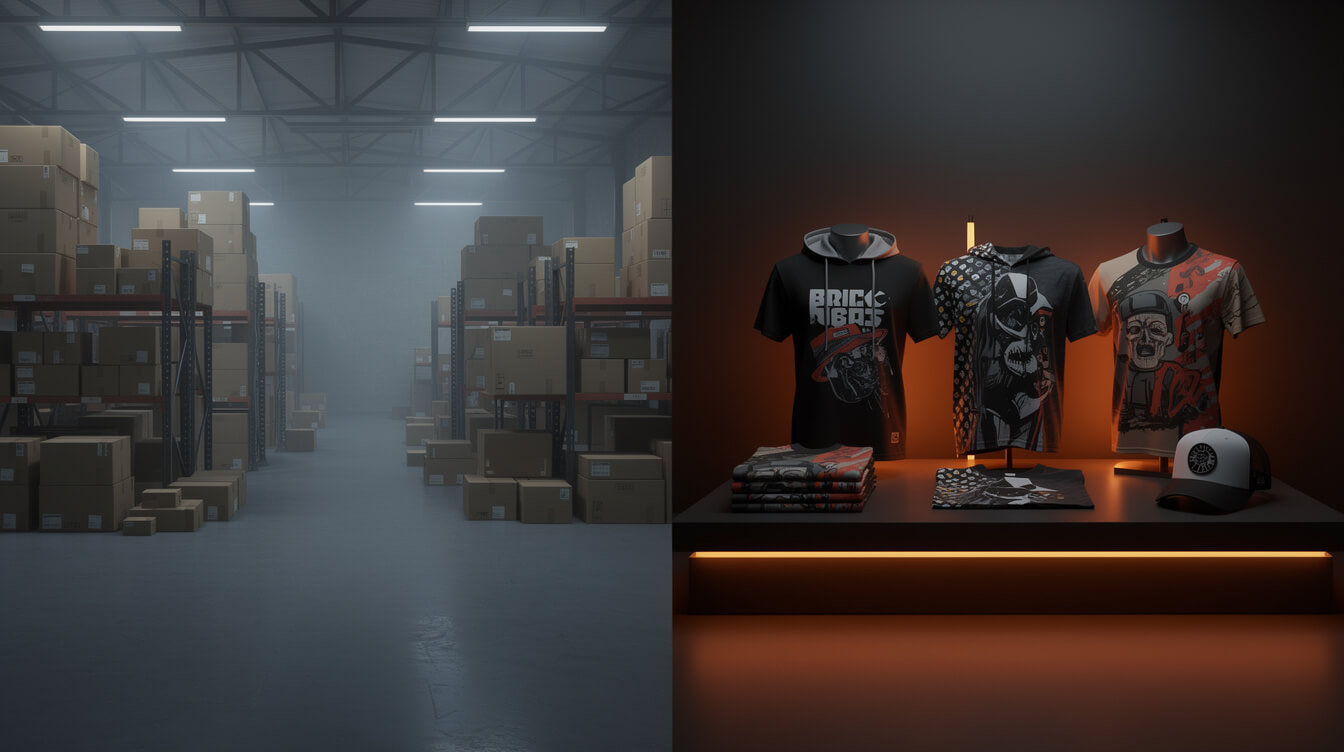
That structure works for a school fundraiser. It does not work for a POD seller building a catalog of dozens of products across multiple niches. Buying 50 units of each design locks up capital, requires storage, and bets that the design will sell before it is out of season.
Platform fees compound the problem. If you are running a Shopify store and using Printful or Printify, Shopify’s 1% platform override fee applies to every transaction. On a $55 hoodie sale with a $26 base cost, your gross margin before platform fees is $29. Shopify takes $0.55 off that immediately. Add app fees, payment processing, and any ad spend, and the net margin on a hoodie sold through a Shopify-based POD stack compresses toward single digits faster than it should.
WooCommerce does not charge a transaction override fee. You pay payment processing (typically 2.9% plus $0.30 via Stripe) and nothing else at the platform level. On the same $55 sale, that is $1.90 in processing fees rather than $1.90 plus $0.55. Over a month of steady hoodie sales, the difference accumulates. Over a year, it is real money returning to your pocket instead of Shopify’s.
The printing services also do not give you the tools to scale. They fulfill orders, but they do not connect to your store’s order management, do not handle variant routing automatically, and do not update inventory counts. Every order is a manual step. POD fulfillment through Printful routes automatically on purchase. That is the structural difference between a business and a manual workflow.
Printful and Printify hoodie options: specs, base costs, and what you actually keep
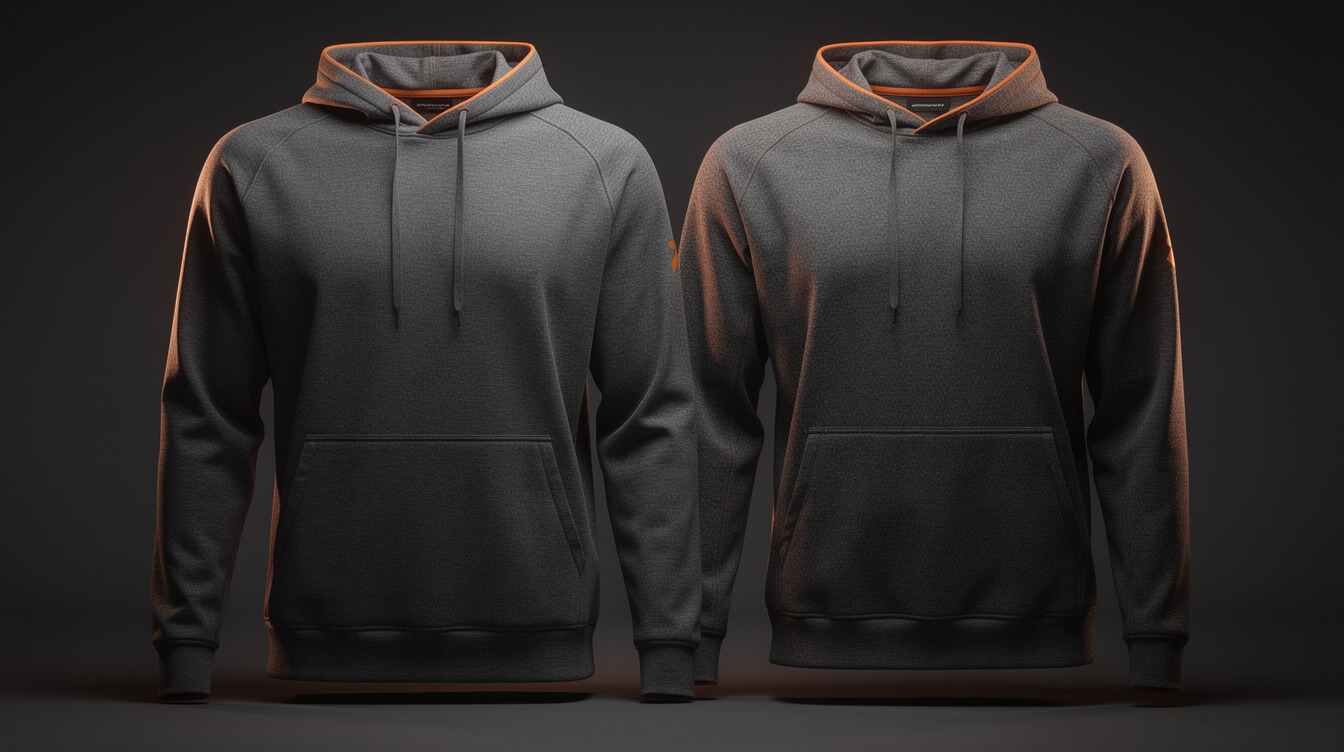
Both Printful and Printify offer a solid selection of custom hoodies. The differences are in base cost, print quality consistency, and the fulfillment network behind each product.
Printful hoodie lineup
Printful’s most popular hoodie is the Bella+Canvas 3719 Sponge Fleece Pullover. Base cost runs approximately $26 to $32 depending on size and color. Retail price for a well-positioned niche hoodie is $52 to $65. Gross margin is roughly $20 to $35 per unit, or 40% to 55% gross before platform and processing fees.
The Champion S700 is a step up in perceived value and commands a slightly higher retail price. Base cost sits in the $30 to $36 range. Premium athletic audiences respond to the Champion brand, which means you can price higher without added resistance.
Printful also offers zip-up hoodies. The Gildan 18600 Full-Zip Hoodie base cost sits around $24 to $28. Zip-ups sell well in athletic and workwear niches where ease of wear matters more than the graphic statement. For more on the full range, the Printful products breakdown covers what sells and what to skip.
Printify hoodie lineup
Printify’s pricing varies by print provider. The Gildan 18500 Pullover Hoodie through a domestic US provider costs roughly $14 to $20 base, depending on the provider selected. That lower base cost increases gross margin if you hold retail price steady, or gives you room to compete on price in volume-driven niches.
The tradeoff is print consistency. Printful operates its own facilities. Printify aggregates third-party providers, and quality varies between providers for the same SKU. If you are selling to a demanding audience that expects premium output, Printful’s tighter quality control justifies the higher base cost. If you are optimizing for margin in a high-volume niche, Printify’s lower floor is worth evaluating.
The margin math in practice
At Printful, a $55 hoodie with a $28 base cost leaves $27 gross. After Stripe processing ($1.90), you net roughly $25.10 per sale on WooCommerce. On Shopify, subtract the 1% override and you are closer to $24.55. Over 100 hoodie sales per month, that difference is $55. Over a year, $660. That is real money that WooCommerce does not charge.
No minimums vs. bulk orders: the math POD sellers need to see

Smash print-on-demand. Join the engine room.
One short email a week. Real numbers, real teardowns, the unfiltered economics behind every move.
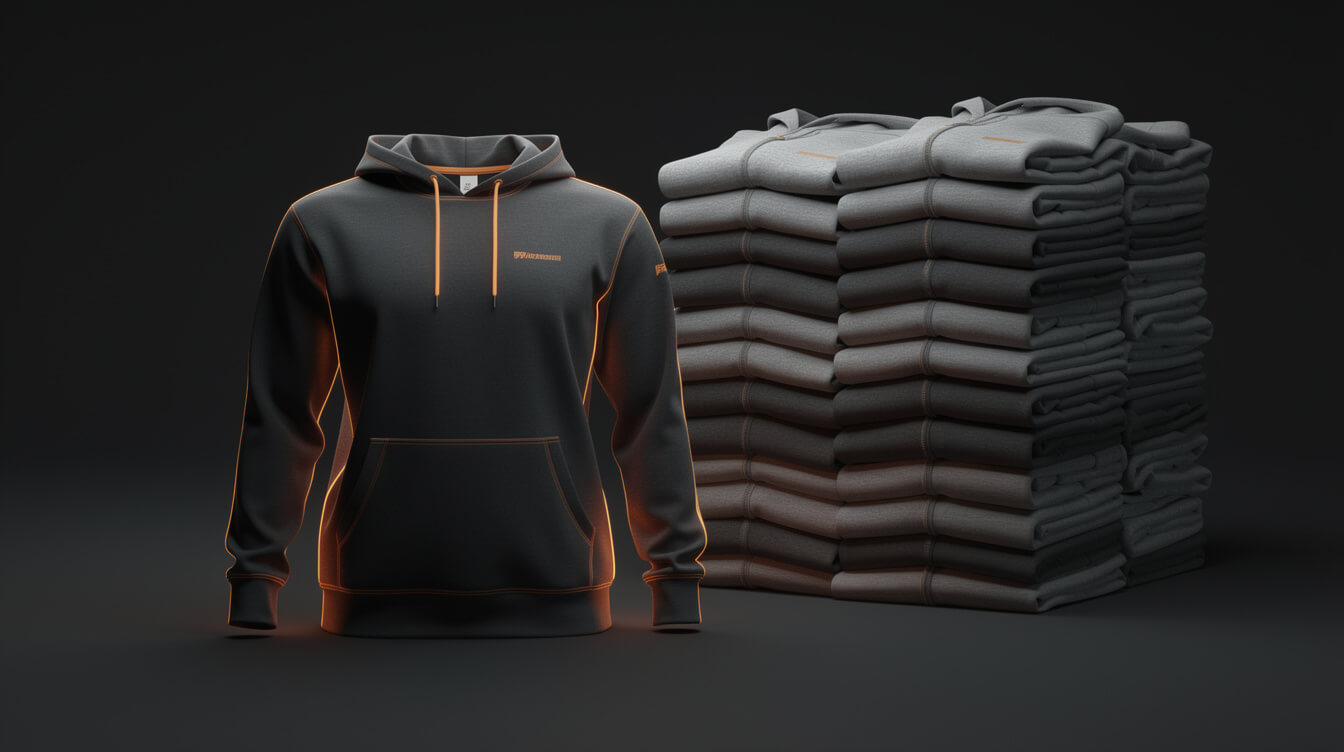
The case for ordering in bulk is straightforward: per-unit cost drops with quantity. A screen printer quoting 24 custom hoodies might charge $18 per unit. Order 1 through Printful and you pay $28. The bulk cost is 36% lower. That math is real.
What the bulk math omits is the cost of capital, storage, and unsold inventory. Here is the full comparison.
Bulk order scenario: 24 hoodies at $18 each. Total upfront cost: $432. You need to sell all 24 at $55 to gross $1,320 before fees. If 6 do not sell, you have $108 in sunk cost. Your effective per-unit cost on the 18 that sold rises to $24. You are now at Printful pricing, but with capital tied up, storage to manage, and 6 hoodies that represent money you will not recover.
POD scenario: 24 orders fulfilled at $28 each. Total cost: $672 paid as orders arrive. Zero upfront capital. Zero storage. Zero unsold inventory risk. Every unit sold represents a real sale. Your effective per-unit cost is $28 because you only paid for units that sold.
The bulk order wins only if sell-through rate is near 100%, which is difficult to predict for a new design in an untested niche. POD eliminates that risk. You trade a lower per-unit cost for zero inventory exposure.
For a catalog-building approach, where you are running 20, 50, or 100 hoodie designs across different niches simultaneously, POD is the only scalable model. Carrying bulk inventory for 100 designs at 24 units each requires $43,200 upfront and warehouse space. POD requires a Printful account and a WooCommerce store.
The math also changes when you factor in product testing speed. With POD, you can list a new design, run a small paid promotion, and know within two weeks whether the design has legs. With a bulk order, you have already committed $432 before your first sale. The ability to test quickly and kill losers fast is worth more than the per-unit savings, especially in the first year of building a catalog.
For a deeper look at when DIY printing makes sense versus POD fulfillment, the t-shirt printing at home breakdown covers the break-even math in detail.
Embroidery vs. screen printing vs. DTF for hoodies: what holds up in the wash
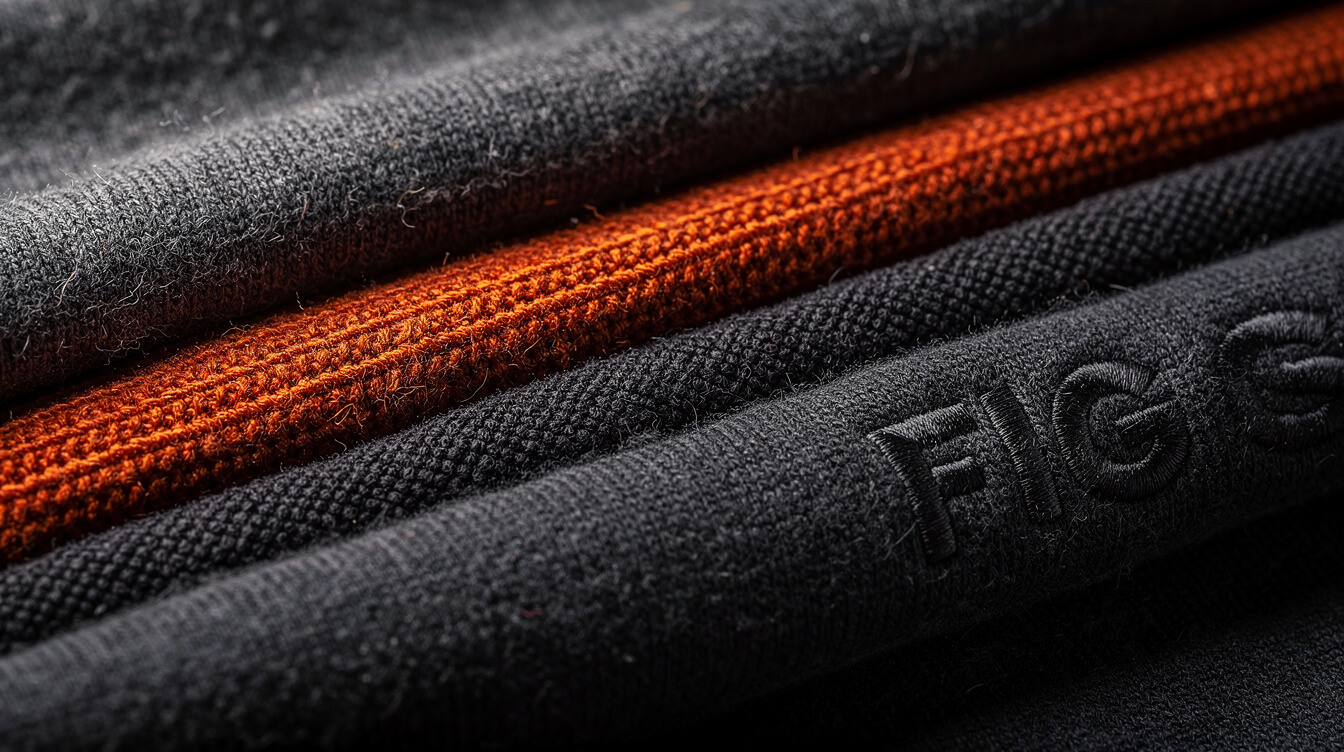
Decoration method matters for hoodies in a way it does not always for t-shirts. Hoodies have texture, weight, and dimensional surface that affect how each method performs over time.
Embroidery
Embroidery is the premium option for hoodies. Thread on fleece holds up through hundreds of washes without cracking or fading. The visual weight of embroidered text or a simple logo reads as high quality in a way that printed designs cannot always match on a premium fleece surface.
The tradeoff is cost and design complexity. Printful charges an embroidery setup fee, and the base cost for an embroidered hoodie runs $5 to $10 more than a printed equivalent. More importantly, embroidery does not handle photographic or highly detailed artwork well. It works best for simple text, monograms, and vector-based logos. If your designs are illustration-heavy or full-color, embroidery is not the right fit. For a full breakdown of the economics, the custom hoodie embroidery guide covers the options and the numbers in detail.
Screen printing
Traditional screen printing is not available through standard POD fulfillment for one-off orders. It requires screen setup, which only becomes cost-effective at volume. Some specialty providers offer screen printing at lower minimums (12 to 24 units), but this is not what Printful and Printify offer for their standard catalog.
When most sellers say they want “screen printing quality,” what they actually want is vibrant, opaque color that holds up long-term. That is increasingly achievable with DTF without a minimum order requirement.
DTF (direct-to-film)
DTF is the fastest-growing decoration method in POD. The process involves printing a design onto a film, applying a hot-melt adhesive powder, curing it, then heat-transferring the film onto the garment. The result is a flexible, full-color print that adheres to fleece hoodies with less cracking than direct-to-garment (DTG) at equivalent wash cycles.
DTF works on dark hoodies without an underbase, which DTG requires and which adds base cost. It handles photographic detail and gradient colors well. For POD sellers building hoodie catalogs with detailed designs or photography-based artwork, DTF providers offer the best balance of quality and per-unit cost.
The practical guidance: use embroidery for branding, logo-mark products, and premium positioning. Use DTF for design-heavy, full-color, or photography-inspired artwork. Do not claim screen printing in your product descriptions unless you are working with a provider that explicitly offers it.
How to list custom hoodies on WooCommerce with Printful fulfillment
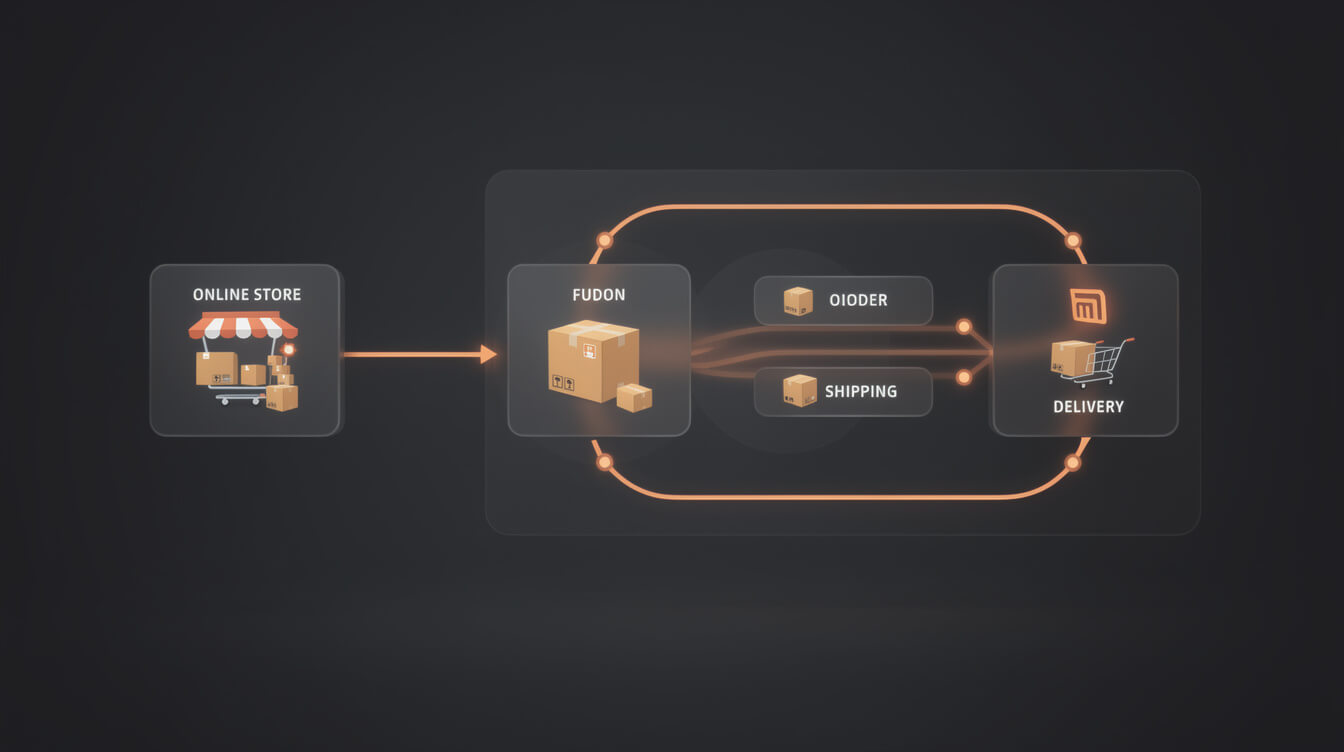
Listing custom hoodies on WooCommerce with Printful fulfillment is a three-step process: connect the integration, configure the product, and set your pricing.
Connect Printful to WooCommerce
Install the official Printful plugin from the WordPress plugin repository. Authenticate with your Printful account. The plugin establishes a webhook connection so that every order placed in your WooCommerce store triggers an automatic fulfillment request at Printful. You do not process orders manually. The WooCommerce pricing breakdown covers what you actually pay across plugins, hosting, and fulfillment in 2026.
Configure the hoodie product
Inside Printful’s dashboard, select your hoodie product, upload your design, and configure print placement (chest, back, sleeve). Printful generates a product mockup automatically. Once saved, the product syncs to WooCommerce as a variable product with size and color as attributes.
Set your retail price at the variant level. Printful will populate the base cost automatically. The difference is your gross margin per variant. Size-based pricing is standard: S through XL at one price, 2XL through 4XL with a $3 to $5 surcharge to cover Printful’s size upcharge.
Product description and SEO
WooCommerce gives you a full product description editor. Use it well. A product page with 200 words of useful copy describing the material, fit, and decoration method will rank better in Google Shopping than a blank page with just a title and price.
Include material details (fleece weight, fabric composition), care instructions, and sizing guidance. These reduce return requests and increase buyer confidence. Use your focus keyword in the product title and the first paragraph of the description.
Fulfillment and shipping
Printful handles fulfillment automatically once payment clears in WooCommerce. Shipping options appear at checkout based on Printful’s real-time rates. Most POD sellers build a portion of the shipping cost into the product price and offer a free shipping threshold, which increases average order value without reducing per-unit margin.
Where MEGA fits: generating hoodie products in under 7 minutes
The workflow described above works. It is also the manual version of the process, and it takes time when you are building a large catalog across multiple niches.
Creating a single hoodie product manually involves: selecting a niche, researching what is selling in that niche, generating a design concept, creating the image, uploading to Printful, writing the product title, writing the product description, setting pricing across variants, adding SEO metadata to the WooCommerce listing, and publishing. For one product, the process takes 30 to 60 minutes if you know exactly what you are doing.
For a catalog of 100 hoodie products across 20 niches, that is 50 to 100 hours of work before a single product is live. At that rate, scaling a hoodie-focused POD store becomes a project that takes months, not days.
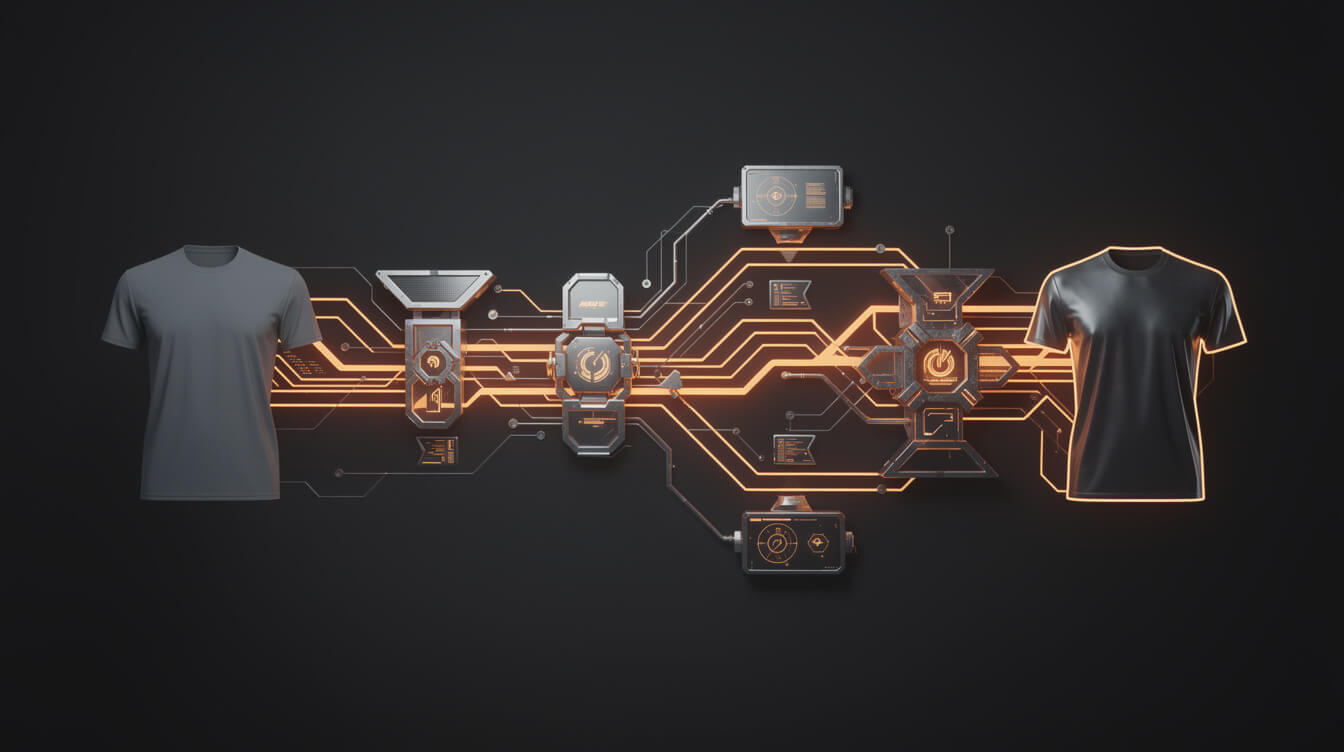
MEGA runs this pipeline end to end. Feed it a niche. It researches what is trending in that niche, generates an AI image sized and optimized for the product, writes the title and SEO description, creates the product in WooCommerce with Printful variants pre-configured, and publishes. Under 7 minutes per product. MEGA automates the research-to-product pipeline that takes manual sellers an hour per listing.
The economics shift when products take 7 minutes instead of 45. A catalog of 100 hoodies becomes a realistic one-day project rather than a multi-week grind. The research quality is consistent across every product. The SEO metadata is applied every time. No product goes live without a description, a proper title, or variant configuration.
That consistency matters for organic search. Google’s product search indexes WooCommerce catalog pages. Pages with complete metadata, proper image alt text, and detailed product descriptions rank better than thin pages. Manual catalog building at scale tends to produce inconsistent output. Automated pipelines produce consistent output by design.
If you are currently running a WooCommerce store and want to add a hoodie-heavy niche catalog without the manual overhead, the MEGA pipeline was built for exactly this use case.
Implement AI. 30x your throughput. Get a 30-min call with the founder.
Drop your details and book a free 30-minute discovery call. Personalized advice on your POD stack, your margin, and where AI fits. No pitch, no fluff.