Custom embroidered hats for POD stores: no-minimum options, digitization fees, and the unit cost math
If you search “custom embroidered hat” right now, every result on page one wants to sell you 25 hats minimum. ZappedHeadwear prices start at $22 per hat for 25 pieces, dropping to $16.75 if you order 100 or more. CustomLids, DekniCreations, Queensboro — same story. Wholesale pricing, wholesale minimums, wholesale headache.
For a print-on-demand seller, that model does not work. You are not buying 100 hats. You are listing a custom embroidered hat in your WooCommerce store and fulfilling one order at a time, on demand, without touching inventory. This guide explains exactly how that works: the embroidery process itself, which POD providers support it, what digitization actually costs, and the break-even math that tells you when wholesale starts making sense.
What custom hat embroidery actually involves
Embroidery is not printing. That distinction matters for POD sellers because the production workflow, the cost structure, and the design requirements are completely different from DTG or DTF printing.
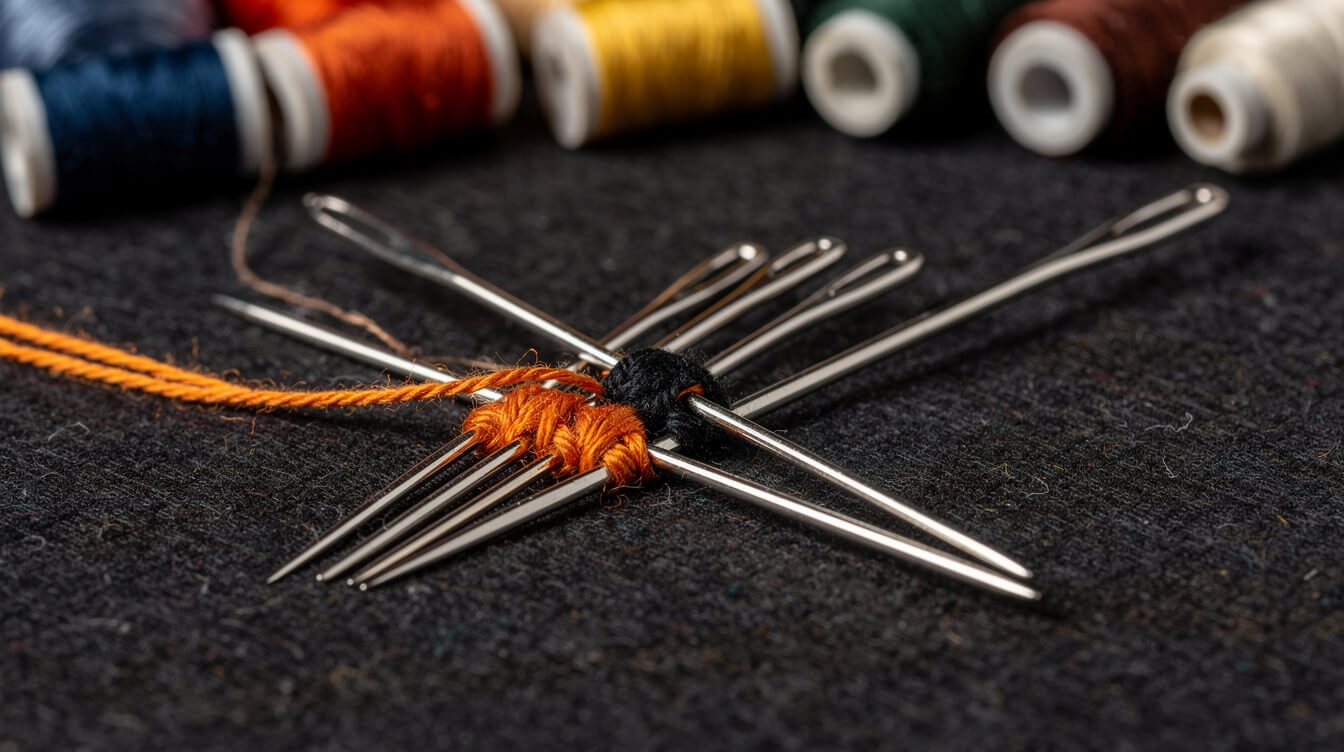
When you embroider a hat, a machine uses needles and thread to stitch a design directly into the fabric. The result is raised, textured, and durable — it does not fade, crack, or peel the way a heat-transferred design can. That is the appeal. A custom embroidered hat signals quality in a way a printed hat often does not.
The process starts with a digitization file. Your design — a logo, wordmark, or graphic — must be converted into a format that tells the embroidery machine exactly where to stitch, in what color, and in what sequence. That file format is usually .dst or .pes. A skilled digitizer converts your artwork into this file. This conversion is called digitization, and it typically costs between $15 and $50 depending on design complexity and stitch count.
Stitch count matters because it determines cost and time. A simple text logo at 5,000 stitches costs less and runs faster than a detailed graphic at 20,000 stitches. Most hat logos land between 8,000 and 15,000 stitches.
Thread colors are limited. Unlike digital printing which can reproduce any color, embroidery uses physical thread from a limited palette. Most providers work with the Madeira or Isacord thread color system, giving you 50 to 100 color options. Simple two- or three-color logos translate well. Photorealistic gradients or subtle color blends do not.
Placement zones on a hat are fixed. The front panel is the standard placement for logos. Side panels can also be embroidered, though they are narrower. The back, just above the strap or buckle, is common for secondary branding. The brim underside is rarely done but exists. Each placement zone has a maximum embroidery area, typically three inches wide by two inches tall for the front panel on a structured hat.
Hat styles that work for embroidery
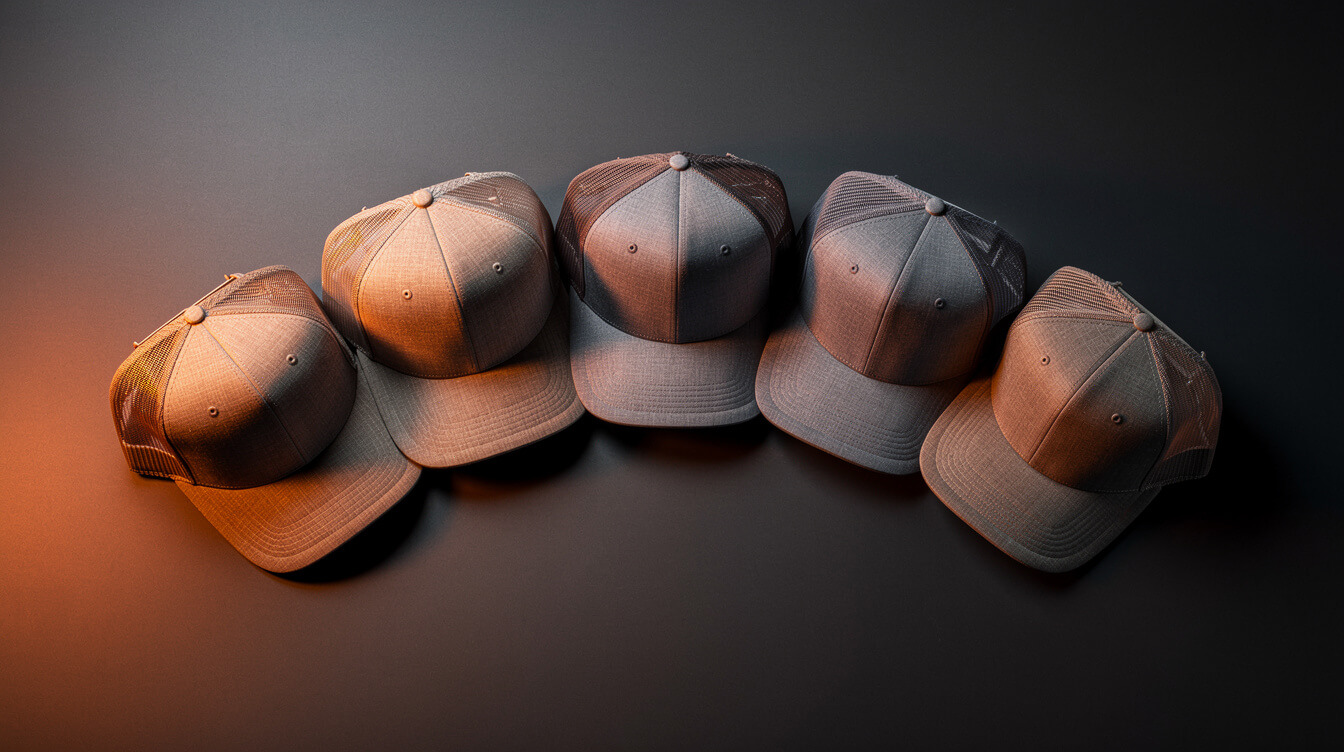
Not all hat styles are equally suited to embroidery, and not all styles are available through every POD provider. Understanding which styles exist — and which your provider actually stocks — saves you from promising a product you cannot deliver.
The Richardson 112 is the dominant embroidery hat in the North American market. It is a six-panel structured trucker hat with a foam front panel and mesh back panels. The structured front holds its shape during embroidery, which is why embroiderers prefer it. Printful stocks this style. It is also widely available through wholesale vendors.
The Flexfit fitted hat is a premium alternative. It has a spandex sweatband that conforms to head size without a snapback closure. The structured fabric holds embroidery well. Printful offers Flexfit options in their embroidery catalog. Price per unit is higher than the Richardson 112.
Snapback hats are popular for streetwear and brand-forward designs. The flat brim and structured crown make them good embroidery candidates. Several providers stock snapbacks through their embroidery programs.
Beanies are a different product category entirely. Embroidery on beanies is possible but technically more challenging due to the knit fabric stretch. The stitch area is smaller and results vary more by provider. If your store targets cold-weather accessories, check provider catalogs carefully before listing.
The practical rule: if Printful or Printify stocks a specific hat in their embroidery catalog, you can sell it on demand. If they do not, you either source it yourself (minimum order territory) or skip that style. Your product lineup is shaped by what your provider actually offers, not by what you can theoretically embroider.
Printful hat embroidery: catalog, digitization, and real unit costs
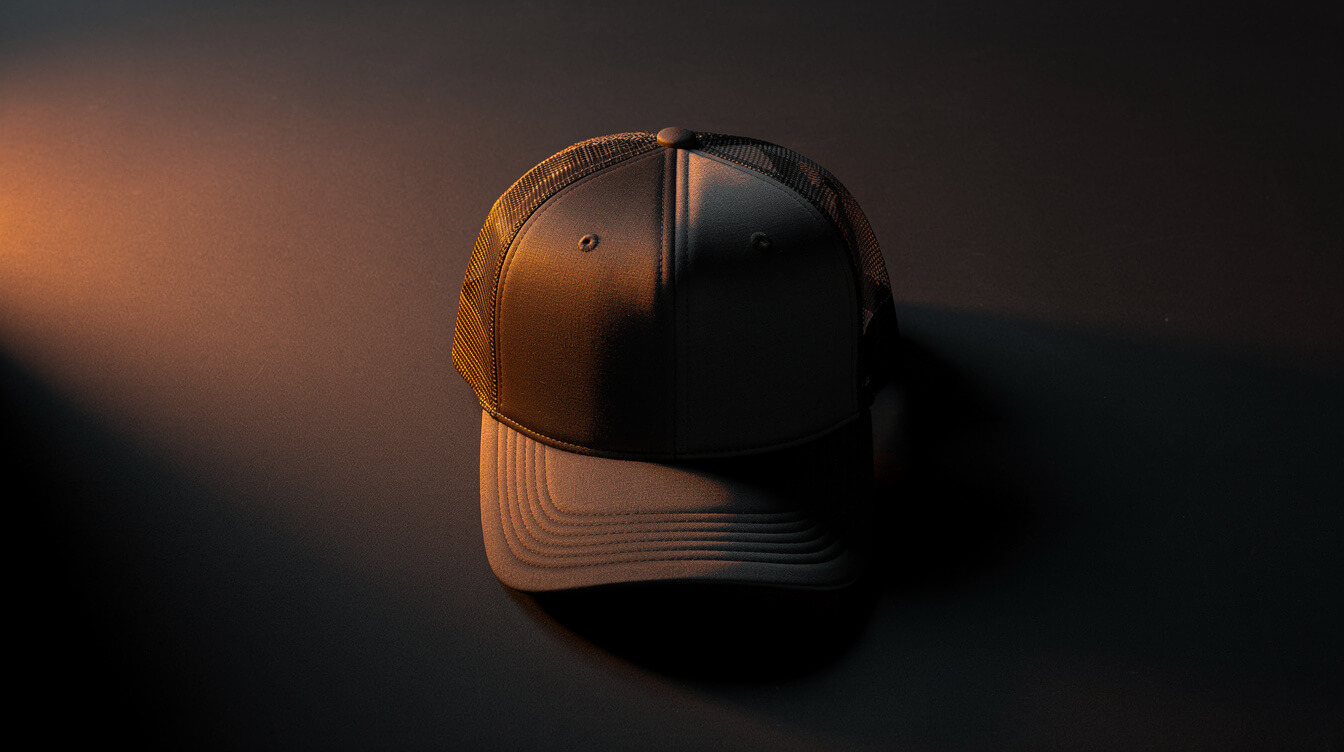
Printful is the most widely integrated POD provider for WooCommerce, and they do support hat embroidery. Here is what that actually looks like in practice.
Printful’s embroidered hat catalog includes the Richardson 112 trucker hat, Flexfit fitted caps, and several other structured hat styles. The exact selection changes, so verify current availability in their product catalog before listing. At publication, they offered embroidery on approximately 15 to 20 hat styles.
The critical cost that most searches miss is the digitization fee. The first time you submit a design for embroidery through Printful, they charge a one-time digitization fee, typically $15 to $25 per design (verify current pricing in Printful’s dashboard). This fee converts your artwork into an embroidery file. Printful then stores that digitized file. Future orders using the same design do not pay this fee again.
For your first order, this means the total cost per hat is: base hat cost + digitization fee + embroidery add-on. On a $15 base hat with a $20 digitization fee and an $11 embroidery add-on, your first hat costs $46. By hat 10, the digitization fee has amortized to $2 per hat, bringing your effective unit cost to about $28.
That math is important for pricing. If you retail a custom embroidered hat at $38 to $45 — a reasonable price point for quality embroidered headwear — your margin on the first order is thin or negative once you include shipping. Your margin on subsequent orders is better. This is the POD economics reality for any embroidered product: the first sale is essentially a setup cost.
Printful charges a per-hat embroidery add-on above the base hat price, currently in the $9 to $15 range depending on stitch count. A simple logo under 10,000 stitches typically falls at the lower end. A complex full-color design above 15,000 stitches falls at the higher end. Keep designs simple and stitch-count efficient for better margins.
For more on what Printful’s overall catalog looks like beyond hats, see our breakdown of Printful products: which ones are worth selling.
Printify hat embroidery: network providers and cost comparison

Smash print-on-demand. Join the engine room.
One short email a week. Real numbers, real teardowns, the unfiltered economics behind every move.

Printify’s model differs from Printful’s. Instead of one fulfillment operation, Printify routes orders through a network of third-party print providers. For embroidered hats, this means availability and pricing vary by which provider you select.
Several Printify providers offer hat embroidery. The selection of hat styles differs between providers, and the per-hat cost reflects each provider’s own pricing. Some Printify providers also charge a digitization fee on first use of a design; others have already absorbed this into their base pricing model. Read each provider’s notes carefully in the Printify catalog.
The practical comparison between Printful and Printify for embroidered hats comes down to three variables: price per unit, hat style selection, and integration quality. Printful typically offers tighter WooCommerce integration with fewer manual steps. Printify can offer lower per-unit costs on some hat styles if you select the right provider.
Neither Printful nor Printify will give you the same per-unit economics as a wholesale hat vendor at 100+ pieces. That is not the right comparison. The correct comparison is: what is the total cost of offering embroidered hats through a POD provider, with zero inventory risk, versus carrying 25 hats in minimum stock from a wholesale vendor. For most early-stage POD stores, the POD model wins on cash flow even if the per-unit cost is higher.
The minimum order reality: why wholesale hat vendors want 25-plus pieces
Every wholesale embroidery vendor you find on Google enforces minimums because of how embroidery economics work. Digitization is a setup cost paid once per design. Machine setup time is a fixed cost per run. Thread loading, operator time, and quality checking all have overhead that only pays out if you are running a batch of hats, not one.
At 25 hats, a vendor starts to recover their setup costs while keeping per-unit price attractive. Below 25 hats, the math often works against them. So they set minimums.
For a POD seller, this creates a structural problem. You do not know how many hats you will sell before you list them. You might sell three. You might sell 300. Committing to 25 or 50 units upfront means inventory risk, capital tied up, and storage overhead — all the things POD was designed to eliminate.
That is the gap the wholesale SERP misses entirely. The searcher for “custom embroidered hat” is often not a buyer placing a team order. They are a store owner who wants to list the product and fulfill on demand. Wholesale vendors are not built for that use case. POD providers are.
The nuance is that minimums do eventually make sense. Once you know a design is selling — say, 20 to 30 hats per month — the per-unit cost savings from a 100-piece wholesale order become real money. At that point, moving that design to a wholesale vendor while keeping the POD option open for new designs is a rational strategy.
Until you hit that volume, POD gives you the flexibility to test designs without betting cash on inventory. That flexibility has value that the per-unit cost difference often understates.
Unit cost math: Printful vs wholesale break-even on custom embroidered hats

Here is the math that most search results skip.
Assume a standard Richardson 112 trucker hat with a 10,000-stitch front logo. These are typical numbers:
Printful (POD, no inventory):
- Base hat: $13 to $15
- Embroidery add-on: $9 to $11
- Digitization (first design, one-time): $18 to $25
- Effective cost at 1 hat: $42 to $51
- Effective cost at 10 hats (digitization amortized): $24 to $28
- Effective cost at 50 hats (digitization amortized): $23 to $27
ZappedHeadwear (wholesale, 25-unit minimum):
- Per-hat at 25 units: $22
- Per-hat at 100 units: $16.75
- Setup/digitization: often included at 25+ units
- Shipping, storage, capital cost: variable
- Effective cost at 25 hats: approximately $22 per hat plus any shipping
The break-even point where wholesale starts beating Printful on unit economics is somewhere around 25 to 50 hats, assuming you are comparing Printful’s amortized cost to a wholesale vendor’s 25-unit price. But that comparison ignores the cost of capital (cash you spent on 25 hats upfront), storage, and the risk that you do not sell those 25 hats.
A realistic break-even model: if you have a design that is already selling 15 or more hats per month through your POD store, the math favors switching that specific design to a 50-plus unit wholesale order while keeping your POD integration for new and untested designs. Below 15 units per month, the flexibility of POD is worth the higher per-unit cost.
Retail price assumption for this math: $38 to $45 per hat. At $40 retail through Printful at scale (10+ units), your margin before shipping is approximately $13 to $17 per hat. At $40 retail through a wholesale vendor at 50 units, your margin before shipping is approximately $18 to $20 per hat — but you have pre-spent $800 to $1,100 on inventory. If you sell them in 60 days, wholesale wins on margin. If you sell half and sit on the rest, the POD math wins on cash efficiency.
This is the calculus that the wholesale vendors filling the “custom embroidered hat” SERP will never run for you. They want your 25-hat order. MEGA helps you run it clearly before you commit.
The Shopify fee problem on embroidered hat sales

If you are selling custom embroidered hats through a Shopify store, the platform takes a cut on every transaction. On Shopify’s Basic plan, that cut is 2% of the transaction value if you use any payment processor other than Shopify Payments. On Advanced, it drops to 0.5%. But even on Shopify Payments, there is a 1% platform override fee baked into plans above free — and there is no free plan anymore.
On a $40 custom embroidered hat: Shopify’s 1% override is $0.40 per order. It does not sound like much. At 50 hats per month, that is $20. At 200 hats per month, that is $80 per month, or $960 per year — money that goes to Shopify regardless of your margin situation.
WooCommerce charges zero platform override. You pay for hosting, a domain, and the plugins you choose to use. The WooCommerce base plugin is free. Printful integrates directly with WooCommerce at no additional platform commission.
At a $40 AOV on embroidered hats, the Shopify fee arithmetic is straightforward: WooCommerce keeps that money in your margin. For a full breakdown of what Shopify actually costs at scale, see our analysis of Shopify transaction fees for POD sellers. And for the WooCommerce cost picture, see WooCommerce pricing for POD stores in 2026.
The fee difference compounds over time. A POD hat store doing $3,000 per month in revenue pays roughly $360 annually to Shopify in platform fees alone. That is a Printful digitization budget for nine new designs, or the hosting cost for a managed WooCommerce setup for three years. It is real money.
How to list custom embroidered hats in WooCommerce
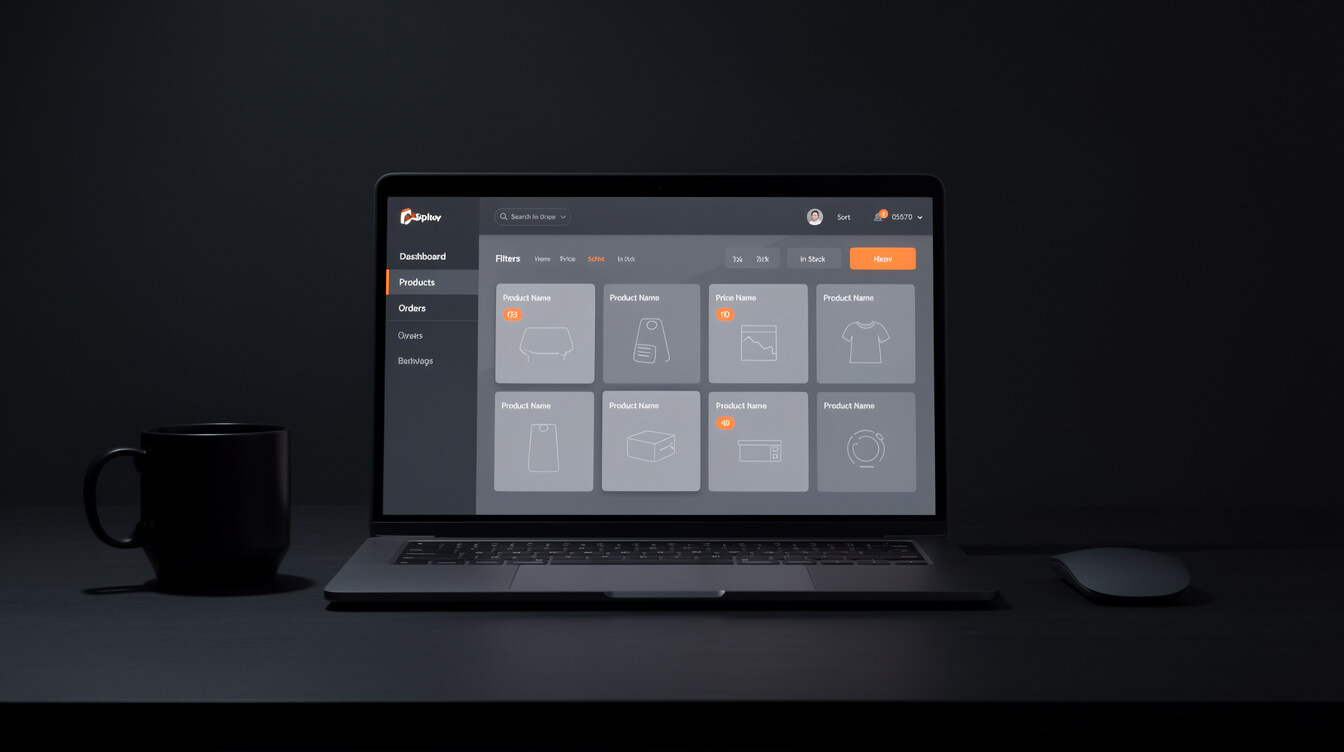
Setting up a custom embroidered hat in WooCommerce through Printful involves a few specific steps that differ from a standard DTG product.
Step 1: Connect Printful to WooCommerce. Install the Printful plugin or use the WooCommerce connection inside the Printful dashboard. Authenticate your store. This is the same setup used for any Printful product.
Step 2: Navigate to embroidery in the Printful product catalog. In Printful, go to “Create product” and filter by embroidery or headwear. Select the hat style you want — Richardson 112 or one of the Flexfit options, for example.
Step 3: Upload your design and set placement. Upload your logo file (vector format preferred — .svg or .eps). Select placement zone (front, side, or back). Printful shows you a preview of how the embroidery will sit on the hat. This is also where you set thread colors by matching to their thread palette.
Step 4: Accept digitization or upload your own .dst file. If this is your first time using this design for embroidery, Printful will either digitize it for you (for a fee) or let you upload a pre-digitized file if you have one from a previous vendor. Using a pre-digitized file saves the fee but requires that your file meets Printful’s specs.
Step 5: Set variants and pricing. Choose hat sizes if applicable (fitted hats have sizes; snapbacks and trucker hats are typically one-size-fits-most). Set your retail price. Factor in the digitization fee amortization if you are in the early sales stage.
Step 6: Sync to WooCommerce. Once the product is created in Printful, it syncs to your WooCommerce product catalog. Review the product page, write a description that speaks to your customer (the embroidery quality, the hat style, the branding opportunity), and set your product category.
The variant handling for embroidered hats is simpler than apparel because there is no size curve to manage for one-size hats. If you offer structured fitted hats in small/medium and large/extra-large, you set those as product variants in WooCommerce, each variant linked to the corresponding size in Printful.
One operational note: because digitization is a one-time setup per design, the economics improve as volume grows. Running your first hat as essentially a proof-of-concept order — buying one yourself to check quality and confirm the embroidery looks as expected — is worth the upfront cost. If the result is good, you have a validated product. If it is not, you have learned something before a customer did.
For more on how to scale embroidered products alongside other POD items, our post on custom hoodie embroidery for POD stores covers the same digitization economics applied to a higher-AOV product. And if you are building out an apparel line, custom sweatshirt printing is the logical companion product to a branded hat.
Custom embroidered hats in a POD store: the decision framework

The search results for “custom embroidered hat” are designed for buyers, not sellers. Wholesale vendors want 25-unit minimums because their economics require it. That is not a problem — it is just a different market.
For a POD seller, the framework is simpler:
- Start with POD (Printful or Printify) to test designs without inventory risk.
- Pay the digitization fee once per design. Treat it as a product development cost, not a per-order cost.
- Price at $38 to $45 retail to maintain margin on the embroidery add-on.
- Once a design clears 15 to 20 units per month, evaluate whether a wholesale reorder at 50 to 100 units makes sense on that specific design.
- Run that store on WooCommerce to avoid paying the Shopify 1% platform override on every hat you sell.
The custom embroidered hat is a higher-AOV product than a printed tee. The margin math is tighter at low volumes but opens up as designs prove themselves. The POD model gives you the freedom to run that proof process without warehouse bills.
MEGA automates the product creation pipeline — research, design generation, product listing, SEO metadata — so you can test more designs faster without spending six hours per product. The engine runs; you validate what sells. Try MEGA and see how many products you can push through in a single afternoon.
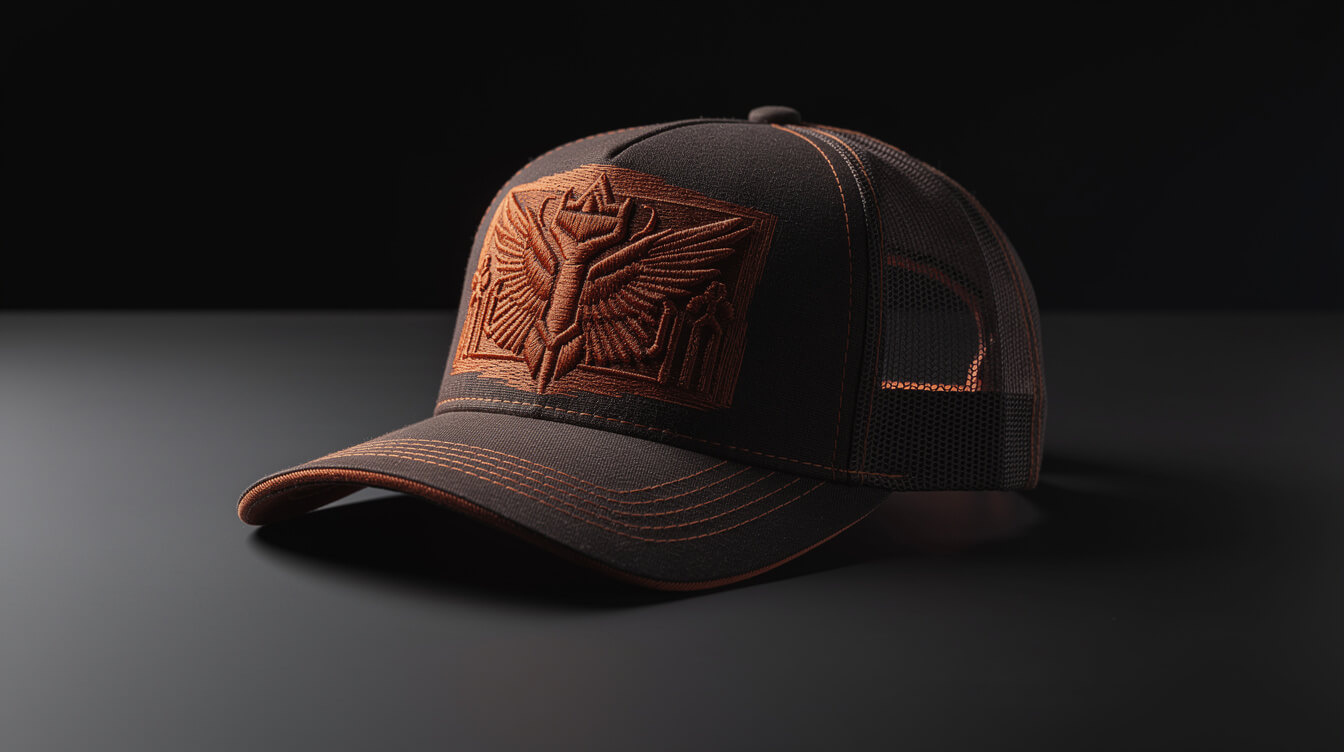
Generate, list, and sell embroidered hats without the 6-hour Canva workflow
MEGA handles the research-to-listing pipeline end to end. Upload your niche, get 47 products out the other side. No manual mockups, no spreadsheets, no guessing.
Implement AI. 30x your throughput. Get a 30-min call with the founder.
Drop your details and book a free 30-minute discovery call. Personalized advice on your POD stack, your margin, and where AI fits. No pitch, no fluff.