
Custom calendars for POD sellers: which providers support print-on-demand calendars, unit cost math, and the 90-day selling window
If you search for custom calendar right now, every result is either a photo-gift retail site selling to consumers or a free digital tool for building a printable PDF. Not a single result is written for the POD seller asking the real question: can I add custom calendars to my store, which provider fulfills them at no minimum order quantity, and what does the margin look like after shipping? That gap is exactly what this post fills.
Calendars are unlike most print-on-demand products. They have a biological clock. Orders placed after mid-November will not arrive before January 1. That hard deadline compresses the sales window into roughly 90 days — September through November — and makes calendar listings a high-urgency, high-AOV sprint that rewards sellers who move early. This post walks through the provider landscape, the unit economics, and the niche verticals most likely to generate repeat annual orders.
Can you actually sell custom calendars through print-on-demand? (the provider reality check)
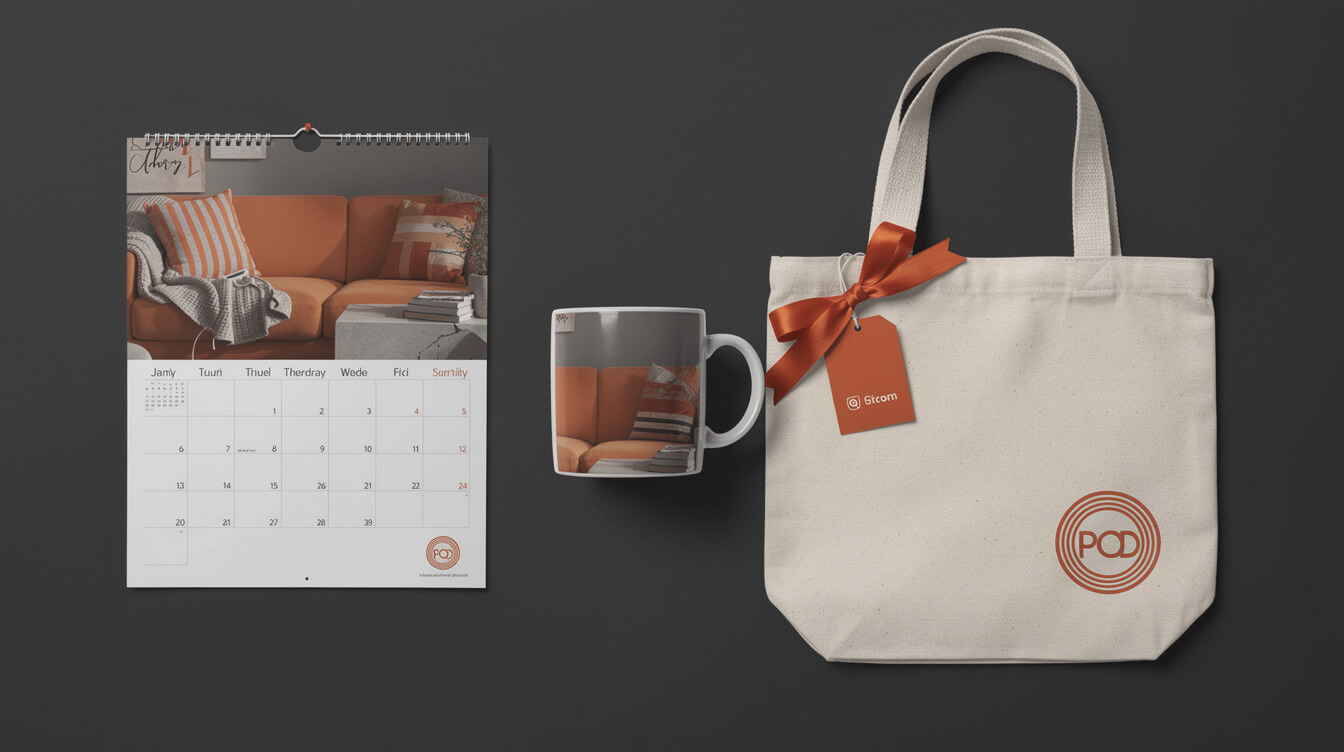
Yes, with some important caveats. Calendar fulfillment is not as universally available as t-shirts or mugs. Not every major POD platform carries them, and availability sometimes shifts between seasons. Here is the current landscape.
Printful does offer wall calendars. The standard product is a 12-page coil-bound wall calendar printed on glossy paper. Each monthly page holds full-bleed photo or design artwork. Printful handles the printing, coil-binding, and poly-bag packaging. There is no minimum order quantity. Single-unit fulfillment is fully supported, which is the defining advantage of the POD model for sellers who do not want to pre-buy inventory.
Printify offers calendars through its network of print providers. Availability varies by provider, and Printify’s catalog is dynamic — products that appear in the product creator one month may be listed as unavailable the next. Check the Printify product creator directly and filter by “calendars” to see current options. Some providers in the Printify network offer desk calendars and spiral-bound photo books in addition to standard wall formats.
Lulu Direct (Lulu xPress) carries coil-bound and saddle-stitched photo books that function as de facto photo calendars when designed with monthly layouts. The product is technically a photo book, but many POD sellers use this as a calendar workaround when standard calendar products are unavailable or more expensive through other providers.
Zazzle and Redbubble carry calendars for creators who sell on marketplace platforms, but those are marketplace models — not direct-to-consumer WooCommerce stores. If you are reading this, you are likely building an owned store, which puts Printful and Printify at the top of the stack.
The key practical note: if you are planning to launch a calendar product for the Q4 selling window, confirm provider availability in August or September. Do not assume availability based on what the product creator showed you in March.
POD calendar formats: wall calendars, desk calendars, and spiral-bound photo books explained

The term “custom calendar” covers several distinct product formats. Each has a different print method, a different price point, and a different buyer psychology. Knowing which format to list matters for both your margin and your niche positioning.
Wall calendars
The classic format. Twelve monthly pages, coil-bound at the top, with a hole for hanging. Page dimensions typically run 8.5×11 inches or 11×8.5 inches in landscape orientation. Most POD providers print wall calendars on glossy 80–100 lb coated stock. The full-bleed print area allows bold imagery — which is why this format works best for visual niches like pet portraits, art prints, travel photography, and sports fan designs.
Wall calendars retail between $28 and $45 for the family photo segment, and $45–65 for premium artist or specialty editions. They are the highest-volume calendar format in the POD space.
Desk calendars
A smaller flip format, typically 4×6 or 5×7 inches, designed to stand on a desk or shelf. Desk calendars have a lower base cost than wall calendars and a lower retail price ($18–28), but the smaller size limits visual impact. They work well for office-oriented niches — motivational quotes, productivity themes, brand calendars for small businesses — where the daily-driver utility matters more than full-size imagery.
Desk calendar availability through standard POD providers is more limited than wall calendars. Check your provider’s current catalog before building a product listing around this format.
Spiral-bound photo books as calendar workarounds
Some sellers design custom calendars as photo books through providers like Lulu Direct or Blurb. The monthly layout is designed in the interior pages, and the coil-bound format mimics a wall calendar. The trade-off: photo books have higher per-unit costs than dedicated calendar products, and the printing timeline is longer. Use this route only if your preferred provider does not offer a dedicated calendar SKU and you are confident the margin still works at the higher base cost.
Print specs that matter: paper weight, binding type, and bleed requirements

Getting the design file right matters more for calendars than it does for most POD products. A misaligned bleed on a t-shirt is invisible. A misaligned bleed on a calendar means the monthly grid gets cropped. Here are the specs that matter.
Paper weight
Standard POD wall calendars use 80–100 lb coated gloss paper for monthly pages. This weight is stiff enough to hold shape when hanging but light enough to keep the overall product weight manageable for shipping. The cover page is typically on heavier stock — 100–120 lb — to protect the interior pages during transit and give the product a premium feel when held. If your provider specifies a different paper weight, verify before finalizing your designs, because the color rendering on uncoated stock is significantly different from coated stock.
Binding types
Coil binding (also called wire-o or spiral binding) is the standard for wall calendars. The metal or plastic coil runs along the top edge and allows pages to flip cleanly without tearing. Saddle-stitch binding (two staples through the spine) is used for some desk calendar formats. Avoid designing files that assume staple binding when your provider uses coil — the binding strip width differs and can eat into your design margins.
Bleed and safe zone
Most providers require a 0.125 inch (3 mm) bleed on all sides. Keep critical design elements — the monthly date grid, any branding, focal image subjects — within the safe zone, which is typically 0.125 inches inside the trim line. Template files from your provider will mark these boundaries. Always use the provider’s template rather than building your own dimensions from scratch.
Color mode
Design in CMYK, not RGB. Calendars are printed via offset or digital press, not sublimation (unlike mugs or performance tees). Colors rendered on your monitor in RGB will shift when converted to CMYK at print time. Build your color palette in CMYK from the start, or embed ICC profiles if your provider supports them.
Unit cost math: what a 12-month wall calendar costs to produce at 1, 10, and 50 units

Smash print-on-demand. Join the engine room.
One short email a week. Real numbers, real teardowns, the unfiltered economics behind every move.
The numbers below are representative estimates based on current POD market pricing. Verify exact figures in your provider’s pricing calculator before setting retail prices — base costs change quarterly.
| Order quantity | Base cost (calendar) | Est. shipping | Total landed cost | Suggested retail | Gross margin |
|---|---|---|---|---|---|
| 1 unit | $18–22 | $5–7 | $23–29 | $38–45 | 35–40% |
| 10 units (10 separate orders) | $18–22/unit | $5–7/unit | $23–29/unit | $38–45 | 35–40% |
| 50 units (50 separate orders) | $18–22/unit | $5–7/unit | $23–29/unit | $38–45 | 35–40% |
A note on the table above: POD pricing does not scale like wholesale. You pay the same base cost per unit whether you sell one calendar or one thousand through individual orders. The “volume discount” in POD comes from your store’s order volume driving better carrier rates or promotional tiers with your provider — not from bulk print runs.
The gross margin on custom calendars (35–40%) is lower than on apparel (typically 40–55%) but comparable to home decor products like custom photo blankets and custom blankets. The AOV ($38–45 for a standard wall calendar, $45–65 for premium) is solid for a single-product sale, and it improves significantly when you bundle — two calendars in a single checkout, or a calendar alongside an ornament or mug, moves the AOV to $60–80.
If your store runs on MEGA, product listing automation handles the SKU setup, the title, and the SEO metadata for calendar listings in the same pipeline as any other POD product — no separate manual workflow required. See how MEGA automates this step for the full product creation pipeline.
The 90-day selling window: why September is the last safe entry point for calendar sellers

Most POD products are evergreen. A custom mug listed in January will sell in July. A custom phone case has no seasonal cliff. Calendars are the exception. The demand window for new-year calendars opens in September and closes hard around November 15. Orders placed after that date run a real risk of not arriving before January 1, and a calendar that arrives on January 3 has lost most of its value.
Here is how the window breaks down:
- September: Early buyers start searching. Gift-buyers researching holiday purchases begin product discovery. This is the moment to have listings live and indexed by Google. If your product page is not indexed by early September, it will not rank in time for peak demand.
- October: Peak organic search demand begins building. Shopping intent increases. Conversion rates are strongest here because buyers have time to be deliberate about gift choices.
- November 1–15: Final buying window. Many buyers now have urgency. Conversion is high but shipping risk grows daily. Standard POD fulfillment times (3–7 business days production plus 3–7 days shipping) mean orders placed after November 12–15 are cutting it close for December 25 delivery.
- After November 15: Demand drops sharply. The remaining buyers are last-minute shoppers who will take the risk on shipping, but volume falls significantly. Most calendar revenue is already closed by this point.
The practical implication: your calendar listings need to be live by September 1, and your SEO targeting needs to be done before that. This is not a product you list in October and expect to rank. A calendar post published in late October has roughly four weeks to earn Google’s trust before the buying window closes — not enough time in a competitive market.
The annual recurrence is also part of the appeal. A buyer who orders a custom pet photo calendar from your store in October 2026 will come back in October 2027. Calendars are one of the few POD products where a one-time sale can convert to an annual returning customer. That repeat dynamic is worth building around, especially for niche stores with a loyal audience.
Q4 timing pressure applies to other seasonal POD products too. If you are also considering custom ornaments, the same September urgency window applies — and the two products often sell to the same gift-buyer audience.
Shopify 1% at $30–40 AOV: how the platform fee stacks up against calendar margin
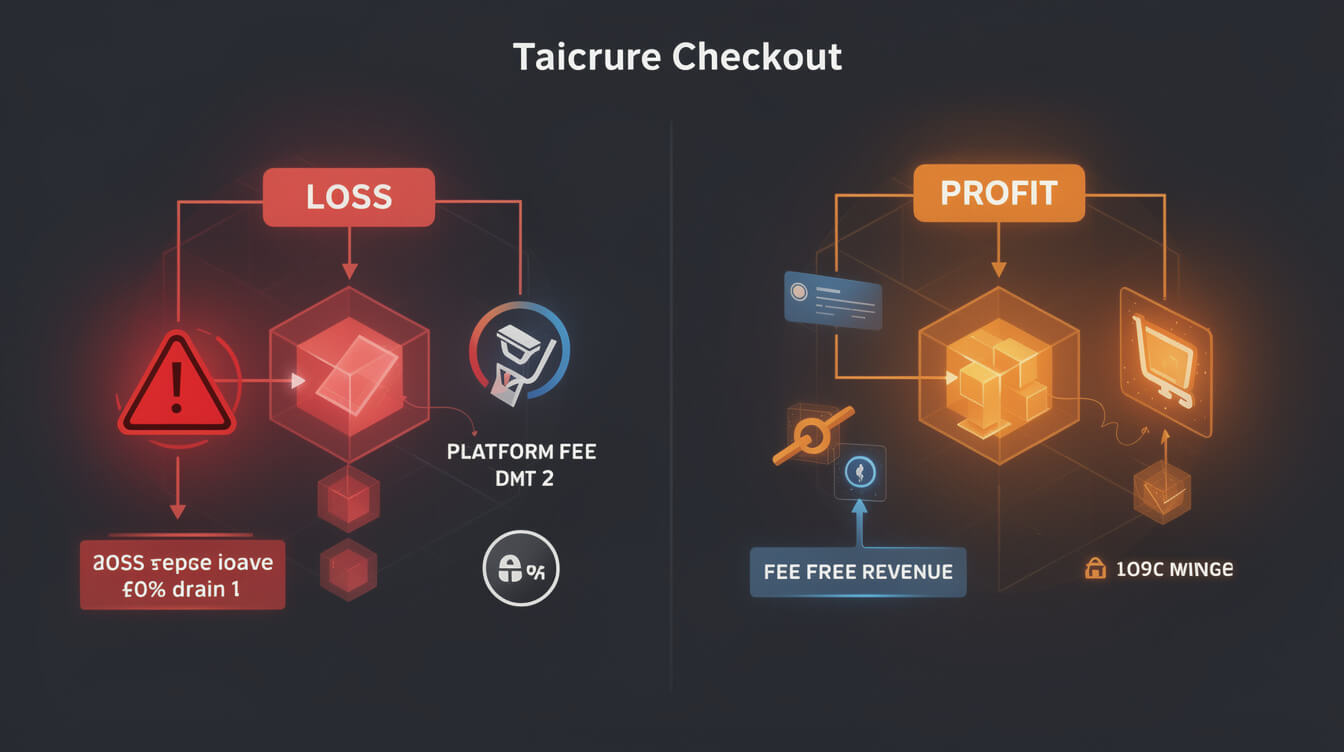
Shopify’s platform override fee of 1% on gross revenue (required on all plans unless you use Shopify Payments) is a margin problem that compounds with every product category. On a $500 hoodie order, the 1% is $5 — annoying but not catastrophic. On a $35 calendar, the 1% is $0.35, which sounds small until you look at the gross margin it consumes.
At 38% gross margin on a $35 calendar, you are working with $13.30 in gross profit per sale. Shopify’s 1% fee takes $0.35 of that — 2.6% of your actual gross profit, not 1% of revenue. Scale that across a seasonal sprint.
- 100 calendar orders at $35: $3,500 revenue. Shopify fee: $35. Gross profit (before platform fee): $1,330. Platform fee as % of gross profit: 2.6%.
- 200 calendar orders at $35: $7,000 revenue. Shopify fee: $70. Gross profit: $2,660. $70 in pure platform tax with zero corresponding value delivered to your customer.
- 500 calendar orders at $35: $17,500 revenue. Shopify fee: $175. That is real money for a 90-day seasonal product.
WooCommerce charges no platform percentage on gross revenue. There is a flat monthly cost for hosting and plugins — typically $15–30/month for a well-configured stack — but zero transaction percentage on top of payment processor fees. At 200 calendar orders per season, WooCommerce saves you $70 in Shopify override fees alone. At 500 orders, you save $175. The platform overhead on WooCommerce is fixed regardless of your revenue.
The compounding effect matters specifically for seasonal products. A calendar seller who generates $20,000 in Q4 revenue across their catalog pays $200 in Shopify override fees annually just for the privilege of selling on the platform. WooCommerce owners keep that $200. That is not a dramatic number in isolation, but it is the same $200 every year, on top of Shopify’s monthly subscription, on top of the app fees for the additional functionality that WooCommerce provides for free. The economics stack up.
If you are running an owned WooCommerce store for POD products, you already know this math. For sellers still on Shopify who are looking at calendar listings as a seasonal revenue driver, the 90-day window is the right time to also run the numbers on your platform overhead.

30x your POD throughput with the research-to-product pipeline
MEGA automates product generation end-to-end: keyword research, AI image creation, sizing, mockups, titles, SEO metadata, and full listings on WooCommerce and Printful — in under seven minutes per product. No Canva. No manual listing workflow.
Calendar niche verticals that generate repeat annual orders (not just family photo gifts)

The family photo calendar is the default mental model when sellers think about custom calendar products. It is a real market — high purchase intent, emotional gift occasion, repeat annual buyer — but it is also the most crowded lane. Walgreens Photo, Amazon, and every major consumer-facing print service is competing for that searcher. Here are the verticals where POD sellers have a structural advantage.
Pet photo calendars
Pet owners are among the most emotionally engaged buyers in consumer retail. A calendar featuring a buyer’s dog or cat breed — or their specific pet’s photos — consistently outperforms generic photo calendars on conversion. Pet niches convert well because the emotional trigger is immediate. Dog mom brands, breed-specific stores, and rescue organization fundraisers all have built-in audiences who will buy annually. A golden retriever calendar sold to a golden retriever owner in 2026 is almost certainly sold again in 2027.
Sports team and youth league calendars
Local sports teams, youth leagues, school booster clubs, and amateur athletics organizations are perpetually looking for fundraising products. A custom calendar featuring team action photos — which families supply — is a product that the team organizer, not you, is motivated to sell. If you can position your POD store as the backend fulfillment partner for a local team’s annual fundraiser, you acquire a repeat customer relationship that renews every September. This vertical does not require national scale. One high school sports team with 25 families ordering 2 calendars each is 50 orders.
Artist and illustrator annual editions
Artists who have an existing following — even a modest one — can sell a limited-edition annual calendar as a premium product. Twelve original illustrations or prints, one per month, at $45–65 retail. The limited-run positioning justifies the higher price, and the annual cadence trains the audience to buy every year. This is also one of the cleaner use cases for AI-generated art: a POD seller who generates twelve unique themed illustrations with a consistent visual style can produce a full calendar year of content without a photography portfolio or an illustrator’s fee.
Local business and nonprofit fundraiser calendars
Small businesses — restaurants, gyms, real estate agencies, veterinary clinics — sometimes commission branded calendars as customer gifts or promotional items. This is technically B2B POD, but the small-business market overlaps with individual consumer buying patterns. A local yoga studio with 300 members who each pay $25 for a branded studio calendar is a $7,500 revenue event. As a WooCommerce store owner, you can create a private product link or use a coupon code to handle these one-off branded runs without building a separate B2B workflow.
Seasonal niche themes
Beyond personalized photo calendars, there is a market for theme-based calendars that buyers purchase for aesthetic or inspirational reasons rather than personal photo inclusion. Examples include: national park landscapes, minimalist design calendars, gardening calendars with seasonal planting guides, and motivational quote formats. These sell on design quality rather than personalization, which makes them easier to scale — you create the design once, list it, and sell it to multiple buyers without any per-order customization workflow.
Final thoughts on custom calendars as a POD product
Custom calendars reward sellers who plan ahead. The 90-day window is real, and the sellers who move in September — with live listings, indexed product pages, and a clear niche angle — capture the majority of the organic demand. Those who wait until October are chasing a closing window with content that has not had time to earn search visibility.
The unit economics are solid: 35–40% gross margin at a $38–45 AOV, with meaningful improvement when you bundle. The repeat buyer dynamic is the underrated advantage — a calendar customer is not a one-time transaction. They are an annual returning buyer if your product and experience merit it.
For WooCommerce sellers, calendar listings are a straightforward product category with no technical complexity beyond standard POD setup. For Shopify sellers running the Q4 math, the platform override fee on seasonal revenue is worth calculating before committing to another year of that overhead. The comparison post on POD store economics for WooCommerce covers the full fee structure if you want to run those numbers now.
List your calendar products in August or September. Get the SEO right before the window opens. Build around a niche that creates annual repeat buyers. That is the full playbook.

Implement AI. 30x your throughput. Get a 30-min call with the founder.
Drop your details and book a free 30-minute discovery call. Personalized advice on your POD stack, your margin, and where AI fits. No pitch, no fluff.