Print on demand products: which categories have the best margins in 2026
Most POD platforms show you 500 or 600 print on demand products. None of them tell you which ones actually make money. Printify lists more than 1,300 SKUs. Printful catalogs north of 340. Both platforms want you to sell everything. That is not the same as telling you what to sell.
This post runs the margin math by product category, adds the Shopify fee calculation at real revenue thresholds, and maps which print on demand products pair cleanly with automation versus which ones require manual craft work. The goal is a product mix decision you can make with numbers, not instinct.
What print on demand products actually are (and the 5 main categories)
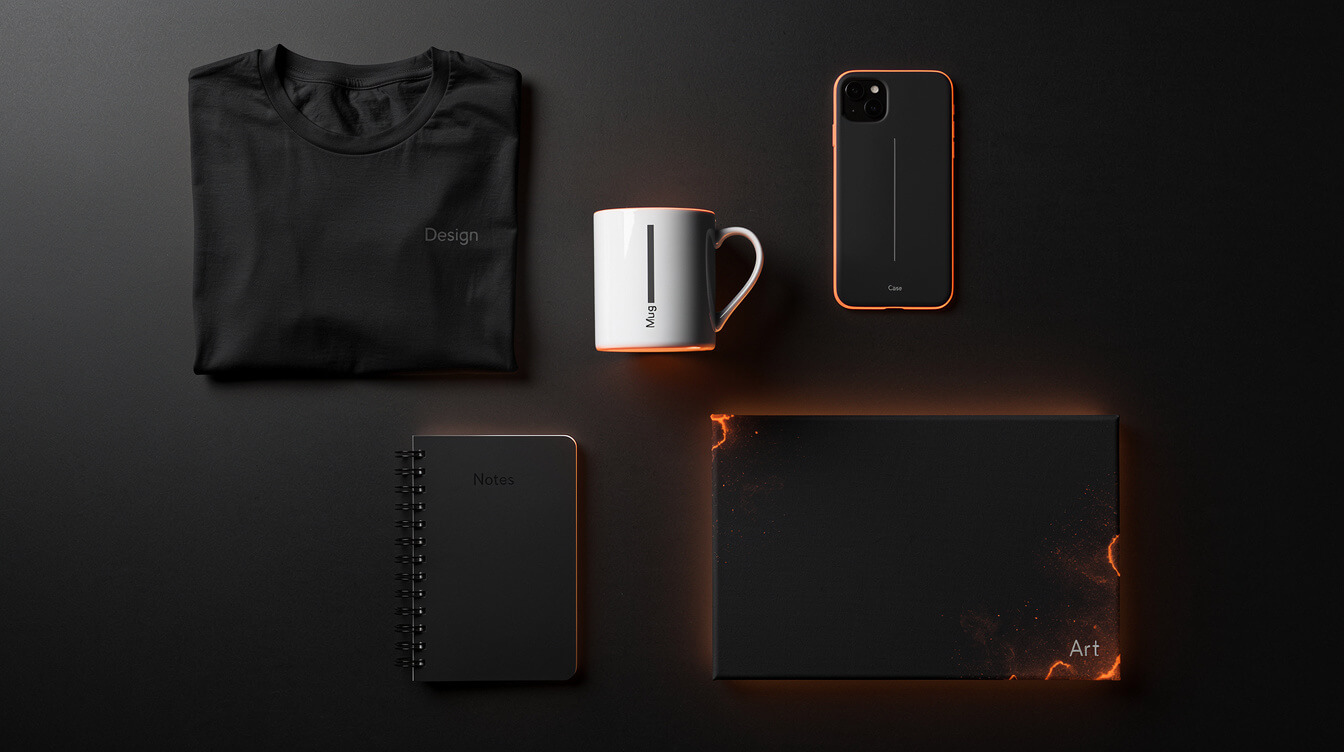
Print on demand (POD) is a fulfillment model where products are manufactured one at a time when a customer places an order. You never hold inventory. You never pre-buy stock. The printer produces the item, ships it, and charges you the base cost. You keep the difference between your retail price and the base cost.
The model has three structural advantages over traditional merchandise: zero upfront inventory cost, zero minimum order quantity, and zero risk of holding unsold stock. The trade-off is that base costs per unit are higher than bulk manufacturing. The math works because you scale by volume, not by pre-buying.
The broad universe of POD products splits into five main categories:
- Apparel: T-shirts, hoodies, sweatshirts, tank tops, long-sleeve shirts, joggers, and socks. This is the largest category by volume and the default starting point for most new sellers.
- Accessories: Phone cases, tote bags, backpacks, hats, beanies, fanny packs, and enamel pins. Lower average order value than apparel, but strong impulse-buy patterns.
- Home decor: Mugs, water bottles, pillows, blankets, and candles. Mugs are the workhorse of this category. Gift-oriented and seasonal.
- Wall art: Canvas prints, framed art, metal prints, posters, and acrylic prints. Higher base costs with correspondingly higher retail prices. Strong niche community appeal.
- Stationery and paper goods: Notebooks, greeting cards, stickers, and phone grips. Lower production cost, but also a lower retail ceiling.
Each category has a different margin profile, a different relationship to fulfillment speed, and a different fit with automation. The comparison starts with apparel because that is where most POD stores begin.
Apparel margins: t-shirts, hoodies, sweatshirts (the baseline math)
Apparel is the most competitive category in print on demand. It is also the most well-understood, which means the margin math is visible if you look for it.
A standard unisex t-shirt (Bella + Canvas 3001 via Printful) has a base cost of roughly $13.25. At a $24.99 retail price, you net $11.74 before fees. That is a 47% gross margin.
A pullover hoodie (Gildan 18500 via Printful) runs around $24.45 base. Retail at $49.99 and you net $25.54, or about 51% gross.
A crew-neck sweatshirt sits in between: roughly $20.95 base, $39.99 retail, $19.04 net, 48% gross.
These numbers look healthy until you layer in the Shopify transaction fee. Shopify charges a 1% override on every transaction on the Basic plan. On a $24.99 t-shirt sale, that is $0.25. Modest on one transaction. At $10,000 a month in t-shirt revenue, it is $100 that goes to Shopify before you pay yourself.
The Printful custom hoodies range adds embroidery as an option, which lifts base costs to $40 or more depending on stitch count. Embroidered hoodies have better perceived value and less price pressure from mass-market competition, but they require a minimum design quality floor that automated generation tools need to account for.
Design complexity also affects conversion rate. A t-shirt with a clean, single-color graphic on a solid blank converts consistently across niches. A t-shirt with an elaborate multicolor illustration requires a stronger brand story to justify the same retail price. The simpler the design, the more portable it is across sub-niches and color variants, which is what makes apparel scale well with automation.
The apparel margin baseline: 45 to 55% gross on the right products, assuming no platform tax. The Shopify override shaves 1 to 3 percentage points off real margins depending on plan tier and monthly volume.
Accessories and home decor: mugs, phone cases, wall art (margin by product)

Moving past apparel, the margin picture changes significantly by sub-category.
Mugs are the profit workhorses of POD. An 11oz white ceramic mug via Printful runs $7.45 base. Retail at $17.99 and you net $10.54, a 59% gross margin. Mugs are low-glamour and high-repeat. They sell year-round with spikes around major holidays and the September to December gifting window. The same design that works on a t-shirt often translates directly to a mug without any modification, which is why mugs make strong second SKUs in an apparel-first niche.
Phone cases are tighter. A Printful phone case for a current iPhone model runs $8.95 to $12.95 depending on the case style. The retail ceiling is around $19.99 for most niches. That leaves a $7 to $11 net per unit, roughly 40 to 55% gross. The challenge: device fragmentation. You need to list 15 or more product variants to cover the top iPhone and Samsung models, which multiplies your SKU count without multiplying your design count.
Wall art earns the best absolute dollar margins per unit. A 12×16 canvas print from Printful costs around $21.15. Retail at $49.99 and you net $28.84, or 58% gross. Move to a larger 18×24 format and the base cost is $38.30 with room to retail at $79.99, netting $41.69. The challenge with wall art is authenticity: buyers in art prints markets expect genuine design craft, and generic vector graphics do not convert as well as authentic illustrations or photography derivatives.
Blankets and pillows sit at the upper end of the home decor range. A fleece blanket via Printful costs around $30. Retail at $59.99 for a 50×60 size. Margin is $29.99, or 50%. Returns for defects are higher in soft goods, and fulfillment time is longer than apparel.
The overall picture: higher per-unit dollar margins on some products (mugs, wall art), but less volume predictability than apparel and a wider range in return and fulfillment complexity. For most sellers building a first POD store, mugs make a strong second category after t-shirts because the design transfer rate is close to 100%.
The platform tax: how Shopify fees change your margin at $3,000 and $10,000 per month

Smash print-on-demand. Join the engine room.
One short email a week. Real numbers, real teardowns, the unfiltered economics behind every move.

This is the section most POD guides skip. The platform you sell on changes your real margin even when your product base costs and retail prices are identical.
Shopify charges a transaction fee on every sale. On the Basic plan ($39/month), that fee is 2% for third-party payment processors, or 1% if you use Shopify Payments. Most sellers use Shopify Payments, so the working number is a 1% override per transaction.
At $3,000 per month in revenue, the 1% override costs $30 per month. At $10,000 per month, it costs $100. At $30,000 per month, it is $300. That figure is on top of the monthly plan fee, payment processing fees, and any app subscriptions.
The Shopify fee stack at $10,000 per month (Shopify plan at $105/month, which reduces the override to 0.5%):
- Plan fee: $105/month
- Transaction override (0.5%): $50
- Payment processing (approximately 2.6% + $0.10 per transaction on ~200 orders): $280
- POD apps and integrations: $50 to $150/month
- Total platform cost: $485 to $585/month on $10,000 revenue. That is 4.85 to 5.85% off the top.
WooCommerce pricing works differently. WooCommerce itself is free. You pay for hosting ($20 to $40/month on a managed WordPress host), the Printful plugin (free), and Stripe or PayPal for payment processing. At $10,000 per month, WooCommerce’s total platform cost is roughly $140 to $200 per month. The transaction override is zero. That is a $300 to $400 monthly saving, every month, without changing a single product.
For a POD seller doing $10,000 per month, WooCommerce returns 3 to 4 extra percentage points of gross margin compared to Shopify. On a 50% gross margin business, that is a 6 to 8% improvement in real earnings.
The math compounds at scale. A seller at $30,000 per month on Shopify’s Shopify plan (0.5% override) pays $150 in override fees alone. Add the plan fee ($105), processing fees (~$780), and app costs ($100+), and the total platform overhead approaches $1,135/month. The same revenue on WooCommerce with Stripe runs $400 to $500 per month total. The gap is $600 to $700 per month, or $7,200 to $8,400 per year.
Which print on demand products automate well (high-volume SKUs vs. custom one-offs)
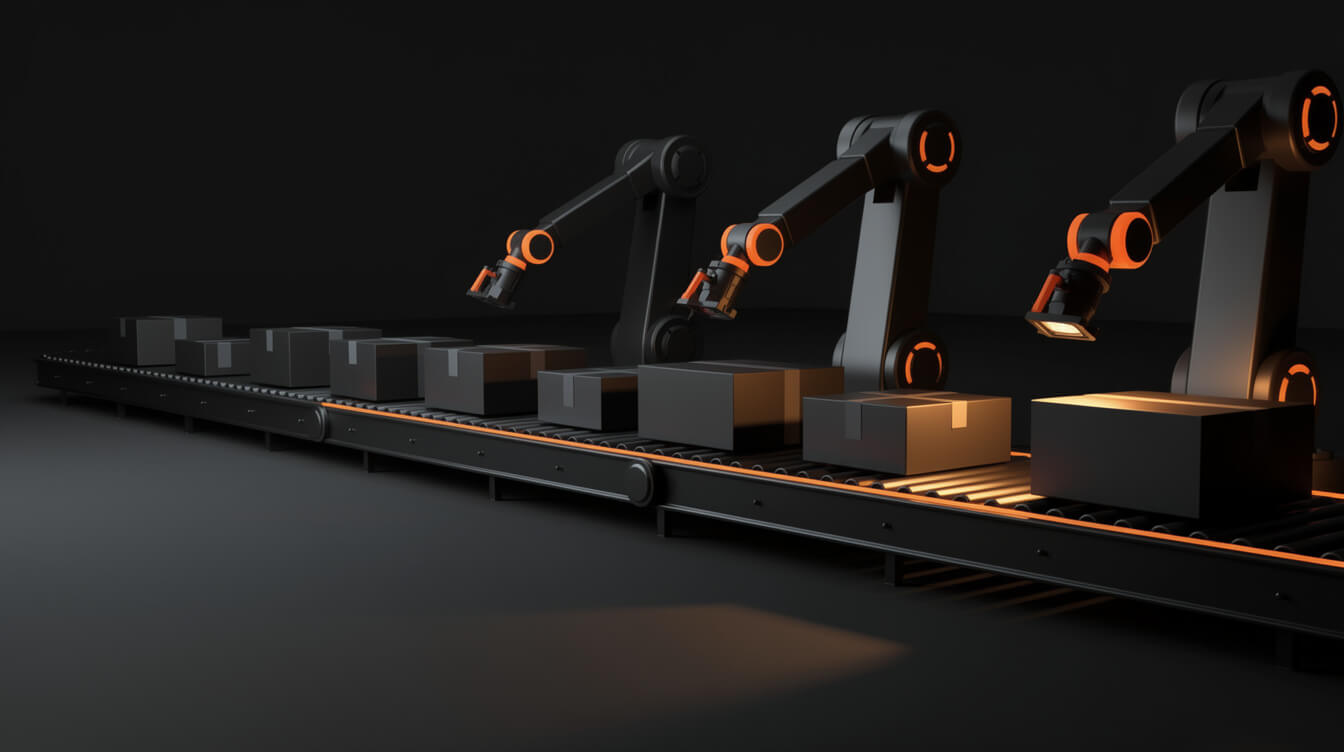
Not all print on demand products benefit equally from automation. The distinction matters when you are evaluating whether a production pipeline makes sense for your product mix.
Products that automate well share three characteristics: a simple and predictable print area, a large niche community willing to buy the same core design concept in variations, and high repetition potential across adjacent sub-niches.
T-shirts and mugs sit at the top of this list. A single niche, a single core visual concept, and you can generate 30 to 50 product variations per afternoon by systematically varying color palettes, sub-niches, and design elements. Canva t-shirt design workflows hit a ceiling fast here: the tool was not built for volume. Manual Canva-based workflows take 4 to 6 hours to produce 10 solid designs. A research-to-listing pipeline can produce end-to-end unique products in under seven minutes, a 30x throughput difference per unit of time invested.
Products that require more manual craft include embroidered hoodies (stitch count precision matters), canvas wall art in gallery niches (buyers can identify generic AI art on sight in certain communities), and fine art prints where authenticity is part of the product story.
The DTG vs DTF distinction matters here too. DTG (direct-to-garment) printing produces excellent results from JPEG or PNG files, which is exactly what AI image generation outputs. Most Printful and Printify products default to DTG, making them compatible with standard AI-generated image output without additional file preparation steps.
A practical automation filter: if a product type has a rectangular print area, a base cost under $20, and a retail ceiling above $25, it is a strong candidate for high-volume automation. T-shirts, mugs, phone cases, flat posters, and tote bags all clear this filter. MEGA automates this pipeline at mega.management, covering niche research, image generation, product listing, and SEO metadata in a single run.
Research, design, list. Under 7 minutes, end to end.
MEGA is the research-to-product pipeline for POD sellers. Feed a niche idea and get a complete, unique product listing with AI-generated images, SEO metadata, and Printful integration in a single run. No Canva. No manual cropping. No six-hour workflow.
Low-competition print on demand product niches in 2026: where the margin opportunity is

The most competitive POD products are the most obvious ones: generic t-shirts with popular quotes, basic graphic tees, one-size-fits-all mugs. Saturation is real. The entry-level generic POD store is not the opportunity.
The opportunity is in niche specificity applied to high-margin product types.
Profession-specific apparel converts well when the niche is small and the buyer identity is strong. Nurses, electricians, teachers, veterinarians, and truck drivers. These buyers have strong professional identity and buy gifts for each other. A niche veterinary-humor t-shirt store competes with almost nobody and serves a buyer who actively searches for their identity reflected back at them.
Community and interest group accessories sit in a similar position. Mugs and tote bags for specific hobby communities (amateur radio, astrophotography, competitive weightlifting) convert at higher rates than generic products because the buyer-product match is tight. A mug for a competitive weightlifter who also runs a small gym is not competing with the 10,000 “coffee lover” mug listings on Etsy. It is in a category of one or two.
Wall art for underserved aesthetics is a 2026 opportunity. Most wall art POD stores default to inspirational quotes and minimalist botanical prints. Both categories are saturated. Underserved aesthetics with active communities include brutalist architecture photography derivatives, vintage scientific illustration style, and regional geography art for mid-size cities not covered by mainstream stores.
Low-competition stationery has almost zero genuine POD competition in non-obvious niches. The base costs are low ($4 to $7 for notebooks), the retail price can reach $18 to $22 for well-designed products, and the margin clears 60 to 65% gross. Greeting cards with highly specific humor niches (obscure hobbies, niche professions, regional in-jokes) are similarly open.
The principle across all these examples is the same: find the intersection of a narrow community, a high-identity purchase trigger, and a product type with favorable margin math. Then build a repeatable pipeline that generates 20 or more variations of that core concept without the manual bottleneck.
Building a product mix that works without a 6-hour Canva workflow
The full picture from the margin math above suggests a practical product mix for a POD store aiming for $3,000 to $10,000 per month in revenue.
Core volume products (60 to 70% of SKU count): T-shirts and mugs. Low base cost, strong automation fit, large existing search demand. These are your traffic engine and your repeat-purchase layer. A niche that supports 30 t-shirt designs can usually support 20 to 30 matching mugs with zero additional design work.
Margin enhancers (20 to 30% of SKU count): Hoodies, sweatshirts, and canvas wall art. Higher price points, better absolute dollar margins per sale, but slower velocity. These are your average-order-value lifters and your gift purchase products. Seasonal launches (fall and winter for hoodies, year-round for wall art) work well here.
Experimental products (10% of SKU count): One or two non-obvious product types (notebooks, stickers, specific accessory categories) where you have identified genuine niche demand and low competition. These are low-risk tests because the automation pipeline can produce them in the same run as your core products.
The mistake most sellers make is building a product mix from the platform catalog, not from margin math and niche demand research. You add everything that looks plausible and hope something converts. That produces a store with 400 products and no coherent audience. A focused store with 80 well-differentiated products in two niches will almost always outperform a 400-SKU catalog with no clear positioning.
A better approach: pick two or three niche communities, run the margin math for each product category, and build 30 to 50 tight, well-differentiated products per niche. Then automate the production of each niche’s core product variation.
The Shopify seller paying 1% per transaction at $10,000 per month is leaving $1,200 per year on the table before accounting for app fees, theme licenses, and transaction overrides on higher plans. The WooCommerce alternative eliminates the transaction tax entirely while keeping all product infrastructure in owned stores. The margin recovery does not require changing a single product. It requires changing the platform underneath them.
Print on demand products are not all created equal. The margin math, the platform economics, and the automation fit vary by product type, niche, and price point. Building a product mix with numbers behind it is not complicated. It just requires asking the questions most POD guides do not ask.
Implement AI. 30x your throughput. Get a 30-min call with the founder.
Drop your details and book a free 30-minute discovery call. Personalized advice on your POD stack, your margin, and where AI fits. No pitch, no fluff.