Custom lanyards for POD sellers: which providers support them, what sublimation printing costs, and the fan merch niche math
Custom lanyards are everywhere at events, schools, and workplaces. But if you search for a print-on-demand seller guide on how to add them to a WooCommerce or Printify store, you find nothing. The entire first page of results is B2B promotional vendors — GS-JJ, VistaPrint, IDCBand — all quoting 500-unit minimum orders to corporate buyers. This article is the custom lanyard guide that POD sellers actually need: which providers carry them at low volumes, what each print method costs, and which niches turn a $12-15 retail price into a repeatable revenue line.
What makes custom lanyards a different POD product category
Most POD accessories sit in a straightforward category: design goes on product, product ships to buyer. Lanyards are different in one important structural way. They are utility products that happen to have a print surface, not decorative products that happen to be functional. Buyers buy lanyards because they need to hold a badge, an ID card, or a set of keys. The custom design is a secondary layer that adds value to a functional item. That distinction changes how you position them and who buys them.
The practical implication is that buyers often purchase in small groups rather than individually. A school orders 40 lanyards for staff. A music festival vendor orders 100 for crew. A small business orders 25 for a trade show. This makes lanyards a category where B2B-adjacent buyers are a natural part of the market, even for sellers who primarily run B2C stores.
The second distinguishing feature is AOV. At $12-20 retail per unit, lanyards sit at the low end of the POD price spectrum. That is not a problem, but it requires a specific economic structure to make the margin work. Low-AOV products punish platform fees disproportionately. A 1% Shopify platform override on a $15 lanyard is $0.15. On a $15 lanyard sale with $4.50 in gross profit, that $0.15 represents 3.3% of your gross, not 1%. The math shifts depending on which platform you run your store on, and we will cover it in detail in the Shopify section below.
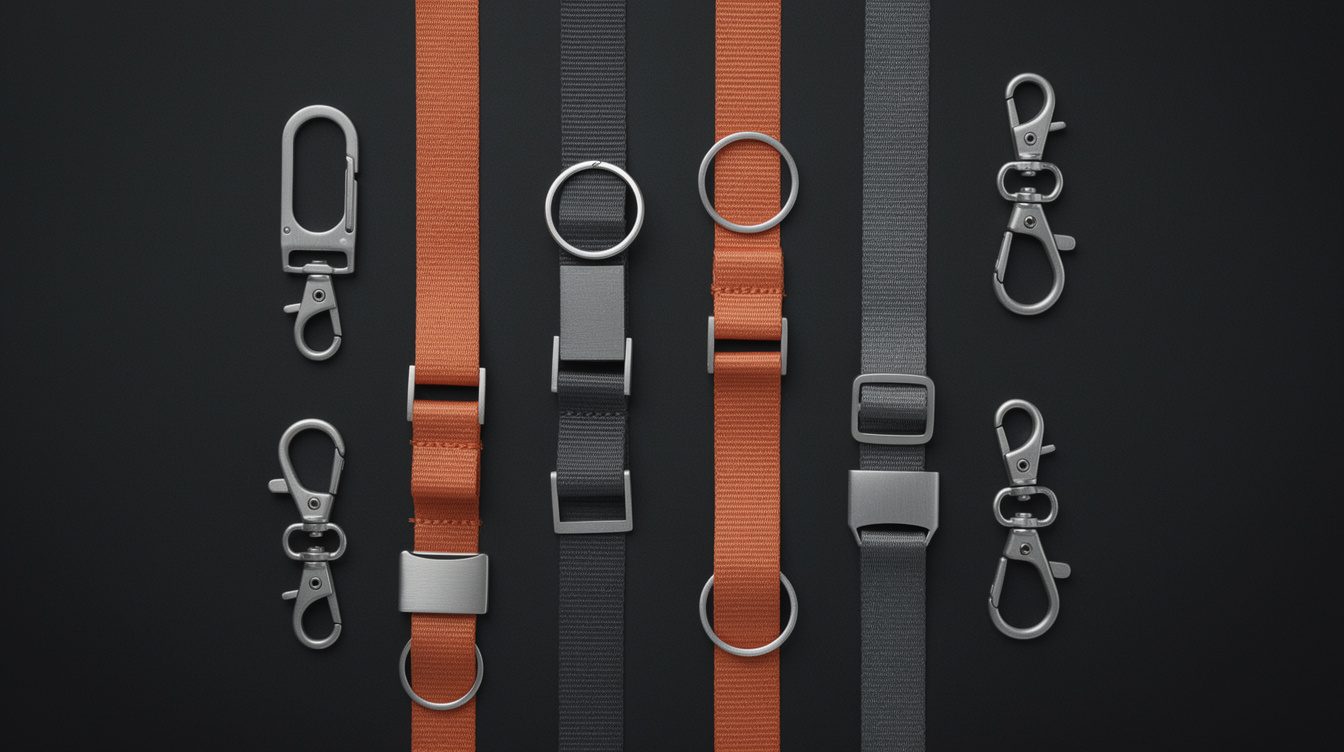
Third, lanyards require a hardware component the design alone cannot supply: the clip hardware and card holder. The sublimated strap is the design surface, but buyers expect a functional metal or plastic attachment mechanism. Sourcing lanyards through a provider that bundles the hardware is necessary unless you want to manage separate inventory.
Which providers support custom lanyards for low-volume sellers
The bad news first: Printful does not carry custom lanyards as of mid-2026. The catalog has not historically included them, and there is no Printful lanyard product in their current product creator. If you are building a Printful-exclusive store, lanyards are not an option without a workaround.
The alternatives fall into three tiers depending on volume and the per-unit cost you are willing to accept.
Printify network vendors
Printify’s marketplace includes select vendors that carry sublimated polyester lanyards with no minimum order quantity. Availability varies by region and vendor, and you should verify current product options directly in the Printify product creator before committing to a product line. When available, Printify vendors typically offer the standard 3/4-inch and 5/8-inch polyester lanyard widths with breakaway safety clasp and plastic swivel hook. Base cost via Printify network vendors is typically in the $3.50-6.00 range per unit depending on hardware configuration, plus shipping.
StickerMule (low-volume, non-Printify path)
StickerMule carries custom lanyards with a 25-unit minimum at approximately $2.35 per unit. This is a direct purchase, not a print-on-demand integration, which means you receive physical inventory. It is a hybrid approach: buy 25-50 units in a design you expect to sell, list them individually. The margins are significantly better than via Printify vendors ($2.35 landed cost vs $5+ for Printify network), but it requires upfront capital and inventory management. For sellers who have identified a proven design or event-specific niche, the StickerMule batch route can make economic sense.
Manufacturer-direct from 25 units
Suppliers like GS-JJ, Alibaba-sourced vendors, and domestic specialty promotional suppliers quote bulk pricing that starts improving meaningfully at 25 units. GS-JJ publicly lists pricing from $0.51-5.01 per unit depending on volume, material, and print method (the lowest tier is for 500+ order quantities). At 25-50 units from a comparable supplier, typical all-in landed cost is $1.50-2.50 per unit. This is the best-margin path but requires cash upfront and some lead time (typically 7-14 days for domestic, 2-3 weeks for international). Suitable for established niches with proven demand, not for testing new designs.
Dye sublimation vs screen printing vs woven jacquard: the print method breakdown
Not all custom lanyards are made the same way. The three main print methods produce different results, require different minimum orders, and suit different design types. Understanding the difference prevents ordering the wrong method for a given design.
Dye sublimation on polyester
Dye sublimation is the POD-compatible method. It requires 100% polyester fabric substrate, heat-transfers dye directly into the fiber at approximately 375-400 degrees Fahrenheit, and produces full-color, edge-to-edge prints with no texture difference between printed and unprinted areas. There is no ink sitting on the surface, so the design cannot crack, peel, or wash off. Color count is unlimited. Photographic and gradient designs reproduce accurately. This is the method Printify network vendors use for no-MOQ lanyard production. The constraint: sublimation only works on white or light-colored polyester. Dark polyester backgrounds cannot be sublimated without pre-treatment.
Screen printing on nylon
Screen printing deposits ink onto the lanyard surface rather than bonding with the fiber. It works on nylon as well as polyester, allows dark base colors, and produces crisp solid-color results. The constraint is setup cost: each color in the design requires a separate screen, which means setup fees and minimum order quantities (typically 25-50 units at minimum for small printers, 100+ for better pricing). Screen printing is cost-effective for designs with 1-3 solid colors where you can commit to volume. It is not cost-effective for full-color or photographic designs, and it is not compatible with no-MOQ POD.
Woven jacquard
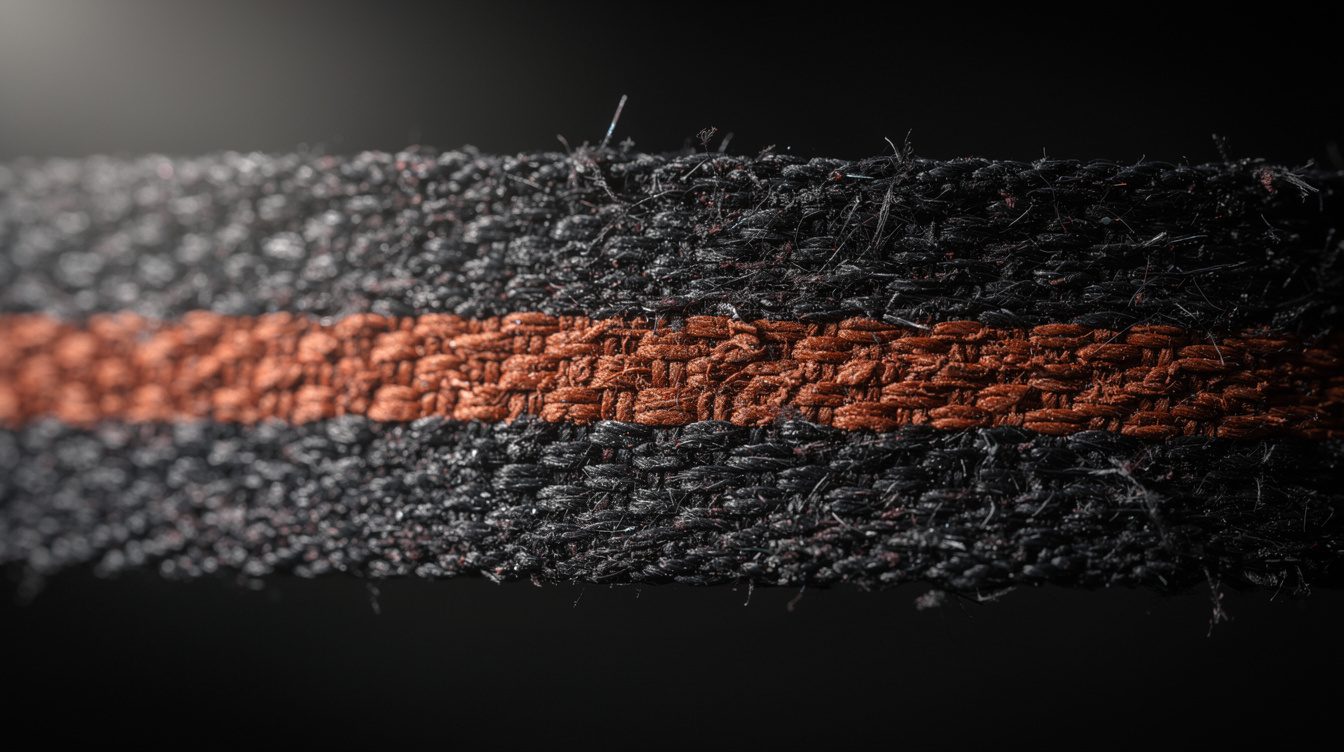
Woven lanyards have their design built into the fabric structure itself during weaving, rather than printed on top or bonded via heat. The result is a premium textured look that is extremely durable and does not fade. Woven lanyards are standard in corporate, government, and trade show contexts. Minimum order quantities for woven production start at 100 units and typically run 300-500 units for economical pricing. Unit cost at 100 units is typically $2-4 depending on design complexity. This method is not POD-compatible in any meaningful sense, but it is the right path for sellers who have an established institutional buyer or corporate client wanting premium product.
For most POD sellers building a lanyard product line from scratch, dye sublimation is the relevant method. It enables no-MOQ production via Printify network vendors, supports unlimited color and photographic designs, and produces a product that is visually competitive with branded corporate lanyards at a fraction of the minimum order commitment.
Unit cost math at 1, 10, 50, and 100 units
Smash print-on-demand. Join the engine room.
One short email a week. Real numbers, real teardowns, the unfiltered economics behind every move.

The economics of custom lanyards depend entirely on volume. Here is how the numbers stack up across the four major quantity tiers a POD seller typically encounters.
1 unit (true POD, Printify network vendor)
Base cost via Printify vendor: approximately $4.50-6.00 depending on vendor and hardware. Shipping: $3.50-5.00. Total landed cost to your customer’s door: $8-11. At $14.99 retail, gross margin is $3.99-6.99, or 27-47%. That is viable but sensitive. Every platform fee matters at this AOV. At $14.99 retail with a $5.50 landed cost, gross profit before platform fees is $9.49. A Shopify 1% platform override takes $0.15, which is 1.6% of gross profit. Manageable at low volume, but it compounds as you scale.
10 units (small batch test or event bundle)
At 10 units from a Printify vendor, per-unit economics are similar to single-unit since most no-MOQ vendors do not volume-discount heavily below 50 units. The advantage at 10 units is that you reduce per-order shipping cost slightly by bundling items in a single order for events or small teams. For StickerMule: at 25-unit minimum, ordering 25 and selling from inventory gives you a $2.35 base cost per unit, which reduces landed cost to approximately $4.35-5.35 with outbound shipping — gross margin at $14.99 retail is $9.64-10.64, or 64-71%.
50 units (event niche sweet spot)
At 50 units from a direct supplier: estimated base cost $1.75-2.25 per unit, shipping $0.80-1.00 per unit if ordered in bulk. Total landed cost: $2.55-3.25. At $14.99 retail, gross profit is $11.74-12.44, or 78-83%. This is where the economics of lanyards become genuinely attractive. The catch: you are holding inventory and need 50 buyers before the order pays off. Suitable for event-specific niches (music festival, fan convention) where you have pre-order demand or a proven sales record.
100 units (established product line)
At 100 units from a manufacturer-direct supplier: base cost $0.90-1.50 per unit (depending on hardware), shipping $0.70-0.90 per unit. Total landed: $1.60-2.40. At $14.99 retail, gross profit is $12.59-13.39, or 84-89%. At this scale, the per-unit economics are exceptional. But you are committing $160-240 upfront plus storage, and you need to move 100 units of a single design. This tier makes sense for evergreen niches (school IDs in a specific design, corporate series) with reliable reorder volume, not for one-off event designs.
The practical takeaway for POD sellers: start with Printify network vendors at single-unit to test design-niche fit. Once you have proven which designs sell, migrate high-velocity SKUs to the 25-50 unit StickerMule tier to recover margin. Keep the Printify vendor path for long-tail designs and customer-specific personalization requests. This hybrid approach is common in accessories niches like custom koozies, where the economics of low-AOV items require the same kind of volume discipline.
The niche verticals that make lanyards work
Not all niches suit lanyards equally. The product sells best where the buyer has a functional need (holding an ID, badge, or key) and a community identity (fan, team member, organization) that makes a custom design worth buying. Here are the verticals with the clearest buyer profiles.
Fan convention and anime event merch
Fan conventions (anime, gaming, comic, K-pop) are high-spend environments where attendees actively collect event-specific merchandise. Lanyards are already used at conventions for badge holding, which means the buyer already has a functional use case. A lanyard with fan art or character artwork is both useful and collectible. Design considerations: artwork must be original (no IP infringement), and designs with clear community identity — a fandom symbol, color scheme, or character silhouette — outperform generic “anime lanyard” designs. Expected retail: $14-18. Demand is year-round but spikes around major convention schedules (AnimeCons, Comic Cons, gaming events).
Music festival crew and artist merch
Music festivals use lanyards extensively for staff credential badges, artist access passes, and VIP packages. Custom festival lanyards are typically ordered in batches of 50-200 by event organizers, which makes them a B2B-adjacent product. For POD sellers, the opportunity is two-fold: small local festival organizers who need 25-50 custom units and cannot justify the MOQ of a promotional supplier, and fan-facing artist merch lanyards sold through the artist’s online store. The latter is pure POD with no pre-commitment. Design approach: festival name and year in artwork format (not text typography), bold color block designs, artist logo or visual identity in artwork form.
School and sports team orders
Schools and youth sports teams buy lanyards for coaches, staff, and event volunteers. This is the most reliable repeat-buyer vertical because the same organization returns each season. School lanyards typically feature school colors and mascot artwork. Sports team lanyards follow the same pattern. A single school contact who orders 40 lanyards annually is worth more than 40 individual buyers at the same total volume, because reorder probability approaches 100% for institutional buyers who found a supplier they trust. The economics here also favor the 25-50 unit batch approach, since orders come in predictable sizes.
Corporate and nonprofit event badges
Corporate conferences, nonprofit fundraisers, and association events all need custom lanyards for attendee badges. These buyers are cost-conscious but not price-sensitive to a premium over the GS-JJ bulk rates if they can avoid the 500-unit MOQ and get 25-50 units in a custom design without the run-around. This is a niche where a POD seller running WooCommerce with a quote request form can capture corporate buyers who googled “custom lanyards 25” and landed on your store. The design needs are simple: logo artwork, color scheme, year. Clean and professional, not creative.
For any of these niches, the research workflow is the same as building out a custom pet accessories line or any other niche POD product: identify a community with a shared identity, confirm there is a functional use case for the product, design for the community, and test at single-unit before committing to batch inventory.
Generate a full lanyard product listing in under 7 minutes
MEGA automates the research-to-listing pipeline: niche research, image generation, SEO copy, and WooCommerce product creation. One pipeline, end-to-end.
Shopify 1% reality at $12-20 AOV: the math that makes WooCommerce worth the switch
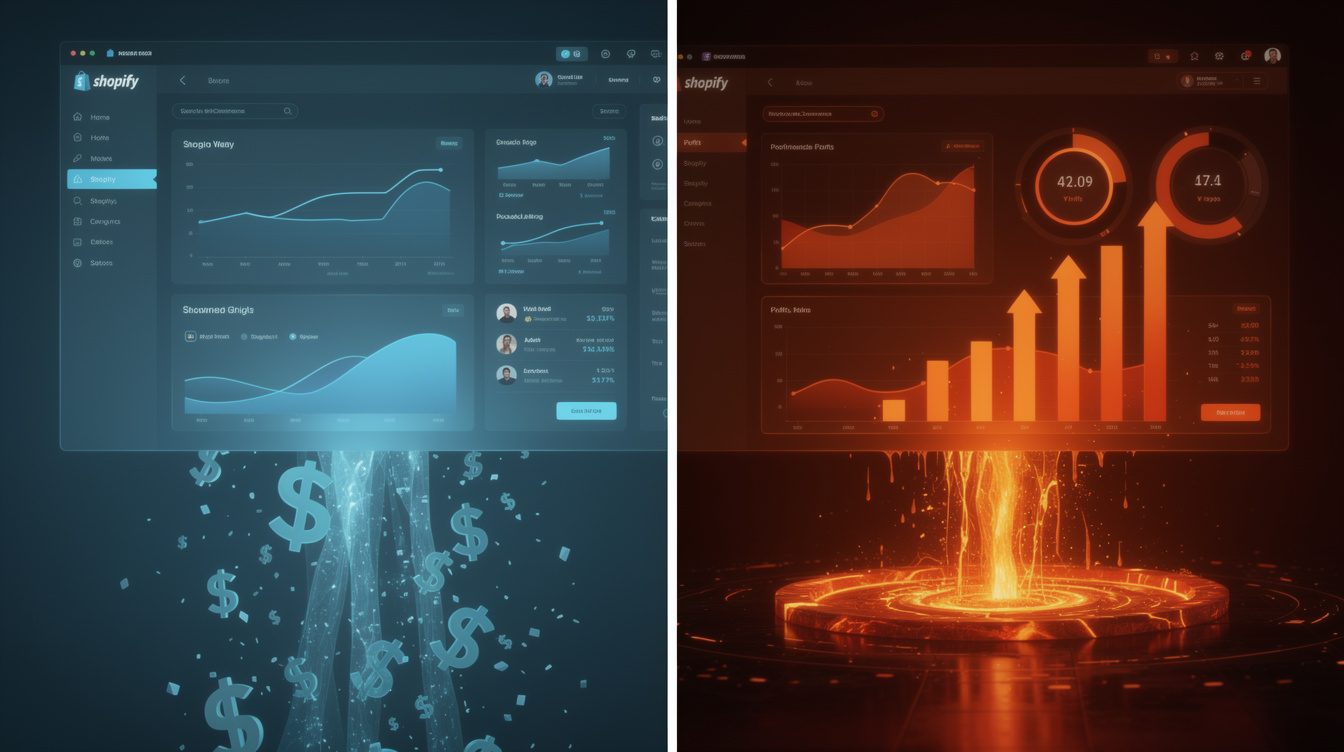
The Shopify 1% platform override is a charge Shopify applies on top of any third-party payment processor fee when you are not using Shopify Payments. But even if you use Shopify Payments, there are additional considerations at the low AOV range where lanyards live.
Here is the math at three realistic annual sales volumes for a custom lanyard store.
100 lanyard orders per month ($15 AOV)
Annual revenue: $18,000. Shopify Basic plan: $348/year. If using a third-party processor (common for non-US stores or sellers using a preferred payment gateway): 2% override on $18,000 = $360/year. Total Shopify platform cost: $708/year. WooCommerce equivalent: hosting ($120-180/year) plus WooCommerce itself (free) = $120-180/year. Savings with WooCommerce: $528-588/year on $18,000 in lanyard revenue.
200 lanyard orders per month ($15 AOV)
Annual revenue: $36,000. Shopify Basic: $348/year. Override: $720/year. Total Shopify platform cost: $1,068/year. WooCommerce: $120-180/year. Savings: $888-948/year.
500 lanyard orders per month ($15 AOV)
Annual revenue: $90,000. Shopify Basic: $348/year. Override: $1,800/year. Or Shopify Shopify plan (to reduce override to 1%): $1,068/year. Total Shopify cost at this volume: $1,416-2,148/year. WooCommerce: $180-360/year. Savings: $1,056-1,968/year.
The savings grow in direct proportion to volume. At $15 AOV, the Shopify overhead is more painful per-transaction than it would be for a store selling $60 hoodies, because the fixed overhead-to-AOV ratio is four times worse. A seller moving 500 custom lanyard orders per month is essentially writing a $1,000-2,000 check to Shopify annually that a WooCommerce seller does not write. For a more complete breakdown of the fee structure comparison across different product types, the WooCommerce vs Shopify for POD sellers post covers the full stack of costs.
There is a second WooCommerce advantage specific to lanyards: personalization. If you want to offer buyer-submitted artwork (a team mascot, a company logo, a fan’s custom design), WooCommerce handles file upload fields natively. On Shopify, that requires a $19-49/month app. At 200 orders per month, the app fee alone adds $228-588/year. WooCommerce treats file uploads as a core form feature, not an upsell.
How to scale a custom lanyard product line without holding inventory
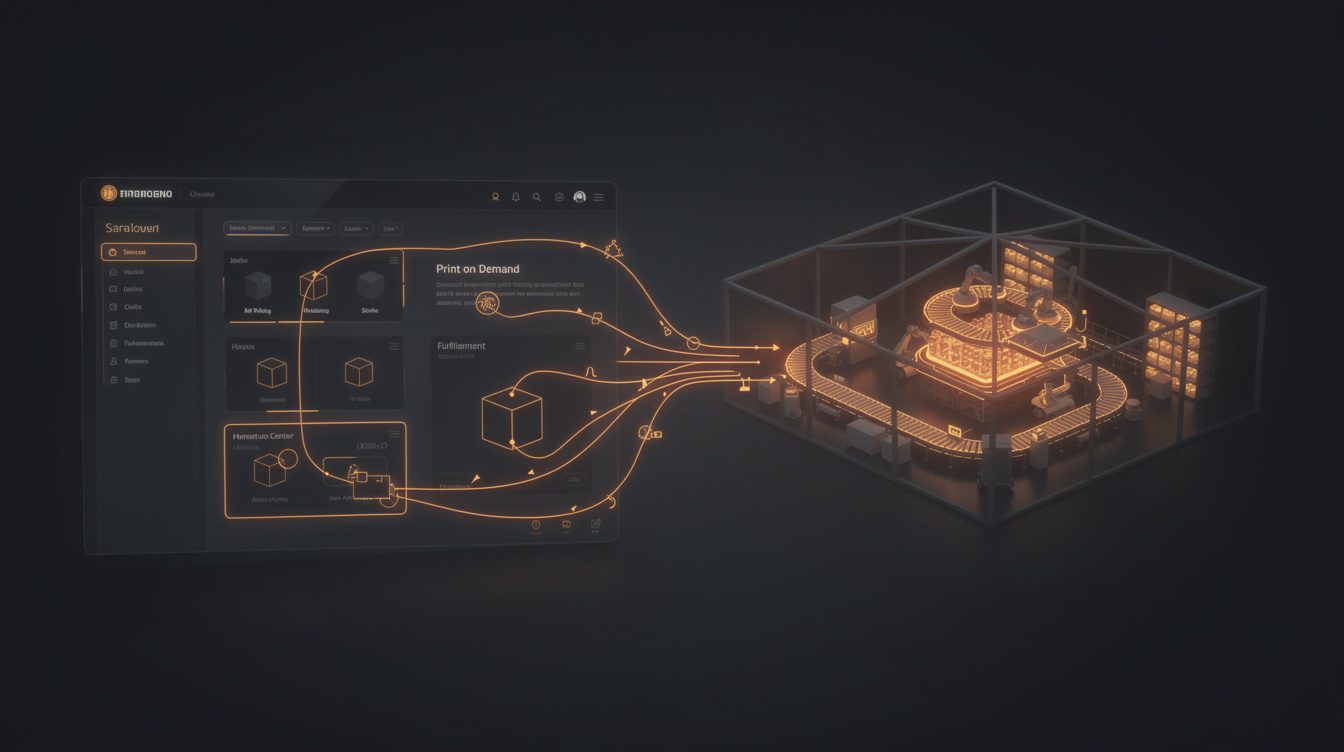
The inventory-free model for custom lanyards requires accepting the unit economics of the Printify vendor path (higher per-unit cost, lower gross margin) in exchange for zero upfront commitment and unlimited design flexibility. Here is how to build a product line within those constraints.
Start with 3-5 niche designs
Test designs in distinct niches rather than creating 20 generic lanyards. Pick three or four specific communities: a fandom group, a specific sport, a school color combination, an event type. Each design serves a community. Generic designs compete on price. Community designs compete on identity. Identity wins at $15.
Build for personalization from day one
The highest-converting lanyard listings in low-MOQ niches include a personalization option. A fan convention lanyard that buyers can add a name or handle to converts better than a fixed design because it becomes a personal item rather than a generic product. WooCommerce allows you to add a text field to any product without additional plugins or fees. Personalization adds perceived value and justifies the $14-18 retail price point versus the $5-8 generic lanyards on Amazon.
Use niche events as launch windows
Fan conventions and music festivals announce their dates 3-6 months in advance. List event-specific lanyard designs 6-8 weeks before the event date, targeting keywords like the event name combined with “lanyard” or “badge holder.” These are transient ranking opportunities — high buyer intent, low competition, short window. The same approach works in the custom enamel pin niche, where event-specific designs consistently outperform generic year-round listings.
Migrate proven designs to batch inventory
Once a design sells 10-15 units in a 60-day window via the Printify vendor path, it has demonstrated demand. At that point, order 25-50 units from StickerMule or a comparable supplier, restock as needed, and pocket the margin difference. This hybrid model — POD for testing, batch for winners — maximizes flexibility without locking capital into unproven designs. It is the same discipline that makes the custom koozie niche economically viable for sellers who run it correctly.
Automate the listing workflow
The biggest operational cost in a lanyard product line is not the per-unit margin — it is the time to research niches, generate product images, write SEO copy, and create listings. A seller building 20 lanyard SKUs across 5 niches manually is looking at 15-25 hours of work. MEGA automates this entire research-to-listing pipeline, generating custom product images, SEO titles, meta descriptions, and WooCommerce product records from a niche input. The same pipeline that generates a t-shirt listing in 7 minutes applies to any POD accessory including lanyards. The economics of the lanyard niche only work if the cost to list and manage products does not eat the margin.
Conclusion
Custom lanyards are an underserved product category for POD sellers. The SERP is dominated by B2B promotional suppliers who cannot serve buyers wanting 1-50 units. Printful does not carry them, which means the standard “connect Printful and go” path does not apply. But Printify network vendors do carry sublimated polyester lanyards with no minimum order, and the three-tier economics — Printify for testing, StickerMule batch for winners, direct supplier for established volume — give sellers a clear progression from zero inventory to healthy margins.
The niche verticals are well-defined: fan conventions, music festival crew, school and sports team orders, and small corporate events. All four require design for community identity, not generic stock imagery. All four are underserved by existing POD sellers, and all four have buyers who are already searching for custom lanyards in the 1-100 unit range that the promotional supplier ecosystem cannot efficiently serve.
At $12-20 AOV, platform fees matter more than they do for higher-ticket products. WooCommerce saves $500-2,000/year versus Shopify at realistic lanyard sales volumes. That savings compounds as volume grows, and the personalization capabilities WooCommerce includes natively are the difference between a $14.99 fixed-design product and a $17.99 personalized one.
Start with Printify vendors, test three niche designs, run the hybrid model to the StickerMule tier once you have proven demand, and build the listing workflow to scale efficiently across multiple lanyard SKUs.
Implement AI. 30x your throughput. Get a 30-min call with the founder.
Drop your details and book a free 30-minute discovery call. Personalized advice on your POD stack, your margin, and where AI fits. No pitch, no fluff.