Custom logo hats for POD sellers: what embroidery actually costs your store
Custom logo hats are one of the most searched products in print on demand. They sit at the intersection of branded merch and wearable fashion, and the search volume reflects it. Yet the top results for “custom logo hat” are 100% wholesale vendor pages aimed at consumers uploading a file and ordering 100 units. There is zero editorial coverage for POD sellers asking the real question: can I build a profitable custom logo hat product line without inventory, without minimums, and without owning an embroidery machine.
The answer is yes. But the unit cost math works differently than most POD sellers expect. This guide walks through the embroidery fee structure, provider comparison, hat style performance, and the platform fee math that determines whether Shopify or WooCommerce is the right home for a custom logo hat store.
What POD sellers get wrong about custom logo hats
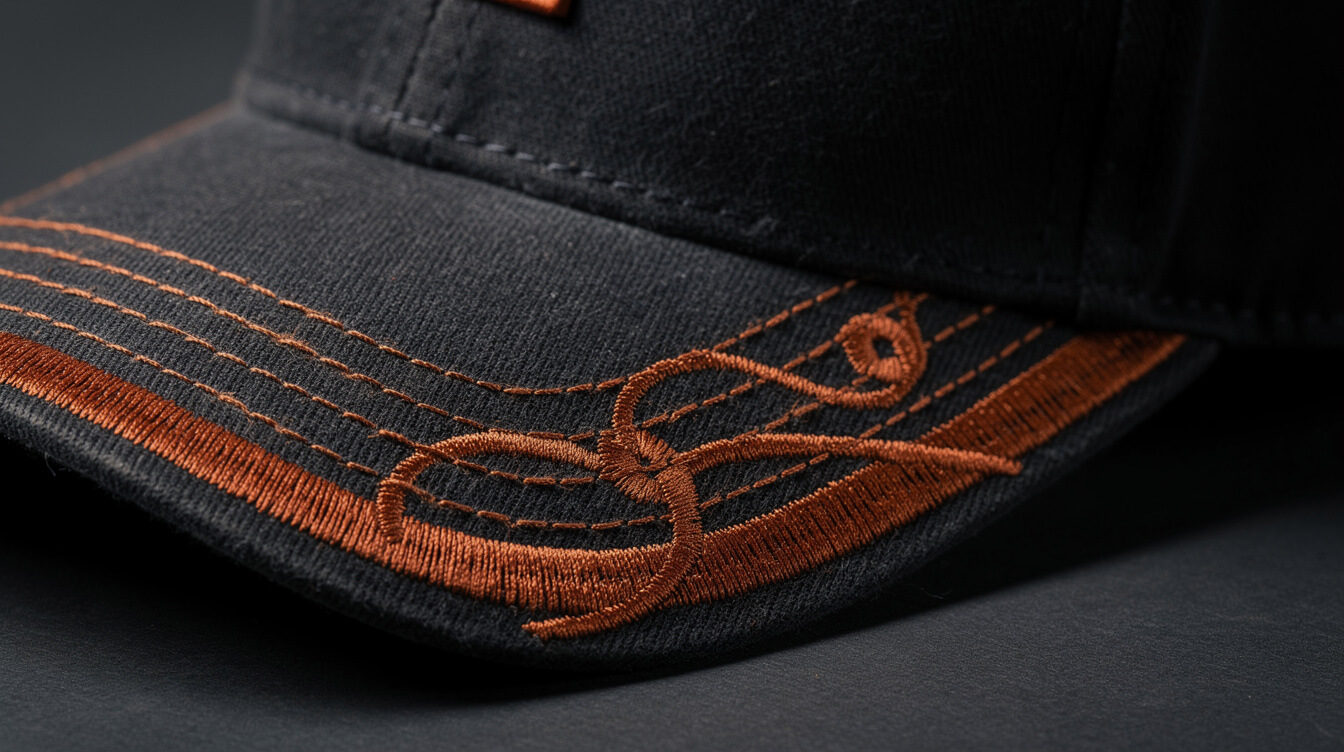
The most common error is treating embroidery like DTG printing. With DTG, you upload an image file and pay a per-unit cost. With embroidery, there is an additional step: digitization. Before your logo can be embroidered onto a hat, a technician (or AI-assisted software) converts the file into a stitch file. That stitch file tells the embroidery machine exactly where to place each thread and at what angle.
Printful charges a flat $5.95 digitization fee per design. This is a one-time cost stored against your account. Once paid, every hat embroidered with that design uses the stored stitch file. On your first hat, that $5.95 is an additional cost. Across 200 hats, it becomes negligible. But many new sellers see their first custom logo hat order and assume the unit economics are broken. They are not. They are amortized.
The second error is assuming any logo will embroider cleanly. Embroidery has physical limits. A logo with thin lines under 1mm, gradients, or photographic complexity will not translate to thread. Printful and Printify both require minimum stitch-ready artwork, and their digitization teams will simplify or reject art that cannot be reproduced accurately in thread. If you are generating logos with AI tools, you need vector-clean output before submitting.
The third error is ignoring color limits. Most POD providers cap embroidery at 6 to 15 thread colors per design depending on the hat position. A complex full-color logo built for screen printing will not survive this constraint unchanged. The POD hat product category rewards simple, bold, two- to four-color logos. Brands that understand this design discipline consistently see better conversion rates because their hats look premium, not busy.
Printful vs Printify: embroidered hat options compared
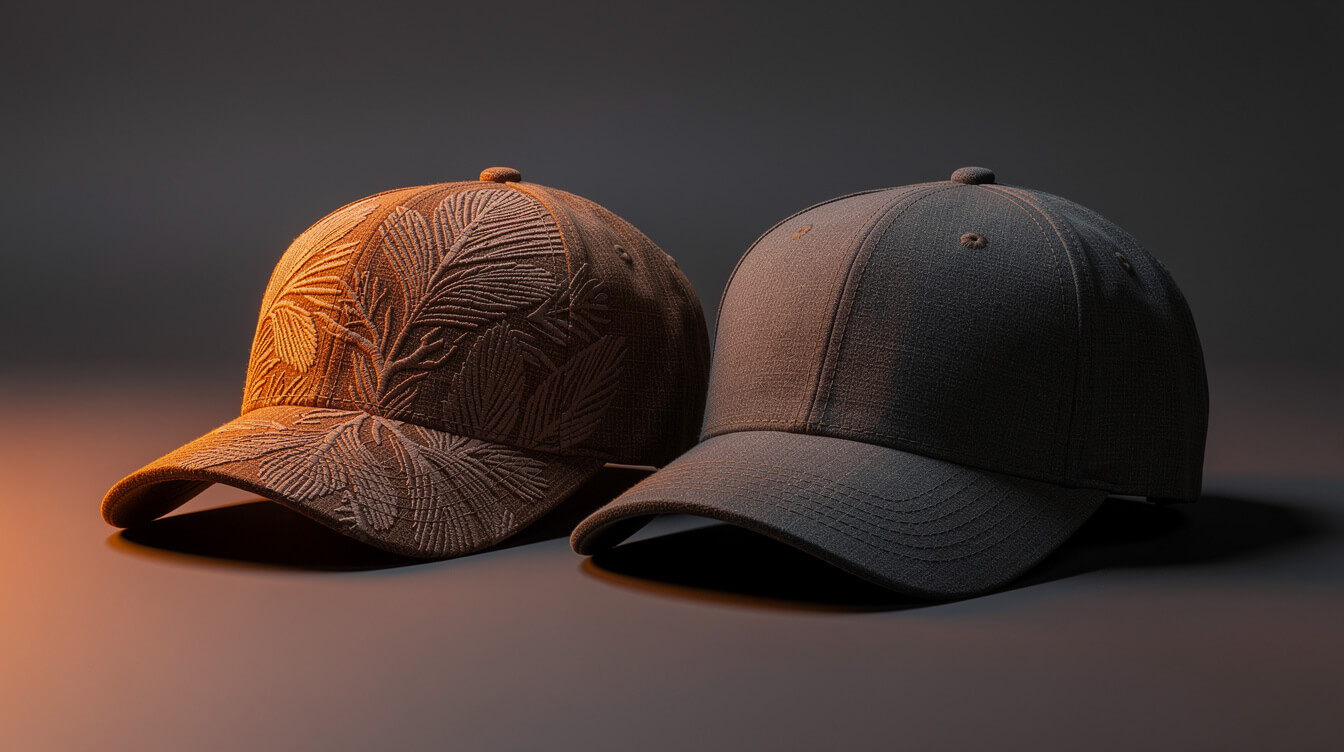
Both Printful and Printify offer embroidered hats, but the catalog depth, pricing model, and integration behavior differ in ways that matter for WooCommerce sellers.
Printful hat catalog includes the Richardson 112 Trucker, Yupoong Classic Structured, Flexfit Delta, and a growing range of premium options. Printful produces in-house, which means consistent quality and reliable turnaround. Their digitization fee is $5.95 per design, stored for future use. Base prices for embroidered hats on Printful start at approximately $14 to $18 before markup, with the Richardson 112 front-panel embroidery sitting around $15.25 including the embroidery cost. Printful integrates directly with WooCommerce via their official plugin.
Printify hat catalog offers more SKU variety because Printify routes to multiple print providers rather than producing in-house. Providers like Monster Digital, T Shirt and Sons, and Drive Fulfillment each have different hat selections, quality levels, and production speeds. Base prices can run $1 to $3 lower than Printful, but quality consistency varies. Printify Premium ($24.99/month) adds a 20% discount on all base prices, which changes the math meaningfully at volume. Printify also integrates with WooCommerce via their official plugin.
For a seller just starting a custom logo hat product line, Printful is the lower-risk entry point. Production quality is predictable. For a seller already running volume with Printify and comfortable managing provider relationships, Printify Premium can improve margin on a $35 retail hat by $3 to $5 per unit.
One integration note: both providers handle embroidery placement on the front panel by default. If you want left chest or back embroidery, that is a separate SKU with a separate stitch file. Do not assume all placement options are interchangeable in the same product listing.
The real unit cost of a custom logo hat

Here is a realistic cost breakdown for a custom logo hat sold on your WooCommerce store using Printful as the fulfillment provider:
- Blank hat base cost (Richardson 112 Trucker): $9.95 to $11.50
- Front panel embroidery: $4.25 to $5.50 (included in Printful’s hat product price)
- Digitization fee: $5.95 one-time, amortized across units sold
- Shipping to US customer: $5.49 to $7.99 (depending on carrier and zone)
- Total landed cost: approximately $21 to $26 before any platform fees
At a $35 retail price, the gross margin before platform costs is $9 to $14 per unit. At a $42 retail price, the margin improves to $16 to $21 per unit. Hats have a natural ceiling around $45 to $50 before customers start comparing them to retail brands, so knowing where to set price matters.
The digitization fee deserves separate attention. On unit 1, you pay $5.95. That cost drops to $0.12 per unit by unit 50, $0.06 per unit by unit 100, and approaches zero after 200 units with the same design. This is why sellers who rotate logos constantly never see strong margins: each new logo resets the digitization amortization. Two to three strong, proven logo designs will outperform a catalog of 30 untested ones every time.
Printify’s lower base price can shift this math. With Printify Premium, the same hat category might run $2 to $4 less per unit in base cost. At 200 units per month, that difference is $400 to $800 in recovered margin. The trade-off is quality consistency risk across different fulfillment providers.
Snapback, trucker, dad hat: which POD hat style sells best

Smash print-on-demand. Join the engine room.
One short email a week. Real numbers, real teardowns, the unfiltered economics behind every move.
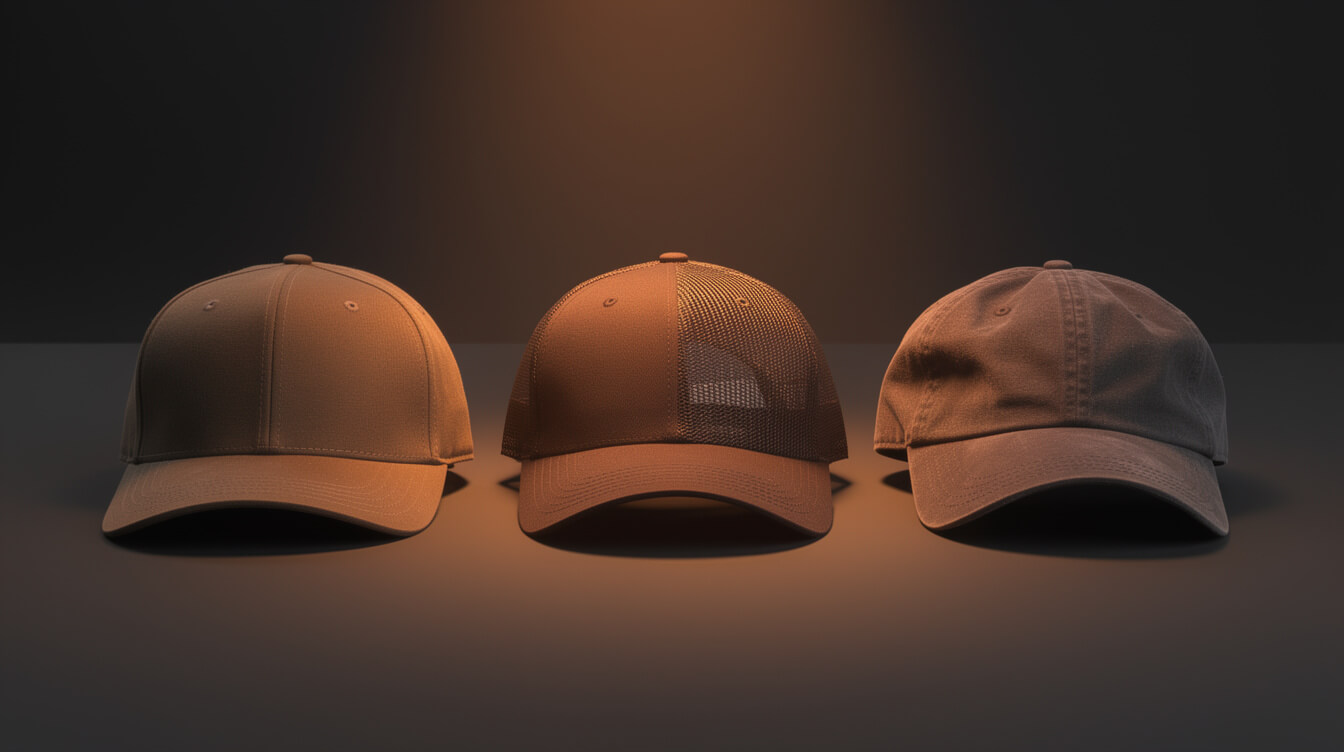
Hat style selection is not arbitrary. Different styles attract different buyers and suit different logo types. Here is how the main categories perform in POD stores:
Structured snapback (6-panel, flat brim): Dominates streetwear, urban, and hype brand niches. The structured front panel provides the best canvas for detailed embroidery because the hat holds its shape. Customers who buy structured snapbacks typically have higher price tolerance, making $38 to $45 retail viable. Richardson 112 and Yupoong 6-panel are the most requested blanks in this category.
Trucker / mesh back: Popular for outdoor, hunting, fishing, farming, and country lifestyle niches. The foam front panel is thicker than structured hats, which allows clean embroidery placement. These hats retail well at $28 to $35. They are the most versatile POD hat for niche stores because the lifestyle context is clear and the buyer intent is strong.
Dad hat (unstructured, low profile, curved brim): The fastest-growing hat category in 2025 and 2026, driven by casual lifestyle and aesthetic brands. The unstructured front panel is softer, which can make fine embroidery detail slightly less crisp. Best with bold, simple logos. Retail well at $30 to $38. They attract a younger buyer demographic than truckers.
Performance / athletic: A viable option for sports niche stores. Moisture-wicking fabric and stretch fits require compatible embroidery thread and technique. Not all POD providers stock performance hats with embroidery options, so verify availability before building a listing.
If you are launching a POD hat store without existing audience data, the Richardson 112 Trucker or a comparable trucker hat is the safest starting point. The niche utility is legible to buyers, the embroidery canvas is forgiving for most logo types, and the price point is accessible enough to generate early volume.
Building a research-first approach to which hat style fits your niche is exactly what MEGA’s pipeline is built for. MEGA identifies niche and product fit before committing to a product line, rather than launching a full catalog and guessing what converts. Learn more at mega.management.
Shopify 1% fee on a $35 hat over 100 orders

Most POD sellers who start on Shopify do not see the fee math clearly until they run volume. Here is what the numbers look like for a custom logo hat store selling a $35 hat.
Shopify’s 1% transaction override fee applies when you use a third-party payment processor (Stripe, PayPal, Square) instead of Shopify Payments. Many sellers outside the US or in markets where Shopify Payments has limited availability pay this fee on every transaction.
Even with Shopify Payments, which waives the override fee, you still pay Shopify’s credit card processing rate (2.9% + $0.30 on Basic, 2.6% + $0.30 on Shopify, 2.4% + $0.30 on Advanced) plus the monthly plan fee ($39 to $399/month).
The override fee math on 100 hat orders at $35:
- Revenue: $3,500
- Shopify 1% override fee: $35.00
- At 500 orders/month ($17,500 revenue): $175/month in override fees alone
- At 1,000 orders/month ($35,000 revenue): $350/month in override fees
On a hat with an $11 gross margin per unit (after Printful fulfillment at $35 retail), the 1% override fee consumes $0.35 per unit, or about 3.2% of your margin. That does not sound devastating on unit 1. It does sound different when you multiply it across 500 monthly orders.
For a deeper breakdown of exactly what Shopify charges POD sellers across plan tiers, the detailed math is in our post on Shopify transaction fees for POD sellers.
Skip the fee math. Let MEGA run the numbers before you list.
MEGA’s research-to-product pipeline identifies your niche, calculates unit economics, generates the product images, and publishes to WooCommerce in under 7 minutes. No Canva. No manual Printful uploads. No guessing on margin.
WooCommerce vs Shopify for logo hat stores

The platform choice for a custom logo hat store is not just about the storefront. It affects your fee structure, your data ownership, and your ability to scale without the 1% overhead compounding against your margin.
Shopify pros for hat stores:
- Fast setup, polished themes out of the box
- Printful and Printify both have official Shopify apps
- Good mobile checkout conversion
Shopify cons for hat stores:
- 1% transaction override fee with third-party processors
- Monthly plan fees ($39 to $399) regardless of revenue
- Customer data owned by Shopify, not by you
- Limited control over checkout and upsell flows
WooCommerce pros for hat stores:
- Zero platform transaction fees on every sale
- Full ownership of customer data and email lists
- Printful and Printify both have WooCommerce plugins
- Hosting cost is flat regardless of revenue
- No ceiling on order volume that changes your cost structure
WooCommerce cons for hat stores:
- Requires WordPress hosting (typically $10 to $40/month)
- Setup requires more initial configuration than Shopify
- Plugin maintenance is your responsibility
The break-even point where WooCommerce starts winning over Shopify on economics is typically $3,000 to $5,000/month in revenue, depending on which Shopify plan you are on and whether you are paying the override fee. Below that revenue level, the Shopify convenience cost is relatively low. Above it, the override fee accumulates fast enough to cover WooCommerce hosting many times over.
For context on the broader custom clothing economics, the post on custom brand clothing without the minimum order covers the platform comparison in detail for apparel sellers. The hat-specific version of this math follows the same logic.
How to set up custom logo hats without minimums
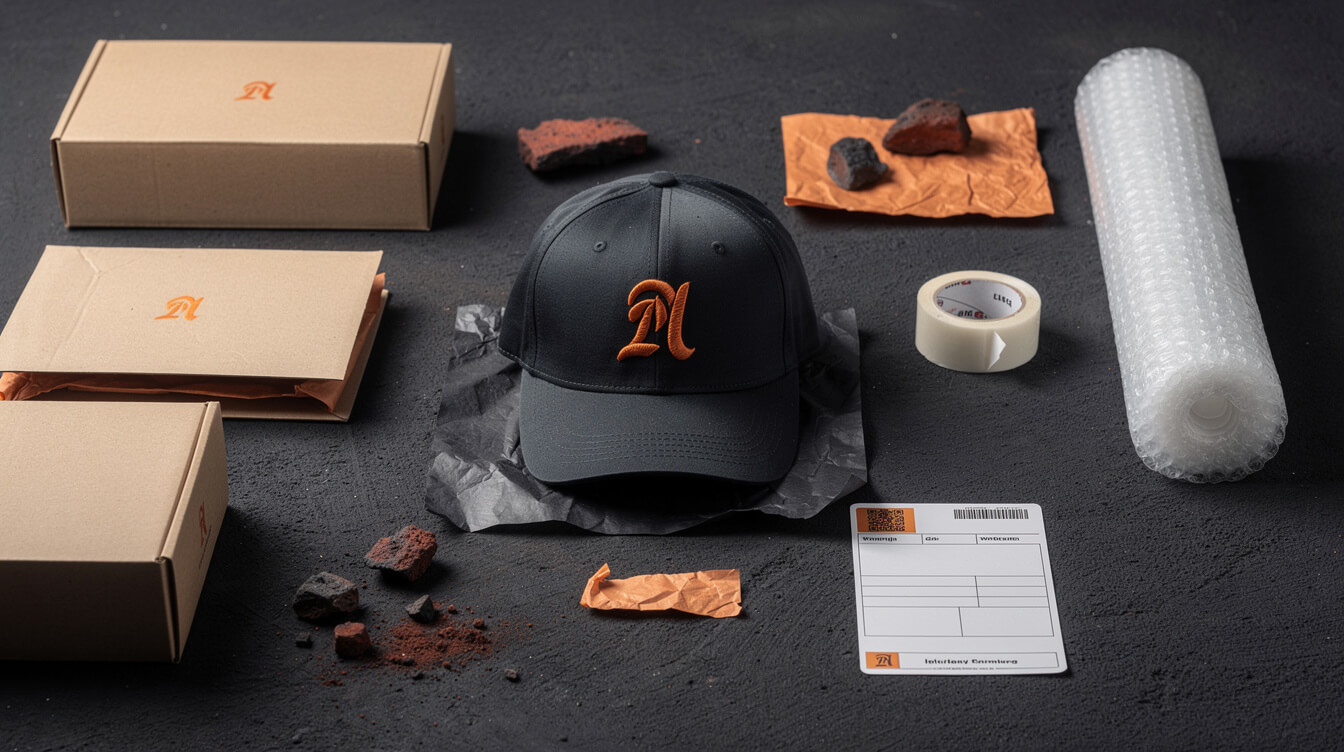
The no-minimum promise is what makes POD hat stores viable where traditional embroidery shops are not. Here is the setup process for a WooCommerce hat store using Printful:
- Prepare your logo file: Export as PNG with transparent background. Minimum 300 DPI. Simplify to 6 or fewer colors. Remove gradients. Vector-clean output is ideal.
- Install Printful’s WooCommerce plugin: Connect your WooCommerce store to Printful via the plugin (available in the WordPress plugin repository). Authenticate with your Printful account.
- Select your hat SKU: In Printful’s product catalog, navigate to Hats and Headwear. Select your style (Richardson 112, Yupoong, Flexfit, etc.). Choose the front panel as the embroidery placement.
- Submit your design for digitization: Upload your logo file. Printful’s system will flag any issues with thread count or color limits. Pay the $5.95 digitization fee on first submission.
- Set your retail price: Apply your markup. For a $15 base hat with shipping at $6, a retail price of $38 to $42 is typical. At $40 retail, you clear approximately $19 before payment processing.
- Publish the product: Sync the product to WooCommerce. Your listing goes live. When a customer orders, Printful fulfills and ships directly. You never touch inventory.
The same process applies with Printify, with the additional step of choosing which print provider to route to. If you are comparing embroidery quality across providers, ordering a sample before setting your retail price is worth the cost of one unit.
For sellers adding hats to an existing POD store rather than building a standalone hat store, the setup is identical. You are adding a product category, not rebuilding your workflow. If your store already runs custom hoodie embroidery through Printful, your digitization workflow for hats is already familiar.
The real differentiation for a custom logo hat store is not the setup. Every competitor can set up the same Printful integration in an afternoon. The differentiation is the research behind the logo, the niche targeting that drives the right customer to your listing, and the unit economics discipline that keeps margin positive as volume grows.
Frequently asked questions about custom logo hats in POD
Do all POD providers offer embroidered hats? No. DTG printing providers typically do not offer embroidery. You need a provider that specializes in embroidery fulfillment. Printful and Printify (via select providers) are the most accessible options for WooCommerce sellers.
Can I sell hats on Printify for free? Yes, the base Printify plan is free. You pay the base product cost per order. Printify Premium ($24.99/month) adds a 20% discount on base prices. For hat stores, the break-even on Premium is approximately 8 to 10 hat orders per month depending on the SKU. The full Printify cost breakdown covers this in detail.
How long does embroidery fulfillment take compared to DTG? Embroidery typically adds 2 to 3 days to production time vs DTG. Printful’s standard production time for embroidered hats is 3 to 7 business days. Factor this into your shipping expectations when writing product descriptions.
What is the minimum number of colors for embroidery? There is no minimum, but most logos use at least 2 colors. The practical ceiling is 6 to 8 thread colors for most hat positions. More colors increase stitch complexity but do not meaningfully increase cost at POD volumes since the per-unit embroidery price is already fixed.
Can I offer custom hat embroidery as a service rather than selling pre-designed hats? Yes. Some POD sellers build a custom-order workflow where customers submit their own logos. This requires manual digitization review on each order and is operationally heavier than a standard POD catalog product. Most sellers running this model at scale move to WooCommerce specifically for the order management flexibility.
The bottom line on custom logo hats for POD sellers
Custom logo hats are a viable and high-margin POD product when you understand the embroidery fee structure, choose the right hat style for your niche, and pick the platform that does not erode your margin at scale. The unit economics work. The no-minimum model works. The providers are available.
What separates stores that build momentum from stores that stall at 10 orders is research. Knowing which hat style your audience wants before you build the listing. Understanding that the digitization fee is amortized, not permanent overhead. Running the Shopify fee math before you hit $5,000/month instead of after.
WooCommerce solves the platform fee problem. Printful or Printify solves the inventory problem. Research solves the niche problem. Those three combined are what a profitable custom logo hat store looks like in 2026.
Implement AI. 30x your throughput. Get a 30-min call with the founder.
Drop your details and book a free 30-minute discovery call. Personalized advice on your POD stack, your margin, and where AI fits. No pitch, no fluff.