Print on demand books: platform economics, royalty math, and the case for owning your distribution
Search “print on demand book” right now and every result you see is a platform trying to sell you on its own service. B&N Press wants you on B&N Press. Lulu wants you on Lulu. BookBaby paid for that ad slot. Not one editorial result compares these platforms honestly, and none of them cover what happens when you want to sell print on demand books through your own store rather than renting shelf space on someone else’s marketplace. This post does that comparison. Real royalty math, real unit economics, and a clear framework for deciding what the owned-store option actually costs or saves you.
What print on demand for books actually means (and why the SERP misleads you)

Print on demand for books works exactly the way it does for apparel: a customer places an order, the printer produces one copy, ships it directly. No warehouse. No inventory. No minimum run. The technology is reliable and the unit economics are predictable once you know what to look for.
The difference between book POD and t-shirt POD is the distribution layer. POD apparel platforms like Printful and Printify integrate with your WooCommerce or Shopify store. You own the customer relationship. The POD service is invisible infrastructure behind your brand.
Book POD platforms mostly want to invert that arrangement. B&N Press routes you through Barnes & Noble’s storefront. Lulu has its own marketplace. IngramSpark distributes to bookstores and libraries. You are creating the product on their platform and renting their distribution channel to reach readers.
That distinction matters more than most self-publishers realize. Renting distribution is not the same as owning a sales channel. When you sell through a platform, you do not get the customer’s email address. You do not control pricing beyond the floor the platform sets. You receive what the platform’s royalty formula produces, and the formula always favors the platform.
The SERP misleads you because every result has a financial interest in your choice. B&N Press makes money when you publish on B&N Press. Lulu earns its margin whether you sell 10 copies or 10,000. The independent editorial that compares all options without a stake in your decision is almost impossible to find. Until now.
This post covers both the platform model and the owned-store model, with actual numbers for both.
The 5 main book POD platforms compared: Lulu, BookBaby, B&N Press, The Book Patch, IngramSpark
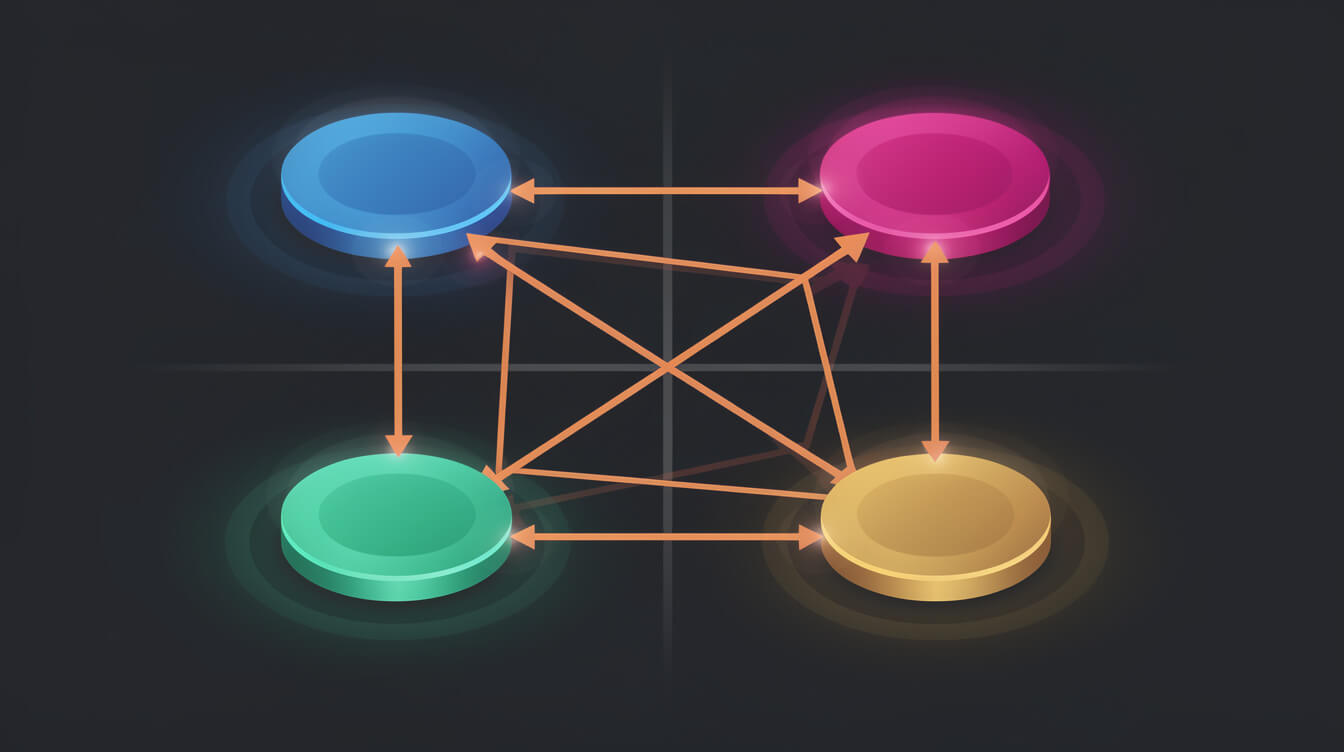
Here are the five platforms you will encounter most when researching print on demand for books, with their key characteristics explained without a sales pitch attached.
Lulu (lulu.com)
Lulu is one of the oldest book POD services and has the broadest format support. No setup fee for basic publishing. Lulu operates its own storefront and also distributes through Ingram’s network, which gets your book into Amazon, bookstores, and libraries. The economics differ significantly depending on which channel you sell through. Direct Lulu storefront sales pay you the full price minus print cost. Retail distribution through Ingram reduces your royalty substantially because the retailer takes a cut before Lulu takes its margin and before print cost is deducted.
BookBaby (bookbaby.com)
BookBaby positions itself as a full-service self-publishing company. Setup fees range from around $199 for print-only services to $399 or more for complete packages that include formatting, ISBN assignment, and distribution setup. The higher upfront cost reflects real services — if you need help formatting or want someone to handle distribution setup, BookBaby does that work. If you are comfortable handling those steps yourself, the setup fee represents cost without additional benefit.
B&N Press (press.barnesandnoble.com)
B&N Press is free to use and straightforward to set up. The catch is that it distributes only to Barnes & Noble’s own marketplace — the website and, in theory, B&N physical stores, though physical placement is not guaranteed. If your readers shop Barnes & Noble specifically, this channel is worth using. If they primarily shop Amazon, B&N Press adds a distribution channel without meaningful reach to your actual audience.
The Book Patch (thebookpatch.com)
The Book Patch is a smaller platform with no setup fee and no ISBN requirement, which makes it useful for authors who want to produce and sell books without entering the ISBN and retail distribution system. Print costs are competitive. Distribution reach is limited compared to IngramSpark or Lulu. The Book Patch suits authors who want physical copies for direct sale, speaking events, or small-scale retail placement without retail distribution complexity.
IngramSpark (ingramspark.com)
IngramSpark is the professional standard for broad retail and library distribution. Ingram operates the distribution infrastructure that most bookstores and libraries use. When you publish on IngramSpark with a 40-55% wholesale discount, your book becomes orderable from roughly 40,000 retailers and libraries worldwide. The setup fee is $49 per title, though this is waived through various ISBN programs. Payment runs on a net-45 schedule. IngramSpark is the platform professional authors use when retail and library placement matters. The royalty per copy sold through retail channels is lower than direct sales, but the distribution reach is unmatched by any other POD platform.
Royalty math: what you actually keep per book on each platform

Run the numbers on a typical trade paperback: 200 pages, 6×9 inches, black and white interior, priced at $14.99. These figures are representative estimates based on publicly available platform pricing; exact costs vary by specification and change over time.
Print cost baseline
Across all major platforms, a standard 200-page black and white 6×9 paperback costs roughly $3.50 to $4.75 to print. The spread reflects platform pricing models and paper type. Lulu and BookBaby tend toward the lower end of that range for standard specifications. IngramSpark is competitive within that range. Color interior printing adds approximately $0.07-0.08 per page, which makes color paperbacks significantly more expensive to produce.
Direct platform storefront (Lulu, BookBaby direct)
Selling directly through a platform’s own storefront, with no retailer intermediary: your royalty is the sale price minus print cost minus the platform’s percentage cut (typically 10-20% of your revenue). On a $14.99 book with a $4.00 print cost and a 20% platform cut: $14.99 minus $4.00 = $10.99, minus 20% = approximately $8.79 per copy. Not bad, but you are selling through someone else’s marketplace with no customer relationship.
Retail distribution via Ingram (IngramSpark, Lulu via Ingram)
This is where the math changes dramatically. Retail distribution requires offering a wholesale discount to booksellers, typically 40-55% of the retail price. At 55% discount on $14.99: the retailer earns $8.24. Lulu or IngramSpark deducts the print cost from the remaining $6.75. After a $4.00 print cost, approximately $2.75 remains. The platform takes its percentage from that amount. Your per-copy royalty lands in the $1.50-3.00 range.
That is the trade for broad retail distribution: you reach bookstores and libraries, but you earn $2 per copy instead of $8. A 500-copy year earns $1,000 through retail distribution versus $4,390 through direct sales. The difference is $3,390 — the cost of paying for distribution you do not own.
B&N Press
B&N Press calculates royalty at 70% of list price minus print cost. On $14.99: 70% = $10.49, minus print cost ~$4.25 = approximately $6.24 per copy. That royalty is only earned on sales through Barnes & Noble’s marketplace, which carries lower traffic than Amazon and lower conversion than direct-audience marketing.
The royalty math across all platforms reveals the same pattern: selling to your own audience through your own channel pays $6-11 per copy. Selling through platform distribution pays $2-4 per copy. The gap is the price of renting someone else’s audience rather than building and owning your own.
The WooCommerce option: selling POD books through your own store

Smash print-on-demand. Join the engine room.
One short email a week. Real numbers, real teardowns, the unfiltered economics behind every move.

You can sell print on demand books through a WooCommerce store. The mechanics involve connecting WooCommerce to a fulfillment partner that prints and ships books on demand. Lulu Direct and similar services provide this integration.
Lulu Direct has a WooCommerce plugin. You upload your book files to Lulu, configure the WooCommerce product with the title, description, and pricing you control, and when a customer orders through your store, Lulu prints and ships directly to them. Your store captures the sale. You get the customer’s email address. You control the price. You keep the margin above Lulu’s print cost, with no platform percentage cut and no retailer discount.
If you already run a WooCommerce store, the owned-store POD book approach is a natural product line extension. You are not building a new channel. You are adding a SKU to a store you already operate and already drive traffic to. The incremental cost of adding a POD book is minimal once the WooCommerce foundation is in place.
This matters especially for authors who are also running other businesses. A coach or consultant who writes a book for credibility and lead generation is not trying to compete with Amazon for book sales. They want the book to reach their specific audience and generate conversations. That goal is served by direct sales to their mailing list, not by retail distribution that pays $2 per copy to strangers.
For the comparison of what WooCommerce actually costs to operate — hosting, plugins, payment processing — versus Shopify’s 1% platform override fee on every sale, see our WooCommerce pricing breakdown for POD stores. The short version: WooCommerce running costs are lower than Shopify’s platform fee on any meaningful monthly revenue. That math applies to books the same as it applies to apparel.
The WooCommerce approach requires that you drive your own traffic. You are not tapping into Amazon’s SEO authority or B&N’s storefront traffic. That is the real constraint. Your mailing list, your existing audience, and your content marketing are your distribution. If those are strong, the WooCommerce math beats platform distribution on every copy sold.
If you want to automate the design-to-listing pipeline for your POD store, including the image generation and product listing steps that apply to books as much as apparel, MEGA handles the end-to-end pipeline so you are not managing every step manually.
When platform distribution makes sense (and when it does not)

Platform distribution is not a bad choice. It is a different trade with a different set of benefits and costs. The mistake is choosing it by default rather than by calculation.
Platform distribution makes sense when
- You want your book in physical bookstores. Only IngramSpark reliably achieves this. Libraries and independent bookstores order from Ingram’s catalog. Without IngramSpark, you are not in that system.
- You have no existing audience and are counting on platform discovery. A mainstream-appeal book with no existing readership benefits from being findable on Amazon and B&N through search and algorithm-driven recommendations.
- Your book targets a broad consumer audience. The platform’s traffic is your distribution. A general-interest title benefits more from platform visibility than a niche title serving a specific community.
- You want library placement. Libraries use Ingram’s catalog. If you want your book in libraries, IngramSpark is the path.
Platform distribution stops making sense when
- You already have an email list, a community, a blog, or any direct-access channel to your target reader. Your list is your distribution. Platform royalties of $2-3 per copy when you could earn $8-10 direct is a large gap to justify.
- Your book is niche. A highly specific book serving a defined community will not surface in platform discovery algorithms. Your marketing to that community is what sells the book, and that marketing can just as easily direct people to your own store.
- You are bundling the book with a course, a membership, or a service. Platforms cannot sell those add-ons. Your WooCommerce store can bundle them as one order.
- You are using the book as a lead magnet or authority piece. Your goal is to start conversations, not to maximize copy count. Direct purchase from your store captures the relationship platform sales never provide.
The worst outcome is defaulting to a platform because it feels like the path of least resistance, realizing years later that you have sold thousands of copies without a single customer email address to show for it. See also the Shopify fee math for why platform dependency compounds over time — the Shopify transaction fee breakdown applies the same logic to apparel sellers, and the arithmetic is identical for authors who outsource distribution without thinking through the cost.

Automate your POD pipeline end-to-end
MEGA generates complete, unique print-on-demand products in under 7 minutes. Research, image generation, sizing, mockups, titles, SEO, and live listings on WooCommerce and Printful — all automated. No Canva workflow. No manual listing process.
AI in book cover creation: how the design pipeline applies to book POD

Book cover design is the single largest discretionary expense most self-publishers face outside of editing. A professional designer charges $300 to $1,500 per cover. Revision cycles cost extra. For an author building a series, that cost multiplies.
AI image generation changes this math. The same pipeline that MEGA uses to generate product images for apparel POD stores applies directly to book cover creation. The workflow is: generate the cover background image via an AI model, compress it, and then add typography separately in a layout tool. The result is a professional-looking cover at a fraction of traditional design costs.
Three important differences between book cover generation and apparel design
First, book covers almost always include typography — title, subtitle, author name. AI models are unreliable at text rendering. The practical workflow is to generate the visual background with AI and then add the text layer in Canva, Affinity Publisher, or Adobe InDesign. Never ask the AI to generate readable text on a book cover. It will produce garbled approximations that require expensive correction.
Second, the aspect ratio for book covers is precise. A 6×9 trade paperback front cover requires a 2:3 aspect ratio image at 300 DPI for print quality — 1800×2700 pixels for front cover only. A full wrap cover (front, spine, back) requires a width calculation based on page count, paper type, and the specific printer’s bleed specifications. Generate at the correct aspect ratio from the start to avoid distortion in layout.
Third, genre conventions are strong in book publishing and readers recognize violations of those conventions immediately. Romance covers have established visual codes. Thriller covers use specific lighting and color palettes. Cozy mystery covers have a recognizable warmth and illustrative quality. Your AI prompts need to work within those conventions. Research 10 to 15 comparable covers in your genre before writing your prompt, and describe the visual elements that define the genre rather than fighting them.
A practical AI workflow for book cover design
- Research genre conventions and collect 10 to 15 reference covers from comparable titles.
- Draft a detailed prompt describing visual elements, mood, color palette, composition, and lighting. Be specific about what the image should convey, not just what it should contain.
- Generate 6 to 10 variations using a high-quality model like Flux 2 Pro.
- Select the strongest background image.
- Add typography in a layout tool. Match font choices to genre conventions.
- Export at 300 DPI in the dimensions your POD platform requires.
For authors producing a series, this workflow scales efficiently. A designer charging $400 per cover for a 10-book series is $4,000 in design costs. AI generation at $0.08 per image with your own layout work is under $100 for the same series, including iterations and rejected variations. The per-book economics shift meaningfully at scale.
The owned-vs-rented decision: what every self-publishing author should calculate first

Before you upload your manuscript to any platform, run this calculation. It takes five minutes and makes every subsequent decision clearer.
Step 1: Estimate your realistic annual units
Be honest rather than optimistic. 100 copies per year is achievable for most authors with any existing audience and basic marketing. 500 copies is a strong performance for a self-published author without major platform backing. 1,000 copies or more represents a real business with consistent marketing behind it.
Step 2: Calculate platform royalty per copy
Use $2.50 as a conservative estimate for retail distribution via IngramSpark with a 55% wholesale discount on a $14.99 paperback. This represents the royalty after print cost, retailer discount, and platform fees on a typical retail distribution sale.
Step 3: Calculate direct royalty per copy
Price at $14.99, estimate $4.25 in print cost through Lulu Direct, and assume no platform percentage cut on your WooCommerce store. Direct royalty per copy: approximately $10.74.
Step 4: Calculate the annual distribution cost
Difference per copy: $10.74 minus $2.50 = $8.24.
At 500 copies per year, the difference between platform retail distribution and direct sales is $4,120. That $4,120 is what the platform’s distribution network costs you in foregone revenue. The question is not whether platform distribution has costs — it clearly does. The question is whether those costs buy you access to readers you could not otherwise reach.
What the calculation tells you
If you have an email list of 2,000 people and 5% buy your book, that is 100 direct sales earning $10.74 each. If you also distribute through IngramSpark and retail channels produce another 200 copies at $2.50 each, your total annual revenue on 300 copies is $1,574. If you could drive those additional 200 copies directly through marketing, your revenue on 300 copies would be $3,222. The difference is $1,648 per year — the annual subsidy your marketing is paying to retail distribution.
The calculation does not mean direct is always better. It means you should make the calculation before choosing. An author with no existing audience and a mainstream-appeal title may find that IngramSpark’s retail and library distribution generates 400 copies that would not exist otherwise. 400 copies at $2.50 is $1,000 in royalties that would not exist from a direct-only approach with no traffic. In that case, the platform’s distribution network is generating revenue, not extracting it.
The authors who use this framework tend to arrive at a hybrid: publish on IngramSpark for library and bookstore placement while also selling directly through a WooCommerce store to their own audience. The two channels serve different readers and do not cannibalize each other. Platform distribution captures the reader who finds you through search and retail. Direct sales capture the reader who already trusts you. The royalties are different. The customer relationship is different. The marketing required is different. Both can exist in parallel.
Frequently asked questions about print on demand books
Can I publish a print on demand book on Amazon? Yes. Amazon KDP (Kindle Direct Publishing) is the largest platform for both ebook and print on demand paperback distribution. Print on demand through Amazon KDP prints and ships from Amazon’s fulfillment infrastructure. Royalty rates depend on format, pricing, and distribution options chosen.
Is print on demand quality good enough for professional books? For most trade paperback applications, yes. Print on demand quality has improved substantially. Standard black and white text printing is comparable to offset printing for the reader’s experience. Full-color printing has higher per-copy costs and some quality variation depending on the print facility. For photography-heavy books or premium design applications, offset printing for larger print runs may still produce better results.
Can I use print on demand books for a Shopify store? Yes, but the Shopify platform fee applies to every sale. For a self-publishing author doing meaningful volume, the 1% Shopify override fee plus transaction fees add up. The same WooCommerce model that works for apparel POD sellers works for book POD — lower platform overhead, same fulfillment infrastructure through services like Lulu Direct.
What file format does IngramSpark require? IngramSpark requires PDF for both interior and cover files. Interior PDFs must be print-ready with embedded fonts and images at 300 DPI. Cover PDFs must include bleed (0.125 inches on all sides). IngramSpark provides cover templates with correct spine width calculations based on your page count and paper selection.
How long does it take for a print on demand book to ship? Production time is typically 3 to 5 business days for most POD services, after which standard shipping time applies. The total delivery window from order placement is usually 7 to 14 days for standard shipping within the US. Express options reduce this at higher shipping cost.
Final thoughts on print on demand books
The print on demand book industry gives authors more production options than any point in publishing history. The barrier to having a physical book in customers’ hands is now $49 and an afternoon of setup work. That is genuinely good for authors.
The complexity is in the distribution decision. Every platform presents itself as the obvious choice. None of them will tell you to sell direct through your own store, because that outcome does not benefit them. The royalty math and the owned-vs-rented calculation are tools that belong in every author’s decision-making process before they upload a single file.
If you already run a WooCommerce store for other products, adding POD books is a natural extension. If you are building an audience through content and want to monetize that audience with a physical book, the direct economics are compelling. If you want broad retail and library distribution and have no existing audience, IngramSpark is the professional tool for that goal.
The decision is yours to make. The math is available. Make it deliberately.

Implement AI. 30x your throughput. Get a 30-min call with the founder.
Drop your details and book a free 30-minute discovery call. Personalized advice on your POD stack, your margin, and where AI fits. No pitch, no fluff.