Fast custom t-shirt printing: when rush services win and when POD automation beats them
Fast custom t-shirt printing means different things depending on what you actually need. For a corporate buyer ordering 48 shirts before Friday’s conference, fast means same-day production and next-morning delivery. For a print-on-demand seller building a scalable apparel catalog, fast means getting a new design live and customer-ready in under seven minutes, with no minimum order quantities, no upfront capital, and no inventory risk. Both definitions are legitimate. But the economics behind them are completely different, and conflating them is how sellers end up with $800 tied up in unsold shirts in the wrong sizes.
This article does the math. We compare rush printing services against print-on-demand automation on cost per unit, capital requirements, overstock risk, and return rates. Then we build a simple decision framework: use a rush service when you have a fixed headcount, a fixed deadline, and confident size data. Use POD automation when you are running a store with unknown demand and a growing catalog. The two models are not interchangeable, and pretending they are costs sellers money on both sides.
What “fast” actually means in custom t-shirt printing

The custom apparel market uses “fast” to describe at least three distinct production tiers. Each tier has different minimums, different costs, and different risk profiles. Understanding the difference is the first step in making the right call for your specific order.
Same-day and overnight rush services include operations like SameDayTees and RushOrderTees. These promise production and ship-out within 24 hours of artwork approval. Minimums typically run 24-48 shirts per design and color combination. Artwork must be submitted in print-ready format. The rush premium on same-day service adds 40-60% above standard production rates.
Standard rush services include CustomInk, BoltPrinting, UberPrints, and most local screen printers offering 3-5 business day production. Minimums typically start at 12 shirts. The rush premium is lower, but upfront capital is still required before production begins. You pay for all units before any of them ship.
Print-on-demand fulfillment via Printful, Printify, or Gooten operates on a 3-7 business day production window with no minimums. Each unit is produced only after a customer places and pays for an order. You never front capital. You never own unsold inventory.
One clarification that matters: every timeline above is order-to-ship, not order-to-customer. Shipping adds 2-5 business days on top of production. A “same-day” rush order still takes 2-3 days to reach the buyer unless you pay for overnight freight at $8-15 per shipment. A POD order with 4-day production and standard ground shipping lands in 7-9 business days for domestic US customers. That gap is real but smaller than the headline numbers suggest.
For a deeper look at the technology differences between production methods, see our guide to DTG printing vs screen printing, which covers how underlying print technology affects quality, cost, and minimum order requirements.
Rush print service economics: minimum orders, unit costs, and the capital you front
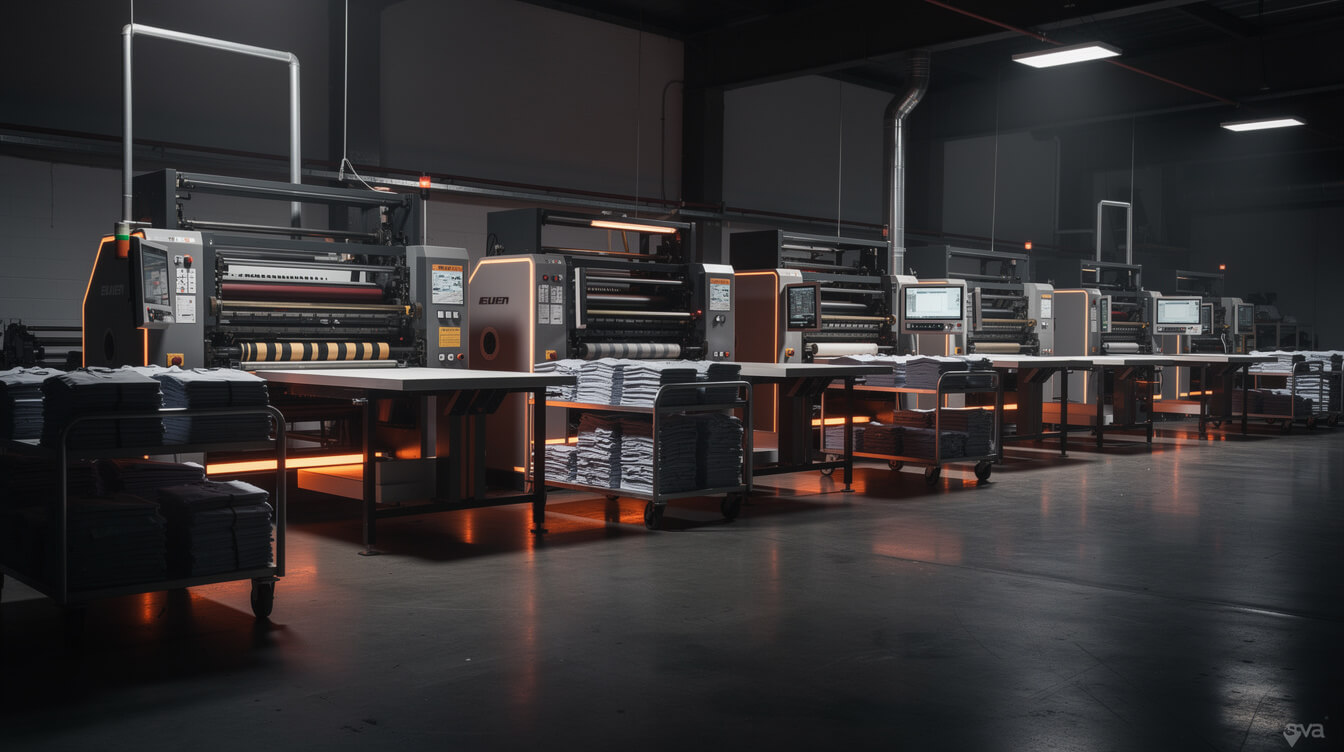
Rush printing services trade speed for two requirements: a minimum order quantity and payment in full before production begins. Both requirements have significant implications for your cash flow and risk exposure.
Minimum order quantities for rush tiers (2026 rates):
- SameDayTees same-day: 24 units minimum per design and color
- RushOrderTees rush: 12 units minimum (standard rush), 24 (same-day)
- CustomInk rush: 6 units minimum for longer lead times, 12+ for rush tiers
- Local screen printers: typically 12-24 minimum for rush jobs
Unit cost breakdown at 24 units:
A blank Gildan 64000 t-shirt in bulk quantities costs $2.50-4.00 per unit depending on color and supplier. Screen printing for a 1-2 color design adds $3-6 per shirt at 24 units, dropping to $1.50-3.00 per shirt at 100+ units. That puts the base COGS at $6-10 per shirt before any rush premium.
Rush surcharges add 25-50% on top of standard production costs. A 24-shirt order at $8/shirt standard cost becomes $10-12/shirt with the rush premium applied. Add shipping: ground delivery runs $0.75-2.00 per shirt; overnight freight runs $3-5 per shirt for a 24-unit box.
A 24-shirt same-day order from a mid-market service typically runs $240-360 in total cost, paid upfront before production starts. Most services require artwork approval within 2-3 hours of order placement for same-day qualification.
The cost curve at higher volumes:
Rush services offer meaningful volume discounts. At 50 units, base production costs often drop to $7-9/shirt for basic designs. At 100 units, $5-7/shirt becomes achievable with competitive quoting. These discounts are where rush services generate their clearest economic argument. The break-even calculation between rush and POD depends heavily on these volume thresholds, covered in the next section.
For sellers considering alternatives to rush services for smaller quantities, the t-shirt printing machine guide covers the capital costs and break-even math for owning your own DTG or heat-press setup.
POD automation economics: zero minimums, 3-7 day fulfillment, no inventory

Print-on-demand fulfillment eliminates the minimum order requirement and the upfront capital requirement simultaneously. Each unit is produced after a customer orders it. You never pay before you sell.
Unit costs at Printful (2026 rates):
- Gildan 64000 unisex tee: $12.95 base (white), $13.95 (colored)
- Bella+Canvas 3001: $16.95-17.95 depending on color
- Next Level 3600: $14.95-15.95
- Priority production upgrade: $4.95-6.95 per order (reduces production to 1-3 business days)
Unit costs at Printify (via print partner network, 2026):
- Gildan 64000 via Monster Digital: $8.50-10.50
- Bella+Canvas 3001 via SwiftPOD: $11.00-14.50
- District M001 via Printify Express: $12.50-14.00
Printify’s lower unit costs come from routing orders through a distributed print provider network. Quality control varies by provider. Printful’s higher unit costs include their own facility QC, centralized production, and a published 0.23% defect rate. For sellers where consistent quality matters more than per-unit margin, Printful’s premium is typically worth it.
The platform fee variable most sellers ignore:
Where your POD store lives determines a second, often-ignored cost. Shopify Basic at $39/month includes a 1% transaction fee on every sale when using third-party payment processors. On a $25 t-shirt at 500 monthly sales, that 1% transaction fee costs $125/month in pure overhead. Add the $39 subscription and you pay $164/month for the privilege of selling your products. WooCommerce on flat hosting costs $10-15/month with zero transaction fees on the same volume.
At $1,500-1,800 per year in Shopify fees versus $120-180 per year in WooCommerce hosting, the platform choice changes the economics of every single sale you make. Our full breakdown is in the WooCommerce pricing guide for POD stores.
POD production timelines at Printful run 2-5 business days for apparel. Bella+Canvas and premium blanks tend toward the longer end. Standard Gildan blanks typically ship within 2-3 business days. Add standard ground shipping (3-5 business days domestic) and total order-to-delivery is 5-10 business days for most US customers. That is 2-7 days slower than a comparable rush service. But you never bought 24 shirts upfront, and that changes the risk equation entirely.
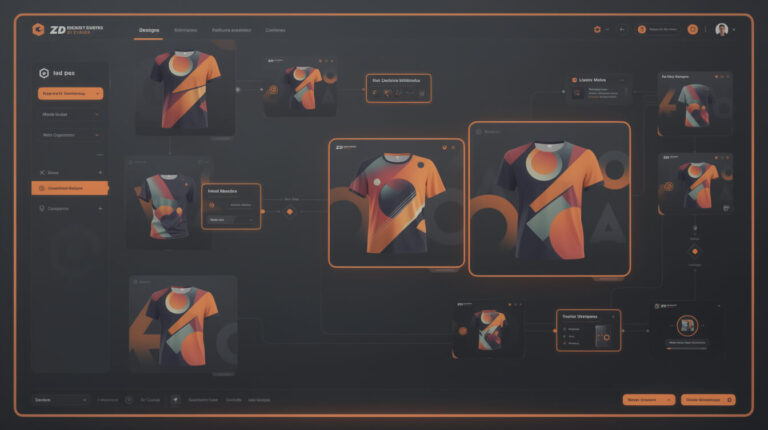
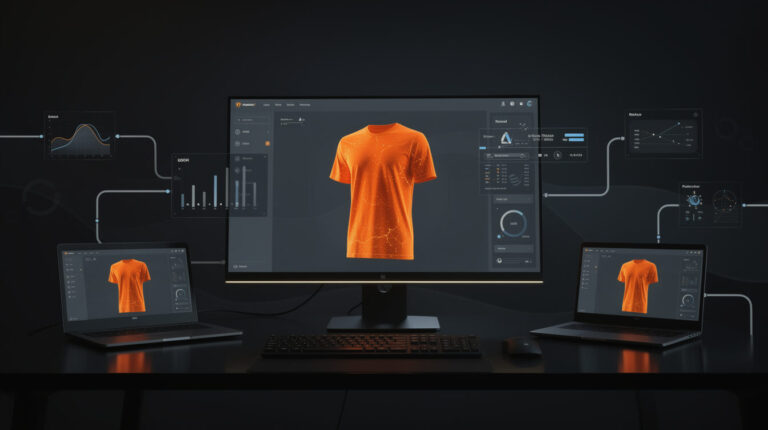
The MEGA platform automates the entire POD setup pipeline. A new t-shirt product goes from niche idea to live WooCommerce listing in under seven minutes, including AI-generated design, Printful integration, sizing configuration, mockup creation, SEO title, and meta description. Try MEGA if you want to see how the pipeline runs end-to-end on your specific niche.
The break-even math: when rush services beat POD on cost per unit

Smash print-on-demand. Join the engine room.
One short email a week. Real numbers, real teardowns, the unfiltered economics behind every move.

The unit cost comparison between rush printing and POD depends on volume and on sell-through rate. Most sellers focus on the volume side and ignore the sell-through side. That is where the math goes wrong.
At 24 units, rush vs POD:
- Rush service (mid-market, 2-color screen print, standard rush): $11-14/shirt all-in
- POD via Printful (Gildan 64000, colored): $13.95/shirt COGS, customer pays shipping
At 24 units, rush and POD are within $0-3 per shirt of each other. The rush buyer saves at most $72 on 24 shirts over POD at 100% sell-through. At 80% sell-through (selling 19 of 24 shirts), the rush buyer holds 5 unsold shirts at $11-14 each. The bulk discount has mostly dissolved into dead inventory cost.
At 100 units, rush vs POD:
- Rush service at 100 units: $7-9/shirt all-in (volume discount applied)
- POD via Printful at 100 units: $13.95/shirt (no volume discount, each unit produced on demand)
At 100 units, the rush savings are $4-7 per shirt, or $400-700 on the full run assuming 100% sell-through. At 85% sell-through (selling 85 of 100 shirts), you paid for 15 unsold shirts at $7-9 each. That is $105-135 in sunk COGS. The net savings over POD narrow to $265-565. That is still a real saving, but it depends entirely on moving 85 out of 100 units.
The risk-adjusted formula:
Rush savings only materialize at sell-through rates approaching 100%. Every unsold unit converts the bulk discount into a loss. For a seller with verified demand data (a pre-order list, a confirmed event headcount, a known customer base), the sell-through risk is low. For a seller building a new catalog without prior sales data, the risk is high.
This is why the rush vs POD decision is not a cost-per-unit question. It is a sell-through certainty question. When certainty is high, rush services offer real savings. When certainty is low, POD eliminates the risk entirely at a modest per-unit premium.
For sellers exploring how print technology affects cost curves at different run lengths, the DTG vs DTF guide for POD sellers covers how production method affects cost and quality across volume tiers.
The hidden cost of speed: returns, overstock, and wrong-size risk

The unit cost and sell-through calculations above assume you got the sizes right. For rush orders, that assumption carries more risk than most sellers recognize.
Size distribution guesswork:
Rush orders require you to specify per-size quantities before printing. Most services lock your size breakdown at order placement. For a general adult unisex apparel run targeting an unknown customer base, the industry-standard size distribution approximates: S 10%, M 30%, L 35%, XL 20%, 2XL 5%. But that is an average. Your actual customer base may skew differently based on geography, age, gender mix, and product type.
A seller whose customers skew toward larger sizes ordering to a standard distribution ends up with too many smalls and not enough XLs. The XLs sell out. The smalls sit unsold. Every unsold unit in the wrong size is a full unit of COGS with zero revenue recovery.
POD stores accumulate live size data from their first actual sales. After 30-60 days, you know your real size distribution from customers who paid for what they wanted. Rush buyers must predict that distribution on day zero.
Overstock consequences:
At $13/shirt COGS, six unsold shirts from a 24-unit rush order equals $78 in dead inventory. You have three options: sell them at a loss in a clearance channel, hold them indefinitely, or write off the loss. None of these recovery paths exist in a POD model. POD produces nothing until it is sold. There is no overstock scenario by design.
For sellers who have considered printing at home to avoid minimum order requirements, the economics of owning a heat press or DTG printer are covered in our t-shirt printing at home guide, including the capital cost breakeven timeline compared to POD fulfillment.
Quality and defect risk in rush production:
Rush printing runs under time pressure, which has implications for quality control. Volume rush services operating at 24-hour turnaround typically carry defect rates of 1-3% on print quality, covering misalignment, ink adhesion failures, and underbase issues. On a 24-shirt order, that is a 0-1 unit defect expectation. Most rush services will reprint defective units, but the replacement takes 1-3 additional days, which defeats the speed rationale of the rush order.
Printful’s published defect rate is 0.23% across all products. When a POD defect occurs, Printful reprints and re-ships at no cost to the seller. The customer receives a replacement. The seller never handles a defective unit or pays a reprint fee.
Generate a t-shirt product in under 7 minutes. Zero minimums, zero inventory.
MEGA runs the complete POD pipeline from niche idea to live WooCommerce listing. AI design, Printful integration, sizing, mockup, SEO title, and meta description. No Canva. No manual listing work. No shirts pre-purchased.
When rush printing wins: events, corporate orders, and urgent one-offs
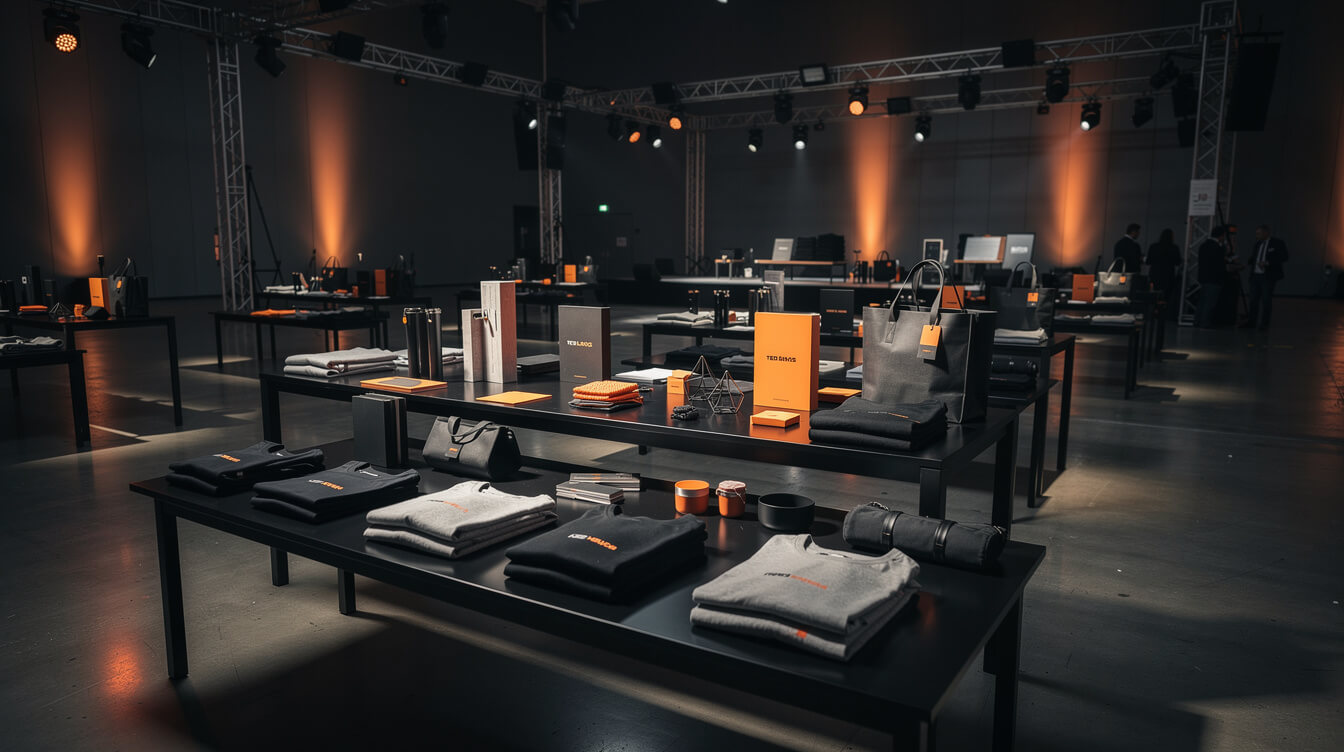
Rush print services exist because certain scenarios genuinely require them. Understanding when they are the right tool prevents sellers from either over-relying on them or dismissing them when they would actually help.
Fixed-date events:
A charity 5K with 60 registered participants all wearing the same shirt needs those shirts in-hand before race day. The organizer knows the headcount precisely. Registration data provides size distribution. The event date is fixed. This is the ideal rush print scenario: known quantity, known sizes, hard deadline, no sell-through uncertainty. The upfront capital commitment is justified because every shirt has a guaranteed recipient.
Corporate uniform and onboarding orders:
A company onboarding 30 new hires in the same week needs branded shirts by Monday. HR has the headcount. The shirts are a business expense, not a revenue-generating inventory item. The sell-through question does not apply. Every shirt gets a recipient. At this scale and certainty level, the rush service’s upfront capital requirement is a budget line item, not a risk.
Promotional giveaways and conference swag:
Conference booth swag, event giveaways, and trade show merchandise operate on known quantities delivered to known venues. You are distributing shirts, not selling them to an unknown customer base. Unit cost optimization matters more than sell-through risk because every unit has a planned recipient. Rush services fit this model well when the event date is close enough to make POD’s 5-10 day window unworkable.
What these use cases share:
Every legitimate rush printing use case involves certainty: you know how many units you need, you have reasonable size data, and a hard deadline exists that POD cannot meet. Rush printing is a logistics tool for defined distribution events. It is not a substitute for a scalable e-commerce strategy, and sellers who apply rush printing economics to ongoing stores end up with capital tied up in speculative inventory.
When POD automation wins: ongoing stores, scaling catalogs, and zero capital

For e-commerce sellers building a scalable product catalog, print-on-demand automation is not a compromise on speed. It is a structural advantage on economics, risk, and capital efficiency.
Zero capital, unlimited SKU potential:
A POD seller on WooCommerce can list 500 t-shirt designs with zero upfront investment. Each design is a potential revenue stream. None of them require a minimum order commitment. The catalog expands based on what actually sells, not on what the seller pre-purchased. A rush-printing seller who wants to test 500 designs at 12-unit minimums would need to commit $60,000-90,000 in speculative inventory at current rush service rates. That comparison makes the capital efficiency argument concrete.
Real throughput from the MEGA pipeline:
The MEGA platform generated 47 complete POD products in one afternoon during an internal test. Each product included an AI-generated design, Printful integration, size variants, a hosted mockup, an SEO-optimized title, and a meta description, all published live to WooCommerce. Total capital spent on inventory: $0. Zero shirts pre-purchased. Zero size predictions required before a single sale.
Running that same test through a rush printing model would require placing 47 separate orders at 12-unit minimums. At $100 average per 12-shirt run, that is $4,700 in speculative inventory across 47 unproven designs. The comparison is not close.
The WooCommerce advantage compounds at scale:
A POD seller on Shopify running 500 monthly sales at $25 average order value pays approximately $39/month in platform fees plus $125/month in 1% transaction fees on the Basic plan, for $164/month in platform overhead, or $1,968/year. On WooCommerce with flat hosting, the same operation costs $10-15/month with zero transaction fees. The $1,788-1,848 annual savings goes directly to margin.
At 1,000 monthly sales, the Shopify overhead doubles. The math does not improve with scale on Shopify. WooCommerce is flat cost at any volume.
The catalog filters itself:
POD sellers do not need sell-through certainty because they never buy inventory in advance. The design that gets zero sales costs the seller nothing beyond the time spent creating the listing. The design that gets 200 monthly sales generates 200 individual production orders, each fulfilled and shipped by the print partner. Winning designs scale automatically. Losing designs simply generate no orders and no losses.
This is the fundamental structural advantage of print-on-demand over any bulk printing model. The catalog learns from real demand without capital at risk during the learning period. That is what “fast” actually means for an e-commerce seller building a business, not 24-hour rush delivery on a batch of pre-purchased shirts.
Choosing between rush printing and POD: the decision framework
The rush vs POD question reduces to a single variable: sell-through certainty.
Use a rush printing service when:
- You have a fixed headcount for a defined event or distribution
- You have reliable size data from registration records, HR files, or prior order history
- The event date is within 1-5 business days, making POD fulfillment impossible
- You are distributing shirts as a marketing or corporate expense, not selling them to unknown buyers
- Your capital is available and the buy-in is a committed budget line, not speculative inventory
Use print-on-demand automation when:
- You are running an e-commerce store with unknown demand across a growing catalog
- You want to test multiple designs without committing capital to each one
- Your customer size distribution is unknown or variable by niche
- Capital efficiency and zero inventory risk are higher priorities than per-unit cost optimization
- You want to scale the catalog without scaling capital requirements proportionally
Fast custom t-shirt printing, properly defined, means getting the right shirt to the right person on the right timeline at the right cost. Rush services deliver that for defined distribution events. POD automation delivers that for everything else: at zero capital risk, across an unlimited catalog, with a WooCommerce cost structure that actually supports profitability at scale.

Implement AI. 30x your throughput. Get a 30-min call with the founder.
Drop your details and book a free 30-minute discovery call. Personalized advice on your POD stack, your margin, and where AI fits. No pitch, no fluff.