Print on demand clothing brands: what successful ones do differently and how to build one
Print on demand clothing brands come in every shape and size, but only a fraction of them build something that compounds over time. The difference is rarely the product. It is the system behind it. This post breaks down what separates a one-product POD store from a real clothing brand, the economics of the three main fulfillment partners, and the honest math on Shopify versus WooCommerce for sellers who want to keep more of what they earn.
If you have been researching print on demand clothing brands and found nothing but lists of example stores, this is the post the SERP is missing. The goal here is to show you how to build one, not just admire the ones that already exist.
What a print on demand clothing brand actually is (vs a one-product store)
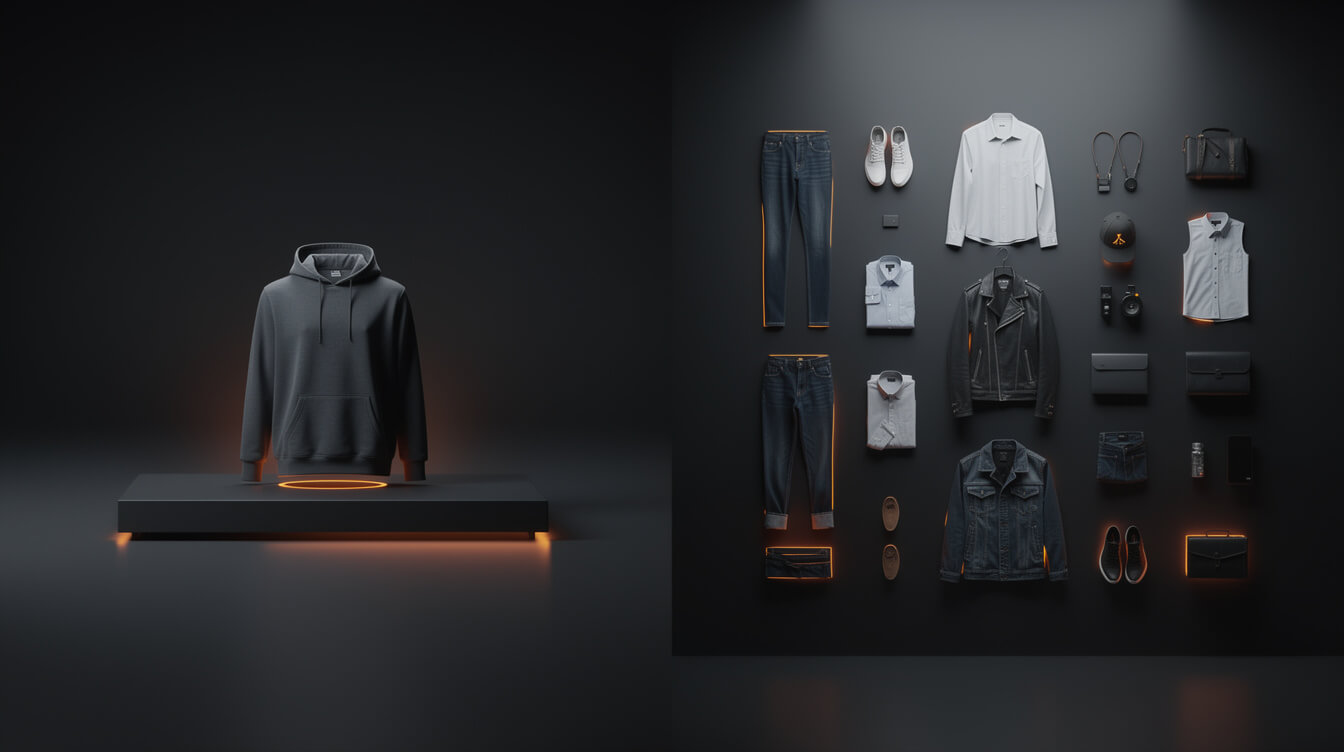
Most POD sellers start with a single design on a single product. That is a fine way to test the market. It is not a brand. A brand has a point of view, a catalog with internal coherence, and a reason for a customer to come back.
A one-product POD store is essentially a test. You pick a niche, design a graphic, put it on a t-shirt, run some traffic, and see what happens. If it works, great. If it does not, you pivot. The economics are low-risk, and the skills transfer.
A print on demand clothing brand goes further. It has:
- A defined niche with multiple product angles within it
- A visual identity that carries across designs (color palette, typography style, art direction)
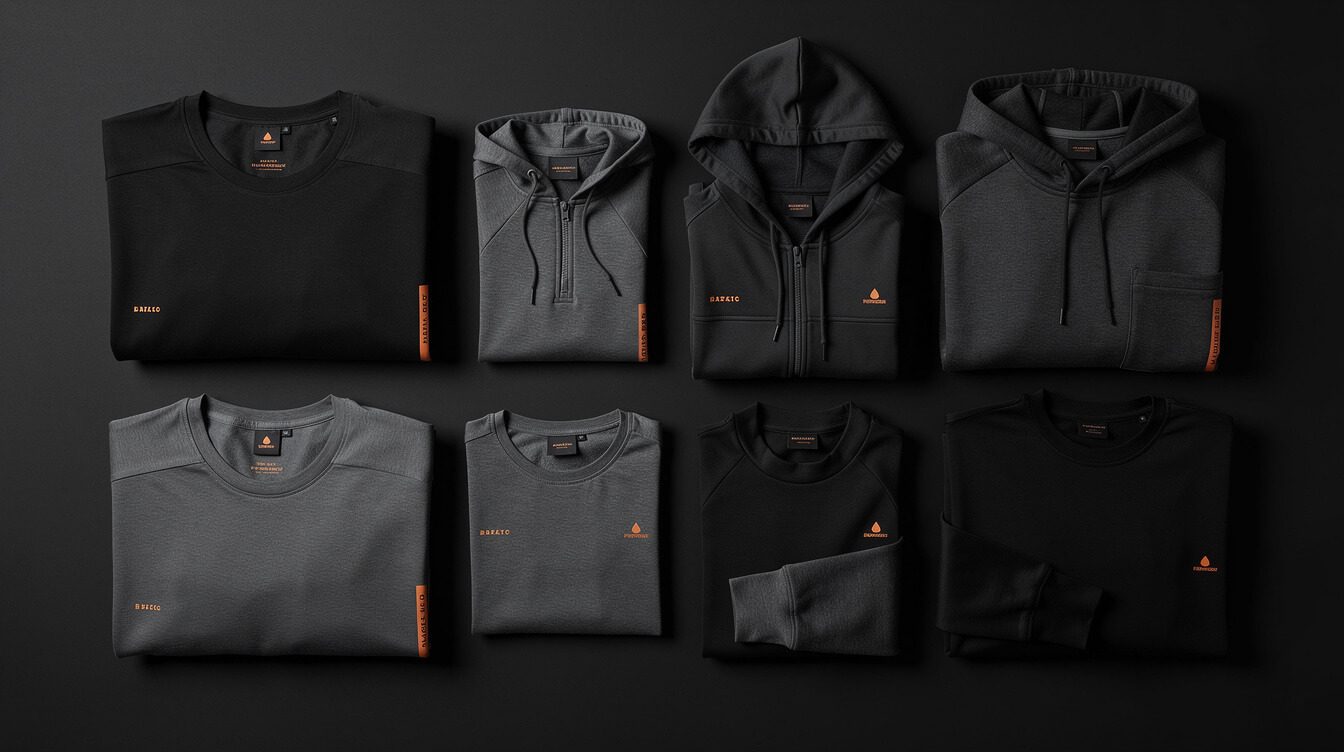
- A catalog deep enough that a customer browsing it feels like they are shopping a real store, not a one-off listing
- A fulfillment pipeline that can add new products without the founder doing 6 hours of Canva work per SKU
The catalog depth question is where most sellers get stuck. Building 30 coherent products by hand is genuinely hard. Building 30 coherent products with an automated research-and-generation pipeline is a different problem entirely, and that distinction is what determines whether you end up with a brand or just a file folder full of designs.
The other distinction is ownership. A listing on Redbubble or Etsy is not a brand. It is a presence on someone else’s platform. A brand means you own the storefront, the customer list, and the margin. WooCommerce on your own domain gives you that. The marketplace route gives you traffic you do not control and margins the platform clips first.
5 things successful POD clothing brands have in common
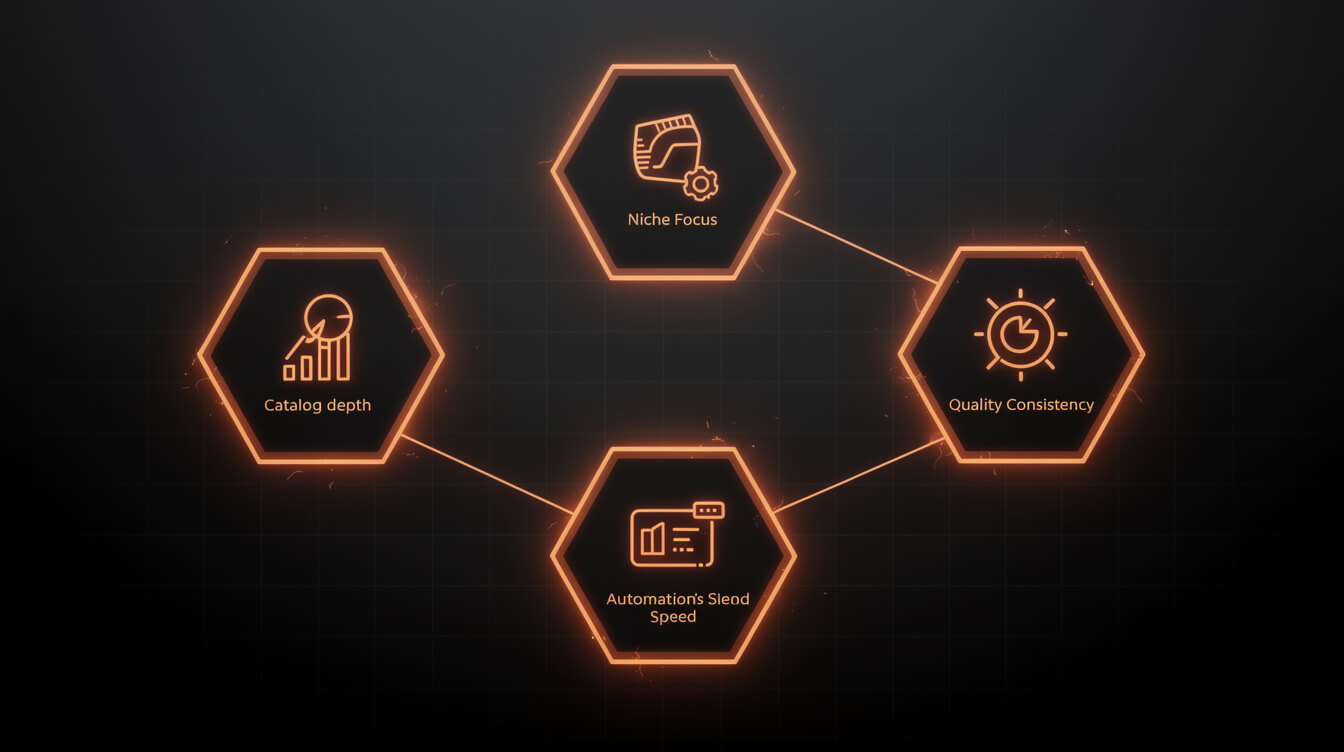
After studying what actually works in the POD clothing space, five patterns repeat across every durable brand, regardless of niche.
1. They picked a niche narrow enough to own
“Dog lovers” is not a niche. “Labrador retriever owners who run 5Ks” is closer. The specificity does two things: it makes the buyer feel seen, and it makes SEO and paid targeting significantly cheaper. Broad niches have broad competition. Tight niches have buyers who feel like you made this just for them.
2. They have catalog depth in that niche
Successful brands are not built on one SKU. They have t-shirts, hoodies, tote bags, hats, and phone cases, all in the same niche DNA. A customer who finds the brand via one product has more to buy when they like what they see. Depth also helps SEO: each product page is a long-tail keyword opportunity.
3. They treat design consistency as non-negotiable
The brands that last have a recognizable look. Same color palette. Same illustration style. Same tone in the listing copy. A customer looking at 20 products from a strong brand should immediately feel the coherence. This is not about hiring a top designer. It is about having a system that generates within defined constraints.
4. They know their unit economics cold
Successful POD clothing brand operators know their cost per item, their average order value, their platform fees, and their margin per sale. They do not guess. They do not discover that Shopify’s 1% transaction override turned a 30% gross margin into 18% after a year of scaling. They ran the math first.
5. They built a customer list, not just a following
Social following is rented attention. An email list is owned. The POD brands with staying power capture email from day one, whether through a lead magnet, a post-purchase sequence, or a simple newsletter. When a platform changes its algorithm or a supplier has a fulfillment issue, the brands with an email list can communicate directly with their customers.
The economics: Printful vs Printify vs Gooten margins for clothing

The economics of print on demand clothing vary meaningfully between platforms, and the difference compounds at scale. Here is a realistic breakdown for a standard unisex t-shirt as of 2026.
Printful
Printful’s base cost for a Bella+Canvas 3001 is typically $12.95-$14.95 depending on size, with a print charge added on top. A standard one-color front print brings you to roughly $15-17 landed cost. If you sell at $29.99, you are looking at a gross margin of $12-15 per unit, or 40-50%.
Printful’s advantage is quality consistency and a wide product catalog. The tradeoff is higher base costs than Printify or Gooten. You are paying for their direct-to-garment equipment and quality control.
For a deep review of Printful’s product range and pricing, the Printful review 2026 covers the catalog in detail.
Printify
Printify is a marketplace model. You choose from a network of print providers, and the base costs are often 15-25% lower than Printful. A comparable Bella+Canvas t-shirt via Printify’s Printify Express network runs $10-12. That is 3-5 dollars more margin per unit at the same retail price.
The tradeoff is quality consistency varies by provider. A 4.8-star provider might drop to 4.2 after 6 months. You are managing a vendor network, not a single supplier. For how the platform works in practice, see how Printify works.
Gooten
Gooten sits in the middle. A 525-product catalog (larger than both Printful and Printify’s common SKUs) with pricing that sits between the two. Gooten’s WooCommerce integration is cleaner than Printify’s and comparable to Printful’s. For sellers building a WooCommerce-first brand, Gooten deserves a look that most POD content skips entirely.
The real margin killer: print method
More than the supplier choice, your print method determines your margins at scale. DTG is the standard for POD, but it has different economics than screen print transfers. A DTG vs DTF comparison for POD sellers covers the cost breakdown in full. For understanding which method fits which product, DTG printing vs screen printing is the place to start.
The math at 100 units per month
At 100 units per month, a $3 per-unit margin difference adds up to $3,600 per year. At 500 units, that is $18,000. The supplier you choose at launch is not just a technical decision. It is a profitability decision that compounds over the life of the business.
WooCommerce vs Shopify for POD clothing brands (the fee math)

Smash print-on-demand. Join the engine room.
One short email a week. Real numbers, real teardowns, the unfiltered economics behind every move.

This is the section most POD content skips, and it is arguably the most important for a seller who wants to build a real business.
Shopify charges a 1% transaction override on top of payment processor fees unless you use Shopify Payments. On a $10,000/month store, that is $100 every month, $1,200 per year, just for using a non-Shopify payment method. The Shopify transaction fee breakdown for POD sellers has the full math on what this costs at different revenue levels.
But the fee conversation is not just about the transaction override. It is about the full cost stack:
- Shopify Basic: $39/month base. Transaction fee waived if using Shopify Payments, but Shopify Payments is not available in all regions (including Taiwan). Add the apps you need: email ($20-30/month), review management ($15-25/month), SEO tools ($10-20/month). You are at $84-114/month before selling a single product.
- WooCommerce: WordPress hosting ($10-25/month), domain ($1/month), free core WooCommerce plugin. Email via a self-hosted or low-cost provider. SEO via RankMath (free tier covers most needs). For a realistic cost breakdown, the WooCommerce pricing for POD stores in 2026 post covers what you actually pay.
The structural difference is ownership and margin. Shopify is a tenant model: you pay rent forever, and the landlord can raise it. WooCommerce is a property model: you own the asset, you pay maintenance costs, and you keep more of the margin.
For a print on demand clothing brand with a 3-5 year horizon, the WooCommerce economics compound in your favor. The Shopify fees compound against you.
How to build a clothing catalog without manual Canva design work

This is where the MEGA framing becomes relevant. The manual-Canva route works for 5 products. At 50 products, it is a full-time job. At 200 products, it is a team.
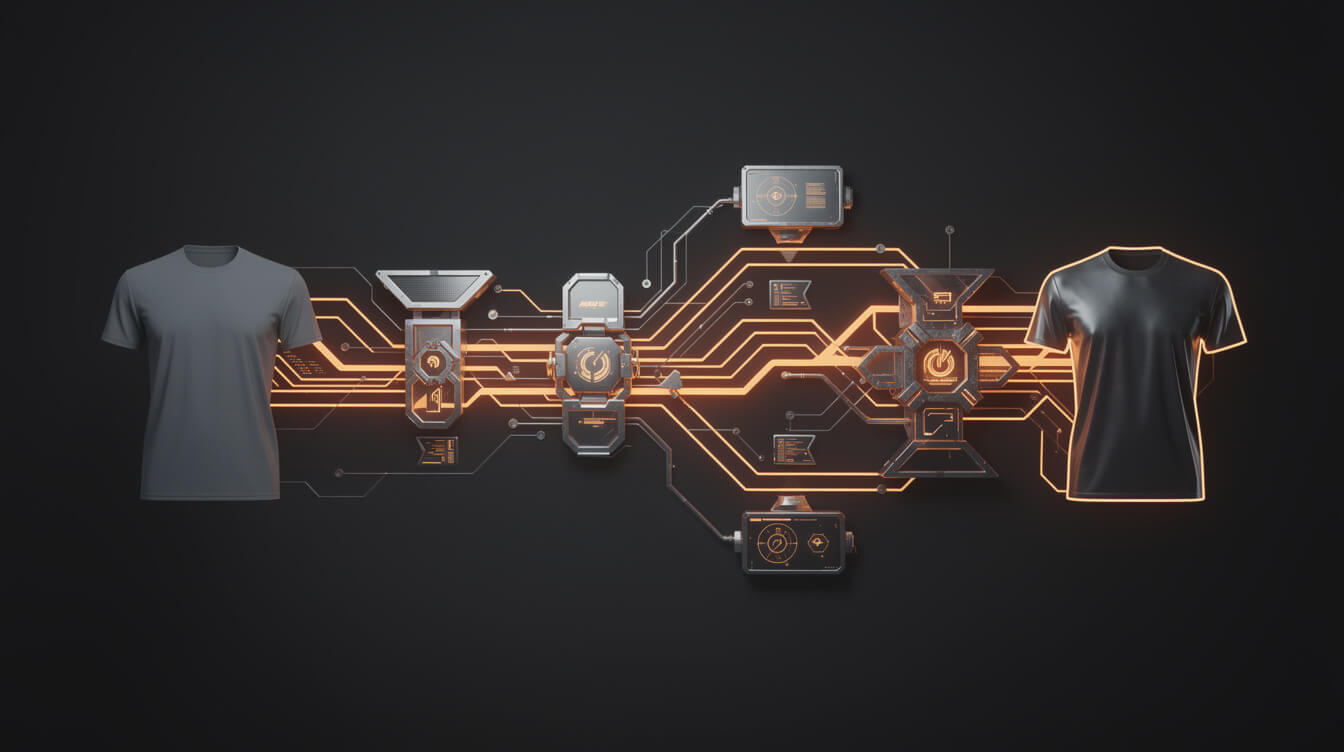
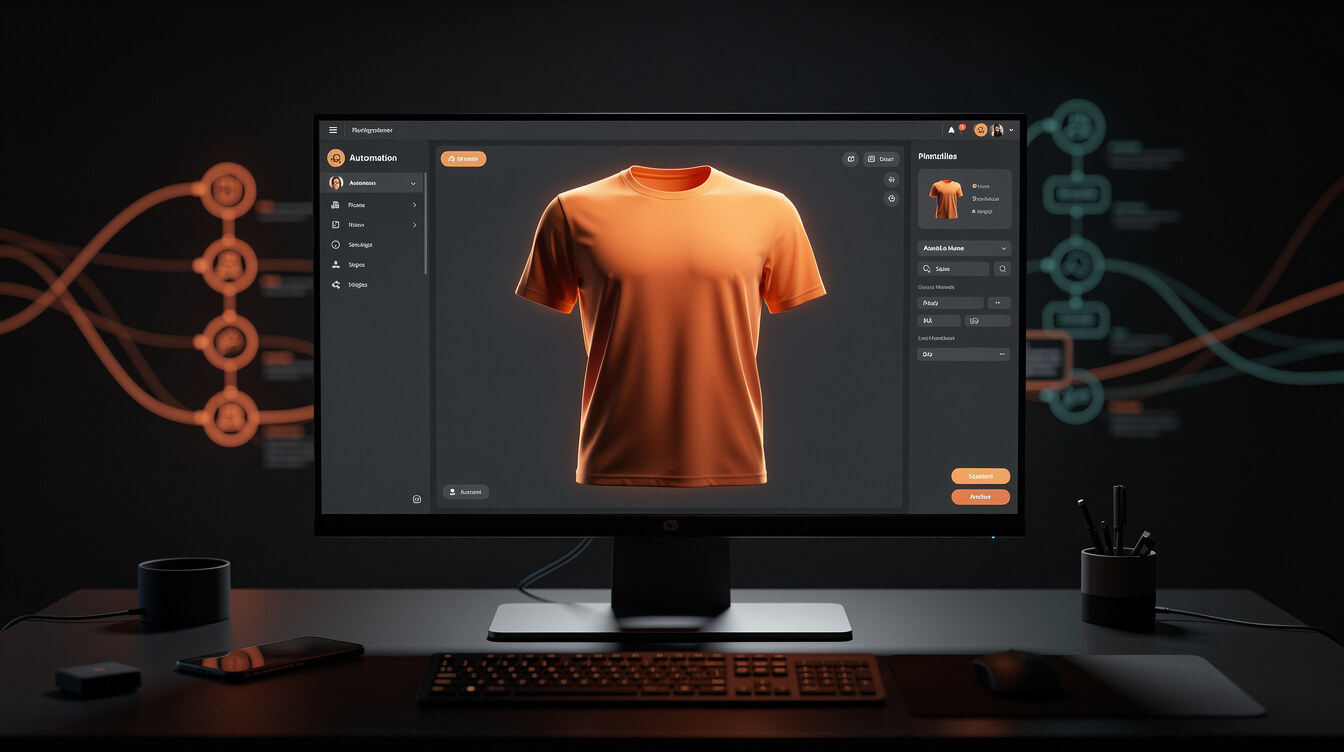
The alternative is a pipeline: niche research feeds design generation, design generation feeds product creation, product creation feeds listing and SEO. Each step is automated or semi-automated, and the founder’s job shifts from execution to quality review.
Here is what that looks like in practice:
Step 1: Niche and product research
You identify a niche. You research what designs exist at the top of Etsy, Redbubble, and Google Images. You identify the 10-15 design archetypes that convert in that niche. This is research work, but it is front-loaded. You do it once per niche, not once per product.
Step 2: Design generation at scale
AI image generation, properly prompted, produces print-ready designs in 15-30 seconds at $0.04-0.08 per image. A 50-product catalog at one image per product costs $2-4 in generation fees. The time cost, with a tuned workflow, is 1-2 hours of review and refinement. Versus 50 hours in Canva.
The key word is “properly prompted.” Generic prompts produce generic designs. Niche-specific prompts with defined style constraints produce cohesive catalog pieces that feel like they belong to the same brand.
Step 3: Product creation and listing
Once the designs exist, each needs to be sized, mocked up, listed with SEO copy, and pushed to Printful or Printify. MEGA automates this step end-to-end: the design goes in, the Printful listing comes out, with title, description, and Printful size variants already set. This is the throughput unlock that most manual POD workflows cannot access.
If you are running a WooCommerce POD store and want to see how this pipeline works in practice, MEGA is the research-to-product engine built for this exact workflow.
Build your clothing catalog 30x faster with MEGA
MEGA is the research-to-product pipeline for POD sellers. Connect WooCommerce and Printful, feed a niche idea, and get complete product listings in under 7 minutes. No Canva required.
Brand identity when everyone uses the same supplier catalog
Here is the objection every serious POD seller has heard: “If you and your competitor both use Printful’s Bella+Canvas 3001, how is your brand different?”
The answer is that the garment is not the brand. The brand is everything else.
Design language
Two sellers can use the same blank. The design on top of it is where differentiation lives. A brand with a defined visual system, consistent illustration style, and coherent color palette looks fundamentally different from a generic print-on-demand store running stock designs. The product is the canvas. The design is the brand signal.
Niche specificity
A brand for urban cyclists in their 30s looks, feels, and sells differently from a generic “outdoor adventure” store using the same garments. Niche specificity creates the psychological sense that this brand was made for me. Generic positioning makes the price comparison the only decision variable.
Packaging and unboxing
Printful supports custom packaging: insert cards, inside labels, and branded poly mailers. For roughly $0.50-1.50 per order, you can create an unboxing experience that feels like a real brand, not a fulfillment drop. Most POD sellers skip this. The ones who include it get photographed and shared.
Post-purchase communication
The email after the purchase is as much brand-building as the product. A well-crafted post-purchase sequence, a care guide for the garment, a referral ask, a thank-you note that sounds like a human wrote it. These are the touchpoints that build repeat buyers. None of them cost anything beyond the time to write them once.
Consistency over time
Brand identity compounds. A store with 3 consistent products does not feel like a brand yet. A store with 30 consistent products starts to. At 100 products in a single visual DNA, the brand registers as authoritative in its niche. The timeline is months, not years, if the production pipeline can keep up.
Throughput advantage: how many products can one person realistically launch

This is the question the SERP does not answer, but every serious POD seller is thinking about it. How many products can one person actually launch, and what separates the stores with 200 active SKUs from the ones stuck at 12?
Manual workflow ceiling: 2-4 products per day
A manual workflow looks like this: find a niche idea, open Canva, design for 1-2 hours, export, upload to Printful, mock up, write the listing copy, size the variants, set pricing, push to WooCommerce. Call it 90 minutes to 3 hours per product if you know what you are doing.
At 3 hours per product and a 40-hour “work week” on the store, you are at roughly 13 new products per week. In practice, because research and revision take longer than expected, most manual POD operators are adding 2-4 new products per week at a sustainable pace.
Automated pipeline ceiling: substantially higher
An automated pipeline shifts the bottleneck. Research and design generation run in parallel. Listing copy is generated from the design context. Printful variants are set programmatically. The human-hours move from execution to review.
In a real MEGA run, a single niche research session followed by automated design generation and listing creation produces 15-40 complete product listings in the same time a manual workflow produces 2-3. That is the 30x throughput claim, and it is grounded in the actual pipeline mechanics, not marketing language.
What the throughput difference means for your brand
If your manual ceiling is 2 products per week, building a 100-product catalog takes 50 weeks. A year of work before your store has catalog depth. With an automated pipeline, that same 100-product catalog is achievable in 5-10 weeks. The brand reaches the “real store” threshold before your competitors who are still doing it manually.
The brands winning in POD clothing right now are not winning because they have better taste. They are winning because they shipped more, faster, with enough consistency to build a recognizable identity while their competitors were still in Canva.
The bottlenecks that remain
Automation does not eliminate all bottlenecks. Quality review is still a human job. Niche judgment is still a human judgment. Pricing strategy and promotion are still decisions that require context and experience. The goal of automation is not to remove the founder from the business. It is to remove the founder from the repetitive execution work so they can focus on the decisions that actually require them.
Frequently asked questions about print on demand clothing brands
How much does it cost to start a print on demand clothing brand?
With WooCommerce and Printful, the upfront cost is hosting ($10-25/month), a domain ($12/year), and the WooCommerce plugin (free core). You pay per product fulfilled, so there is no inventory cost. A realistic month-one budget including some paid promotion is $100-300.
Can you make real money with a POD clothing brand?
Yes, but the economics depend on margin management, catalog depth, and traffic strategy. A 30% gross margin business with 300 units per month at $30 average order value is $2,700/month gross. After fulfillment costs and platform fees, the owner keeps $810-900/month. Scale both the units and the catalog, and the numbers compound. The sellers who do not make real money are typically the ones with 3 products and no content strategy.
Is Printful or Printify better for a clothing brand?
Printful for quality consistency and simpler vendor management. Printify for lower base costs and higher margin potential if you are willing to manage provider quality. The right answer depends on whether your brand competes on margin or on premium positioning.
Do I need a business license to sell POD clothing?
In most jurisdictions, yes, you need some form of business registration once you are generating income. Requirements vary by country and state. This is a question for a local accountant or business attorney, not a blog post.
How do I stand out from other POD clothing brands?
Niche depth, visual consistency, and catalog scale. The stores that blend in are the ones with 5-10 generic designs on standard blanks. The stores that stand out have a clear visual identity, a tight niche, and enough catalog depth that a browser turns into a repeat buyer.
The path from one design to a real brand
Building a print on demand clothing brand is not a mysterious process. It is a systems problem. You need a niche narrow enough to own, economics clear enough to operate profitably, a platform that keeps more of your margin, a catalog deep enough to register as a real store, and a production pipeline fast enough to build that catalog before the opportunity closes.
The sellers who succeed are not the ones with the most talent. They are the ones who solved the throughput problem and the economics problem at the same time. The manual-Canva workflow solves neither. It caps your speed and clips your focus on the work that actually builds the brand.
The research-to-product pipeline is the lever. Whether you build it yourself, piece by piece, or use a tool like MEGA to run it end-to-end, the outcome is the same: more products, faster, with the consistency that makes a clothing catalog into a brand.
Implement AI. 30x your throughput. Get a 30-min call with the founder.
Drop your details and book a free 30-minute discovery call. Personalized advice on your POD stack, your margin, and where AI fits. No pitch, no fluff.