Custom screen printing transfers vs. print on demand: the break-even math
Custom screen printing transfers have one compelling pitch: buy the transfers, buy blank shirts, apply them with a heat press, and you own the entire production chain. No print partner middleman. No per-unit fulfillment markup. Just transfers, blanks, and a press.
The pitch breaks down fast when you run the actual numbers. Most guides for custom screen printing transfers are vendor product pages — they list transfer prices and move on. None of them cover what the full cost per shirt actually looks like once you factor in equipment, blanks, labor, and minimum order quantities. And none of them compare that cost against what print on demand automation delivers at the same volume tiers.
This post does both. If you are trying to decide whether custom screen printing transfers make sense for your POD store, or whether a WooCommerce store connected to Printful or Printify gives you better unit economics, the math is here.
What custom screen printing transfers actually are (and who they are built for)
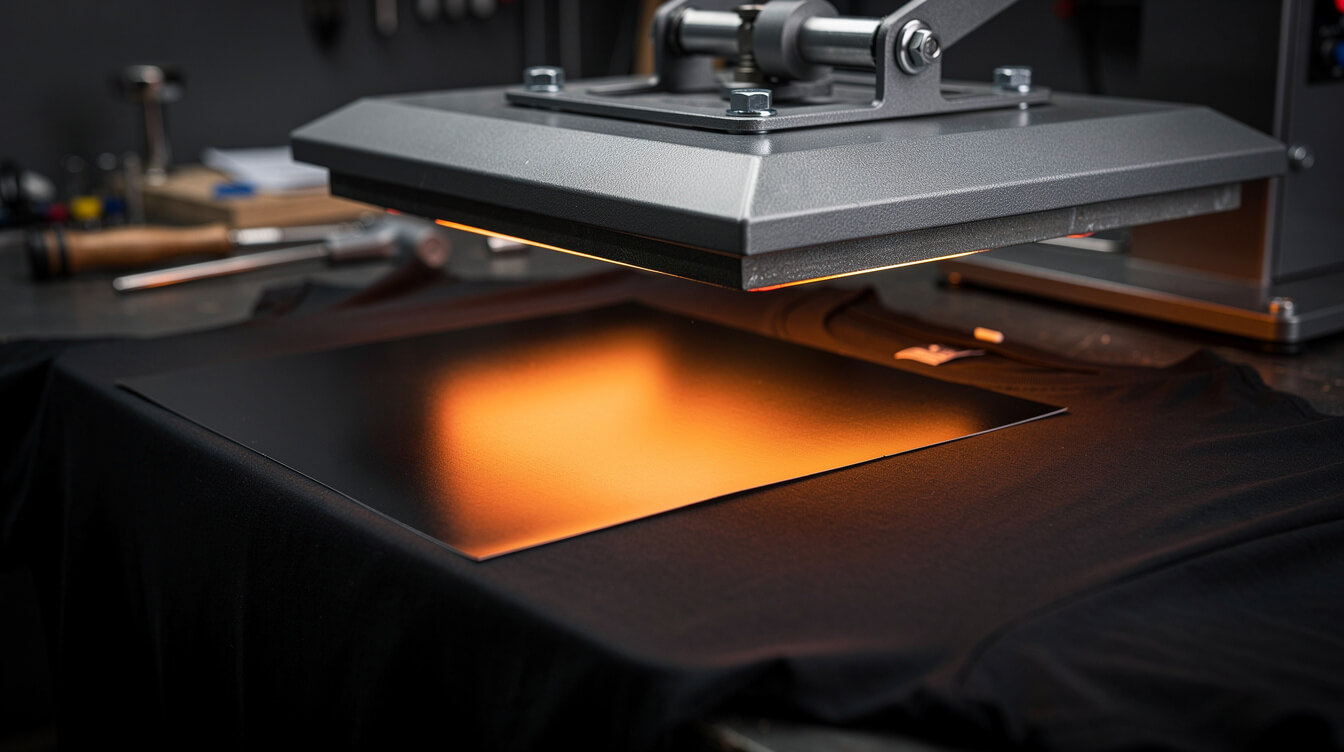
A screen printing transfer is a pre-printed ink design on release paper. You apply it to a blank garment using a heat press — typically at 325-375 degrees Fahrenheit for 10-15 seconds — and the ink transfers from the paper to the fabric. The result looks like a traditional screen print.
There are two main types. Plastisol transfers use thick, rubber-based ink and come from suppliers like Stahls or FMExpressions. Gang-printed transfers are produced in bulk runs, which is where the aggressive per-unit pricing comes from at high quantities. Goof Proof transfers (a Stahls product line) sit in the middle: standardized artwork options printed at volume that a reseller can order in smaller runs.
The model is built for one type of operation: a local print shop or decorated apparel business that already owns a heat press, already has walk-in or direct-sale relationships with local customers, and needs to fill small one-off orders without running a full screen printing operation. Youth sports leagues, church groups, local events, school spirit wear. That is the native market.
POD store owners find them appealing because the transfer pricing at scale looks cheap compared to Printful rates. But the comparison almost always leaves out three costs that change the math entirely: the equipment investment, the blank garment cost, and the value of your time.
The real cost per shirt with screen printing transfers: equipment, blanks, and your time
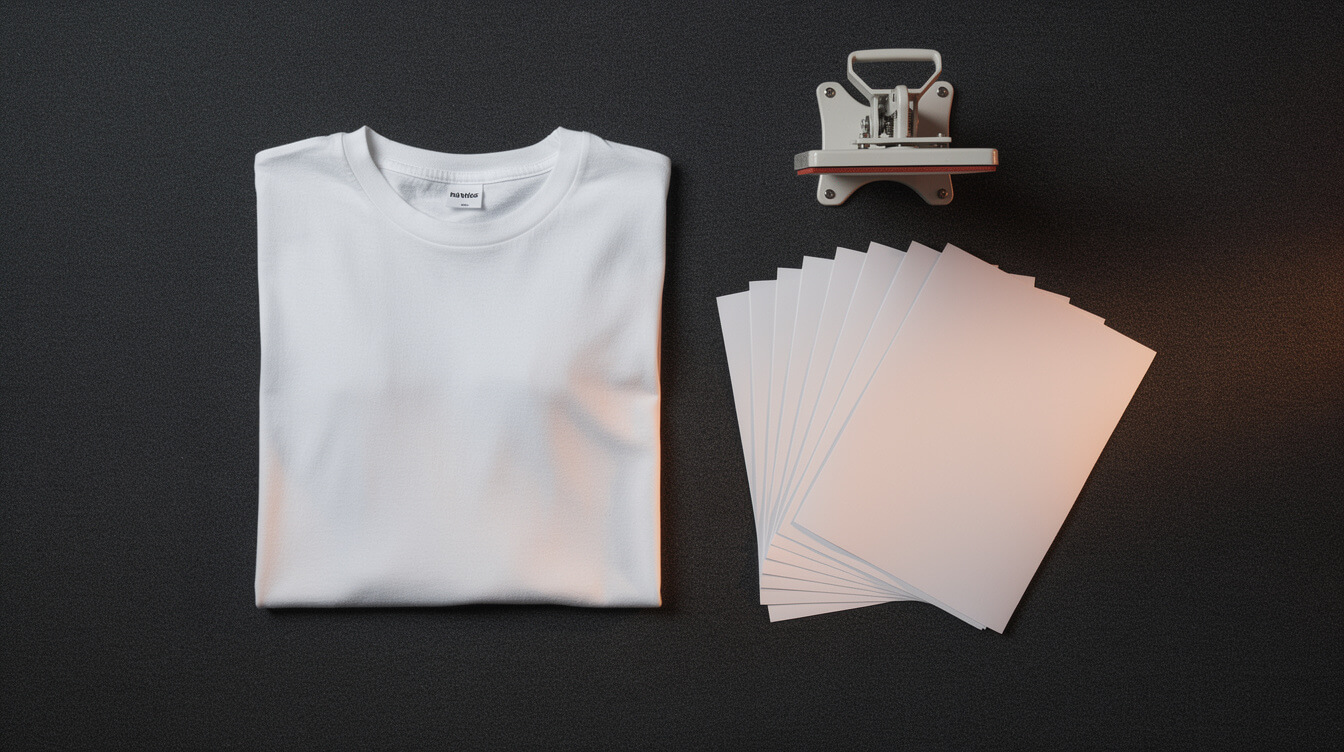
Transfer suppliers advertise per-transfer pricing. Stahls Goof Proof pricing runs like this: roughly $2.05 per transfer at 25-49 units, $0.99 per transfer at 50-99 units, and as low as $0.30 per transfer at 500+ units. Those numbers look attractive in isolation.
But a transfer is not a completed shirt. Here is what a complete unit actually costs.
Equipment (amortized)
A starter-level heat press runs $400-800. A quality commercial press (Stahls Hotronix or comparable) runs $1,500-2,000. If you do 50 shirts per month, a $600 press amortized over 24 months adds $0.50 per shirt. That is not catastrophic, but it is a real cost that vendor pricing pages never mention. And that assumes the press lasts two years with no maintenance issues or platen replacements.
Blank garments
A Gildan 5000 blank in a standard color runs $2.50-3.50 when ordered from a wholesale supplier like S&S Activewear or Alphabroder, assuming you qualify for the account minimums. Fashion-fit blanks (Bella+Canvas 3001, Next Level 6010) run $4.50-7.00 wholesale. You are buying inventory, which means you need to predict demand by size and color before you commit to an order. Overbuying smalls when large is your top seller is not a hypothetical risk — it is a standard outcome for anyone operating without real demand data.
Labor
A heat press application takes 2-4 minutes per shirt including setup, press, peel, and quality check. At 50 shirts per month, that is 1.5-3.5 hours. At 500 shirts per month, you are looking at 15-35 hours of production time. That labor is almost always the operator’s own time — the one cost that every break-even calculation undervalues or omits entirely. At a conservative $25/hour opportunity cost, 3 hours of monthly production time at 50 shirts adds $1.50 per shirt to your cost structure.
Full unit cost at different volume tiers
Pulling it together at 50 shirts per month:
- Transfer: $0.99 (Goof Proof at 50-99 tier)
- Blank shirt: $3.00
- Equipment amortization: $0.50
- Labor (3 hrs / 50 shirts x $25/hr): $1.50
- Total: $6.00 per shirt
At 500 shirts per month, labor and volume improve the math significantly:
- Transfer: $0.30
- Blank shirt: $2.80 (volume pricing)
- Equipment amortization: $0.15
- Labor (25 hrs / 500 shirts x $25/hr): $1.25
- Total: $4.50 per shirt
Compare this with DTF and DTG print methods that POD sellers also evaluate — the economics shift depending heavily on volume and whether you own the equipment.
Print on demand as the alternative: what you give up, what you gain
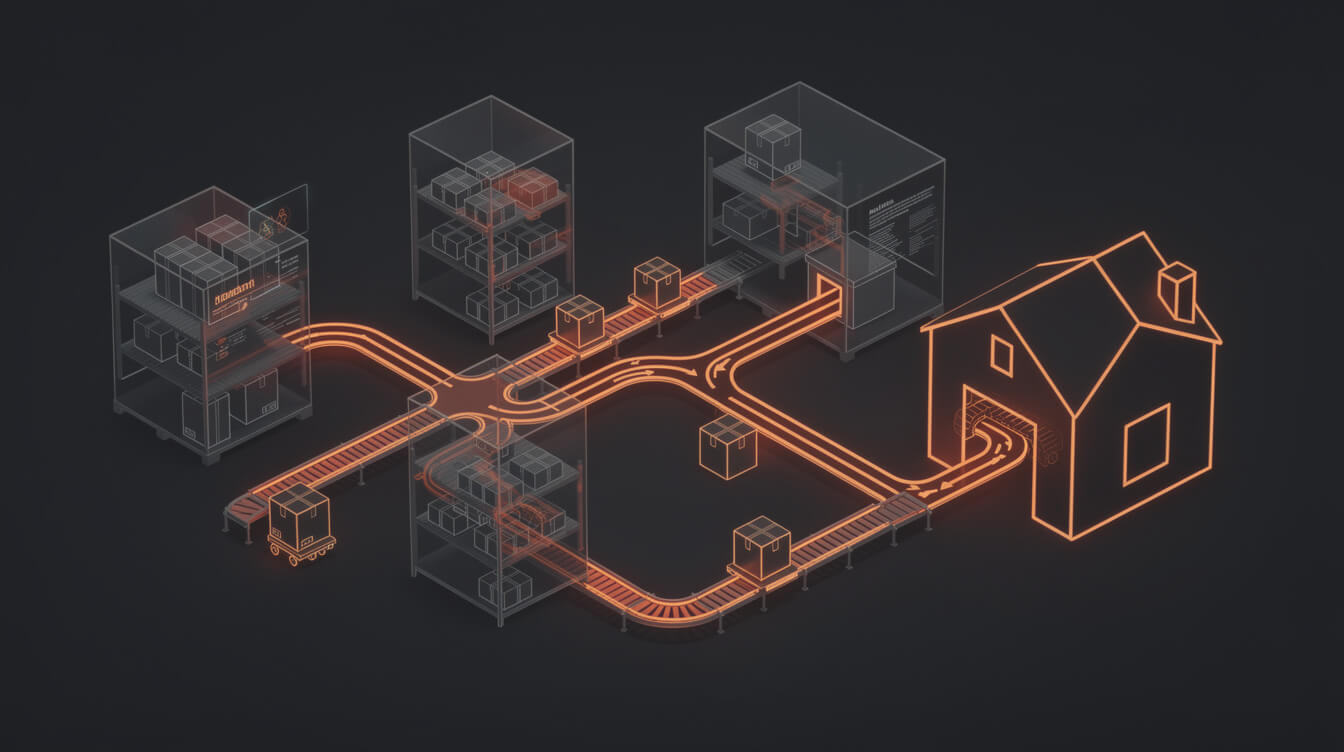
Print on demand through a fulfillment partner like Printful eliminates three cost categories: equipment, inventory, and labor. You pay a single all-in price per unit. The Printful Gildan 64000 runs roughly $9-12 per unit fully fulfilled, depending on print location and design complexity. Bella+Canvas 3001 runs $12-15.
That unit price looks higher than the transfer math above. But the comparison is not apples to apples. POD includes:
- Printing (no equipment investment on your side)
- Blank garment sourcing (no wholesale account required)
- Zero inventory commitment (no size or color overbuying risk)
- Zero production labor from you
- Pick, pack, and ship from Printful’s facility
- No shipping supplies, boxes, or postage management on your end
What you give up: margin at high volume. At 500 shirts per month using transfers at $4.50/unit vs POD at $9.50/unit, the difference is $5.00 per shirt — or $2,500 per month at that volume. That is real money. But 500 shirts per month is also where most online POD operators are not operating when they start the comparison.
You also give up print exclusivity. With screen printing transfers, your design runs on your order — Stahls does not print anyone else’s orders on your file. With POD, a competitor can sell nearly the same product using the same Printful catalog. The print quality is consistent and defensible, but the supply chain is not proprietary.
The home printing comparison hits the same trade-off from a different angle — equipment ownership versus outsourced fulfillment — and the break-even calculus is nearly identical.
The break-even table: 10 shirts/month vs 100 vs 500

Smash print-on-demand. Join the engine room.
One short email a week. Real numbers, real teardowns, the unfiltered economics behind every move.
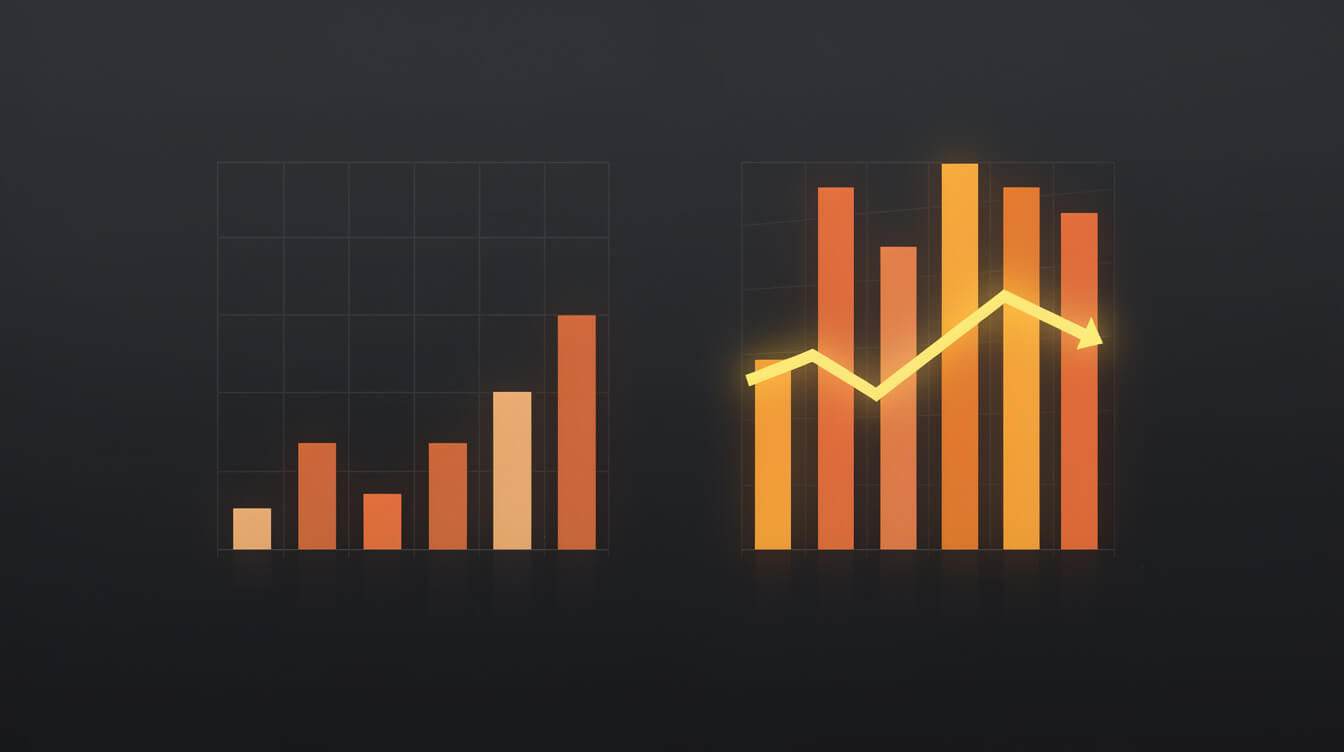
Here is the honest break-even table. All figures use conservative inputs: Goof Proof transfer pricing, Gildan 5000 blanks at S&S wholesale pricing, and a $600 heat press amortized over 24 months. POD pricing uses Printful’s Gildan 64000 base rate with standard fulfillment included.
| Monthly Volume | Transfer cost/unit | POD cost/unit | Difference/unit | Monthly advantage |
|---|---|---|---|---|
| 10 shirts | $8.55 | $9.50 | $0.95 (transfers) | $9.50 monthly |
| 50 shirts | $6.00 | $9.50 | $3.50 (transfers) | $175 monthly |
| 100 shirts | $5.25 | $9.50 | $4.25 (transfers) | $425 monthly |
| 500 shirts | $4.50 | $9.00 | $4.50 (transfers) | $2,250 monthly |
At every volume tier, transfers show a lower unit cost than POD. So why does POD still make sense for most online store operators? Four reasons.
The transfer math uses your time as free. The numbers above use $25/hour opportunity cost — already conservative — but many operators unconsciously treat their own production hours as zero because they are paying themselves with sweat equity. That is a business accounting error. Time spent pressing shirts is time not spent on marketing, SEO, or new product research.
At 10-50 shirts per month, the absolute dollar difference is small but the cash flow difference is not. POD requires zero upfront inventory spend. Transfers require paying for blanks before you know your actual demand by size and color. A $500 inventory buy that generates $300 in actual sales is a $200 loss that does not appear in the unit cost table.
The $600 heat press assumption is optimistic. A real commercial-quality press that handles consistent production runs without hot spots or pressure variation is $1,500+. Budget presses introduce print quality inconsistency — a defect rate as low as 3% still eats into your per-unit advantage. And that is before discussing the additional equipment often needed: lint rollers, teflon sheets, and pretreat equipment for dark garments.
POD scales without you. At 500 shirts per month on POD, you are managing orders and marketing. At 500 shirts per month on transfers, you are also managing a production operation with real physical labor requirements. The t-shirt printing press investment comparison covers this labor math in more detail — the calculus is similar and the production time cost is consistently underestimated.
When custom screen printing transfers win (and they do win sometimes)

There are specific scenarios where screen printing transfers are the right call. This is not a one-sided comparison. Transfers win when all of the following conditions are true.
High-repeat local orders with predictable designs
If you supply apparel to a handful of recurring local accounts — a school, a youth sports league, a local business — and you already know approximately how many shirts they will order per season, transfer economics make sense. You can pre-order transfers at volume pricing, pre-stock a limited range of blank colors and sizes, and run production in batches. This is the scenario the transfer model was designed for.
You already own a heat press
If you are already operating a local print shop or decorated apparel business and the press is a sunk cost, the comparison changes. The equipment amortization disappears from the unit cost calculation. At that point, transfers at 50-100 shirts per month are legitimately cheaper than POD for the specific designs you can support with your transfer stock.
Short turnaround on local pickup orders
POD ships from Printful’s fulfillment centers. Standard turnaround is 2-7 business days plus shipping transit. If you have local customers who need shirts for an event in 48 hours and are willing to pay for it, same-day or next-day production with a heat press beats POD fulfillment timelines by a week. This is a narrow but real use case.
Designs where transfers outperform DTG
High-opacity prints on dark garments are harder for DTG (the primary POD print technology) than they are for plastisol screen printing transfers. If your product line relies heavily on bright-on-dark designs at very high coverage percentages, transfer quality on those specific jobs may exceed POD quality for that design category. Compare with the full DTG vs screen printing comparison for the technical breakdown by design type.
When POD automation wins: the volume thresholds and platform economics
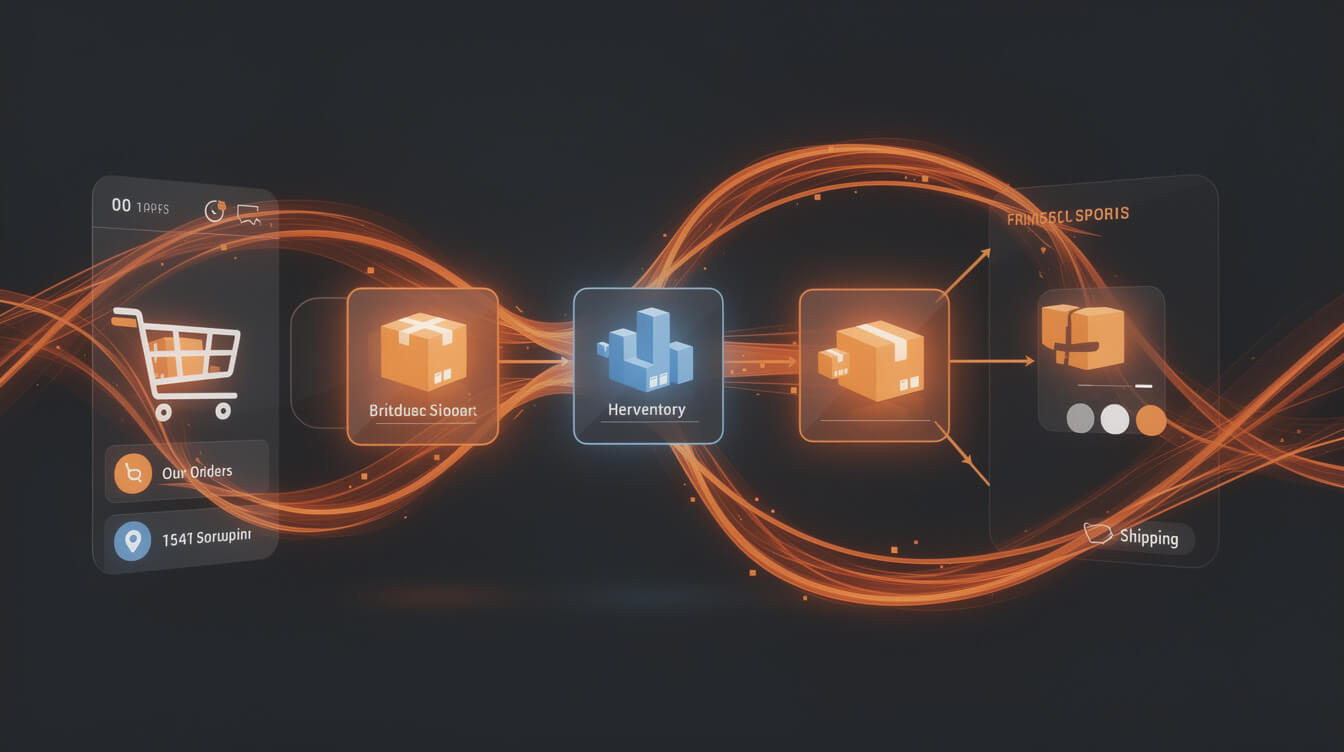
POD automation wins in every scenario that a transfer operation cannot handle: unlimited SKUs without inventory, no production labor, no equipment maintenance, and platform-level economics that favor WooCommerce over Shopify at any margin-sensitive volume.
Here is where the platform piece matters more than most sellers realize. The standard Shopify plan charges a 2% transaction fee on every order (reduced to 1% on Professional, with the same override applying on top of payment processor fees). At a $25 selling price with a $9.50 unit cost, a Shopify 1% override takes $0.25 off every transaction before you even get to payment processing. At 500 shirts per month, that is $125/month in platform overhead that does not exist on WooCommerce.
WooCommerce’s cost structure is flat — hosting plus your payment processor, no revenue-percentage tax. A $10,000/month POD store on Shopify is paying $100-200/month in platform override fees that do not exist on an equivalent WooCommerce store. That number compounds at scale and it is sitting in every Shopify invoice as a transaction fee line item.
MEGA automates the full pipeline on WooCommerce: research to product to live listing in under seven minutes, without a heat press, without inventory, and without a Shopify transaction fee eroding the margin. Try MEGA if you are building a WooCommerce POD store and want to see what 30x the throughput of a manual workflow looks like in practice.
See how Printful’s full product catalog maps to the POD product line decisions most stores need to make — the unit economics are consistent across the catalog for standard apparel, which makes WooCommerce-connected automation scalable without renegotiating supplier pricing at each volume tier.
Setting up a WooCommerce POD store instead of buying a heat press
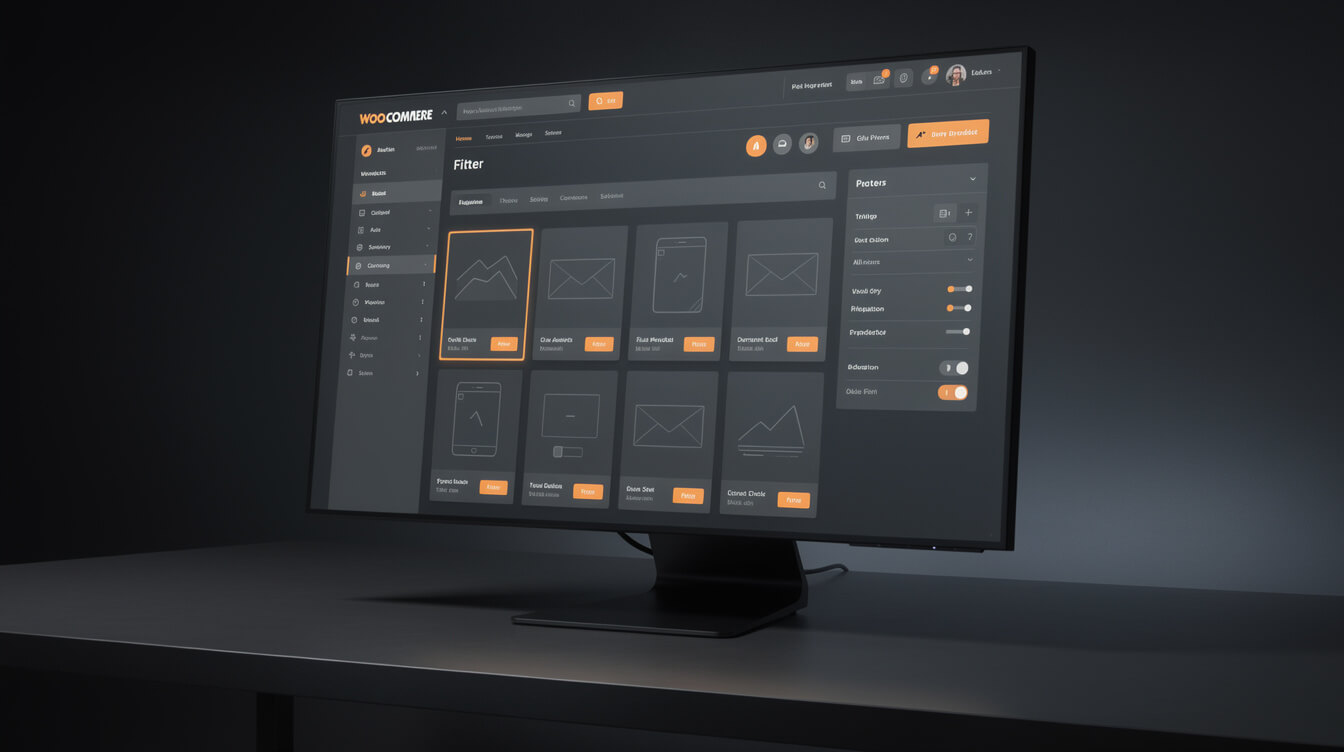
If you are comparing “buy a heat press and source transfers” against “set up a WooCommerce POD store,” the decision framework is straightforward. The inputs are different in kind, not just in amount.
What you need for a WooCommerce POD store
- WordPress hosting: $10-25/month
- WooCommerce: free (open source, no transaction fees)
- Printful or Printify plugin: free to connect, pay per fulfilled order
- Domain: $12-15/year
Total infrastructure cost: $30-40/month. No equipment. No inventory capital. No warehouse space. No production labor.
What you need for a transfer operation
- Heat press: $600-2,000+
- Blank garment inventory (minimum order quantities apply)
- Transfer stock ordered ahead of demand
- Production space
- Your time for pressing, quality check, folding, packing, shipping
- Shipping supplies: boxes, mailers, labels, postage account
Total infrastructure cost to start: $1,500-3,000+ upfront, before your first sale. And that upfront spend represents real capital tied up in equipment and inventory that cannot easily be converted back to cash if demand does not materialize as expected.
The decision rule
If you are building an online store to sell apparel at scale, the WooCommerce POD route wins on every metric that matters for an online business: capital efficiency, time to first sale, scalability, and SKU flexibility. The unit cost disadvantage at high volumes is real, but high-volume POD operations also require a real production infrastructure — full equipment investment, labor management, and quality control — not a solo operator pressing shirts in a spare bedroom.
If you are running a local print shop that already has the equipment and the local client relationships, adding an e-commerce channel to your existing operation makes sense. Transfers serve the local repeat-order model well. But “buy a heat press and compete with POD” as a startup thesis for a new online store is a capital-intensive way to solve a problem that POD automation already solves at lower cost for the first two to three years of operation.
Frequently asked questions about custom screen printing transfers vs POD
Are custom screen printing transfers better quality than DTG?
For high-opacity prints on dark garments at high coverage areas, plastisol screen printing transfers can outperform DTG. For standard designs on light-to-mid garments, modern DTG quality (Printful uses the Kornit Atlas Max) is comparable for most product lines. See the DTG vs DTF breakdown for the full technical comparison by design type and substrate.
Do I need a special heat press for screen printing transfers?
A standard clamshell press works for flat-panel garment printing. Sleeve work, hats, and oddly shaped items need specialty platens or a swing-arm press design. Budget presses under $300 often have hot spots that cause inconsistent adhesion and color variation. For reliable production quality, $600-1,500 is the realistic minimum for a press you can depend on at scale.
What is the minimum order for Goof Proof transfers?
Standard pre-made designs from Stahls can be ordered in runs as low as 12-24 units. Custom designs typically require 48+ minimums at major suppliers. The pricing table is steeply tiered: single units are expensive, and the volume discount only becomes meaningful at 100+ units where you are committing real capital to a specific design before you know demand.
Can I use a WooCommerce store with Printful and still compete on turnaround time?
For standard orders, Printful fulfills in 2-7 business days. Rush production (1-2 business days) is available for an upcharge on select products. For local event orders under 72 hours, a heat press operation will beat Printful. For an online store serving national customers with standard shipping expectations, POD turnaround is not a competitive disadvantage.
The math is no longer hidden
Custom screen printing transfers have legitimate uses. If you have the equipment, the local relationships, and the production capacity, they are a viable production method for the right type of operation. The unit economics at volume are genuinely competitive — the table above does not lie about that.
But for an online POD store being built from scratch, the transfer route requires significant upfront capital, ongoing production labor, and inventory management — three costs that POD automation eliminates entirely. The Shopify platform tax compounds the math further: at any meaningful monthly volume, the 1% platform override is a real line item that WooCommerce does not charge.
Run your own numbers with your actual volume, your actual design complexity, and your actual opportunity cost for production labor. The break-even table above is a starting point. What it shows is that the transfer advantage most vendor pricing pages imply only materializes at volume levels where you are already running a real production operation — and at that point, you are in a different business than an online POD store.
Skip the heat press. Run 30x more products in the same time.
MEGA connects to your WooCommerce store and handles the full pipeline: niche research, AI design generation, product listings, SEO, and Printful fulfillment. No equipment. No inventory. No production labor.
Implement AI. 30x your throughput. Get a 30-min call with the founder.
Drop your details and book a free 30-minute discovery call. Personalized advice on your POD stack, your margin, and where AI fits. No pitch, no fluff.