Custom t-shirt printing for POD sellers: what the $4 shirt actually costs your store
Search “custom t-shirt printing” and you land on a wall of order forms. Upload your logo, pick a quantity, get a quote. Every result targets the buyer placing a company retreat order. None of them are built for you, the seller who needs to understand what custom t-shirt printing actually costs per unit, which print method scales, and what the platform underneath your store takes off the top before a single shirt ships. That gap is what this guide covers.
Custom t-shirt printing is among the most searched terms in the POD space, and the search results answer exactly the wrong question. The buyer wants price-per-shirt. The seller needs margin math. This is the seller’s guide.
What custom t-shirt printing actually means for a POD seller (not a buyer)
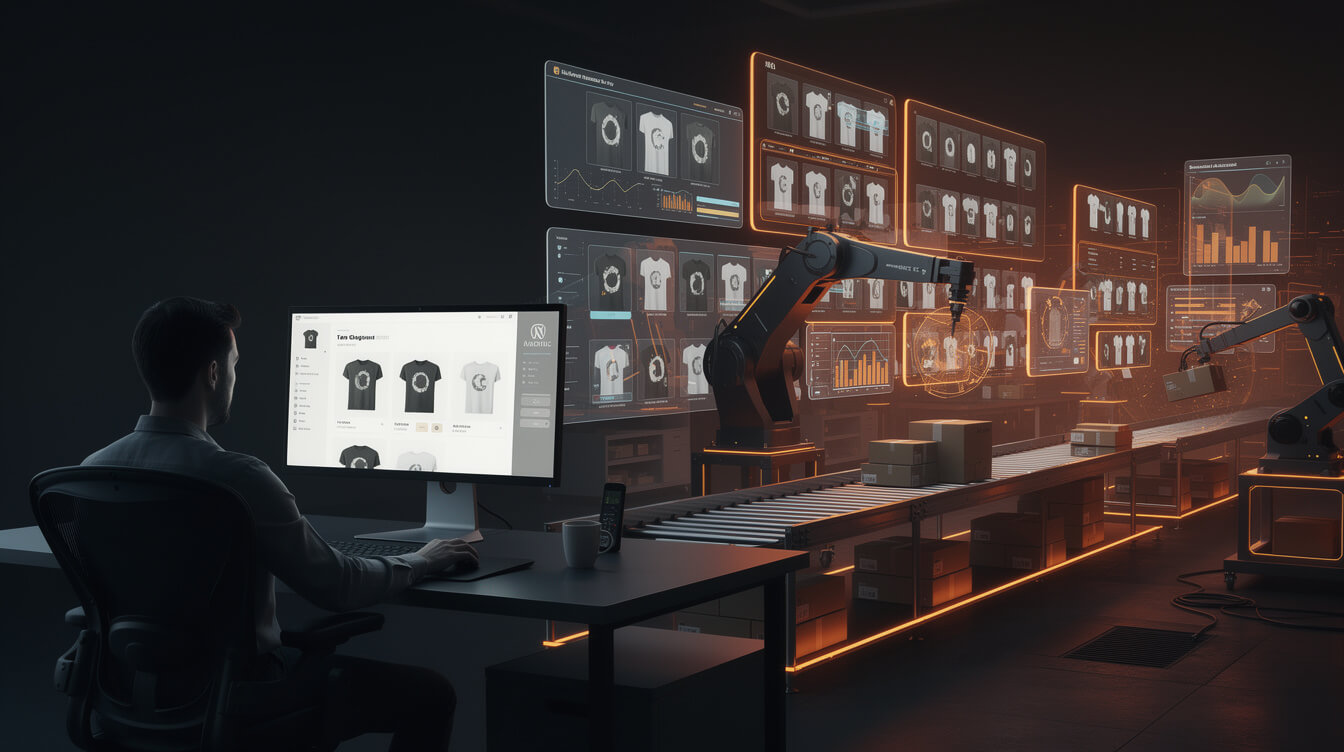
When a buyer searches “custom t-shirt printing,” they want a vendor to take their existing logo and put it on a shirt. One order, one relationship, one transaction. When a POD seller searches the same term, the intent is completely different.
You are not placing an order. You are building a repeatable product system. Custom t-shirt printing, from your side of the business, means designing a product, setting a price, connecting it to a fulfillment partner who prints and ships on demand, and then repeating that for dozens or hundreds of SKUs across multiple niches.
The confusion matters because it distorts how you think about cost. Buyers see the printer’s quote page and assume that is what printing costs. Sellers who think the same way systematically underprice their products and wonder why their store never makes money.
The printer’s price is the blank shirt cost plus the print cost. That is not your unit cost. That is your starting point. Four more layers sit on top of it before you collect a cent, and most guides never name them.
For POD sellers, custom t-shirt printing is also a volume decision in disguise. A buyer who prints 500 shirts gets economies of scale. A POD seller who prints one shirt at a time via Printful or Printify does not get those economies. What you get instead is zero inventory risk, zero minimum order, and the ability to list 200 products before making a single sale. The economic trade-off is real and worth understanding before you set a single price.
The other thing POD sellers misread is market positioning. Buyers ordering custom shirts expect customisation lead time of 5 to 10 business days. Your POD customers expect 3 to 7 day delivery because that is the Amazon benchmark they are calibrating to. This places POD sellers in direct competition with printers who have established speed, without the volume leverage those printers have. Understanding that gap is the first step to pricing correctly and choosing the right fulfillment partner.
The economics of a POD clothing business look different from a traditional print shop, and treating them as equivalent is the first mistake most new sellers make.
The four costs that turn a $4 shirt into a $14 unit cost
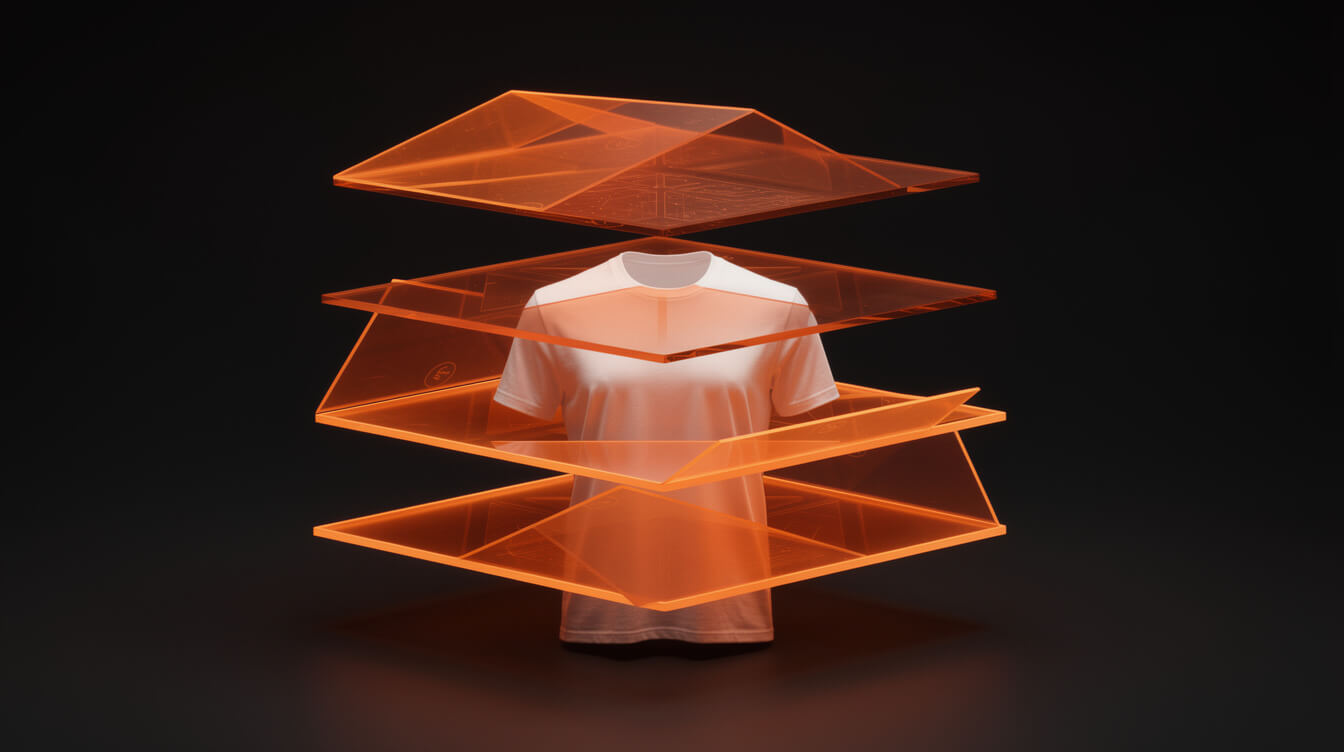
The $4 blank shirt is real. Gildan 64000 runs around $4 wholesale. But that is the cost to a screen printer buying a pallet. Your cost as a POD seller is different, and the gap between the two is where most sellers lose track of their margin.
Here are the four layers that stack on top of the blank cost before you calculate margin:
Layer 1: The print cost
Printful charges $7.95 to $13.95 to print a standard DTG design on a Gildan or Bella+Canvas tee, depending on the shirt and print placement. The blank shirt is included in this price, but the number is not $4. A standard front-print Bella+Canvas 3001 via Printful runs around $15.50 to $17.50 depending on your plan. That is before the next three layers.
Layer 2: Shipping
Printful charges $4.49 for the first item shipped in the US, $1.49 for each additional. Printify rates vary by print provider but average $4 to $7 for domestic US orders. If you are offering free shipping to stay competitive, that cost comes directly out of your margin. At a $20 retail price on a $16 base cost, a $5 shipping charge leaves you $1 gross margin. That is not a business. That is a donation operation.
Layer 3: Platform fees
On Shopify Basic, you pay $39 per month plus 2% on every transaction if you use a third-party payment processor. On Shopify Advanced, the transaction fee drops to 0.5%. On WooCommerce, there is no platform transaction fee at any scale. At $10,000 per month in revenue, a 2% Shopify transaction fee is $200 per month that WooCommerce users keep. At $50,000 per month, that is $1,000 per month in pure platform overhead. The best Shopify print-on-demand app does not fix that fee because it sits underneath the app layer.
Layer 4: Payment processing
Stripe and Shopify Payments both take approximately 2.9% plus 30 cents per transaction. On a $25 sale, that is $1.03 in processing fees. Combined with platform fees, a Shopify seller on the Basic plan is paying roughly 5% of every sale in overhead before accounting for returns, chargebacks, or advertising. On WooCommerce with Stripe, you pay 2.9% plus 30 cents, and nothing else.
Add these four layers together and a $4 blank shirt realistically costs you $14 to $17 per unit to sell through a properly priced POD store on Shopify. On WooCommerce, you recover the platform fee entirely. At scale, that recovery compounds faster than most sellers expect.
Screen printing vs DTG vs POD: which method fits which store size
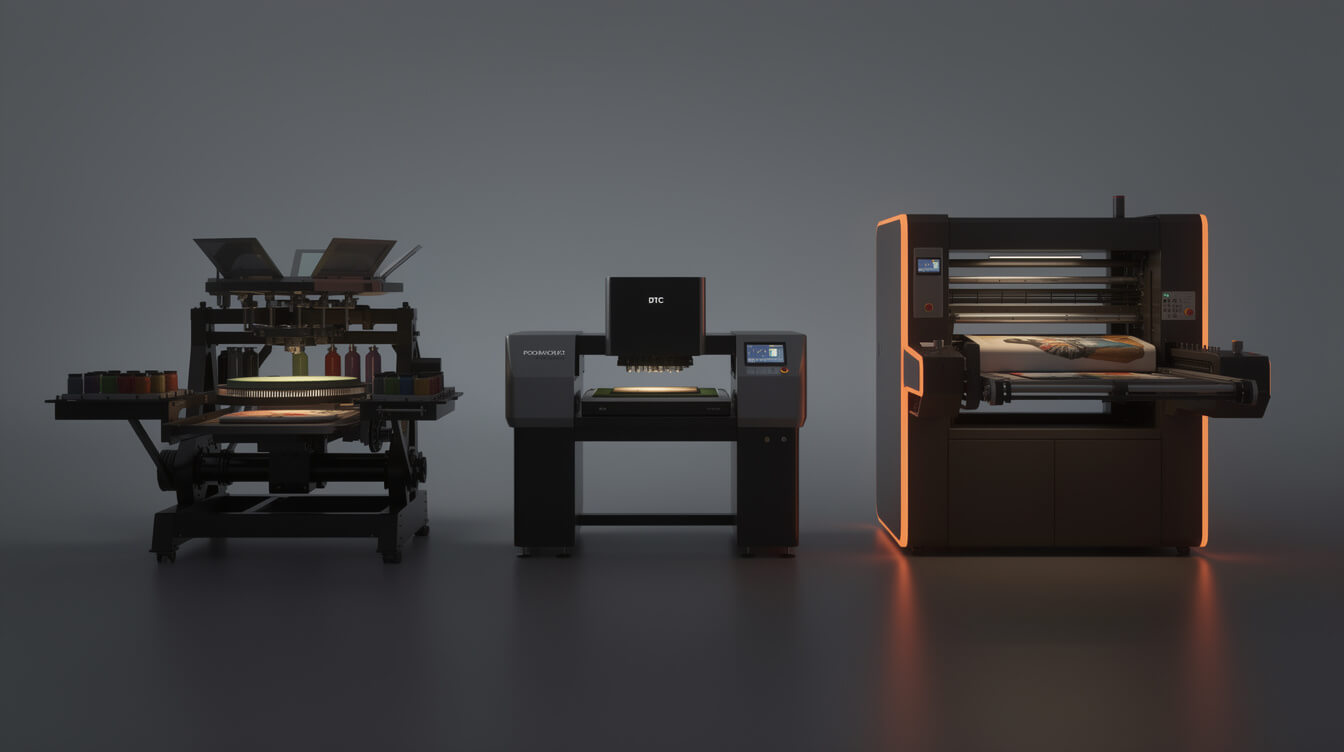
The print method question trips up sellers because the framing is usually wrong. Most comparisons are written for buyers placing bulk orders, not for sellers building repeatable product lines. Here is what each method actually means for a POD seller.
Screen printing
Screen printing requires setup costs that range from $25 to $75 per color per design. This is called the “setup fee” or “screen fee.” On a run of 500 shirts, that cost is negligible. On a run of 12 shirts, it is the dominant cost. Break-even for screen printing against DTG typically occurs between 24 and 48 units per design, depending on the number of colors.
For POD sellers, screen printing is not a realistic primary method because POD means printing one shirt at a time. You can use screen printing for limited drops or event orders if you have a local printer and pre-sold inventory, but it is not the default POD workflow.
DTG (direct-to-garment) printing
DTG uses industrial inkjet technology to print directly onto the fabric. No screens, no setup fees, no minimum order. Printful and most major POD platforms use DTG for standard t-shirt products. Quality is excellent for complex, multi-color designs. DTG is the default print method for POD sellers and the correct answer to “how do I print one shirt at a time without a setup fee.”
DTG does have limitations: very dark garments require a white base layer that adds cost and can reduce wash durability; athletic and synthetic fabrics do not accept DTG ink well; thick ink coverage on 100% polyester blends can crack over time. These are not dealbreakers, but they are design constraints to understand before selecting product types. The comparison between custom t-shirt screen printing and POD fulfillment covers the unit economics in detail if you are considering both models.
POD (print on demand via fulfillment partner)
POD is not a print method. It is a fulfillment model that uses DTG as its default print technology. When you sell through Printful or Printify, they DTG-print and ship per order. The distinction matters because it changes how you frame the decision: you are not choosing between screen printing and DTG, you are choosing between owning your inventory (and print equipment) versus using a fulfillment partner who handles it.
For new sellers and anyone testing niches, POD wins because the risk is zero. You list a product, and if it never sells, you pay nothing. For established sellers moving more than 200 units per month of a single design, buying a DTG printer or negotiating a print-partner arrangement becomes financially competitive.
Break-even math for custom t-shirt printing: what you need to charge on a $15 Printful tee

Smash print-on-demand. Join the engine room.
One short email a week. Real numbers, real teardowns, the unfiltered economics behind every move.

Let us run the actual numbers. A Printful Bella+Canvas 3001 with a standard front print costs approximately $15.50 to $16.95 depending on the size and current pricing tier. Add shipping at $4.49 domestic. Add Shopify payment processing at 2.9% plus 30 cents. Run this through a spreadsheet and here is what you find:
At a $25 retail price: Revenue $25, Printful cost $16, Shipping $4.49, Processing fee $1.03 (2.9% + $0.30). Gross margin: $3.48. That is a 14% gross margin. At $50,000 per month in revenue, you are making $7,000 in gross margin before marketing, store overhead, or taxes.
At a $30 retail price: Revenue $30, Printful cost $16, Shipping $4.49, Processing fee $1.17. Gross margin: $8.34. That is a 28% gross margin. Nearly double the margin from a $5 price increase. The lesson here is that pricing decisions at the low end of the range have an outsized effect on viability.
At a $35 retail price: Revenue $35, Printful cost $16, Shipping $4.49, Processing fee $1.32. Gross margin: $13.19. That is 38% gross margin, which is what you need to fund paid traffic and still make money.
The baseline for a viable POD business with custom t-shirt printing on Printful is a minimum retail price of $28 to $32 for standard tees, higher for premium blends. Anything below $25 on a standard DTG print requires a specific strategy to offset the thin margin, whether that is volume, upsells, or a subscription model.
One lever most sellers miss: offering free shipping at a threshold. If you set free shipping above $50 and your average order value is $28, the customer buys two shirts. Your Printful cost for two shirts is $16 plus $16 plus $1.49 shipping for the second item ($21.49 total base cost vs. $23.98 for two separate orders). The margin improvement on multi-unit orders is meaningful because the shipping cost per unit drops. Build your pricing to encourage that basket size.
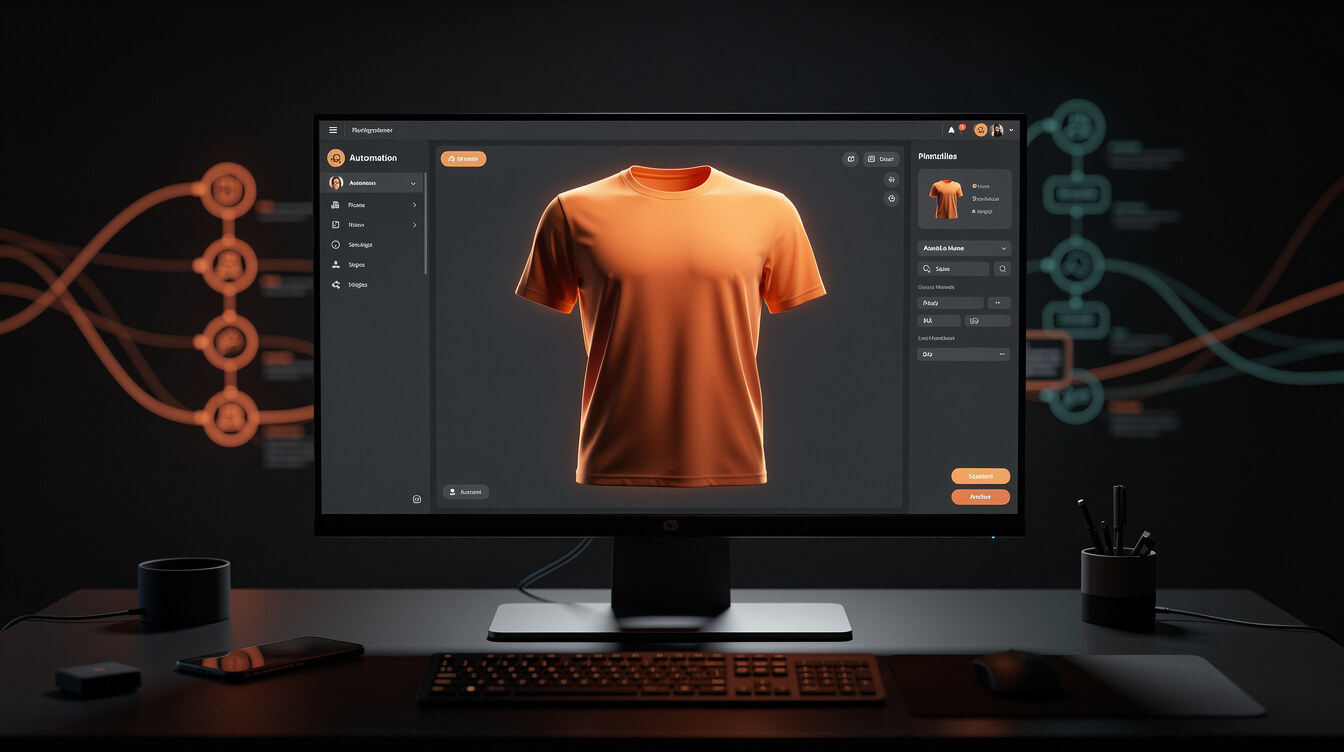
MEGA automates the margin calculation step entirely. When you generate a product through the MEGA pipeline, the pricing recommendation is built into the output based on your platform, fulfillment partner, and target margin. You are not doing this math by hand for every SKU.
How automation changes custom t-shirt economics at scale
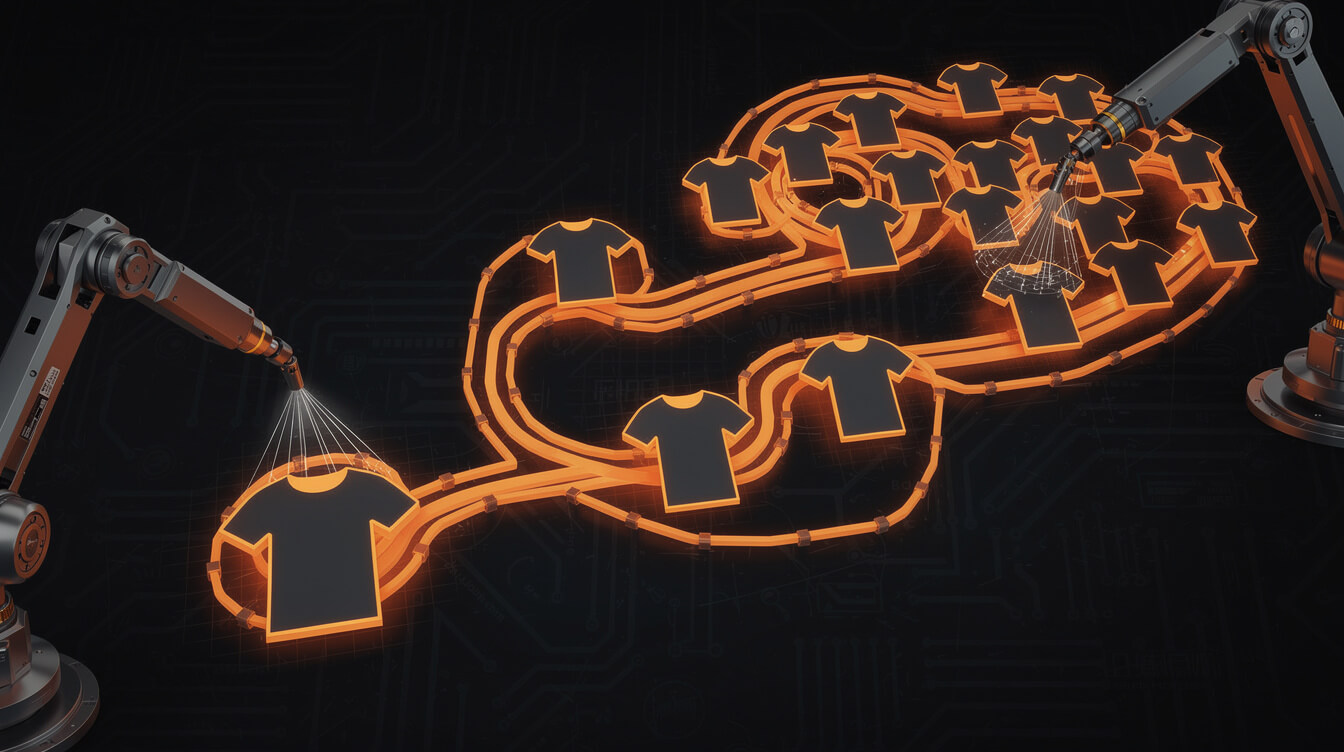
The math above applies to a single product. Most POD stores need 50 to 200 active listings to generate meaningful traffic through organic search and platform discovery. At that volume, the bottleneck is not the margin per shirt. It is the time cost of creating each product.
A manual custom t-shirt listing takes approximately 25 to 40 minutes when you factor in design creation, mockup generation, title writing, SEO research for the product description, category selection, and pricing configuration. At 40 minutes per listing, creating 100 SKUs takes 67 hours. That is roughly 1.5 months of full-time work at 40-hour weeks, and that assumes you can maintain the same quality and attention across 100 consecutive tasks.
Automation removes the per-unit time cost from the equation. A POD seller using an automated pipeline can generate a research-backed product, complete with a unique AI design, optimised title, SEO description, and pricing recommendation, in under 7 minutes. The same 100-SKU catalog that took 1.5 months of manual work takes less than 12 hours in an automated workflow.
The economic implication is significant. When each listing costs you 30 seconds of oversight rather than 40 minutes of labour, you can afford to test more niches, iterate faster, and replace underperforming products without the sunk cost of hours invested in each one. The POD business model is fundamentally a numbers game at the product level, and automation is what makes the numbers viable.
Automation also improves consistency. Manual listing processes introduce variance: you write a stronger description on Monday morning than you do at 9pm after a long day. An automated pipeline runs to the same standard every time. For a business where organic search traffic depends on consistent keyword targeting across hundreds of product pages, that consistency has direct revenue impact.
The third economic lever automation unlocks is niche depth. Manual sellers tend to stay in one or two niches because research and design iteration is expensive. Automated sellers can run 15 niches simultaneously, allocating effort to what performs and cutting what does not. That portfolio approach is what the most profitable POD stores use.
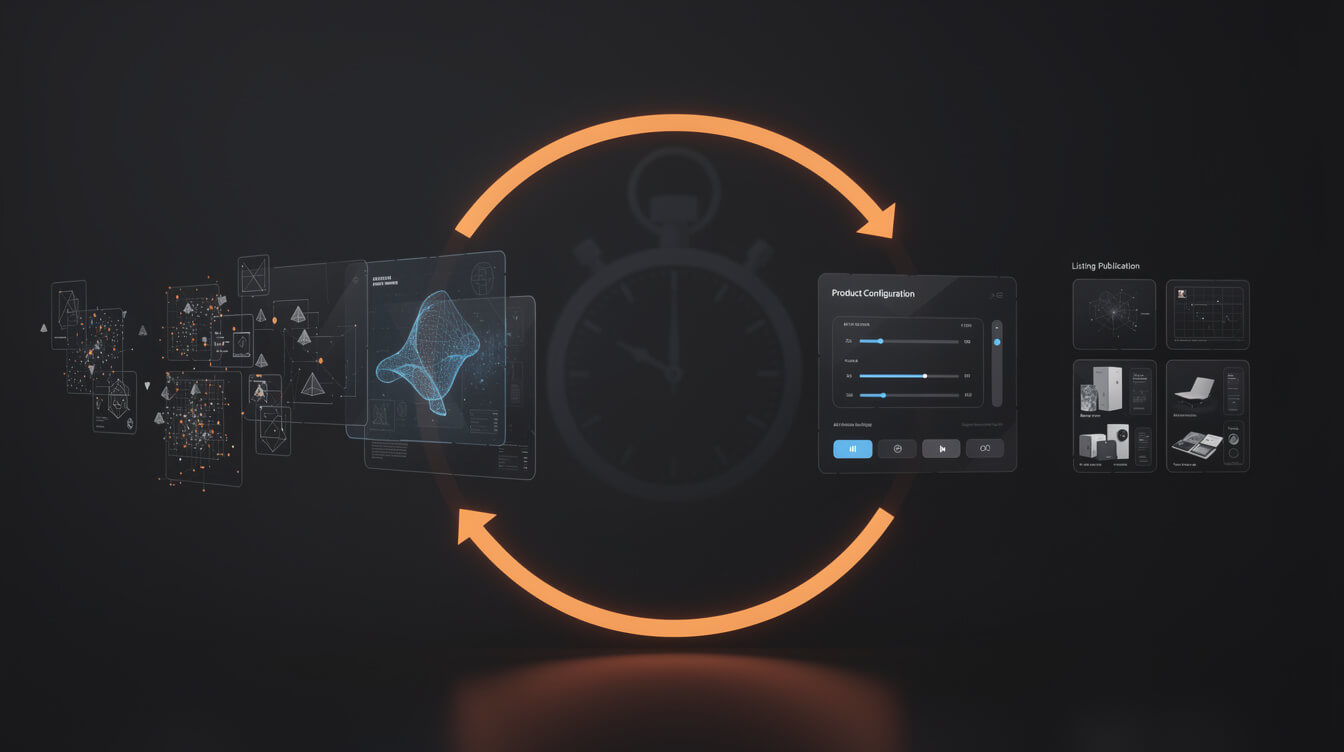
Generate a full custom t-shirt catalog in 7 minutes
MEGA automates the custom t-shirt pipeline from niche research to live listing. Design, mockup, title, SEO description, and pricing in one automated run.
WooCommerce vs Shopify: the 1% fee that custom t-shirt sellers pay without knowing it

Shopify does not advertise its transaction fee the same way it advertises its plans. The fee appears when you set up a payment processor other than Shopify Payments. On the Basic plan, it is 2%. On the Shopify plan, it is 1%. On the Advanced plan, it is 0.5%.
Most new POD sellers start on Basic. At $10,000 per month in revenue, that 2% transaction fee is $200 per month on top of the $39 plan fee. At $30,000 per month, it is $600 per month. At $100,000 per month, it is $2,000 per month, plus $79 for the plan, plus payment processing. A POD seller hitting $100,000 per month in revenue on Shopify Basic is paying approximately $5,400 per month in combined platform and processing fees before counting Printful costs, return logistics, or any advertising spend.
WooCommerce charges zero platform transaction fees. You pay payment processing directly to Stripe or your gateway of choice, typically 2.9% plus 30 cents, the same rate Shopify applies. There is no second layer. At $100,000 per month, a WooCommerce store on Stripe pays $2,900 per month in processing. A Shopify Basic store pays $5,400. The difference is $2,500 per month, or $30,000 per year, that WooCommerce keeps and Shopify does not.
This is what MEGA means by “naming the Shopify tax.” It is not an opinion. It is arithmetic. A custom t-shirt store on Shopify at scale is systematically less profitable than the equivalent store on WooCommerce, and the gap compounds as revenue grows.
WooCommerce also gives you full control over your customer data, email list, and product catalog. With Shopify, your store lives on a platform that can change terms, raise fees, or sunset features. With WooCommerce running on your own hosting, the store is yours. For a POD business built on custom t-shirt printing volume, that ownership matters.
The switching cost from Shopify to WooCommerce is real but finite. Product migration, design transfer, and SEO redirect mapping typically take one to two weeks with the right tools. The economics of staying on Shopify at scale make that migration investment worth running.
For POD sellers building on WooCommerce from the start, the AI design generation tools built for POD integrate directly with WooCommerce product creation, skipping the Shopify layer entirely.
The MEGA pipeline: from niche research to custom t-shirt listing in 7 minutes
The conventional POD workflow looks like this: identify a niche, spend two hours on Canva building a design, generate a mockup, write a product title, write a description, choose categories, set a price, and list. Then repeat 99 more times to build a catalog worth driving traffic to.
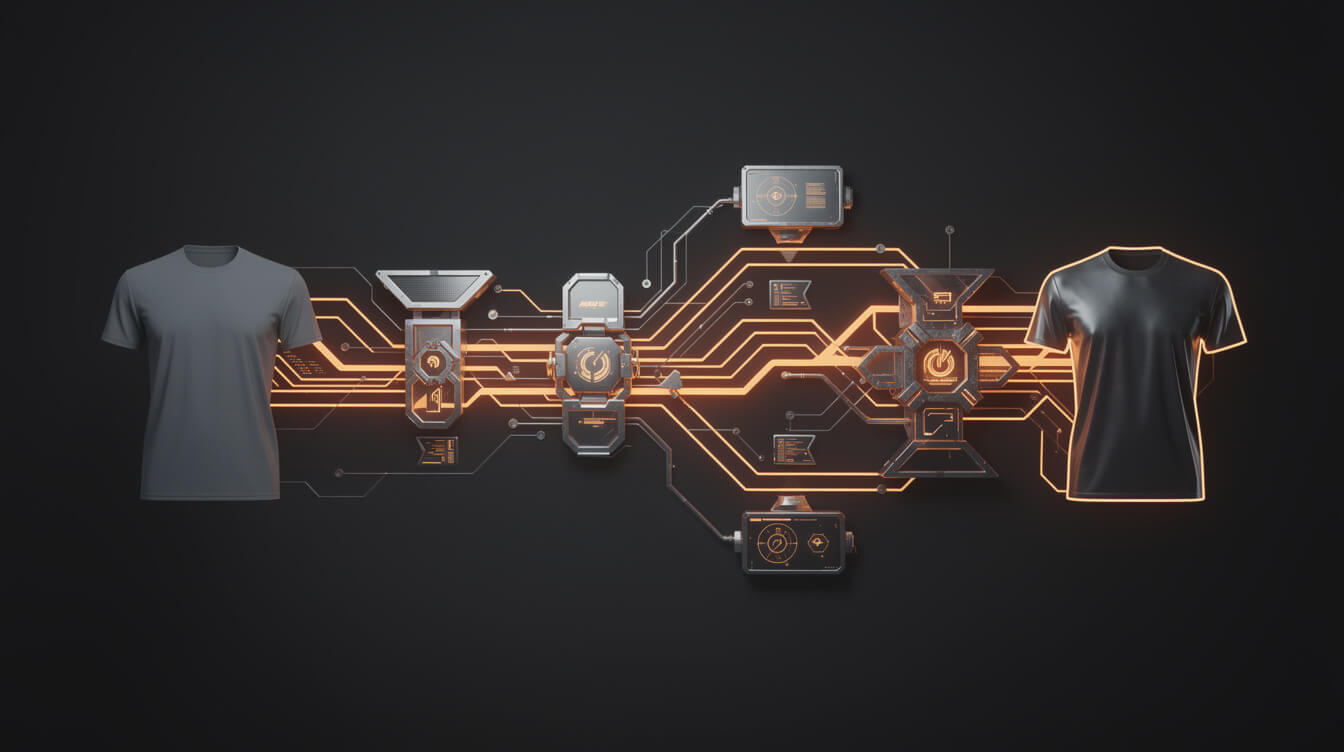
MEGA runs that same workflow end-to-end in under 7 minutes. You connect your WooCommerce store and Printful account, input a niche idea or pull one from MEGA Research, and the pipeline handles the rest: AI image generation to spec for DTG printing, automated mockup creation, SEO-optimised title generation, product description writing, sizing configuration, and live listing on both Printful and WooCommerce.
The 30x throughput claim comes from comparing a manual workflow that averages 30 to 40 minutes per listing against a MEGA run that averages 7 minutes. At 100 listings, the difference is 50 to 60 hours of manual work versus roughly 12 hours automated, including review time. That is the efficiency gap MEGA addresses.
For custom t-shirt printing specifically, MEGA generates designs that meet DTG technical requirements: CMYK-safe colour profiles, 300 DPI minimum, correct placement sizing for Printful’s standard front-print area (12.5 x 16 inches for most adult tees). You are not uploading a logo and hoping for the best. The pipeline produces print-ready files.
The niche research component matters as much as the design speed. A custom t-shirt that no one is searching for does not make money regardless of how fast you listed it. MEGA’s Research module identifies keyword-validated niches with search volume, competition data, and product-market fit signals before generating a single design. The result is a catalog built on demand signals, not guesses.
Frequently asked questions about custom t-shirt printing for POD stores
What is the minimum order for custom t-shirt printing through Printful?
Printful has no minimum order requirement for POD sellers. You can sell one shirt at the standard per-unit price. There is no bulk discount for standard plan users, but Printful Advantage (their paid loyalty tier) offers a 9% discount on most products, which improves unit economics at volume.
How long does custom t-shirt printing take through a POD partner?
Printful’s production time for DTG t-shirts is typically 2 to 5 business days. Add domestic US shipping of 3 to 5 business days for a total delivery window of 5 to 10 business days. Express shipping options are available. For customers benchmarked to Amazon Prime delivery, managing expectations in your product description is worth doing explicitly.
Can I use my own design on a custom t-shirt through POD?
Yes. Both Printful and Printify accept uploaded design files in PNG format at 300 DPI or higher. The design must be within the printable area dimensions for each product. MEGA generates designs that meet these technical requirements automatically as part of the pipeline output.
What markup should I add to a custom t-shirt on Printful?
Target a minimum of 35% gross margin after Printful costs and shipping. For a Bella+Canvas 3001 that costs $16 via Printful with $4.49 shipping, a break-even retail price covering standard payment processing is approximately $22. A 35% gross margin requires a retail price of approximately $31 to $33. Most competitive POD t-shirt pricing in the $28 to $35 range. Going below $25 is only viable at very high volume or with a bundle strategy.
Is WooCommerce better than Shopify for custom t-shirt POD stores?
At low volume (under $5,000 per month), the platform fee difference is small. Above $10,000 per month, WooCommerce’s zero transaction fee is a meaningful margin advantage. Above $50,000 per month, the difference exceeds $1,000 per month. The right answer depends on your current stage and where you are building toward. Most sellers starting fresh with WooCommerce stay on WooCommerce. Most sellers migrating from Shopify do so when the fee math becomes undeniable.
The bottom line on custom t-shirt printing economics
The $4 shirt is real. The $14 unit cost is also real. The gap between them is where most POD stores fail, not because sellers are bad at business, but because every guide written about custom t-shirt printing is aimed at buyers placing bulk orders, not sellers building automated product pipelines.
The practical steps from here are clear. Price your t-shirts at a minimum of $28 to $32 to achieve workable gross margin. Account for all four cost layers before setting prices. Choose DTG via a POD partner for any listing under 50 units per design. Build on WooCommerce if you are serious about margin at scale. And use automation to close the gap between the catalog size you can manage manually and the catalog size that generates meaningful organic traffic.
The custom t-shirt printing market is not saturated. The POD seller market serving it intelligently is thin. Most of the SERP for custom t-shirt terms is still occupied by buyer-focused product pages. The editorial gap for seller-side content remains wide open, which is exactly where a well-built POD store with consistent content can build durable organic traffic.
Implement AI. 30x your throughput. Get a 30-min call with the founder.
Drop your details and book a free 30-minute discovery call. Personalized advice on your POD stack, your margin, and where AI fits. No pitch, no fluff.